

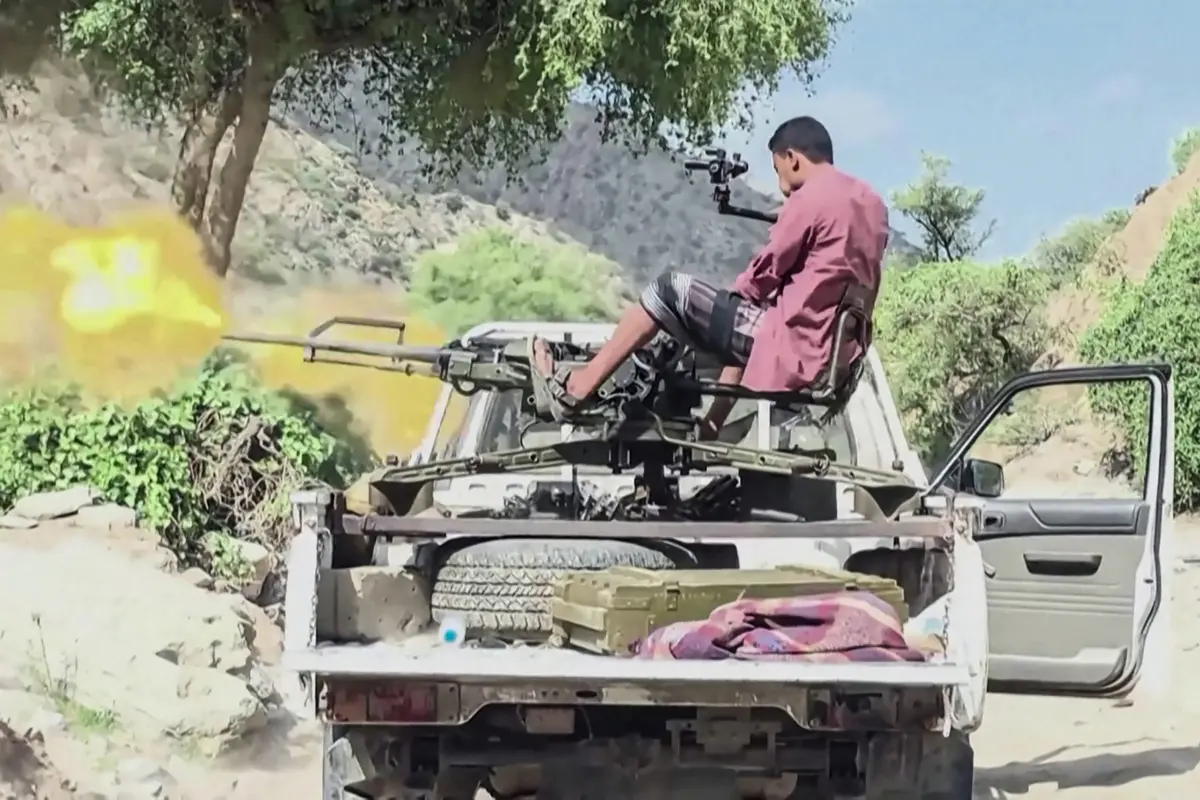
A Yemeni human rights organization has vehemently accused the Iran-aligned Houthi movement of executing five civilians, including a five-year-old girl, and injuring more than a dozen others in the embattled city of Taiz, Yemen’s third-largest city, over a 24-hour period. These grave allegations surfaced as forces loyal to Yemen’s internationally recognized government intensified their military operations, reporting a series of targeted air strikes against Houthi positions and military equipment in the country’s southwestern governorate. The escalating violence underscores a dangerous resurgence of hostilities in a conflict that has already devastated the nation and triggered one of the world’s worst humanitarian crises.
The Yemeni Network for Rights and Freedom, in a statement issued on Tuesday, detailed the horrific toll on civilian lives in Taiz. Beyond the five fatalities, which tragically included a young child, the group reported that 17 other civilians sustained injuries of varying severity, many requiring immediate medical attention in overwhelmed local facilities. The organization further accused the Houthis of indiscriminate shelling of residential neighborhoods, leading to significant damage to at least seven homes and instilling widespread fear among the populace. It was also alleged that the Houthi group unleashed more than 180 projectiles across various districts of Taiz within the same 24-hour timeframe, indicating a sustained and heavy bombardment. Such actions, if verified, constitute serious violations of international humanitarian law, which strictly prohibits targeting civilians and civilian infrastructure.
Concurrently, the internationally recognized government of Yemen reported a robust military response to the Houthi aggressions. According to official statements from the Taiz Military Axis Media Center, affiliated with the Ministry of Defence, a total of nine precision air strikes were carried out in Taiz governorate on Tuesday. These strikes were strategically distributed, with five targeting Houthi strongholds in Dhubab district and an additional four aimed at military assets in al-Masrakh district. The government asserted that these operations were directed at Houthi positions and military equipment, part of an ongoing effort to push back the rebel forces. Ground combat remains fierce, with reports confirming continuous fighting between government forces and Houthi fighters in al-Shaqab, situated south of Taiz city, a critical frontline in the protracted conflict.
A Deepening Crisis: Context and Chronology of the Yemeni War
The roots of the current conflagration in Yemen trace back to 2014 when the Houthi movement, officially known as Ansar Allah, capitalized on widespread discontent and a weak central government to seize the capital, Sanaa. This swift takeover forced the internationally recognized government, then led by President Abdrabbuh Mansur Hadi, to flee, initially to Aden and subsequently into exile. The Houthi ascent marked a critical turning point, plunging Yemen into a full-scale civil war.
In March 2015, a significant international military coalition, spearheaded by Saudi Arabia and including the United Arab Emirates and other Arab states, intervened in support of the exiled government. The stated objective of the coalition was to restore the legitimate government and curb what they perceived as growing Iranian influence in Yemen through the Houthis. This intervention introduced a new and devastating dimension to the conflict, transforming it into a regional proxy battle that has since been characterized by relentless aerial bombardments, ground skirmishes, and a suffocating blockade.
A glimmer of hope emerged in April 2022 when a UN-backed truce was brokered, leading to a significant reduction in fighting across most fronts. This ceasefire, though fragile, offered a much-needed respite for millions of Yemenis and allowed for limited humanitarian access. However, the truce ultimately collapsed, and tensions have steadily mounted since July of this year. The Houthis, emboldened by their strategic positions and perceived military gains, declared a naval blockade of Saudi Arabian ports and shipping lanes passing through the critical Bab al-Mandeb strait. This declaration signaled a renewed intent to project power beyond Yemen’s borders and directly challenge regional maritime security.
The latter half of 2023 has witnessed a significant escalation in Houthi military activities. In September, the group launched a swift ground offensive on Mocha, a strategically vital port city on Yemen’s Red Sea coast. This offensive succeeded in pushing back forces loyal to the Yemeni government, underscoring the Houthis’ persistent military capabilities and their determination to control key coastal areas. The same month, Houthi forces extended their territorial gains along the western coast, asserting control over significant stretches and, most critically, seizing Mayyun Island. This small volcanic island, strategically located at the mouth of the Bab al-Mandeb strait, offers a commanding position over one of the world’s most crucial shipping chokepoints, through which an estimated 10% of global trade passes. The control of Mayyun Island provides the Houthis with unprecedented leverage over international maritime traffic, raising alarms across global shipping and security circles.
Dire Humanitarian Consequences and International Appeals
The resurgence of fighting has predictably exacerbated Yemen’s already catastrophic humanitarian crisis. The International Committee of the Red Cross (ICRC) has voiced profound alarm over the escalating hostilities, with its president, Mirjana Spoljaric, issuing a stark warning about the "unacceptable price" civilians are paying across the Middle East, particularly in Yemen. "In Yemen, the scale of death, displacement and damage to civilian infrastructure, including in Aden and Sanaa, is mounting at an alarming rate," Spoljaric stated, emphasizing the widespread destruction and loss of life. She reiterated the ICRC’s urgent call for all parties to de-escalate and adhere strictly to international humanitarian law.
Data from the United Nations paints an equally grim picture. Since August, at least 46 civilians have been killed and more than 130 others injured in Yemen, a significant number of whom are children, who are disproportionately affected by the conflict. The UN’s migration agency (IOM) reported that over 200,000 people have been displaced within Yemen since September alone, adding to the millions already uprooted by years of warfare. These figures highlight the immense human cost of the renewed fighting, pushing vulnerable populations further into destitution and exacerbating food insecurity, disease outbreaks, and lack of access to basic services. Hospitals and aid organizations are struggling to cope with the influx of casualties and the overwhelming needs of displaced communities, many of whom have nowhere safe to go.
Regional Fallout and Diplomatic Maneuvers
The escalation in Yemen has not been confined to its borders, triggering a dangerous ripple effect across the broader Middle East. The Houthis have demonstrated an increasing capability and willingness to project their military might beyond Yemen, launching a series of sophisticated attacks on Saudi Arabian infrastructure. Over the weekend, missile attacks attributed to the Houthis struck King Khalid airport in Riyadh, resulting in the deaths of at least 14 people and drawing widespread international condemnation. These attacks also targeted critical oil facilities, threatening global energy supplies and underscoring the Houthis’ capacity to disrupt regional stability.
In response to these aggressive acts, Saudi Arabia’s energy minister unequivocally promised a "serious response," signaling a potential for further military retaliation and a hardening of Riyadh’s stance. The heightened security risks have already impacted regional air travel, with several major airlines, including Qatar Airways and the United Arab Emirates’ flagship carrier Emirates, announcing cancellations of flights to Saudi Arabia and neighboring countries. This disruption highlights the economic consequences of the conflict extending beyond the immediate war zones.
The escalating crisis has also spurred a flurry of diplomatic activity aimed at de-escalation and finding a path to peace. German Chancellor Friedrich Merz held a crucial discussion with Saudi Crown Prince Mohammed bin Salman (MBS) on Tuesday, focusing on regional security issues. During their conversation, Merz reportedly urged Iran to engage in serious negotiations regarding its regional activities, accusing Tehran of destabilizing the Middle East. This statement reflects growing international concern over Iran’s alleged support for proxy groups, including the Houthis, and its broader impact on regional stability.
Meanwhile, Egyptian Foreign Minister Badr Abdelatty engaged in high-level meetings with key regional figures. He met with Gulf Cooperation Council (GCC) Secretary-General Jasem Mohamed AlBudaiwi, underscoring the deep interconnectedness of regional security. In a post on X (formerly Twitter), Abdelatty affirmed that "Gulf security is integral to Egypt’s national security," reiterating Cairo’s commitment to protecting its strategic interests and those of its allies. Abdelatty also held discussions with his Iranian counterpart, Abbas Araghchi, during which he reportedly urged an immediate halt to Houthi attacks on Saudi Arabia. This direct appeal to Tehran highlights the international community’s perception of Iran’s influence over the Houthi movement, despite some analysts suggesting that Iran may hold less direct sway over the group’s operational decisions than commonly believed, implying a degree of Houthi autonomy in their military actions.
Broader Impact and Future Implications
The current trajectory of the Yemeni conflict carries profound implications for regional and global stability. The Houthis’ expansion of control over strategic maritime routes, particularly the Bab al-Mandeb strait and Mayyun Island, presents a significant threat to international shipping and could have severe repercussions for global trade and energy markets. Any sustained disruption to this vital chokepoint could lead to increased shipping costs, longer transit times, and potentially higher oil prices, impacting economies worldwide.
The intensified Houthi attacks on Saudi Arabia risk drawing the kingdom into a more direct and expansive military confrontation, potentially igniting a wider regional conflict that could involve other regional and international actors. The geopolitical landscape of the Middle East is already fraught with tensions, and an uncontained escalation in Yemen could destabilize the entire region further, leading to unforeseen consequences.
Furthermore, the renewed fighting undermines any prospects for a durable political resolution to the conflict. Years of peace efforts have yielded limited success, and the current military gains by the Houthis, coupled with the government’s retaliatory strikes, create a cycle of violence that makes negotiations increasingly difficult. The humanitarian situation, already catastrophic, is set to deteriorate further, placing an even greater strain on international aid organizations and donor countries. The long-term implications for Yemen’s population, including widespread displacement, food insecurity, and the collapse of essential services, will require decades of sustained international support to address. The international community faces a critical challenge in finding a pathway to de-escalation, protecting civilians, and reigniting a credible political process to bring an end to this devastating war.
