

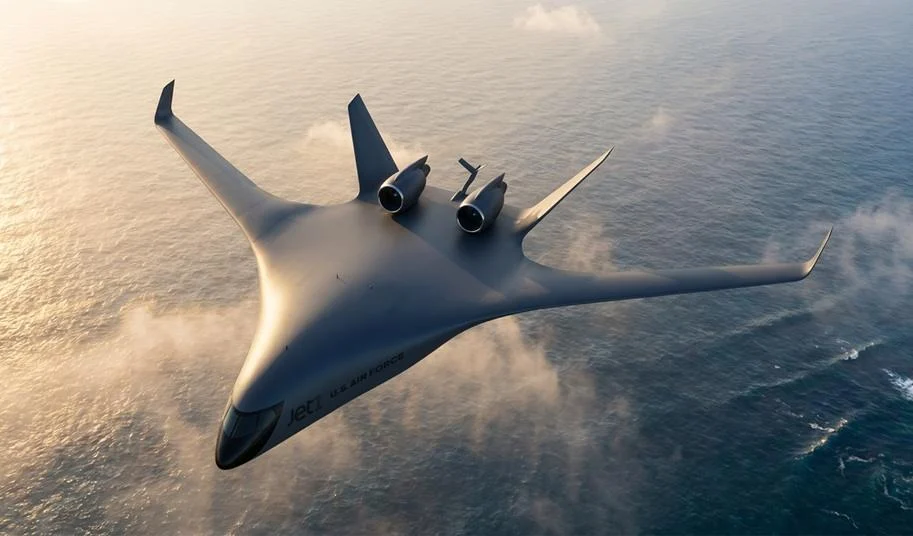
The California-based aerospace innovator JetZero has successfully closed a senior secured term loan facility of up to $100 million, marking a pivotal moment in the development of next-generation aviation technology. This substantial infusion of capital is earmarked for the acceleration of the company’s ambitious blended-wing aircraft program, specifically targeting the maturation of the Z4 aircraft. By integrating the wings and fuselage into a single, aerodynamic structure, JetZero aims to achieve a staggering 50% reduction in fuel consumption and carbon emissions compared to the traditional "tube-and-wing" designs that have dominated the skies for nearly a century. This financing round, led by specialized credit partners and established financial institutions, underscores a growing confidence in the commercial viability of radical airframe innovation as the global aviation sector faces intensifying pressure to decarbonize.
Strategic Financing and Capital Allocation
The $100 million financing facility was provided by a consortium of lenders, including Pinegrove Credit Partners—a firm backed by the investment giants Brookfield and HRTG Partners—alongside Silicon Valley Bank, a division of First-Citizens Bank. This structure as a senior secured term loan provides JetZero with a stable capital base as it transitions from the theoretical design phase into intensive physical production and testing.
According to JetZero, the proceeds will be strategically deployed across several key areas of the business. A primary focus is the completion of "Jet1," the company’s full-scale demonstrator aircraft. As of mid-2026, the demonstrator was reported to be 40% complete. The new funds will also support the continued build-out of "Factory1," the company’s primary manufacturing and testing hub located in Greensboro, North Carolina. Furthermore, the capital will provide essential working capital to scale U.S. operations, ensuring that the company can meet the rigorous engineering and regulatory milestones required for FAA certification.
Craig Caukin, a Partner at Pinegrove, highlighted the importance of this timing, noting that JetZero is currently navigating the critical "valley of death" between prototype demonstration and full-scale production. He emphasized that the facility was structured around specific program milestones, with the potential for expanded capacity as the company hits its developmental targets.
The Z4: Engineering a Paradigm Shift in Aviation
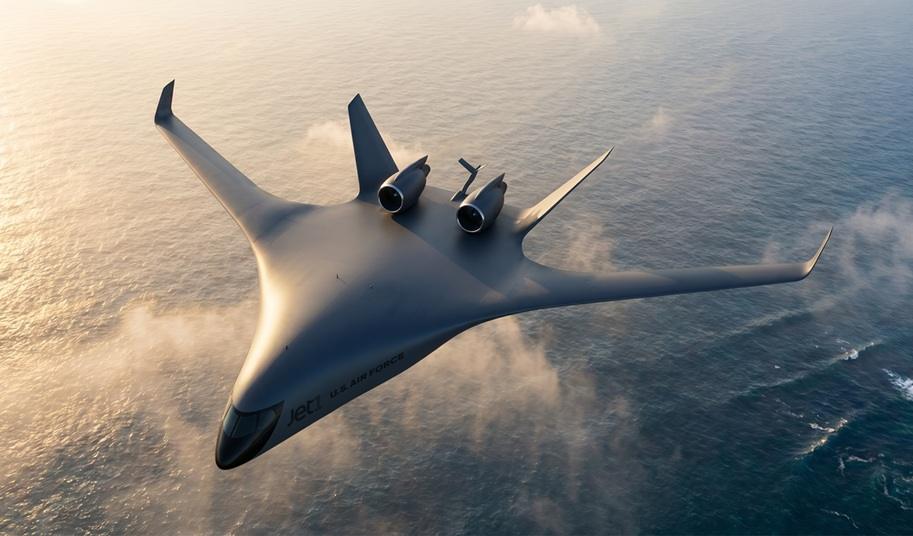
At the heart of JetZero’s value proposition is the Z4 aircraft. Designed for the "middle market," the Z4 is intended to fill the gap currently occupied by aircraft like the Boeing 767 or the Airbus A330. With a projected capacity for approximately 250 passengers and a range of up to 5,000 nautical miles, the Z4 is not merely a regional jet but a long-haul contender capable of transcontinental and even some transoceanic routes.
The blended-wing body (BWB) design represents the most significant departure from conventional aircraft architecture since the dawn of the jet age. In a standard aircraft, the fuselage is essentially a pressurized cylinder that contributes little to lift while creating significant drag. In a BWB design, the entire aircraft—including the fuselage—contributes to lift. This aerodynamic efficiency allows the aircraft to stay aloft with much less thrust, directly translating to the estimated 50% reduction in fuel burn.
Beyond environmental benefits, the Z4 promises a radical shift in the passenger experience. Because the fuselage is wider and more integrated, the interior cabin can accommodate larger seats, wider aisles, and a more spacious layout that avoids the "tunnel" feel of traditional planes. Crucially for airlines, JetZero has designed the aircraft to be compatible with existing airport infrastructure, meaning it can utilize current gates, taxiways, and hangars without requiring expensive airport renovations.
Manufacturing and Economic Impact in North Carolina
The selection of Greensboro, North Carolina, as the site for Factory1 is a strategic move that taps into the state’s burgeoning aerospace corridor. In June 2026, JetZero officially broke ground on this production facility, which is expected to become the epicenter of BWB manufacturing.
The economic implications for the region are profound. JetZero has projected the creation of more than 14,000 jobs in North Carolina over the next decade. These roles will span a wide spectrum, from high-tech composite manufacturing and aerospace engineering to logistics and administrative support. This expansion aligns with North Carolina’s broader strategy to position itself as a global leader in aerospace innovation, joining other high-profile tenants in the state such as Boom Supersonic and HondaJet.

Tom O’Leary, CEO and co-founder of JetZero, framed the North Carolina expansion as a cornerstone of "reindustrializing America." By focusing on advanced manufacturing techniques and sustainable technology, the company aims to revitalize the domestic aerospace industry while providing a scalable solution for the global climate crisis.
Development Timeline and Partnerships
JetZero’s path to commercial service is defined by several critical milestones. The company was founded in 2021 with a clear mandate to disrupt the status quo. To achieve this, it has partnered with Scaled Composites, a subsidiary of Northrop Grumman known for its expertise in experimental aircraft and advanced composite materials.
The current timeline for the Z4 program is as follows:
- June 2026: Groundbreaking of Factory1 in Greensboro and announcement that the Jet1 demonstrator is 40% complete.
- September 2026: Securing of the $100 million loan facility to fund production tooling and facilities.
- Fourth Quarter 2027: Scheduled first flight of the Jet1 full-scale demonstrator.
- Late 2020s: Intensive flight testing, data collection, and FAA certification processes.
- Early 2030s: Expected entry into commercial service for the Z4.
This aggressive schedule is supported by the fact that BWB technology has been studied for decades by NASA and the U.S. Air Force. JetZero is effectively taking these long-researched concepts and applying modern composite manufacturing and digital design tools to make them commercially viable for the first time.
The Broader Context of Sustainable Aviation
The aviation industry currently accounts for approximately 2.5% of global carbon dioxide emissions, a figure that is expected to rise as demand for air travel grows in developing economies. While many airlines have committed to "Net Zero by 2050," the path to achieving this goal is fraught with challenges. Most current efforts focus on Sustainable Aviation Fuel (SAF) and incremental improvements to existing engine designs.

However, industry analysts argue that SAF alone may not be enough due to supply constraints and high costs. A 50% reduction in fuel burn through airframe efficiency, as promised by JetZero, would drastically reduce the volume of SAF required, making the transition to green fuels more economically feasible. The Z4 is being built from the ground up to be 100% SAF-compatible and is also seen as a potential platform for future hydrogen propulsion systems, given the large internal volume of the blended-wing design which could accommodate bulky hydrogen storage tanks.
Analysis of Market Implications
JetZero’s successful funding round sends a clear signal to established aerospace giants like Boeing and Airbus. For decades, the duopoly has focused on evolutionary changes—better engines, slightly lighter materials, and refined winglets. JetZero is betting that the industry has reached the limit of what the tube-and-wing design can offer and that a "clean sheet" approach is the only way to meet future environmental regulations.
The involvement of Pinegrove Credit Partners and Brookfield is also telling. These are not typical venture capital firms; they are institutional players focused on infrastructure and long-term credit. Their participation suggests that JetZero’s technology has moved past the "science project" stage and is now viewed as an industrial-scale investment opportunity.
Furthermore, the Z4’s focus on the middle market (250 passengers) is a direct challenge to the most profitable segment of the commercial aviation market. If JetZero can deliver on its promise of 50% lower operating costs, it could force a massive shift in how airlines plan their fleets for the 2030s and 2040s.
Conclusion
The $100 million secured by JetZero is more than just a financial transaction; it is a catalyst for a potential revolution in flight. By combining a radical but scientifically grounded airframe design with a robust manufacturing plan in North Carolina, JetZero is positioning itself as a leader in the race to sustainable aviation. While the road to 2030 is long and filled with regulatory and engineering hurdles, the successful completion of this funding round provides the company with the runway needed to turn the blended-wing dream into a commercial reality. As the Jet1 demonstrator nears its 2027 flight date, the eyes of the global aerospace community will be fixed on Greensboro to see if the future of aviation truly is a wing and a prayer—or a blended-wing reality.
