

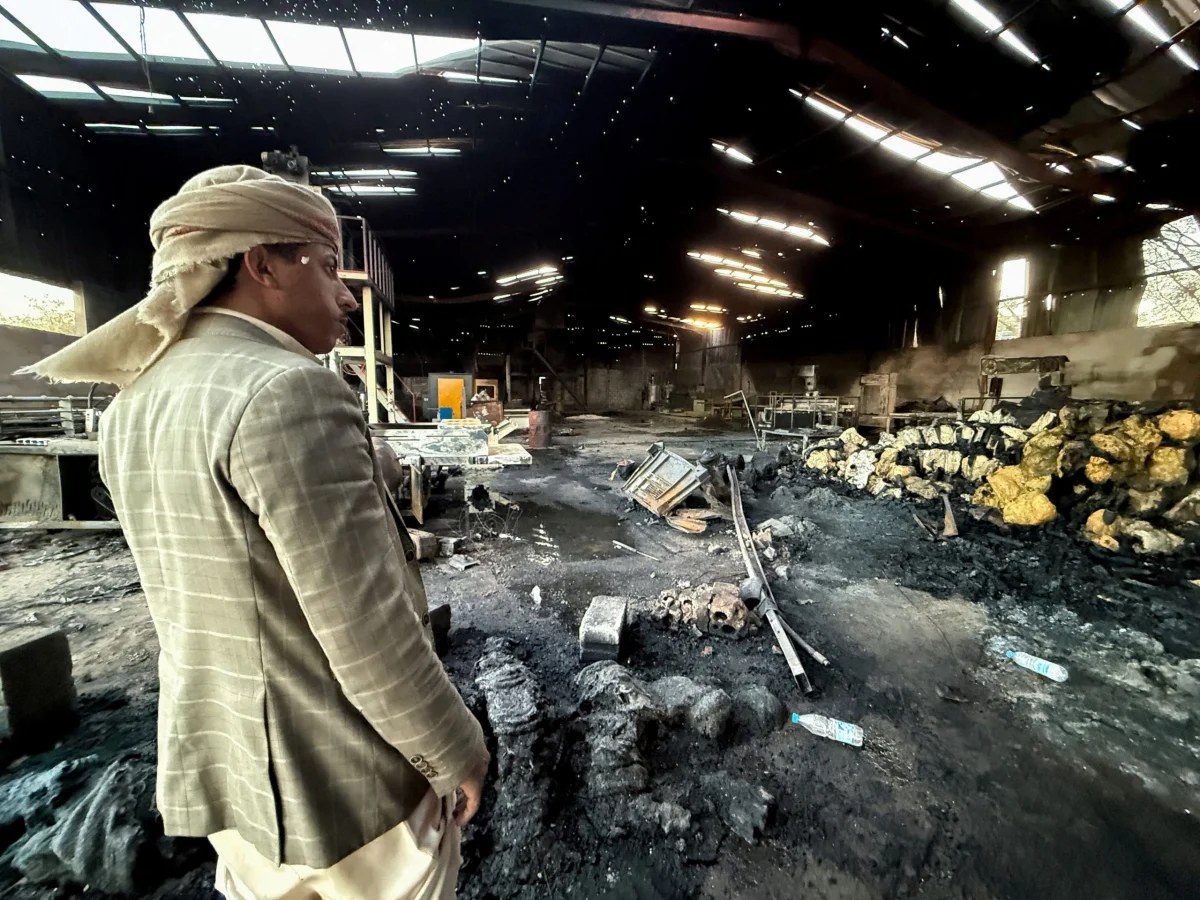
SANAA/TEHRAN – As regional tensions continue to escalate, Yemen’s internationally recognized government announced on October 4, 2026, the launch of a major new offensive aimed at retaking significant swathes of territory currently held by the Houthi movement. This development comes amidst heightened rhetoric from Tehran, with Iranian officials declaring their nation’s preparedness for potential US attacks, even while emphasizing that "there is no military solution" to the ongoing conflict with the United States. The dual announcements underscore the deepening complexity and volatility of the Middle East, a region already grappling with multifaceted proxy wars and geopolitical rivalries.
The Yemeni government’s declaration of a broad-scale operation against the Houthi-controlled areas signals a renewed push in the protracted civil war, which has devastated the Arabian Peninsula nation for over a decade. Details emerging from official channels suggest the offensive, dubbed "Operation Decisive Dawn," targets strategic locations across several governorates, with a primary objective of liberating key urban centers and supply routes. This move is a direct challenge to the Houthi’s entrenched positions, particularly around the capital Sanaa, which has been under their control since late 2014. The announcement was accompanied by a video broadcast featuring Yemen’s leader outlining the strategic goals of the operation, projecting confidence in reclaiming national sovereignty over the contested territories.
The Intensifying Yemen Conflict: A Decade of Devastation
The conflict in Yemen, often described as the world’s worst humanitarian crisis, began in earnest in September 2014 when Houthi rebels, an Iran-aligned Zaidi Shia group, swept down from their northern stronghold of Saada and seized the capital, Sanaa, effectively ousting the internationally recognized government of President Abdrabbuh Mansur Hadi. This power vacuum and the Houthi’s rapid territorial gains prompted a Saudi-led military coalition, including the United Arab Emirates and other Sunni Arab states, to intervene in March 2015. Their stated aim was to restore the legitimate government and curb what they perceived as Iranian expansionism in the region.
Since then, Yemen has been caught in a brutal stalemate, characterized by relentless airstrikes, ground battles, and a devastating blockade. The conflict has directly resulted in the deaths of hundreds of thousands of people, both from direct combat and indirect causes such as famine, disease, and lack of healthcare. The United Nations estimates that over four million Yemenis have been internally displaced, and more than two-thirds of the population, approximately 23 million people, require humanitarian assistance, with millions teetering on the brink of starvation. Infrastructure, including hospitals, schools, and vital water and sanitation systems, has been decimated, exacerbating the suffering of a populace already among the poorest in the Arab world.
The Houthis, despite facing overwhelming military pressure from the coalition, have demonstrated remarkable resilience, maintaining control over significant population centers and frequently launching missile and drone attacks into Saudi Arabia and the UAE. Their continued ability to pose a threat, often attributed to sophisticated weaponry and technical support allegedly supplied by Iran, has been a key factor in prolonging the conflict and frustrating international peace efforts.
Iran’s Dual Message: Readiness and De-escalation
Concurrently with the escalating fighting in Yemen, Tehran delivered a nuanced yet firm message regarding its broader confrontation with the United States. While stating a readiness to respond to any potential US attacks, Iranian officials reiterated their long-held position that a military solution to the complex geopolitical standoff is unachievable. This dual narrative — a posture of deterrence combined with a call for diplomacy — reflects Iran’s strategic balancing act in the face of persistent US sanctions and military pressure.
The declaration of readiness for US attacks, emanating from high-ranking military and political figures in Tehran, is widely interpreted as a deterrent signal. It aims to underscore Iran’s defensive capabilities and its commitment to protecting its sovereignty and interests in the face of perceived external threats. Such statements are often accompanied by reminders of Iran’s significant missile arsenal and its capacity to disrupt vital shipping lanes in the Strait of Hormuz, a critical choke point for global oil supplies.
However, the simultaneous emphasis on "no military solution" suggests Iran’s desire to avoid an all-out war with the United States, recognizing the catastrophic implications such a conflict would have for the region and its own populace. This diplomatic overture, even if delivered alongside warnings, serves to keep open the possibility of de-escalation or negotiation, albeit on terms favorable to Tehran. It echoes past calls for regional dialogue and a rejection of what Iran views as US unilateralism.
Historical Context of US-Iran Tensions
The animosity between Washington and Tehran has deep historical roots, intensified significantly after the 1979 Iranian Revolution and the subsequent hostage crisis. Tensions escalated sharply following the US withdrawal from the Joint Comprehensive Plan of Action (JCPOA), commonly known as the Iran nuclear deal, in 2018 under the Trump administration. The re-imposition of crippling economic sanctions, coupled with a "maximum pressure" campaign, aimed to curtail Iran’s nuclear program, ballistic missile development, and its regional influence.
Since 2018, the region has witnessed a series of dangerous incidents, including attacks on oil tankers in the Persian Gulf, drone strikes, and the downing of a US surveillance drone. The assassination of Iranian Quds Force commander Qassem Soleimani in Baghdad by a US drone strike in January 2020 and Iran’s retaliatory missile attacks on US bases in Iraq brought the two nations to the brink of war. While direct military confrontation has largely been avoided, the shadow of such a conflict looms large, fueled by proxy engagements across the Middle East, including in Yemen, Iraq, Syria, and Lebanon. The US maintains a significant military presence in the region, including naval assets, airbases, and thousands of troops, which Iran views as a direct threat to its national security.
International Reactions and Diplomatic Efforts
The international community has long viewed the Yemen conflict with alarm, consistently calling for a political solution and condemning the humanitarian toll. The United Nations has spearheaded numerous peace initiatives, including the Stockholm Agreement in 2018, which achieved limited success in areas like Hodeidah but failed to bring about a comprehensive ceasefire. UN Special Envoys have tirelessly engaged with all belligerent parties, urging dialogue and adherence to international humanitarian law.
The latest escalation in Yemen and Iran’s assertive stance will undoubtedly draw renewed calls from global powers for restraint and de-escalation. Countries like the European Union members, Russia, and China have historically advocated for diplomatic engagement and the preservation of the JCPOA, viewing it as the most viable path to prevent nuclear proliferation and stabilize the region. They are likely to reiterate warnings against further military action, emphasizing the imperative of protecting civilian lives and ensuring humanitarian access.
Regional players, particularly Saudi Arabia and the UAE, who are central to the Yemen conflict, will be closely monitoring both the progress of the Yemeni government’s offensive and Iran’s statements. Their reactions will be crucial in shaping the immediate trajectory of the conflict. While supporting efforts to restore the Yemeni government, they have also expressed openness to political solutions that guarantee their national security interests.
Implications and Future Outlook
The launch of a major offensive by the Yemeni government carries significant implications for the future of the civil war. If successful, it could fundamentally alter the territorial control balance, potentially forcing the Houthis to the negotiating table from a weaker position. However, it also risks prolonging and intensifying the conflict, leading to further civilian casualties and exacerbating the already dire humanitarian situation. The Houthis are expected to mount a fierce defense, potentially launching retaliatory strikes that could destabilize the region even further.
For the broader US-Iran dynamic, the current situation underscores the persistent state of strategic tension. Iran’s dual message highlights its calculated approach: demonstrating strength to deter aggression while simultaneously signaling a preference for non-military resolution. This delicate balance will likely continue, with both sides engaging in a test of wills and capabilities. Any miscalculation or unintended escalation could have catastrophic consequences, potentially drawing regional and international actors into a wider conflagration.
Economically, the ongoing instability in the Middle East, particularly around critical shipping lanes, poses a constant threat to global energy markets. Increased tensions and conflict inevitably lead to spikes in oil prices and insurance premiums for maritime transport, impacting economies worldwide. The potential for a direct US-Iran confrontation, however remote, remains the ultimate nightmare scenario for global financial markets.
As October 2026 unfolds, the world watches with bated breath. The convergence of an intensified civil war in Yemen and a renewed verbal standoff between Iran and the United States creates a volatile cocktail, demanding urgent diplomatic intervention and a renewed commitment from all parties to de-escalation and peaceful resolution. The path forward remains fraught with peril, with millions of lives hanging in the balance across a region already scarred by conflict.
