

The volatile landscape of the Middle East witnessed a significant escalation today, with reports confirming a United States missile strike on a cargo vessel suspected of breaching an international blockade against Iran. This incident, unfolding amidst an already tense "Iran war," comes as Qatar announces substantial progress in delicate negotiations between Oman and Iran regarding the future of critical shipping routes through the Strait of Hormuz. These developments underscore the complex interplay of military action, economic pressure, and urgent diplomatic efforts defining the region’s geopolitical future in mid-2026.
The US Missile Strike and the "Iran Blockade"
Details surrounding the US missile strike remain emerging, but initial reports indicate the operation targeted a cargo ship in international waters, believed to be actively circumventing a stringent international blockade imposed on Iran. This blockade, largely enforced by the United States and its allies, is understood to be a multifaceted economic and military measure aimed at restricting Iran’s access to certain goods, technologies, and financial networks, particularly those deemed dual-use or related to its controversial nuclear and ballistic missile programs. While official statements from the Pentagon are awaited, sources close to the operation suggest the vessel was tracked for several days, gathering intelligence on its illicit cargo and intended destination. The strike, reportedly executed with precision, was designed to disable the ship and prevent its continued passage, rather than to cause catastrophic damage, though the full extent of the impact and any potential casualties are yet to be confirmed.
This US action marks a definitive hardening of the international stance towards Tehran, indicating a readiness to employ kinetic force to uphold the integrity of the blockade. For years, Iran has consistently denounced such measures as illegal and an infringement on its sovereignty, often accusing the US of economic warfare. The concept of an "Iran blockade" has evolved from a series of sanctions and interdictions to a more explicit and militarily enforced cordon, designed to cripple Iran’s capacity to fund and arm its regional proxies, or to advance its strategic military capabilities. The US administration, in justifying such aggressive postures, routinely cites threats to regional stability, global energy security, and the proliferation risks posed by Iran’s activities. The strike sends a clear message: attempts to circumvent these restrictions will be met with decisive military intervention.
The Bab el-Mandeb Incident: Vessel Tihamah Attacked by Houthis
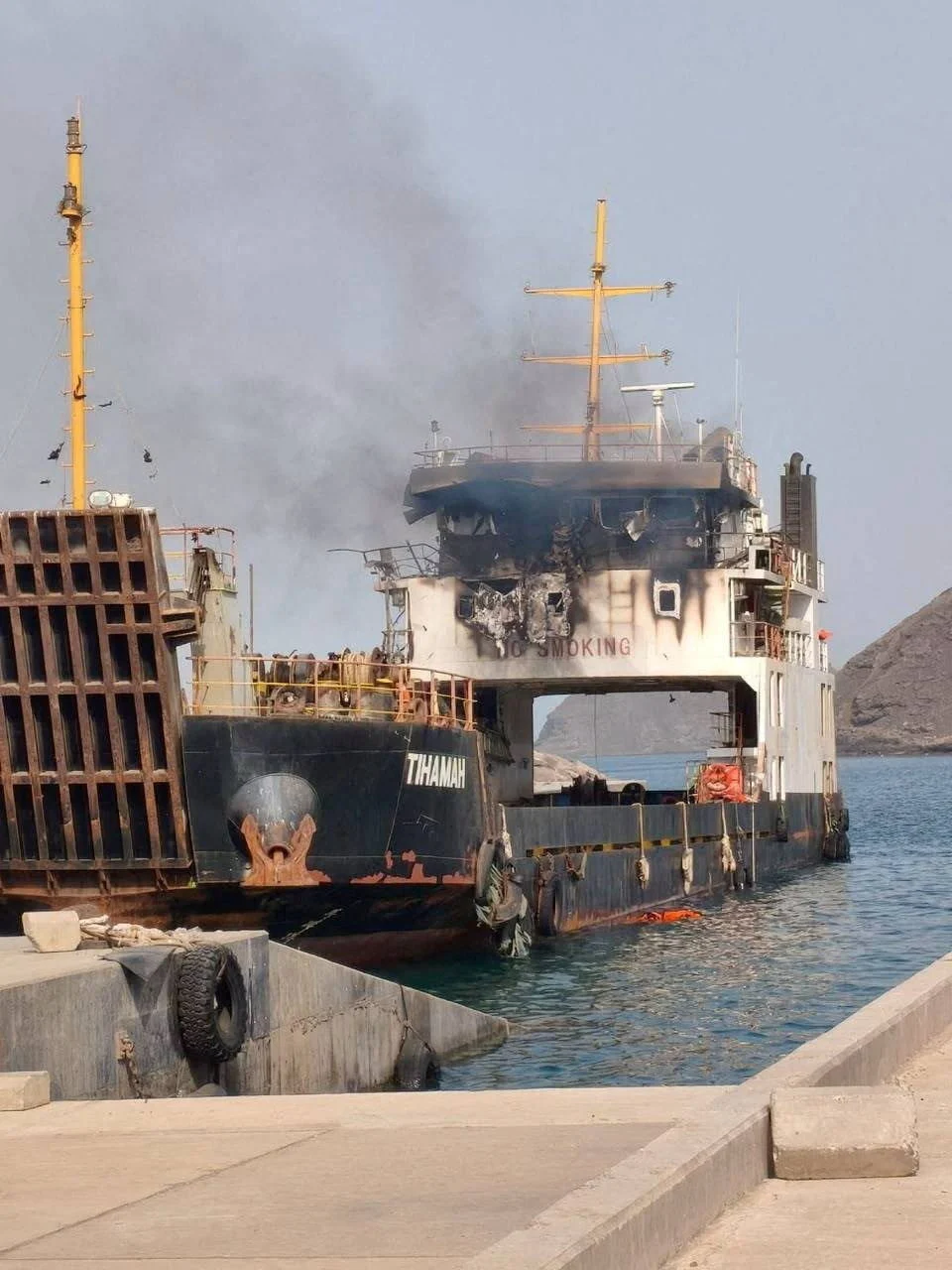
Adding to the maritime insecurity, a separate but related incident unfolded on August 11, 2026, in the highly strategic Bab el-Mandeb Strait. The cargo vessel Tihamah, a small commercial freighter, sustained significant damage following an attack attributed to Yemen’s Iran-aligned Houthi rebels. The Yemeni Transport Ministry confirmed the tragic loss of four crew members in the assault. The attack occurred near Murad, Yemen, a region frequently affected by the ongoing conflict in Yemen and Houthi military operations.
According to verified reports from the UK Maritime Trade Operations (UKMTO) and the British maritime security firm Ambrey, the Tihamah was targeted while transiting one of the world’s most perilous maritime corridors. The Houthis, who have repeatedly demonstrated their capability to target commercial and military shipping in the Red Sea and Bab el-Mandeb, often justify such actions as retaliation against the Saudi-led coalition or as a means to exert pressure on international actors perceived as hostile. This particular incident highlights the devastating human cost of the conflict and the indiscriminate nature of maritime attacks by non-state actors, further complicating the already precarious navigation through this vital chokepoint. The Tihamah incident serves as a stark reminder that the "Iran war" is not confined to direct confrontations between major powers but extends through a network of proxies and regional conflicts, each capable of triggering broader instability.
Strategic Maritime Chokepoints: Strait of Hormuz and Bab el-Mandeb
The Strait of Hormuz and the Bab el-Mandeb Strait are arguably the two most critical maritime chokepoints in the world, central to global energy security and international trade. The Strait of Hormuz, a narrow waterway between Oman and Iran, connects the Persian Gulf to the open ocean, through which approximately 20% of the world’s petroleum liquids and a significant portion of liquefied natural gas (LNG) pass daily. Its strategic importance makes it a perennial flashpoint in any conflict involving Iran, which has repeatedly threatened to close the strait in response to external pressures or military actions. The prospect of Iran blockading Hormuz or launching attacks on tankers has historically sent shockwaves through global energy markets, leading to spikes in oil prices and increased shipping insurance premiums.
Just to the south, the Bab el-Mandeb Strait, meaning "Gate of Tears" in Arabic, connects the Red Sea to the Gulf of Aden and the Indian Ocean. It is a crucial artery for trade between Europe, Asia, and Africa, with an estimated 12% of global trade and a substantial volume of oil and gas transiting its waters annually. The ongoing conflict in Yemen, with the Houthis controlling significant portions of Yemen’s Red Sea coastline, has transformed Bab el-Mandeb into a high-risk zone for international shipping. Attacks, like the one on the Tihamah, underscore the vulnerability of vessels traversing this passage, forcing shipping companies to consider longer, more expensive alternative routes around Africa, with significant economic implications. The simultaneous threats in both Hormuz and Bab el-Mandeb illustrate a concerted pressure campaign or a spreading conflict that leverages maritime vulnerabilities as a key strategic lever.
Diplomacy Amidst Conflict: Qatar and Oman’s Efforts
Amidst the escalating military actions and maritime attacks, a vital diplomatic track is reportedly making headway. Qatar’s Ministry of Foreign Affairs announced today that negotiations between Oman and Iran, concerning the future of shipping through the Strait of Hormuz, are showing "major progress." Both Qatar and Oman have long positioned themselves as regional mediators, leveraging their relatively neutral stances and established diplomatic channels to de-escalate tensions and foster dialogue. Oman, with its direct proximity to the Strait of Hormuz and historical ties to Iran, is particularly well-suited to facilitate such discussions.
These negotiations are crucial for several reasons. Firstly, they aim to establish protocols or agreements that could safeguard commercial shipping, irrespective of the broader geopolitical climate, thereby reducing the risk of disruption to global trade and energy supplies. Secondly, they represent a potential pathway to de-escalation, offering Iran a diplomatic avenue to address its security concerns and economic grievances without resorting to military threats or actions that could trigger a wider conflict. The involvement of Qatar, a nation with significant diplomatic clout and strong ties to both Western powers and Iran, adds weight to these efforts. Past attempts at de-escalation have often faltered due to a lack of trust and fundamental disagreements, but the current reported progress suggests a renewed urgency and perhaps a greater willingness from both Tehran and regional actors to find common ground on maritime security. Success in these talks could offer a much-needed glimmer of hope in an otherwise bleak regional outlook, potentially paving the way for broader dialogue on regional security architecture.
The Broader "Iran War" Context and Timeline
The term "Iran war live" reflects a grim reality that has been simmering and occasionally boiling over for years, reaching a critical juncture in 2026. This "war" is not a conventional, declared conflict but rather a multi-front struggle involving proxy conflicts, cyber warfare, economic sanctions, and occasional direct military confrontations.
- Early 2020s: Tensions steadily mounted following the collapse of the Joint Comprehensive Plan of Action (JCPOA) nuclear deal. Iran accelerated its nuclear program, while the US reimposed and expanded sanctions, leading to frequent confrontations in the Persian Gulf.
- 2023-2024: Escalation of Houthi attacks on Saudi and Emirati targets, often attributed to Iranian support. Concurrently, incidents of sabotage on oil tankers and drone attacks on critical infrastructure in the Gulf become more frequent, often linked to Iran or its allies.
- Late 2024: Significant naval buildups by both the US and Iran in the Gulf. Several close encounters between US and Iranian naval forces raise fears of miscalculation. The US implements stricter maritime interdiction policies.
- 2025: Increased cyberattacks targeting critical infrastructure in both Iran and its adversaries. Iran begins more overt support for its proxies in Iraq, Syria, and Lebanon, leading to renewed regional instability. US and Israeli operations against Iranian targets in Syria and Iraq intensify.
- Early 2026: A major incident, possibly involving a large-scale missile or drone attack on a civilian target or critical infrastructure, pushes the region closer to open conflict. This leads to the formalization of the "Iran blockade" by a coalition of international naval forces, justifying more aggressive interdiction tactics like the recent US missile strike.
- August 2026 (Current): The US missile strike on the cargo ship violating the blockade, the Houthi attack on the Tihamah, and the ongoing Qatar-Oman-Iran negotiations represent the current, highly volatile phase of this extended "Iran war." The situation is characterized by simultaneous military pressure and diplomatic maneuvering, reflecting a complex and dangerous equilibrium.
Regional and International Reactions
The US missile strike is expected to elicit strong and divergent reactions. The United States will likely justify its actions as necessary to enforce international law, counter illicit trade, and protect regional stability, reiterating its commitment to freedom of navigation. Iran is anticipated to condemn the strike as an act of aggression, a violation of international law, and an infringement on its sovereign rights, potentially vowing retaliation or threatening further disruptions in the Gulf. Iran may also leverage its proxies to increase pressure on US interests or allies in the region.
Houthi rebels will likely claim responsibility for the Tihamah attack, framing it as legitimate resistance against perceived enemies or as a response to ongoing aggression in Yemen. Yemen’s internationally recognized government and the Saudi-led coalition will condemn the Houthi attack, highlighting the group’s disregard for civilian lives and international shipping.
From a diplomatic standpoint, Qatar and Oman will likely reiterate their call for restraint and emphasize the importance of their ongoing negotiations, positioning diplomacy as the only viable path to long-term stability. The United Nations and other international bodies, such as the International Maritime Organization (IMO), will express grave concern over the escalation of maritime incidents, urging all parties to respect international maritime law and ensure the safety of global shipping. Shipping associations and maritime insurers are expected to issue renewed warnings, potentially raising insurance premiums and advising extreme caution or rerouting for vessels operating in the region.
Implications for Global Trade and Energy Security
The ongoing "Iran war" and the recent maritime incidents carry profound implications for global trade and energy security. The dual threats in the Strait of Hormuz and Bab el-Mandeb effectively put a squeeze on two of the world’s most vital maritime arteries. Any sustained disruption could lead to significant spikes in crude oil and natural gas prices, impacting economies worldwide. Energy-importing nations, particularly in Asia and Europe, are especially vulnerable to such volatility.
Beyond energy, the increased risk profile translates directly into higher shipping costs. Insurance premiums for vessels transiting these areas have already soared, and further escalation will make these routes economically unviable for many, forcing them to opt for longer, more expensive voyages. This could include rerouting around the Cape of Good Hope, adding weeks to transit times and significantly increasing fuel consumption and operational costs. Such disruptions would inevitably ripple through global supply chains, affecting the cost of everything from consumer goods to industrial raw materials. The cumulative effect of these incidents is a heightened sense of uncertainty in global markets, making long-term planning difficult for businesses and governments alike. The international community faces the daunting task of balancing the imperative of regional security with the necessity of maintaining open and safe maritime trade routes.
The current situation is a stark illustration of the dangers inherent in protracted regional conflicts. The US missile strike, the Houthi attack, and the parallel diplomatic efforts paint a picture of a region teetering on the edge, where every action carries the potential for widespread consequences far beyond its immediate theater. The world watches closely as the delicate balance between conflict and diplomacy unfolds in the critical waterways of the Middle East.
