

The Middle East finds itself at an escalating crossroads of conflict and geopolitical tension, with recent events underscoring the volatile nature of regional power struggles. In a significant development, Iraqi Prime Minister Ali al-Zaidi confirmed that a drone attack on Saudi Arabia’s critical East-West pipeline originated from Iraqi territory, prompting an immediate investigation and the dismissal of a regional army commander. This incident, which led to the pipeline’s shutdown, compounds a rapidly shifting security landscape where Houthi forces have reportedly cemented control over vital sections of the Red Sea coast, intensifying concerns over global energy security and maritime navigation.
The Pipeline Under Attack: A Direct Threat to Saudi Energy Exports
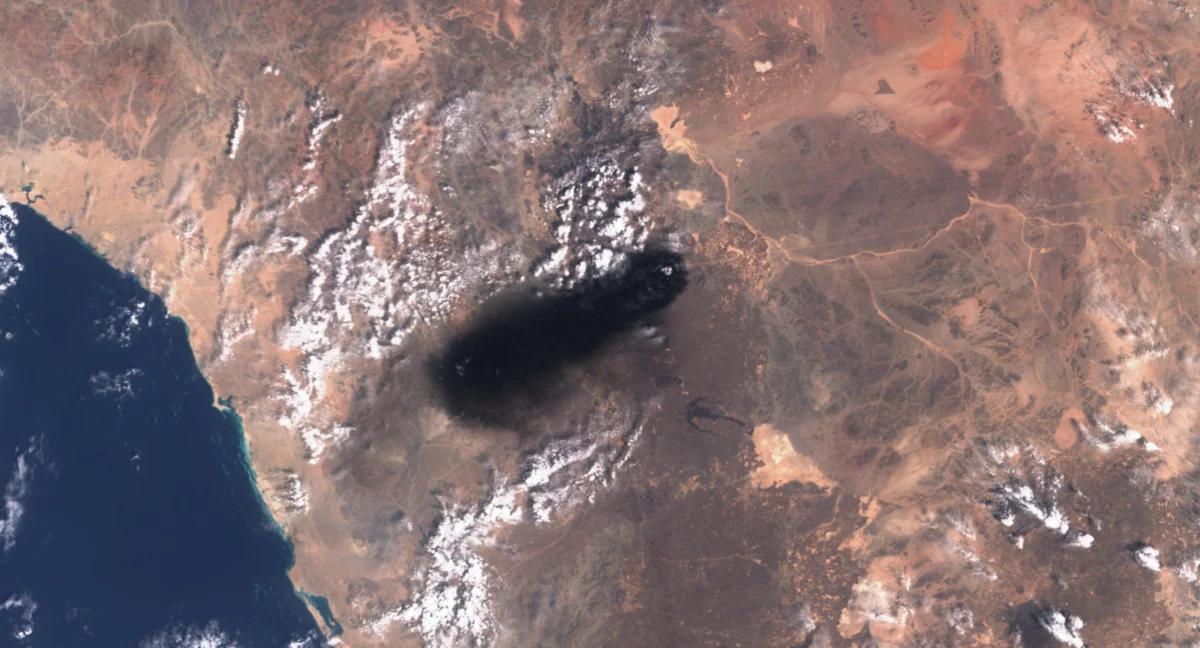
On September 10, 2026, a drone strike targeted Saudi Arabia’s East-West pipeline, a crucial artery for the Kingdom’s oil exports. Satellite imagery, subsequently released, depicted plumes of black smoke rising from an area south of Medina, corroborating reports of an incident. This pipeline, officially known as the Petroline, is a twin crude oil pipeline system with a design capacity of approximately 5 million barrels per day (bpd), transporting crude from the eastern oil fields to Yanbu on the Red Sea coast. Its primary strategic importance lies in offering an alternative export route, bypassing the Strait of Hormuz, a narrow chokepoint often threatened by regional instability and Iranian naval maneuvers. The attack’s immediate consequence was the precautionary shutdown of the pipeline, a move designed to assess damage and prevent further environmental or economic catastrophe. While Saudi officials have yet to provide detailed public statements on the extent of the damage or the timeline for restoration, the disruption to such a vital piece of infrastructure sends ripples through global energy markets.
The decision by Prime Minister Ali al-Zaidi to launch a full investigation and relieve a regional army commander of his duties highlights the severity with which Baghdad views the incident and the potential implications for Iraq’s sovereignty and international relations. Zaidi’s swift action suggests an urgent need to assert state control over various armed factions operating within Iraq’s borders, some of which are known to be aligned with external powers. The implication that a drone capable of striking Saudi Arabian infrastructure could be launched from Iraqi soil without central government approval underscores the persistent challenges Iraq faces in consolidating its authority and preventing its territory from being used as a staging ground for regional conflicts. This move by Zaidi is likely an attempt to reassure Saudi Arabia and the international community of Iraq’s commitment to regional stability and its condemnation of attacks originating from its sovereign territory.
Houthi Ascendancy: A New Reality on the Red Sea
Simultaneously, the strategic balance in the Red Sea has undergone a profound shift with reports confirming Houthi forces have gained substantial control over significant portions of the Red Sea coastline in Yemen. This development is a culmination of years of conflict in Yemen, where the Iran-aligned Houthi movement has steadily expanded its territorial control against the internationally recognized government and the Saudi-led coalition. The Red Sea is one of the world’s most vital maritime arteries, linking the Suez Canal to the Bab el-Mandeb Strait, a narrow passage through which approximately 12% of global trade and a substantial portion of the world’s oil supply passes daily.
Houthi control over this coastline introduces a new layer of risk for international shipping and directly threatens the security of maritime commerce. Concerns are mounting that this territorial gain could enable the Houthis to exert influence, or even directly interfere, with commercial and military vessels navigating the strait. The potential for missile attacks, drone strikes, or naval harassment from Houthi-controlled shores against passing ships could severely impact global supply chains, drive up insurance costs for vessels, and potentially lead to re-routing of shipping traffic, with significant economic consequences. This strategic foothold also poses a direct security challenge to regional powers like Saudi Arabia, Egypt, and Israel, all of whom rely heavily on the unhindered flow of goods through the Red Sea. For Saudi Arabia, the Houthi presence along the Red Sea coast creates a dual threat: an eastern front with the pipeline attack and a western maritime threat, further complicating its security calculus.
A Chronology of Escalation and Responses
The current crisis is not an isolated event but rather the latest manifestation of a prolonged period of regional instability, primarily fueled by the deep-seated rivalry between Iran and Saudi Arabia.
- September 10, 2026: A drone attack targets Saudi Arabia’s East-West pipeline, forcing its shutdown. Satellite imagery confirms smoke plumes.
- September 11, 2026 (approx.): Iraqi Prime Minister Ali al-Zaidi publicly acknowledges the drone’s origin from Iraqi territory, orders an investigation, and dismisses a regional army commander, signaling Baghdad’s seriousness in addressing the issue.
- Ongoing (leading up to these events): Houthi forces consolidate control over key Red Sea coastal areas in Yemen, a slow but steady territorial expansion over the past several months/years, culminating in the current reported "control." This suggests a tactical victory in the prolonged Yemen conflict.
- Broader Context: These events occur against a backdrop of continued proxy conflicts across the region, including in Syria, Lebanon, and Iraq, where various non-state actors are supported by regional powers, creating a complex web of alliances and antagonisms. The Strait of Hormuz has seen numerous incidents involving oil tankers and naval vessels over recent years, underscoring the fragility of maritime security in the region.
Statements, Reactions, and Inferred Positions
While official statements are often carefully worded, the implications of these incidents prompt various responses from involved and interested parties:
- Iraqi Government: Prime Minister Ali al-Zaidi’s public announcement and decisive action signify a strong commitment to Iraqi sovereignty and a desire to avoid being drawn further into regional conflicts. His statements would likely emphasize Iraq’s determination to prevent its territory from being used to attack neighbors and its efforts to rein in all armed groups. This also serves as a critical message to the international community, particularly the United States, which has consistently pressed Iraq to control Iran-aligned militias.
- Saudi Arabia: The Kingdom would likely issue condemnations of the "terrorist attack" on its vital infrastructure, reiterating its right to self-defense and demanding accountability for those responsible. While the focus would be on damage assessment and restoration, behind-the-scenes diplomatic pressure on Iraq would be immense. On the Red Sea issue, Saudi Arabia would likely express grave concerns about freedom of navigation and the security of maritime trade, potentially calling for international intervention or increased naval presence to deter Houthi aggression.
- Houthi Movement: The Houthis would likely claim their expanded control over the Red Sea coast as a strategic victory in their war against the Saudi-led coalition. While they might not directly claim responsibility for the pipeline attack originating from Iraq, they often celebrate any actions that undermine Saudi security or economic interests as part of their broader "resistance" narrative. Their statements would likely emphasize their right to defend Yemen and challenge the Saudi blockade.
- Iran: Tehran would likely deny any direct involvement in the pipeline attack, while subtly expressing support for "resistance movements" in the region. Regarding the Houthis, Iran would continue to champion their cause as a legitimate movement against foreign aggression, without necessarily acknowledging direct command and control over their actions. Iran’s official rhetoric often frames regional tensions as a result of "foreign interference" and "US-Zionist plots."
- United States and Western Allies: The US would likely condemn the pipeline attack and the threats to Red Sea shipping, calling for de-escalation and protection of international waters. Statements would emphasize the importance of energy security and freedom of navigation. There would be renewed calls for a diplomatic solution to the Yemen conflict and for Iraq to assert full control over its territory. The US might also reiterate its commitment to its regional allies’ security.
- United Nations: The UN Secretary-General and various humanitarian agencies would likely issue appeals for calm, de-escalation, and protection of civilian lives, particularly in Yemen. There would be concerns over the humanitarian impact of any further escalation, especially regarding the delivery of aid.
Broader Impact and Implications
The combined impact of these events creates a highly volatile situation with far-reaching consequences across multiple domains:
- Economic Implications:
- Oil Prices: The shutdown of a major Saudi pipeline, even temporarily, introduces supply uncertainty into global oil markets, potentially leading to price spikes. Traders will factor in increased geopolitical risk premium.
- Shipping Costs: Houthi control over the Red Sea coast and the potential for maritime interference will inevitably lead to increased insurance premiums for vessels transiting the Bab el-Mandeb Strait. Some shipping companies may opt for longer, more expensive routes around the Cape of Good Hope, impacting global supply chains and consumer prices.
- Investment: Increased regional instability deters foreign direct investment, not just in the directly affected countries but across the broader Middle East, impacting long-term economic development.
- Geopolitical Implications:
- Escalation of Regional Conflict: These incidents risk pushing the Iran-Saudi proxy war closer to a direct confrontation. The pipeline attack from Iraq could be seen as an act of aggression by Saudi Arabia, potentially prompting retaliation.
- Iraqi Sovereignty: The incident poses a severe challenge to Iraqi Prime Minister Zaidi’s government, testing its ability to control non-state actors and maintain stable relations with its neighbors. Failure to do so could further destabilize Iraq and undermine its nascent recovery.
- Maritime Security: The Red Sea, already a flashpoint, becomes even more perilous. International naval forces may increase their presence, but direct confrontation with Houthi forces could lead to broader regional engagements. The security of critical chokepoints like the Bab el-Mandeb and the Strait of Hormuz remains paramount for global trade.
- Diplomatic Efforts: Efforts to de-escalate tensions and find political solutions to conflicts, particularly in Yemen, will face significant setbacks. Trust between regional adversaries will be eroded further.
- Security Implications:
- Saudi Arabia’s Vulnerability: The attack highlights Saudi Arabia’s extensive and challenging-to-defend infrastructure. Despite massive investments in air defense, drone and missile attacks from various directions remain a persistent threat.
- Weapon Proliferation: The increasing sophistication and reach of non-state actors’ weaponry, particularly drones and missiles, pose a grave threat to regional security and stability.
- Humanitarian Crisis in Yemen: Any escalation of the conflict, particularly in the Red Sea, will worsen the already catastrophic humanitarian situation in Yemen, further hindering aid delivery and exacerbating food insecurity.
The Path Forward: A Precarious Balance
The confluence of these events paints a stark picture of a region teetering on the brink. The "Iran war" referenced in the headline is not a formal declaration of hostilities but rather a recognition of the pervasive and escalating proxy conflicts that define the contemporary Middle East. The pipeline attack from Iraq, originating from a group potentially aligned with Iran, coupled with the Houthi’s strategic gains on the Red Sea coast, both represent significant escalations that directly challenge Saudi interests and global stability.
For Saudi Arabia, the immediate priorities will be to secure its energy infrastructure, ensure the free flow of maritime trade, and pressure Iraq to prevent future attacks. For Iraq, Prime Minister Zaidi faces the monumental task of consolidating state control over powerful militias without triggering further internal instability. For the international community, the challenge lies in de-escalating tensions, protecting critical maritime routes, and renewing diplomatic efforts to resolve underlying conflicts, especially the devastating war in Yemen. The future of the Middle East, and indeed global energy security, hinges on how these complex and interconnected challenges are addressed in the coming months. Without concerted efforts towards de-escalation and genuine political solutions, the risk of a wider, more direct conflict remains alarmingly high.
