

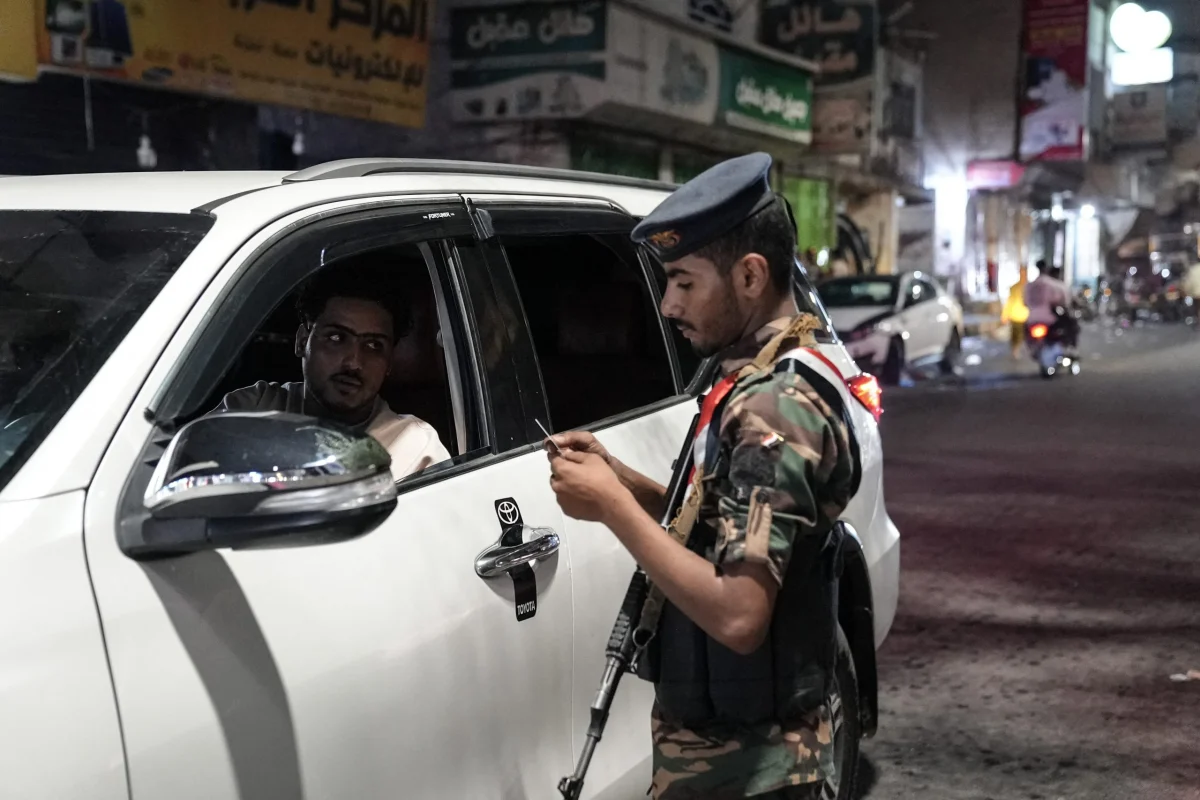
The ongoing conflict in Yemen has seen a dramatic escalation, with reports indicating intensified fighting across various fronts, leading to hundreds of casualties. The latest incident involved Saudi Arabia intercepting a ballistic missile over its southern region of Asir, with debris causing injuries to a resident in the Ahad Rafidah governorate. This development underscores the volatile nature of the renewed hostilities, which have been reignited since July 2026, against the backdrop of a wider regional conflagration often termed the "Middle East war."
Escalation and Cross-Border Attack
Saudi defense forces confirmed the successful interception of a ballistic missile launched from Yemeni territory. While the missile itself was neutralized, falling debris resulted in a civilian injury in Ahad Rafidah, a populated area within the Asir region, underscoring the persistent threat of cross-border attacks. This incident is the latest in a series of such aggressions that have frequently targeted Saudi civilian infrastructure and population centers since the Yemeni conflict first erupted in 2014. The Saudi Ministry of Defense released a statement condemning the attack as a deliberate act of aggression targeting civilians and reiterated its commitment to defending its borders and citizens.
The renewed intensity of the conflict in Yemen marks a significant departure from a period of relative calm that had characterized much of 2023 and early 2024. The Houthi movement, officially known as Ansar Allah, launched a sweeping offensive in September 2026, which saw them seize control of critical strategic locations along Yemen’s Red Sea coast. This rapid territorial gain included the vital Bab al-Mandab Strait, a narrow waterway crucial for global maritime trade, connecting the Red Sea to the Gulf of Aden and the Indian Ocean. The capture of this choke point has immediately raised international alarms regarding the security of shipping lanes and global energy supplies.
Background and Genesis of the Conflict
The roots of the current Yemeni conflict trace back to 2014, when the Houthi movement, capitalizing on a weak transitional government and widespread grievances, launched an offensive that culminated in the capture of the capital, Sana’a, in September 2014. This move effectively ousted the internationally recognized government of President Abdrabbuh Mansur Hadi. In response, a Saudi-led coalition, comprising several Arab states and backed by the United States, intervened in March 2015 with the stated aim of restoring the Hadi government and countering what it perceived as growing Iranian influence in Yemen.
The conflict quickly devolved into a brutal proxy war, exacerbating Yemen’s already dire humanitarian situation. For years, the fighting saw intermittent but intense ground clashes, widespread aerial bombardment by the Saudi-led coalition, and repeated Houthi missile and drone attacks targeting Saudi Arabia and, less frequently, the United Arab Emirates. Despite numerous attempts at UN-brokered peace talks and a fragile truce in 2022, a lasting political resolution remained elusive. The period of relative calm that followed this truce offered a glimmer of hope, with diplomatic efforts attempting to bridge the deep divisions between the warring factions and regional powers. However, these efforts ultimately failed to prevent the recent resurgence of large-scale hostilities.
Timeline of Recent Escalation (2026)
- July 2026: Reports begin to surface of increased skirmishes and localized clashes in various Yemeni governorates, signaling the breakdown of the tacit ceasefire. Both Houthi forces and elements of the internationally recognized government, along with allied militias, accuse the other side of initiating provocations.
- August 2026: The intensity of fighting grows, particularly in Marib, Taiz, and Hodeidah provinces. Aerial operations by the Saudi-led coalition reportedly resume with greater frequency in response to Houthi advances. Casualty figures begin to climb steadily.
- Early September 2026: The Houthi movement launches a significant, multi-pronged "lightning offensive" targeting Yemen’s western coastline. This offensive appears well-coordinated and executed, catching some observers off guard after a prolonged period of relative stalemate.
- Mid-September 2026: Houthi forces consolidate control over key coastal areas, culminating in the seizure of the entire Red Sea coast, including the strategic port city of Hodeidah (which had been under Houthi control but was a flashpoint) and crucially, the Bab al-Mandab Strait. This marks a significant strategic victory for the Houthis, granting them unprecedented leverage over a vital global shipping lane.
- Late September 2026: Fighting intensifies further as government forces and coalition allies attempt to push back Houthi gains. Reports indicate hundreds of casualties among combatants and a growing number of civilian displacements. Concurrently, Houthi cross-border missile and drone attacks on Saudi Arabia resume with renewed vigor, leading to incidents like the missile interception over Asir.
Strategic Importance of Bab al-Mandab
The Houthi control over the Bab al-Mandab Strait represents a critical shift in the conflict’s dynamics. This narrow passage, only about 18 miles (29 kilometers) wide at its narrowest point, is one of the world’s busiest maritime choke points. Approximately 12% of global trade and a significant portion of the world’s oil supply pass through it daily, en route to or from the Suez Canal. Any disruption to shipping through Bab al-Mandab can have immediate and far-reaching consequences for global energy markets, supply chains, and insurance rates.
Analysts suggest that Houthi control over the strait provides them with significant bargaining power and the potential to disrupt international shipping, a capability they have demonstrated in previous phases of the conflict through attacks on commercial vessels. The implications extend beyond regional security, touching upon global economic stability.
Humanitarian Crisis Deepens
The resurgence of large-scale fighting inevitably exacerbates what the United Nations has repeatedly termed the world’s worst humanitarian crisis. Even before the latest escalation, millions of Yemenis were teetering on the brink of famine, dependent on humanitarian aid for survival. The renewed conflict is expected to:
- Increase Displacement: Thousands, if not hundreds of thousands, of civilians are likely to be displaced from their homes, fleeing the violence, adding to the estimated 4.5 million already internally displaced.
- Worsen Food Insecurity: Disruptions to supply lines, damage to infrastructure, and limited access for humanitarian organizations will likely push more people into acute food insecurity. An estimated 17 million Yemenis already face high levels of acute food insecurity, with millions in emergency or catastrophic conditions.
- Healthcare Collapse: Yemen’s healthcare system is already in tatters. Renewed fighting will further strain medical facilities, limit access to essential medicines, and increase the risk of disease outbreaks.
- Economic Devastation: The Yemeni economy has been decimated by years of conflict. The recent escalation will further depress economic activity, destroy livelihoods, and devalue the local currency, making basic necessities even more unaffordable.
International humanitarian organizations have issued urgent appeals for de-escalation and unimpeded access to deliver aid, warning that the humanitarian situation could quickly spiral out of control.
Regional and International Reactions
The intensification of the conflict has drawn renewed condemnation and calls for restraint from the international community.
- Saudi Arabia: Riyadh has consistently framed its involvement as a defensive measure against Houthi aggression and Iranian expansionism. Following the missile attack, Saudi authorities reiterated their right to self-defense and vowed to take all necessary measures to protect its sovereignty. They also called on the international community to pressure the Houthis and their alleged backers to cease hostilities.
- Houthi Movement: Houthi spokesmen have historically justified their attacks on Saudi Arabia as retaliatory measures against the Saudi-led blockade and aerial campaign. They portray their recent offensive as a legitimate effort to liberate Yemeni territory and assert national sovereignty, often accusing the Saudi-led coalition of prolonging the war. They deny direct military command from Iran but acknowledge ideological and political alignment.
- Internationally Recognized Yemeni Government: The government, currently based in Aden, condemned the Houthi offensive as a betrayal of peace efforts and a deliberate attempt to undermine regional stability. It appealed for increased international support to reclaim territory and restore legitimate authority across the country.
- United Nations: UN Secretary-General António Guterres expressed deep alarm over the escalation, reiterating the UN’s call for an immediate cessation of hostilities and a return to the negotiating table. Special Envoy for Yemen, Hans Grundberg, emphasized the urgent need for a political solution and warned against the catastrophic consequences of a full-scale return to war.
- United States: The U.S. State Department issued a statement expressing concern over the escalating violence, particularly the Houthi seizure of the Bab al-Mandab Strait, which it deemed a threat to international shipping and stability. The U.S. reiterated its support for Saudi Arabia’s defense and called for all parties to engage constructively in peace talks, while also urging adherence to international humanitarian law.
- Iran: Tehran has consistently denied providing direct military support to the Houthis, despite accusations from Saudi Arabia and the U.S. Iranian officials have instead called for an end to the "aggression" against Yemen and emphasized the need for a political solution driven by Yemenis themselves.
Broader Implications for Regional Stability
The renewed fighting in Yemen is not an isolated event but rather a significant component of a wider regional power struggle, often characterized by proxy conflicts involving Iran and Saudi Arabia. The "widening Middle East war" referenced in the initial report suggests a broader context of heightened tensions across the region, potentially encompassing conflicts or standoffs in other areas.
The Houthi gains, particularly control of Bab al-Mandab, could empower Iran’s regional influence, a development that would be viewed with significant apprehension by Saudi Arabia, the UAE, and their Western allies. This could lead to a more aggressive posture from the Saudi-led coalition, potentially drawing more regional actors into the conflict or escalating existing tensions elsewhere. The risk of miscalculation and direct confrontation between regional powers increases substantially with such a critical strategic asset now under the control of a non-state actor with alleged ties to one side of the regional divide.
Furthermore, the threat to global shipping in the Red Sea could prompt a more robust international naval presence or even interventions, potentially transforming the conflict into an even more complex internationalized crisis. The current trajectory suggests a perilous path away from peace, with profound implications for the Yemeni people and the stability of one of the world’s most geopolitically sensitive regions. The international community faces a renewed challenge in preventing a further descent into chaos and in reigniting efforts towards a comprehensive and sustainable political settlement.
