

Iran is set to formally join the BRICS New Development Bank (NDB), a strategic move confirmed by the country’s central bank chief on Thursday. This development comes as Tehran intensifies its efforts to fortify economic alliances, particularly crucial nearly six months into what it characterizes as a state of war with the United States and Israel. The announcement signals a significant pivot in Iran’s long-term strategy to circumvent the crippling effects of Western sanctions and integrate into an emerging alternative global financial architecture.
The BRICS Alliance: An Expanding Geopolitical and Economic Bloc
The BRICS alliance, originally conceived in 2006 by Brazil, Russia, India, and China, with South Africa joining in 2010, was established as a counterweight to Western-dominated global institutions. Its primary aim has been to foster greater economic cooperation, trade, and development among major emerging economies. In its most recent expansion phase, the bloc has extended full membership to several nations, including Iran, Egypt, Ethiopia, Saudi Arabia, the United Arab Emirates, and Indonesia. This expansion, which took effect earlier in the current year, reflects a broader trend of developing nations seeking to reshape the global economic order and reduce reliance on traditional Western financial systems and the U.S. dollar. Beyond full members, other countries such as Belarus, Cuba, and Nigeria have also joined as "partner countries," indicating a growing network of nations interested in aligning with the bloc’s vision.
The decision to expand BRICS membership was driven by a collective desire to enhance the group’s geopolitical influence and economic heft, bringing together diverse economies that collectively represent over 40% of the world’s population and a significant portion of global GDP. For Iran, joining this expanded alliance represents a critical step in its "Look East" policy, a diplomatic and economic strategy aimed at strengthening ties with non-Western powers, particularly those in Asia, to mitigate the impact of international isolation.
The New Development Bank: A Counterweight to Bretton Woods Institutions
At the heart of BRICS’s financial infrastructure is the New Development Bank (NDB), established in 2014 and officially launched in 2015. Headquartered in Shanghai, the NDB was conceived by the founding BRICS members – Brazil, Russia, India, China, and South Africa – to mobilize resources for infrastructure and sustainable development projects in emerging markets and developing countries. Its creation was explicitly a response to the perceived shortcomings and conditionalities often associated with traditional multilateral lending institutions like the World Bank and the International Monetary Fund (IMF), which are largely dominated by Western powers.
The NDB aims to offer a more equitable and responsive financing mechanism, focusing on areas such as clean energy, transport, water and sanitation, digital infrastructure, and urban development. Since its inception, the bank has approved numerous projects across its member states, demonstrating its commitment to fostering economic growth and social progress. For instance, in India, it has funded projects like the Mumbai Metro Rail and renewable energy initiatives. In Brazil, it has supported water infrastructure and sustainable development projects. The NDB’s operational principles emphasize speed, flexibility, and a deep understanding of the unique development challenges faced by its member countries, distinguishing it from older institutions.
Iran’s Path to Membership: Official Statements and the Accession Process
The announcement of Iran’s impending NDB membership came from Abdolnasser Hemmati, the Governor of the Central Bank of Iran. Speaking on Thursday while in India ahead of next month’s BRICS summit, Hemmati was quoted by Iran’s Tasnim News Agency stating, "We are seeking to establish bilateral and trilateral monetary cooperation with member states." This statement underscores Iran’s intent not only to access development financing but also to deepen financial integration with key economies outside the traditional Western sphere, potentially exploring mechanisms for trade and finance that bypass the U.S. dollar.
Despite Hemmati’s assertion, the New Development Bank itself has maintained a cautious stance. A spokesperson for the NDB, when contacted by CNBC, stated that the bank could not confirm information regarding Iran’s membership. They reiterated that NDB membership is open to members of the United Nations and is available to both borrowing and non-borrowing countries. The spokesperson highlighted that the NDB recently welcomed Uzbekistan as its tenth member country, which officially joined the bank on June 5, 2026, serving as a recent example of the accession process.
For Iran to become an official member country, it must navigate the NDB’s formal accession process. This typically involves a series of negotiations, financial commitments, and parliamentary approvals within the prospective member state. The process ensures that new members adhere to the bank’s operational guidelines and contribute to its capital base. Current prospective members undergoing this process include Uruguay, Colombia, Ethiopia, Angola, and Zimbabwe, indicating the rigorous nature of joining the institution. Once officially a member, Iran would become eligible to seek financing for a wide array of critical projects in sectors such as transport networks, sanitation systems, digital infrastructure expansion, and urban development initiatives, which are vital for its economic rejuvenation.
A Nation Under Duress: Iran’s Economic Challenges and Strategic Shift
Iran’s drive to join the NDB is intrinsically linked to its dire economic situation, exacerbated by decades of international sanctions and, more recently, a heightened state of conflict. The country has been under severe economic pressure since the 1979 Islamic Revolution, with sanctions imposed by the United States, the United Nations, and the European Union targeting its nuclear program, human rights record, and alleged support for terrorism. These measures have severely constrained Iran’s access to international capital markets, particularly from Western financial institutions, effectively isolating it from the global banking system.
The re-imposition of U.S. sanctions following the Trump administration’s withdrawal from the Joint Comprehensive Plan of Action (JCPOA) in 2018 plunged the Iranian economy into a deep recession. The sanctions targeted Iran’s crucial oil exports, banking sector, and shipping industry, drastically cutting its revenue streams. According to World Bank data, Iran’s GDP contracted significantly in subsequent years, while inflation soared, and its national currency, the Rial, depreciated sharply. For example, by 2025, the Rial had lost a substantial portion of its value against major currencies compared to pre-sanctions levels, fueling widespread economic hardship.
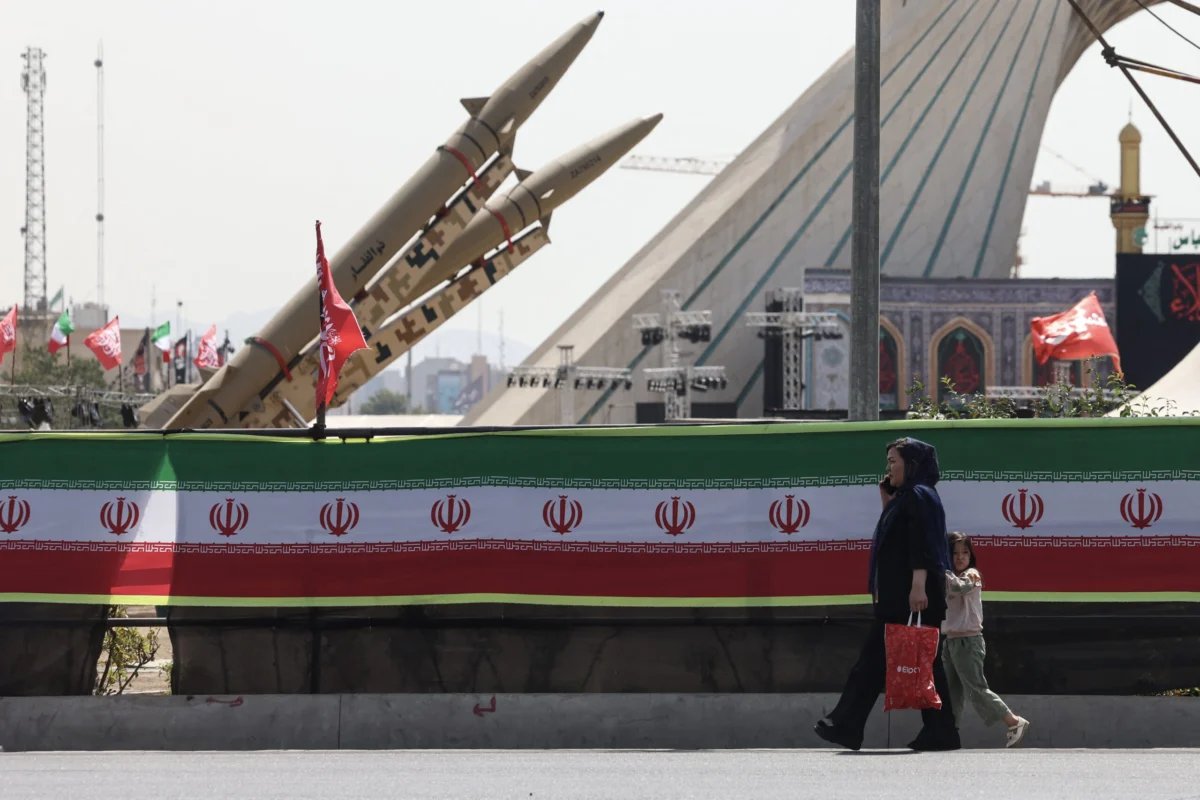
The current "war" with the U.S. and Israel, now nearly six months old, has further intensified pressure on the Iranian economy. While the nature of this "war" is multifaceted – involving proxy conflicts in the Middle East, cyber warfare, targeted strikes, naval incidents in vital waterways like the Strait of Hormuz, and an aggressive economic blockade – its impact has been devastating. CNBC reported in April 2026 that the conflict had ramped up economic pressure, leading to surging inflation, plummeting growth rates, and the Rial in free fall. The display of Iranian-made Zolfaghar missiles in Azadi Square in Tehran on July 24, 2026, as captured by AFP and Getty Images, serves as a stark visual reminder of the country’s military posture amidst these geopolitical tensions, even as its economy struggles.
In response to this sustained pressure, Iran has aggressively pursued a "Look East" policy, seeking to pivot away from Western economic dominance and forge stronger ties with non-Western powers. This strategy involves increasing trade with Asian nations, developing alternative payment mechanisms to bypass the dollar, and joining multilateral organizations like BRICS and the Shanghai Cooperation Organization (SCO). Membership in the NDB aligns perfectly with this strategy, offering a potential lifeline for development financing that is less susceptible to Western political influence.
Geopolitical Ramifications: U.S. Reactions and Global Economic Fragmentation
The potential accession of Iran to the NDB carries significant geopolitical ramifications, particularly for its relationship with the United States. U.S. President Donald Trump, whose administration has consistently adopted a hawkish stance towards Iran, has previously labeled BRICS policies "anti-American." In July 2025, Trump threatened to impose a punitive 25% tariff on goods imported to the U.S. from any country that directly or indirectly purchases goods or services from Iran. This threat underscores the U.S.’s determination to maintain its sanctions regime and deter any nation from economically engaging with Tehran.
While CNBC reached out to the White House for comment on Iran joining the BRICS bank, the U.S. response is expected to be one of strong disapproval, potentially leading to further punitive measures against entities or countries facilitating Iran’s economic integration into the NDB. Analysts suggest that Iran’s move represents a direct challenge to U.S. financial hegemony and its ability to weaponize the dollar for foreign policy objectives. This development could further accelerate the fragmentation of the global financial system, with different blocs developing their own payment systems and lending institutions, reducing reliance on the U.S. dollar and SWIFT.
For the BRICS bloc, incorporating Iran, a heavily sanctioned nation embroiled in regional conflicts, adds to its geopolitical weight but also introduces potential complexities. It signals the bloc’s willingness to challenge the existing global order and offer alternatives to countries facing Western isolation. However, it also exposes member states to potential secondary sanctions from the U.S., which could complicate their own trade and financial relationships with Washington.
The China-Iran Nexus: A Pillar of Tehran’s Economic Resilience
A crucial element in Iran’s strategy to counter Western pressure is its robust economic partnership with China. According to the World Bank’s most recent available data, China stands as Iran’s biggest trading partner. This relationship is particularly vital for Iran’s energy sector. In 2025, Kpler data revealed that China purchased more than 80% of Iran’s shipped oil, providing a critical source of revenue despite international sanctions. This trade largely occurs through informal channels, often involving obscure shipping practices and payment methods to evade detection and sanctions enforcement.
The enduring nature of this trade relationship underscores China’s strategic importance to Iran. China’s insatiable demand for energy and its "Belt and Road Initiative" (BRI) offer avenues for Iranian integration into a vast economic network that bypasses Western influence. However, it remains unclear whether this critical trading relationship has shifted since the U.S.-Iran "war" began approximately six months ago. The heightened conflict and increased U.S. scrutiny could potentially impact the volume and methods of this trade, even if China remains a steadfast partner. The ongoing cooperation also extends beyond oil, encompassing infrastructure development, technology transfer, and even military collaboration, solidifying a strategic alliance between the two nations.
Looking Ahead: Opportunities and Obstacles for Tehran
Iran’s potential membership in the NDB presents both significant opportunities and formidable obstacles. On the opportunity front, access to NDB financing could provide a much-needed injection of capital for Iran’s dilapidated infrastructure, helping to modernize its transport networks, improve public services like sanitation, and expand its digital economy. Such projects could stimulate economic growth, create jobs, and alleviate some of the social pressures stemming from the economic crisis. Furthermore, NDB membership offers a symbolic victory against Western isolation, legitimizing Iran’s pursuit of alternative economic pathways and strengthening its ties with a powerful bloc of emerging economies.
However, the path forward is fraught with challenges. The U.S. is unlikely to passively accept Iran’s integration into the NDB and will likely intensify its efforts to enforce sanctions, potentially targeting the NDB or its other member states if they are perceived to be directly facilitating sanctions evasion. The NDB, while an alternative, still operates within a broader international financial system and will need to navigate these complexities carefully to avoid jeopardizing its own standing. Internally, Iran’s economy requires deep structural reforms beyond external financing. Issues such as corruption, inefficient state enterprises, and a challenging business environment must be addressed to maximize the benefits of any new financial partnerships.
Ultimately, Iran’s impending NDB membership is a critical development in its long-term strategy to counter Western pressure and forge new economic alliances. It reflects a rapidly shifting global landscape where emerging powers are increasingly asserting their independence from traditional Western-led institutions. This move is poised to deepen the fragmentation of the international financial architecture, further challenging the dominance of the U.S. dollar and signaling a definitive step towards a more multipolar economic order. Its success will depend not only on the resolve of Iran and the BRICS bloc but also on the evolving dynamics of global geopolitics and the continuing struggle for influence in the Middle East.
