

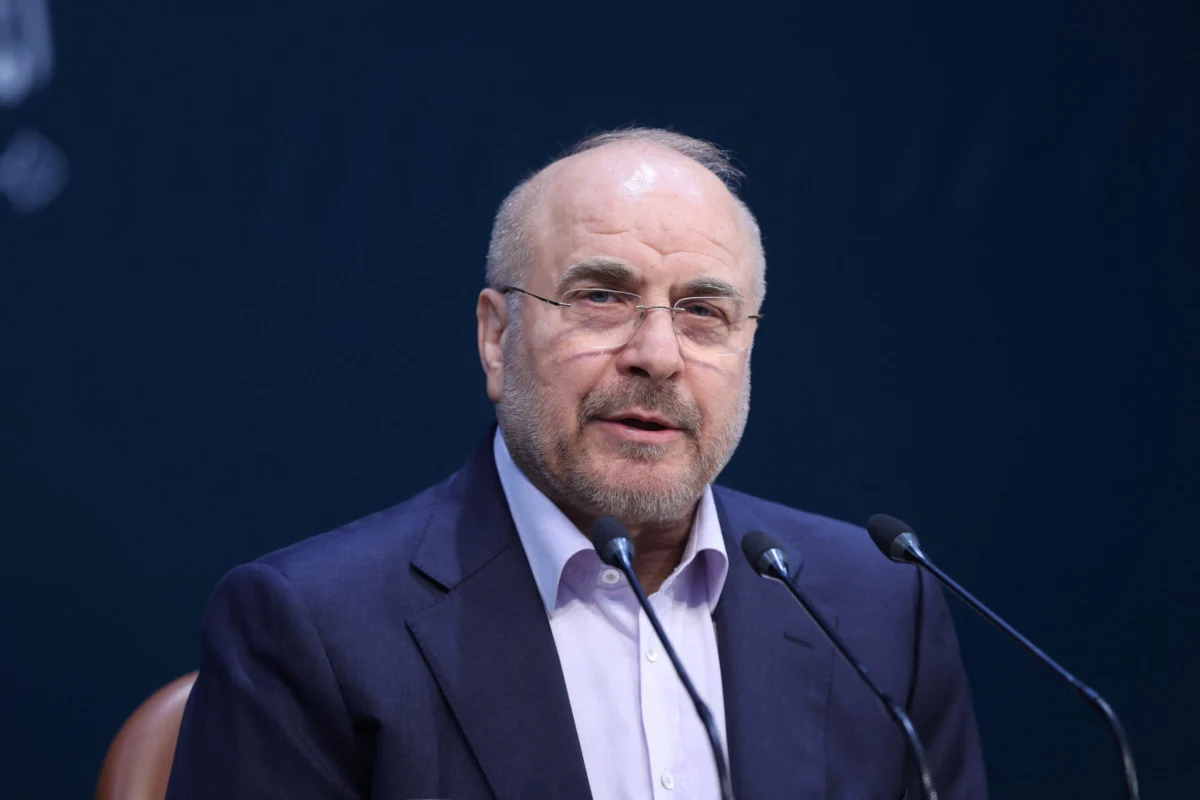
The geopolitical landscape found an unexpected arena for its complexities following a recent World Cup final, as Iran extended effusive congratulations to Spain for what it described as a victory over Argentina. This unusual diplomatic gesture, conveyed through high-ranking Iranian officials, transcended mere sporting commendation, explicitly linking Spain’s perceived triumph to the Spanish government’s vocal condemnation of Israel’s military actions in Gaza and its criticism of what Tehran perceives as a "US-Israel war on Iran." The Iranian embrace of Spain’s sporting success underscored a deeper alignment of political interests, highlighting the intricate interplay between international sports, public opinion, and sensitive foreign policy positions in the Middle East.
The Unusual Overture: Football Meets Geopolitics
The pronouncements from Tehran, delivered by figures such as Iran’s top negotiator, Mohammad Bagher Ghalibaf, and the Ministry of Foreign Affairs spokesman, Esmaeil Baghaei, marked a significant departure from conventional post-sporting event diplomacy. While the specific details of a "Spain’s win over Argentina" in a World Cup final are not directly reflected in recent major FIFA tournaments (Spain’s women’s national team notably won the FIFA Women’s World Cup in 2023, while Argentina’s men’s national team won the FIFA World Cup in 2022, with neither final featuring a Spain-Argentina matchup), the intent behind Iran’s message was undeniably clear. Tehran seized upon Spain’s recent footballing visibility to laud its government’s independent foreign policy trajectory, framing the victory as a symbolic win for "freedom and assertiveness" on the global stage.
Mohammad Bagher Ghalibaf, in remarks widely quoted by the state news agency IRNA on a Monday, articulated this sentiment: "The players’ defence of the Palestinian people and the support of Spain for Iran… showed that freedom and assertiveness are characteristics of that intelligent and respectful nation." He further elaborated that Spain’s reported 1-0 victory "not only made the hearts of the Spanish people happy but also the hearts of many free and independent and justice-loving nations of the world." This statement, from a figure deeply involved in Iran’s international negotiations, elevated the congratulation beyond a mere courtesy, imbuing it with significant political weight.
Echoing Ghalibaf’s sentiments, Iranian Ministry of Foreign Affairs spokesman Esmaeil Baghaei had earlier stated: "The behaviour of the Spanish national team and Spain’s stance in general in recent months in opposing aggression, genocide and oppression was valuable." These statements collectively painted a picture of Iran identifying a kindred spirit in Spain, particularly concerning issues central to Tehran’s foreign policy agenda.
Spain’s Evolving Stance on the Middle East
Spain’s foreign policy under its current government has indeed marked a notable divergence from traditional European and especially American positions on the Israeli-Palestinian conflict and Iran. Since the escalation of the conflict in Gaza following the October 7, 2023, attacks by Hamas and Israel’s subsequent military response, Madrid has been among the most vocal critics within the European Union regarding Israel’s actions. Prime Minister Pedro Sánchez has repeatedly called for a permanent ceasefire, expressed deep concern over the humanitarian crisis in Gaza, and advocated for the recognition of a Palestinian state.
This stance has often put Spain at odds with close allies, including the United States and Germany, who have generally maintained stronger support for Israel’s right to self-defense. Sánchez, alongside other progressive leaders, has articulated a view that Israel’s response in Gaza has been disproportionate and has contributed to an unacceptable loss of civilian life. Madrid’s calls for international accountability and humanitarian aid have been consistent, positioning Spain as a leading voice for Palestinian rights within the EU.
Furthermore, Spain has historically maintained a more nuanced approach to Iran compared to the hawkish policies often pursued by Washington and Jerusalem. While adhering to international sanctions, Spain has generally favored diplomatic engagement and the preservation of the Joint Comprehensive Plan of Action (JCPOA), the 2015 nuclear deal, which the US unilaterally withdrew from in 2018. This preference for diplomacy over confrontation with Iran aligns more closely with Tehran’s desire to find European partners willing to challenge the US-led narrative on its regional activities and nuclear program. Spain’s criticism of a "US-Israel war on Iran" as cited by the Iranian officials, likely refers to the sustained economic pressure, cyber operations, and covert actions attributed to the US and Israel aimed at destabilizing Iran and curbing its nuclear ambitions and regional influence. Madrid’s more independent line on these matters has evidently resonated positively within the Iranian leadership.
The Geopolitical Chessboard: Gaza, Israel, and the Axis of Resistance
The backdrop to Iran’s diplomatic footballing maneuver is the deeply entrenched and volatile geopolitical rivalry between Iran, Israel, and the United States. Iran has long been a staunch opponent of Israel, refusing to recognize its existence and providing support to various Palestinian factions, including Hamas and Palestinian Islamic Jihad, as well as Lebanese Hezbollah. This forms a core tenet of Iran’s "Axis of Resistance," a network of state and non-state actors aimed at challenging US and Israeli influence in the Middle East.

The ongoing conflict in Gaza has intensified these regional dynamics. Since October 7, 2023, when Hamas launched a surprise attack into southern Israel, resulting in approximately 1,200 deaths and over 240 hostages taken, Israel has launched a comprehensive military operation in Gaza. This operation has led to a devastating humanitarian crisis, with tens of thousands of Palestinian casualties, widespread displacement, and severe damage to infrastructure. International criticism, particularly from humanitarian organizations and several nations, has focused on the scale of civilian casualties and the blockade’s impact on aid delivery.
For Iran, the Gaza conflict represents both a humanitarian tragedy and a strategic opportunity. By condemning Israel’s actions, Iran solidifies its image as a champion of the Palestinian cause, bolstering its standing among Arab and Muslim populations. Simultaneously, it seeks to expose divisions within the Western alliance and identify countries like Spain that are willing to articulate dissenting views from the US-Israel consensus. This strategy aims to chip away at Israel’s international legitimacy and undermine US diplomatic efforts in the region.
Argentina’s Counter-Alignment and Regional Shifts
In stark contrast to Spain’s position, Argentina, under President Javier Milei, has adopted a staunchly pro-Israel stance, aligning itself closely with Washington and Jerusalem. Milei, a self-proclaimed "anarcho-capitalist," has made his support for Israel a cornerstone of his foreign policy. He has expressed intentions to move Argentina’s embassy to Jerusalem, a highly symbolic gesture that would follow in the footsteps of the United States and Guatemala, defying international consensus that Jerusalem’s status should be resolved through negotiations.
Milei’s ideological alignment extends to his domestic and economic policies, which mirror a broader embrace of Western, particularly American, conservative ideals. His government has condemned Hamas as a terrorist organization and unequivocally supported Israel’s right to self-defense. This stance has been warmly received in Israel, where politicians and public figures have praised Milei as a crucial ally. The original article notes that "Israeli politicians and football fans had rallied for Argentina" in the World Cup final, implicitly drawing a direct line between Milei’s political alignment and public sentiment in Israel. This illustrates how even sporting events become proxies for broader geopolitical loyalties.
Milei’s foreign policy represents a significant shift for Argentina, which has historically maintained a more non-aligned or even critical stance towards US and Israeli policies in the Middle East. This realignment has implications for Latin America, where many nations have traditionally shown solidarity with the Palestinian cause. Argentina’s move could inspire similar shifts in other countries or, conversely, create new diplomatic friction within the region.
The Interplay of Sports and Diplomacy: A Historical Perspective
The politicization of sports, particularly global spectacles like the World Cup, is not a new phenomenon. Throughout history, international sporting events have served as platforms for political statements, protests, and diplomatic maneuvers. From the "Ping Pong Diplomacy" between the US and China in the 1970s to the Olympic boycotts during the Cold War, governments have consistently leveraged the power and visibility of sports to advance their foreign policy objectives.
For Iran, congratulating Spain on a football victory, however factually ambiguous the specific match might be, is a calculated act of public diplomacy. It allows Tehran to:
- Isolate Adversaries: By praising Spain for its stance, Iran implicitly criticizes nations that support Israel and the US, highlighting perceived international divisions.
- Cultivate Allies: It signals to Spain and other like-minded nations that their independent foreign policy is noted and appreciated by a significant regional power, potentially encouraging further divergence from the US-Israel axis.
- Boost Soft Power: By linking a popular sport to its political agenda, Iran attempts to resonate with global public opinion, particularly among populations sympathetic to the Palestinian cause or critical of US foreign policy.
- Legitimize Its Narrative: It validates Iran’s perspective on the Gaza conflict and the broader US-Israel regional strategy, portraying its stance as aligned with "justice-loving nations."
Implications and Future Outlook
The Iranian congratulation to Spain, while seemingly a minor diplomatic incident, carries broader implications for international relations.
- For Spain: This public embrace from Iran could complicate Spain’s relationships with its traditional Western allies, particularly the United States and Israel. While Madrid asserts its right to an independent foreign policy, being lauded by a country often characterized as a rogue state by the US and Israel might lead to diplomatic discomfort or even pressure. It also solidifies Spain’s position as a distinctive voice within the European Union on Middle Eastern affairs, potentially influencing broader EU policy debates.
- For Iran: The move is a small but significant victory in its ongoing efforts to break international isolation and cultivate new diplomatic pathways. By recognizing Spain’s "assertiveness," Iran subtly encourages other nations to adopt similar independent stances, thereby weakening the international coalition against its regional and nuclear ambitions.
- For the Middle East: The incident further underscores the deep divisions within the international community regarding the Israeli-Palestinian conflict. It highlights how nations are increasingly forced to choose sides, even indirectly, with sporting events becoming unlikely stages for such alignments.
- The Role of Sports: This event reaffirms the enduring power of sports as a tool for political messaging and public diplomacy. In an increasingly polarized world, even a football match can be transformed into a potent symbol of geopolitical allegiance and dissent.
In conclusion, Iran’s effusive praise for Spain’s World Cup victory, irrespective of the factual nuances of the match itself, serves as a vivid illustration of how deeply intertwined sports, politics, and international relations have become. It reflects Tehran’s strategic efforts to leverage global events to amplify its political narrative and identify sympathetic partners, while simultaneously highlighting Spain’s increasingly independent and assertive foreign policy stance on some of the world’s most contentious issues. The reverberations of this seemingly simple congratulation will likely continue to underscore the complex and often unpredictable dynamics of global diplomacy in the modern era.
