

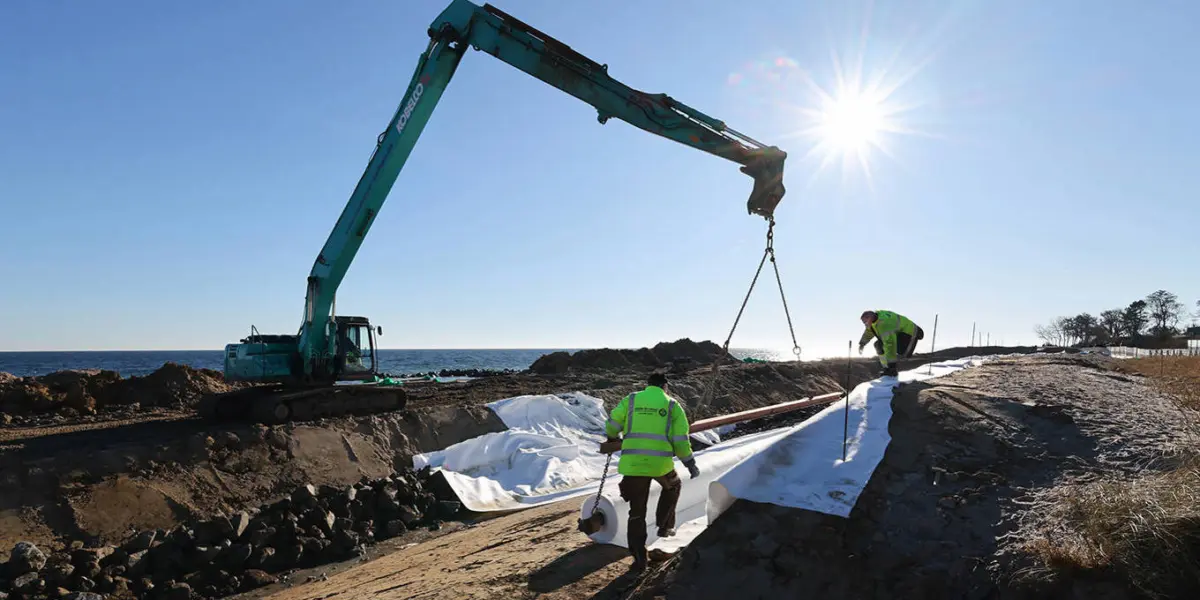
As world leaders convene for the United Nations Climate Change Conference (COP31) in Antalya, Turkey, the urgent need for robust climate adaptation strategies is at the forefront of global discussions. While the economic imperative for implementing measures to protect populations and assets from extreme weather events is increasingly undeniable, a significant chasm persists between the proven cost-effectiveness of these solutions and their widespread implementation. The core challenge lies in making these vital adaptations more affordable and establishing innovative revenue mechanisms and financing structures to overcome current investment barriers.
The Compelling Economic Case for Adaptation
The scientific consensus is unequivocal: climate change is exacerbating the frequency and intensity of extreme weather events, from searing heatwaves and devastating wildfires to catastrophic floods and prolonged droughts. The economic toll of inaction is staggering. Property damage, reduced labor productivity due to extreme heat, and diminished agricultural yields represent just a fraction of the losses incurred annually. A landmark report by the McKinsey Global Institute (MGI) highlights that the world currently invests approximately $190 billion per year in 20 proven adaptation measures. While this expenditure offers substantial protection, it represents only one-third of the estimated $540 billion required to shield everyone exposed to climate hazards to developed-economy standards.
Looking ahead, the financial implications of insufficient adaptation become even more pronounced. Projections indicate that by the time global temperatures reach 2 degrees Celsius above pre-industrial levels – a scenario increasingly likely under current emissions trajectories, potentially by 2050 – the annual cost of adaptation could escalate to a staggering $1.2 trillion. However, the MGI analysis underscores a critical point: the return on investment for adaptation measures is exceptionally high. Today, avoided losses are estimated to be roughly three times the cost of these measures, a figure projected to surge to seven times the cost at 2 degrees Celsius of warming. This presents a compelling economic argument that transcends mere cost-benefit analyses, pointing towards adaptation as a sound long-term investment strategy.
The Disconnect: Societal Benefits vs. Financial Viability
Despite the overwhelming economic rationale, a significant shortfall exists in global adaptation investment. This disparity stems from a fundamental disconnect: what makes economic sense for society as a whole does not always translate into financial sense for the individual households, corporations, and governments tasked with implementing these measures.
Consider the construction of a coastal sea dike. Such a project offers invaluable protection to residents, businesses, property owners, and insurers against the devastating impacts of storm surges and rising sea levels. However, the public agency responsible for building the dike typically lacks a direct revenue stream to recoup its substantial construction and maintenance costs. Similarly, financial institutions, which often rely on predictable cash flows for loan repayment, may find it challenging to finance assets like sea defenses that do not generate direct revenue. This inherent challenge in monetizing the broad societal benefits of adaptation is a major impediment to private sector investment.
Unpacking the Barriers to Investment
New research from MGI, which delves into investment barriers across 20 adaptation measures, identifies two fundamental preconditions for successful climate adaptation: the willingness and ability of households, companies, and governments to implement measures, and the willingness of capital providers to finance these initiatives on acceptable terms.
Demand-Side Constraints: Several factors can constrain the demand for adaptation measures. These include competing spending priorities, particularly in developing economies where immediate needs often overshadow long-term climate risks. A lack of clear and compelling evidence of the immediate benefits can also deter action. Furthermore, misaligned incentives, where the beneficiaries of adaptation are not the ones bearing the costs, and practical implementation challenges, such as a shortage of skilled labor or appropriate technologies, can further hinder adoption.
Supply-Side Constraints: On the financing side, barriers are equally significant. Repayment risks, especially for projects with uncertain long-term performance or unconventional revenue models, can deter investors. The sheer volume of potentially small, dispersed adaptation investments can also create administrative burdens and reduce the attractiveness of projects for large-scale capital providers. The difficulty of aggregating numerous small investments into financially viable packages is a persistent challenge.
The "Deployment Ready" Opportunity and the Widening Divide
While significant obstacles remain, a portion of adaptation needs is already "deployment ready," meaning it faces minimal demand or financing constraints. MGI estimates that by 2050, measures representing approximately $460 billion in annual adaptation costs—about 40% of the total projected need—could be readily implementable. These "deployment ready" measures, which include a range of solutions from energy-efficient cooling systems to advanced stormwater management, not only bolster resilience but also represent a substantial market opportunity for adaptation providers and financiers. Encouragingly, over two-thirds of this market opportunity is anticipated to be concentrated in higher-income regions, where the capacity for investment is generally greater.
However, this optimistic outlook is tempered by the stark reality of the remaining $690 billion in annual adaptation costs required at 2 degrees Celsius of warming. These costs are disproportionately concentrated in regions that are already the most vulnerable and least protected, particularly in India and Sub-Saharan Africa. In these regions, adaptation costs could amount to 2-3% of GDP, a significant burden compared to the 0.3-0.5% projected for higher-income regions. Critically, less than 20% of the adaptation investment needed in these vulnerable areas is expected to be "deployment ready," a stark contrast to over half in higher-income regions. This glaring disparity underscores the urgent need for innovative approaches to how adaptation is delivered and financed in the most at-risk parts of the world.
Addressing the Core Obstacles: Affordability, Incentives, and Bankability
To unlock the full potential of climate adaptation and protect the most vulnerable, three key issues must be systematically addressed:
1. Enhancing Affordability for Vulnerable Populations
An estimated $440 billion in annual adaptation needs could be hindered by competing spending priorities and a lack of creditworthiness, particularly impacting low-income households and communities. This necessitates a dual approach: developing and deploying more affordable adaptation technologies and creating accessible financing mechanisms.
A compelling example of this approach in action is the initiative undertaken in Ahmedabad, India. Municipal authorities collaborated with the Mahila Housing Trust to significantly reduce the cost of heat-reflecting roofs for low-income households. This was achieved through a combination of targeted subsidies, the establishment of credit schemes that made financing more accessible, and coordinated implementation efforts that streamlined the process for beneficiaries. Such integrated strategies are crucial for ensuring that essential adaptation measures are within reach for those who need them most.
2. Strengthening Incentives and Demonstrating Benefits
Approximately $210 billion in annual adaptation costs could be unlocked by creating stronger incentives, providing clearer evidence of benefits, and enhancing the capabilities of implementers. This requires a strategic alignment of interests and a robust understanding of how adaptation benefits accrue.
The Netherlands’ "Room for the River" program offers a powerful illustration of this principle. To create more space for rivers to safely accommodate floodwaters, the program had to engage with landowners, sometimes requiring them to relinquish property or alter land use. The program’s success hinged on its ability to convince stakeholders by demonstrating how the benefits of reduced flood risk would be shared broadly across communities. This was achieved through a carefully designed system of incentives, including fair compensation for acquired land, relocation support for affected residents, and a meticulous coordination process involving national and local governments, water authorities, and community representatives. By aligning incentives and fostering collaboration, the program successfully implemented over 30 projects, enhancing resilience while respecting the needs of local populations.
3. Making Projects Bankable Through Innovative Finance
The remaining $40 billion in required adaptation measures, though smaller in scale, faces significant barriers related to their "bankability." These projects often require innovative revenue mechanisms and financing structures, or compelling evidence of reliable performance, to mitigate investor risk.
The "Drought Tolerant Maize for Africa" initiative provides a valuable model for de-risking and scaling emerging adaptation solutions. Through early-stage funding from donors, extensive research and field testing were conducted, establishing a credible track record for drought-tolerant maize varieties. Crucially, partnerships with local seed companies were forged to facilitate the scaling of production and distribution. By 2014, this collaborative effort had successfully reached an estimated 5.4 million households with seeds that could withstand drought conditions, demonstrating the power of targeted investment and strategic partnerships in bringing essential adaptation technologies to market.
A Call to Action for All Stakeholders
The path forward demands a concerted and collaborative effort from all stakeholders. Proven methods for protecting people and assets from extreme weather exist, but their widespread adoption hinges on overcoming financial and practical hurdles.
-
Companies have a critical role to play by integrating climate resilience into their investment decisions and by actively developing and offering more affordable adaptation solutions. This includes fostering innovation in materials, technologies, and service delivery models.
-
Financial institutions must evolve their offerings to create financing structures that accurately capture the economic value of avoided losses and the long-term benefits of adaptation. This could involve developing new financial instruments, impact investing frameworks, and blended finance solutions that de-risk investments for private capital.
-
Governments, at all levels, are essential for strengthening incentives for adaptation, coordinating implementation efforts across sectors, and directing scarce public resources towards investments that markets alone cannot adequately deliver. This includes investing in research and development, providing clear regulatory frameworks, and supporting vulnerable communities with targeted financial and technical assistance.
The Unfolding Opportunity
Climate adaptation has repeatedly demonstrated its capacity to generate substantial economic value. The challenge before us is not a lack of solutions, but rather ensuring that those who need to invest have both the financial means and the compelling incentives to do so. As COP31 unfolds, the imperative to bridge this gap between economic sense and financial feasibility will undoubtedly remain a central theme, driving the global agenda towards a more resilient and sustainable future. The transition to a climate-resilient world represents not just a necessity, but also a significant economic opportunity that, if seized, can yield profound benefits for generations to come.
