

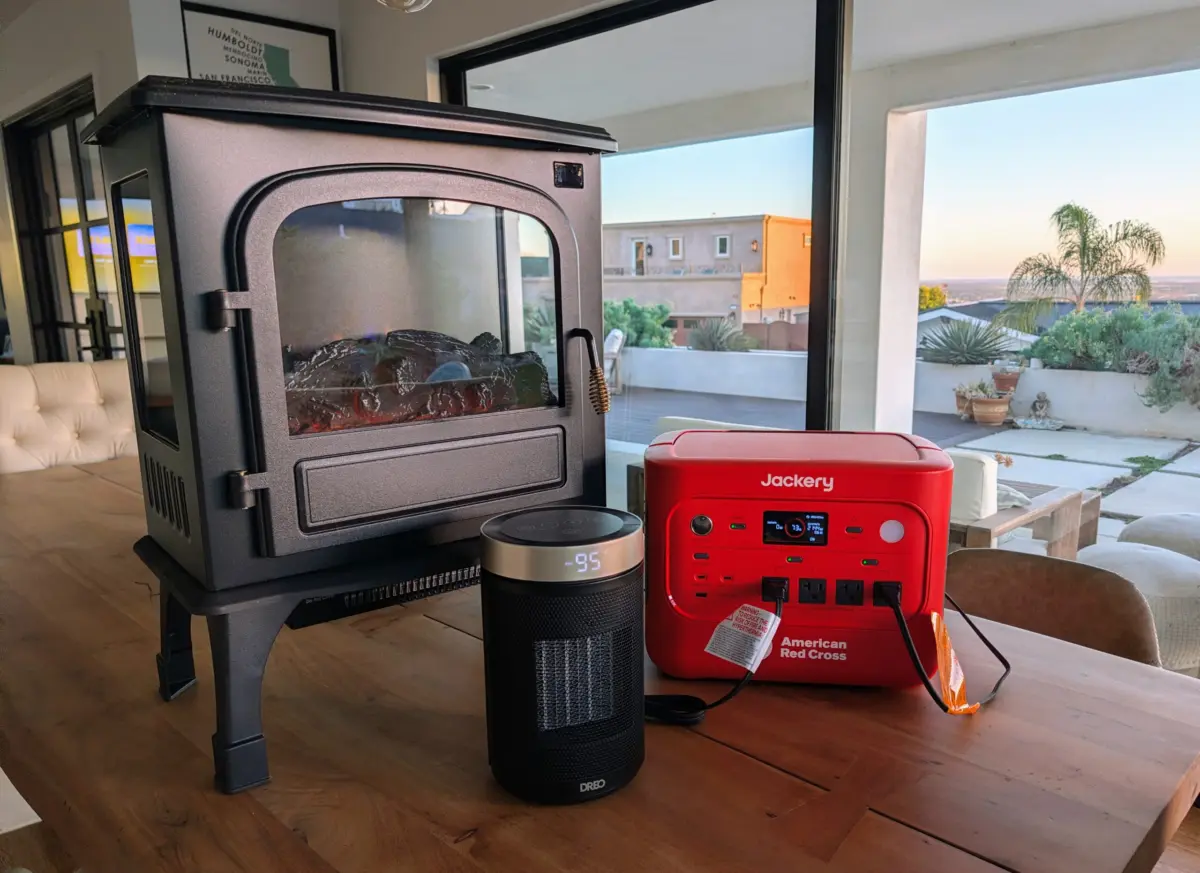
The portable power industry has reached a significant milestone with the official production launch of the Jackery HomePower 2000 Plus v2 Red Cross Edition. This collaboration between one of the world’s leading portable energy manufacturers and the American Red Cross marks a strategic intersection of consumer technology and humanitarian aid. By integrating high-capacity lithium-iron-phosphate (LFP) technology with a dedicated philanthropic mission, Jackery aims to provide essential electricity to both households and emergency personnel during critical grid failures.

The initiative, which first gained international attention during a visit to Jackery’s Shenzhen headquarters earlier this year, has transitioned from a conceptual prototype to a mass-produced solution for disaster resilience. The partnership is defined by a commitment to donate 10% of the profits from this specific series to the Red Cross, facilitating the distribution of portable power units to first responders and rescue organizations operating in disaster-stricken zones.
The Evolution of Portable Energy and the Jackery-Red Cross Alliance
Jackery has long been recognized as a pioneer in the "solar generator" space, having transitioned from early-stage power banks to sophisticated, high-output energy storage systems. The development of the HomePower 2000 Plus v2 reflects a broader industry trend toward the "prosumer" market, where users require industrial-grade reliability in a form factor manageable for residential use or camping.

The partnership with the Red Cross addresses a growing need for silent, emission-free power in emergency management. Traditional gasoline generators, while powerful, pose risks of carbon monoxide poisoning and require a steady supply of fuel, which is often the first resource to vanish during a natural disaster. In contrast, the HomePower 2000 Plus v2 provides a closed-loop energy system when paired with solar panels, allowing relief workers to maintain communication devices, medical equipment, and lighting without the logistical burden of liquid fuel.
Technical Specifications and Charging Capabilities
The HomePower 2000 Plus v2 is built upon a 2 kWh base capacity, utilizing Lithium Iron Phosphate (LiFePO4) battery chemistry. LFP technology has become the gold standard for stationary and portable storage due to its thermal stability and longevity. Jackery’s implementation is rated for approximately 6,000 charging cycles, which translates to over 16 years of daily use before the battery capacity drops to 80% of its original state.

Multi-Modal Charging Infrastructure
One of the most critical features for emergency equipment is the ability to regain energy from diverse sources. The Red Cross Edition supports four distinct charging methods:
- AC Wall Charging: The unit can pull up to 1,600 watts from a standard 120V outlet. In field tests, this allows for a 0% to 100% charge in approximately 90 minutes. This high-speed intake is essential for users who may only have brief access to a functioning grid or a large-scale generator.
- Solar Integration: The unit supports up to 800 watts of solar input. Utilizing Jackery’s proprietary foldable solar panels, the battery can be fully replenished in roughly 3.2 hours under optimal sunlight. This feature is the cornerstone of the unit’s "off-grid" utility, providing indefinite power as long as there is solar exposure.
- DC-to-DC Alternator Charging: For professional responders and overlanders, Jackery offers an optional 600-watt DC-to-DC charger. Unlike standard 12V "cigarette lighter" adapters that are limited to 100 watts, this accessory taps directly into a vehicle’s alternator, allowing the unit to charge in roughly four hours while the vehicle is in transit.
- Electric Vehicle (EV) Synergy: While the unit does not support USB-C input charging—a common limitation in high-capacity stations—it can be charged via the AC outlets found in modern electric vehicles like the Tesla Cybertruck or Ford F-150 Lightning. This "vehicle-to-load" (V2L) approach allows EV owners to use their car’s massive battery to top off the portable station, which can then be carried into a home or a medical tent where the vehicle cannot go.
Performance Analysis: Power Output and Surge Management
The HomePower 2000 Plus v2 is designed to handle heavy-duty electrical loads, boasting a continuous output of 2,400 watts. This threshold is significant as it exceeds the requirements of almost any standard household appliance, including full-sized refrigerators, sump pumps, and high-wattage kitchen tools.

During rigorous testing, the unit demonstrated a robust surge capacity of 4,800 watts. Surge capacity is vital for appliances with electric motors—such as air conditioners or power tools—which require a momentary spike in energy to start. In a "torture test" involving multiple 1,500-watt space heaters, the unit successfully managed a constant draw of nearly 3,100 watts for several minutes before the internal safety breakers engaged. This performance indicates a significant "overhead" in the inverter’s design, providing a safety margin for users who might inadvertently exceed the rated 2,400-watt limit.
Modular Expandability for Long-Term Outages
While the base 2 kWh capacity is sufficient for short-term needs—capable of running a standard refrigerator and essential electronics for approximately 10 hours—the HomePower 2000 Plus v2 features a modular design. A dedicated expansion port on the side of the chassis allows users to daisy-chain Jackery’s Battery Plus expansion packs.

This modularity allows the system to scale up to a total of 12 kWh. At this capacity, a household could maintain essential functions for several days without any external power input. For the Red Cross and other emergency organizations, this expandability means a single "brain" unit can be bolstered with additional battery modules to create a mobile microgrid capable of supporting a command center or a field clinic.
Chronology of Development and Global Production
The journey of the Red Cross Edition began with Jackery’s commitment to Corporate Social Responsibility (CSR) in the wake of increasing climate-related disasters.

- Q2 2026: Jackery engineers in Shenzhen finalized the v2 architecture, focusing on reducing the weight-to-power ratio and improving the efficiency of the LFP cells.
- June 2026: A delegation of energy analysts visited the Jackery Energy Storage Factory and testing labs to witness the stress-testing of the Red Cross prototypes.
- Q3 2026: Official partnership with the Red Cross was announced, designating the signature "Rescue Red" colorway for the limited-edition units.
- November 2026: Full-scale production commenced, with the first shipments designated for both consumer retail and direct donation to disaster relief stockpiles.
Market Impact and Humanitarian Implications
The release of this unit comes at a time when the reliability of the centralized power grid is under scrutiny. Aging infrastructure, combined with the increasing frequency of extreme weather events, has turned portable power from a luxury "camping accessory" into a necessity for home readiness.
By branding this unit for the Red Cross, Jackery is not merely engaging in a marketing exercise; it is validating the role of portable energy in the broader framework of national security and public safety. The 10% profit-sharing model sets a precedent for other technology firms to integrate philanthropic "give-back" mechanisms directly into their product cycles.

From an analytical perspective, the HomePower 2000 Plus v2 represents the "maturation" of the portable power station. The transition to LFP chemistry ensures that these units will remain functional for nearly two decades, making them a viable long-term investment for emergency preparedness. Furthermore, the bright red aesthetic serves a functional purpose, ensuring the unit is easily identifiable in low-light or high-chaos environments typical of search-and-rescue operations.
Conclusion
The Jackery HomePower 2000 Plus v2 Red Cross Edition is a testament to the progress of battery technology and its potential to serve the public good. With its 2,400W output, rapid charging capabilities, and 12 kWh expansion potential, it offers a comprehensive solution for those seeking independence from an unstable grid. As the units move from the factory floor in Shenzhen to the front lines of disaster relief, they represent a new era of "Resilience-as-a-Service," where consumer purchases directly empower the first responders who protect the community.

For consumers, the choice to opt for the Red Cross Edition provides a high-performance energy tool with the added value of supporting global disaster recovery efforts. As Jackery continues to push the boundaries of LFP technology, the integration of humanitarian goals into their core business model likely marks the beginning of a new trend in the green tech industry.
