

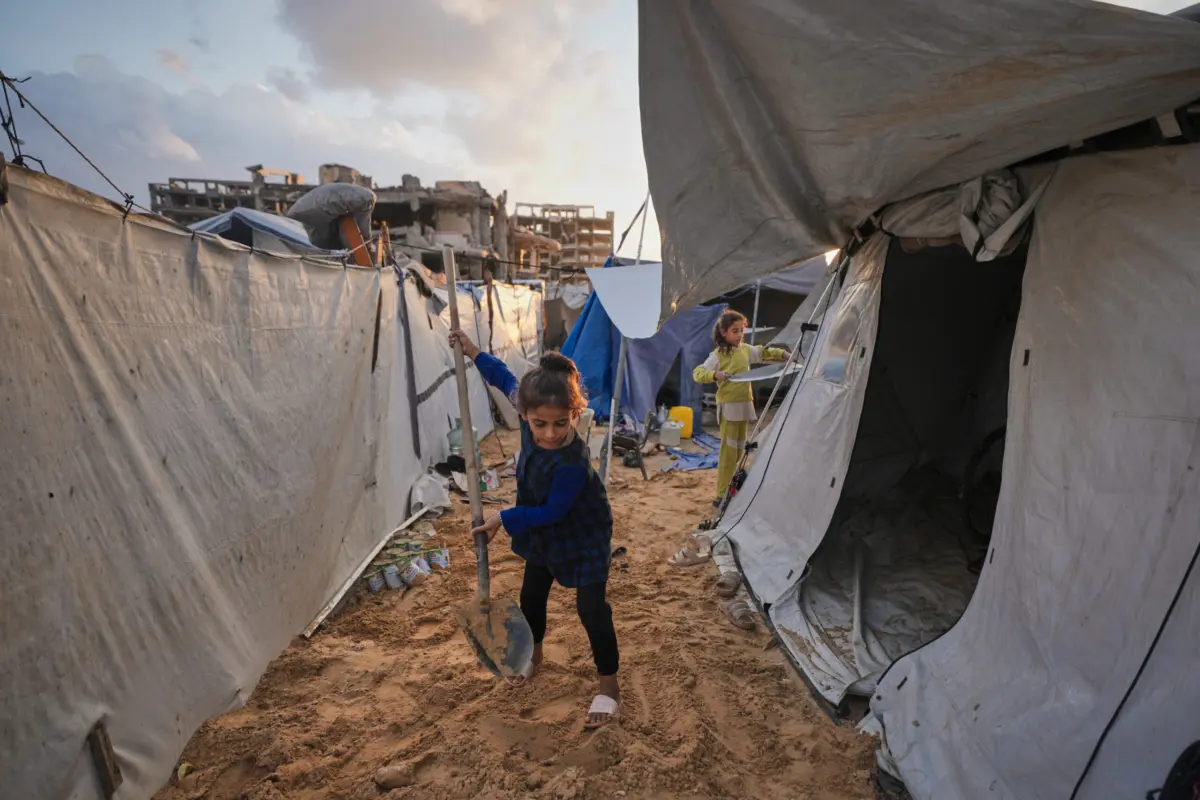
In a significant diplomatic escalation, the governments of Australia, Canada, Italy, and the United Kingdom have issued a joint appeal demanding that Israel grant immediate and unimpeded humanitarian access to the Gaza Strip. The coordinated statement, released on Sunday, highlights a worsening catastrophe as seasonal floods and plummeting temperatures threaten the lives of hundreds of thousands of displaced Palestinians. The four nations specifically accused the Israeli government of obstructing the entry of approximately 150,000 tents and other essential survival supplies, which currently remain stalled at border crossings despite the onset of a harsh winter.
The joint communiqué represents the latest in a series of international warnings regarding the humanitarian conditions in the besieged enclave, where more than two million people have lived under varying degrees of blockade for years. However, the ministers noted that the situation has reached a critical breaking point following the intensification of military operations and the imposition of a full-scale siege. The foreign ministers emphasized that the current suffering is "entirely reversible" and called for an end to the delays that have left a significant portion of the population without basic protection from the elements.
The Shelter Crisis: A Race Against Winter
The urgency of the four-nation appeal is underscored by the dire statistics provided by international monitoring bodies. According to the United Nations, more than 1.9 million people in Gaza—nearly the entire population—have been displaced from their homes. Many of these individuals have been forced to move multiple times as evacuation orders and military strikes have systematically leveled entire neighborhoods and cities. As of early November 2026, the Global Shelter Cluster—a humanitarian collective involving the Red Cross and various UN agencies—estimated that Gaza’s residents require at least 1.7 million mattresses and 121,000 specialized tents to survive the current season.
The arrival of heavy rainstorms earlier this month has exacerbated an already fragile situation. Flash floods have reportedly swept away tens of thousands of makeshift shelters, leaving families to sleep in the mud or in the ruins of unstable, bombed-out buildings. The UN’s Humanitarian Country Team in the Occupied Palestinian Territory reported that the impact of the latest storms was not merely a natural disaster but a "preventable" tragedy resulting from policy decisions that restricted the movement of aid. They noted that the death of civilians during the floods was directly linked to the lack of adequate shelter materials that have been sitting in warehouses or at border points for months.
A Chronology of Siege and Infrastructure Collapse
The current humanitarian paralysis is the culmination of a long-term strategy of restriction that shifted into a total blockade following the outbreak of the conflict in October 2023. While Israel has historically controlled the flow of goods into Gaza, citing security concerns, the last three years have seen a near-total cessation of commercial and humanitarian imports.
- October 2023: Following the start of the war, Israel announced a complete siege, cutting off electricity, water, and fuel supplies to the territory.
- 2024-2025: Sustained aerial bombardment and ground operations resulted in the destruction of approximately 70% of Gaza’s housing stock and critical infrastructure, including sewage systems and water desalination plants.
- 2025: The "Comprehensive Plan for Gaza" was unveiled, seeking an immediate ceasefire and a roadmap for reconstruction. However, despite diplomatic efforts, hostilities continued, and the implementation of the plan stalled.
- September 2026: Structural failures in war-damaged buildings began claiming lives independently of direct military action. In one instance, a collapsed building used as a makeshift shelter killed 20 people.
- November 2026: Severe flooding destroyed tens of thousands of remaining tents, leading to the current joint statement by Australia, Canada, Italy, and the UK.
The destruction of urban centers has left the population with no recourse but to rely on international aid for basic survival. However, the four-nation statement points out that the bottleneck at the border is not due to a lack of supplies, but rather a lack of permission to enter.
Diplomatic Pressure and Legal Implications
The joint statement from the four Western powers is notable for its direct language regarding the "delays" caused by the Israeli government. By highlighting the 150,000 tents held at the border, the nations are signaling a shift toward more public and specific criticisms of Israeli military policy. This sentiment was echoed by the European Union on Saturday, which expressed "grave concern" and urged the reopening of all border crossings to ensure that aid can be distributed throughout the entire territory, including the isolated northern regions.
Under the Geneva Convention, the denial of humanitarian relief to civilian populations can be classified as a war crime. The four nations alluded to these legal obligations by urging Israel to allow "immediate, rapid, and unimpeded" access. This diplomatic pressure comes at a time when Israel’s military and political leadership are under intense international legal scrutiny. The International Criminal Court (ICC) has already issued arrest warrants for Prime Minister Benjamin Netanyahu and former Defense Minister Yoav Gallant, citing allegations of war crimes and crimes against humanity, including the use of starvation as a method of warfare.
Furthermore, Israel remains the subject of an ongoing case at the International Court of Justice (ICJ), where it faces accusations of violating the Genocide Convention. While Israel has consistently denied these allegations, claiming its actions are necessary for national security and the dismantling of militant groups, the ICJ has previously issued provisional measures ordering Israel to ensure the delivery of basic services and humanitarian assistance to Palestinians in Gaza.
Economic Devastation and Public Health
Beyond the immediate need for shelter, the blockade has triggered a total economic collapse within the Gaza Strip. Hundreds of thousands of Palestinians have been plunged into extreme poverty. With the cessation of most local production and the restriction of commercial shipments, the prices of basic goods—when available—have soared beyond the reach of the average family. Incomes have largely vanished as the private sector remains paralyzed by the ongoing conflict.
The public health implications of the shelter shortage are equally severe. Without adequate protection from the rain and cold, medical professionals warn of an impending surge in respiratory infections, hypothermia, and waterborne diseases. The healthcare system, already crippled by strikes on facilities such as Nasser Hospital—where an Israeli air strike recently killed six people—is ill-equipped to handle a winter health crisis. The lack of clean water and the overflow of sewage systems due to flooding create a high-risk environment for the spread of cholera and other illnesses.
Analysis of Global Implications
The joint appeal by Australia, Canada, Italy, and the United Kingdom marks a critical juncture in the international community’s response to the crisis. These four nations have historically maintained strong bilateral ties with Israel, making their public and collective reprimand particularly significant. This suggests a narrowing of the diplomatic "green light" for continued military operations that do not account for civilian survival.
The reference to the "Comprehensive Plan for Gaza" indicates that these nations are still pushing for a diplomatic resolution and a permanent ceasefire, despite the continued violence. However, the failure to implement the 2025 plan suggests a growing gap between international diplomatic intent and the realities on the ground.
If the 150,000 tents and associated supplies are not released immediately, the resulting humanitarian fallout could lead to a death toll from environmental exposure that rivals the casualties caused by direct military engagement. For the international community, the situation in Gaza is increasingly seen as a test of the efficacy of international humanitarian law. The refusal to allow basic shelter into a war zone, especially during a seasonal climate crisis, sets a precedent that many legal experts and world leaders find untenable.
As the winter of 2026 sets in, the window for effective intervention is closing. The statement from the four foreign ministers concludes with a stark reminder: "This situation is entirely reversible, and there is still time to act before the winter fully sets in." Whether the Israeli government will heed this specific and public demand remains to be seen, but the pressure from its traditional allies has reached an unprecedented level of urgency.
