

The international energy landscape has undergone a seismic shift over the past twelve months, exposing a growing divergence between global decarbonization trends and North American infrastructure ambitions. When the International Energy Agency (IEA) released its influential World Energy Outlook 2025 in late 2024, the prevailing sentiment was one of stalled progress. At that time, none of the agency’s modeled scenarios kept global warming within the 1.5°C threshold mandated by the 2015 Paris Agreement, and the projected peaks for oil and gas demand appeared to be receding further into the future. However, recent data from 2025 and early 2026 suggest that the energy transition has reached a tipping point, driven by a surge in solar generation, the rapid electrification of transport in Asia, and a fundamental realignment of energy security priorities.
The Acceleration of the Global Energy Transition
The pace of change since the release of the IEA’s 2025 outlook has surprised even seasoned energy analysts. In the European Union, solar power has achieved a historic milestone, generating more electricity on the grid than any other single energy source. Globally, renewable energy sources—including wind, solar, nuclear, and hydropower—now contribute more to the growth of the world’s energy supply than oil, gas, or coal individually. This shift is not merely a Western phenomenon; it is most acutely visible in China, formerly the world’s most voracious consumer of fossil fuels.
For the first time in two decades, China’s annual demand for oil declined in 2024. This contraction is largely attributed to the unprecedented adoption of electric vehicles (EVs), including cars, two-wheelers, and commercial fleets. By 2024, EV market penetration in China had reduced domestic gasoline consumption by approximately 12% compared to pre-adoption forecasts. This shift represents a reduction of 67.5 million tons of carbon dioxide emissions, equivalent to roughly 0.6% of China’s total national emissions in 2023. Analysts now expect peak oil demand in China to arrive well before 2030, a development that undermines the long-term growth projections of major oil-exporting nations.
The LNG Expansion and the Carbon Contradiction
Despite the clear deceleration in fossil fuel demand growth, the global energy sector is currently witnessing a massive expansion of liquefied natural gas (LNG) infrastructure. The world is on track to add an unprecedented 300 billion cubic metres of LNG export capacity by 2030, representing a 50% increase in global supply. This expansion presents a stark environmental contradiction: once operational, this new capacity will inject more than 560 million metric tons of carbon dioxide equivalent into the atmosphere annually. According to the U.S. Environmental Protection Agency’s Greenhouse Gas Equivalencies Calculator, this volume of emissions is comparable to the annual output of more than 130 million gasoline-powered passenger vehicles.
This looming LNG glut has created a complex economic landscape. While demand for gas is projected to grow into the early 2030s, the IEA’s "Stated Policies Scenario" (STEPS) indicates that the influx of new supply will likely result in a 65-billion-cubic-metre surplus. This oversupply threatens to depress prices and leave high-cost projects vulnerable to becoming "stranded assets"—infrastructure that fails to provide an economic return before the end of its physical life.
Canada’s Strategic Gamble: The Pacific Link Pipeline
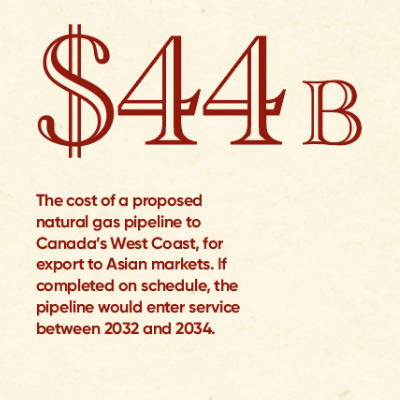
In the midst of this global volatility, Canada is doubling down on its fossil fuel export capacity. The centerpiece of this strategy is the proposed Pacific Link pipeline, a 1,200- to 1,250-kilometre project recently declared a matter of national interest. Designed to transport up to one million barrels of heavy crude per day from Alberta’s Western Canada Sedimentary Basin to the Roberts Bank Terminal in British Columbia, the project carries a staggering price tag of up to $44 billion.
The business case for the Pacific Link rests on the assumption of sustained demand for Canadian heavy crude in Asian markets through the middle of the century. Alberta Premier Danielle Smith has championed the project as a vital tool to double provincial oil production and diversify export routes away from the United States. However, energy finance analysts at the Institute for Energy Economics and Financial Analysis (IEEFA) have raised alarms. They argue that because China—the primary target for this crude—is electrifying its transport sector significantly faster than the rest of the world, the window for demand growth is rapidly closing.
A Chronology of Shifting Energy Milestones
To understand the current tension in energy policy, one must look at the timeline of the transition:

- 2015: The Paris Agreement sets a target to limit global warming to 1.5°C.
- 2021: China’s transport-related oil use reaches a plateau.
- 2024: China records its first annual decline in total oil demand in 20 years; solar power becomes the EU’s primary electricity source.
- 2025: Global energy consumption growth slows to 1.3%, with low-emission sources meeting 60% of that increase.
- 2030: Projected peak for global coal and oil demand under IEA STEPS modeling.
- 2032–2034: Proposed service entry window for the Pacific Link pipeline.
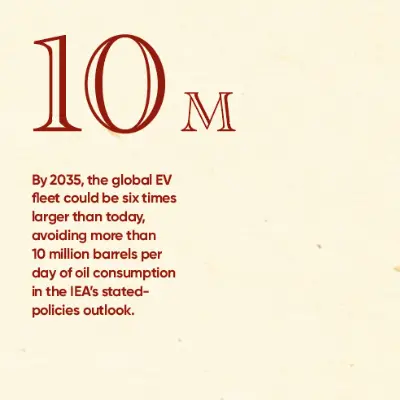
- 2035: Projected peak for global natural gas demand; global EV fleet expected to be six times larger than in 2024.
The Economic Debate: Infrastructure Fragility vs. Market Reality
The push for expanded pipeline capacity has divided industry experts. Kevin Birn, chief analyst for Canadian oil markets at S&P Global, argues that Canada desperately needs "spare capacity" to prevent market backups. Western Canada is currently producing over five million barrels of oil a day, a volume that Birn describes as "staggering." He contends that the current system is fragile; any minor disruption can lead to supply gluts in Alberta, forcing producers to sell their crude at deep discounts.
S&P Global predicts that by 2030, Western Canadian export supply could exceed 5.2 million barrels per day. Without new pipelines like the Pacific Link, Birn warns that producers will be forced to rely on storage tanks, which provide only a temporary buffer. Once storage is full, the price discount on Canadian heavy crude—already significant due to refining complexities—could widen further, stripping billions from the Canadian economy.
Conversely, analysts from the Pembina Institute and IEEFA point to the "tepid" response from the private sector as a sign of the project’s inherent risk. Despite strong government backing, major private investors have remained conspicuously absent from the Pacific Link proposal. The project is currently being spearheaded by the federally owned Trans Mountain Corporation and the Alberta government’s Petroleum Marketing Commission. Critics argue that if private capital, which is deeply familiar with the oil and gas sector, deems the project too risky, the financial burden and potential losses should not be shifted to Canadian taxpayers.
Geopolitical Catalysts and the Manufacturing Shift
The urgency behind energy diversification was recently heightened by geopolitical instability in the Middle East. Conflict in Iran and the subsequent closure of the Strait of Hormuz—a transit point for nearly 20% of the world’s oil and gas—sent shockwaves through global markets. This energy shock has redefined "energy security" for many nations. Rather than simply seeking new sources of oil and gas, many economies are viewing fossil fuel dependency itself as a strategic vulnerability.
As noted by the U.K.-based think tank Ember, the global energy landscape is transitioning from a commodity-based system of extraction to a manufacturing-based system. In the old model, wealth was derived from pulling resources out of the ground. In the new model, wealth is generated by the production of solar panels, electric motors, and high-capacity batteries. Asia is currently the frontrunner in this manufacturing revolution, with electrification rates that outpace both Europe and North America.
Implications for the Canadian Economy
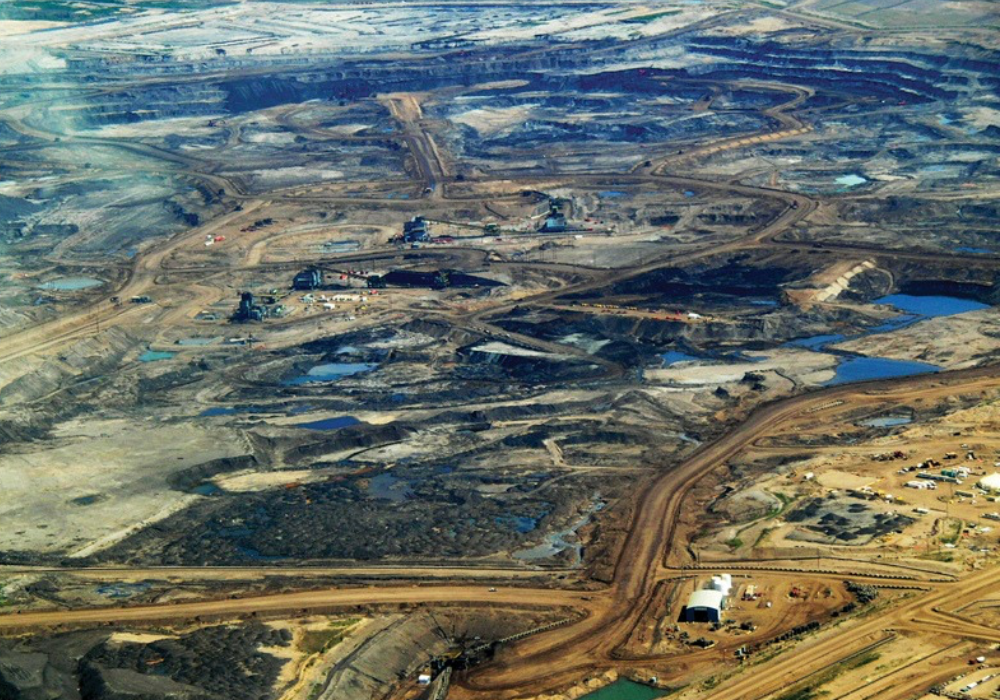
For Canada, and Alberta in particular, the shift toward a manufacturing-based energy economy poses a fundamental challenge. Alberta’s oil sands produce heavy crude, which requires specialized, high-complexity refineries to process. While global demand for petrochemicals may remain stable, the market for refined transport fuels like gasoline and diesel is shrinking. If Canada builds massive new export infrastructure just as its primary customers are switching to electric alternatives, it risks being left with expensive, underutilized pipelines.

The domestic market offers little reprieve for fossil fuel growth. The federal energy regulator’s 2026 outlook predicts substantial growth in electricity demand over the next two decades as the Canadian economy electrifies, while hydrocarbon use is expected to remain flat or decline.
As Canada stands at this crossroads, the decision to invest tens of billions in fossil fuel infrastructure represents a high-stakes wager against the current trajectory of global technology and policy. While proponents argue that pipelines are essential for economic stability and energy security, the data suggests that the world to which Canada intends to export its oil is disappearing. The challenge for policymakers in the coming decade will be determining how to allocate scarce capital in an energy system increasingly defined by renewables, efficiency, and a rapid departure from the carbon-intensive status quo.
