

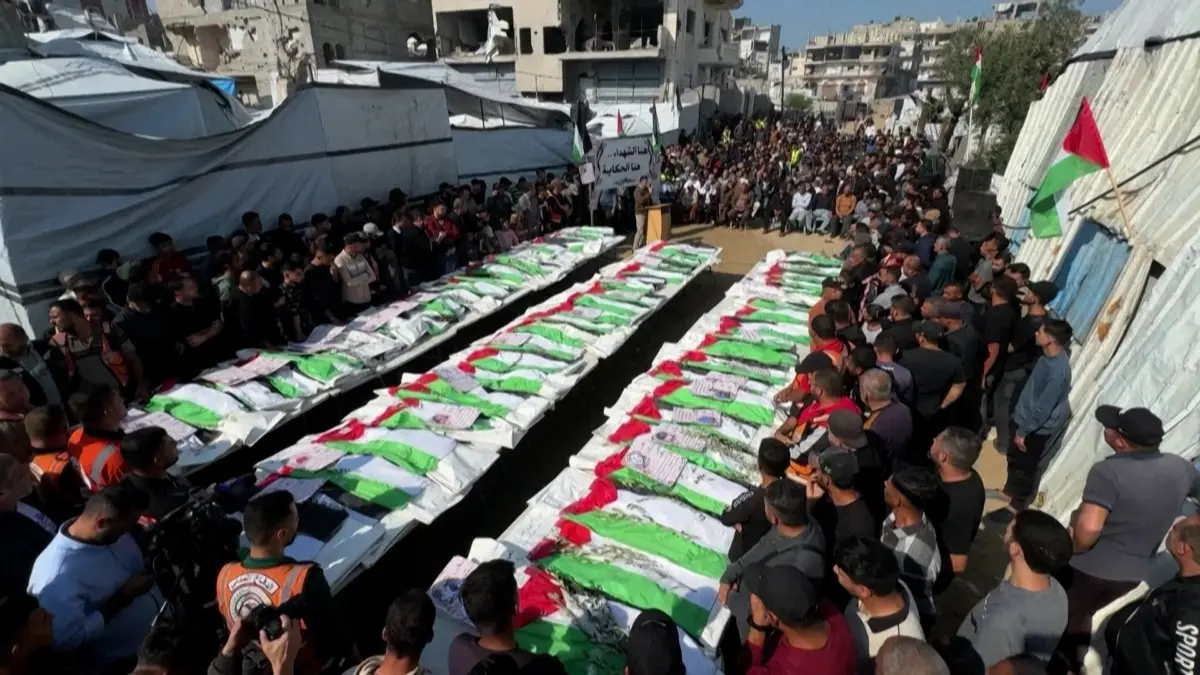
The recovery of the 70 bodies, many of which were found in advanced stages of decomposition, has provided a painful sense of closure to families who have spent years waiting for news of their loved ones. However, the slow pace of the recovery efforts highlights the catastrophic lack of resources available to emergency responders in the region. For over a month, search teams have worked with rudimentary tools, often digging by hand or using simple shovels, as heavy machinery and fuel remain in critically short supply due to ongoing logistical bottlenecks and the long-term degradation of Gaza’s infrastructure.
The Scope of the Recovery Mission
The 35-day operation focused primarily on several high-density residential areas in northern Gaza and parts of Khan Younis, where some of the most intense bombardments occurred in the earlier phases of the conflict. According to the Gaza Civil Defense, the recovery sites included the remains of multi-story apartment complexes and public shelters. The 70 individuals identified during this period represent only a fraction of those reported missing by their families since the escalation of hostilities began in late 2023.
Local authorities have noted that the identification process is becoming increasingly difficult. The passage of time—exceeding three years for many of the sites—means that forensic identification often requires DNA testing, a capability that is currently non-existent within the Gaza Strip’s crippled healthcare system. Families are frequently forced to identify their relatives through tattered clothing, personal effects, or dental records, adding a layer of psychological trauma to an already harrowing process.
A Timeline of Prolonged Crisis
The current state of the Gaza Strip is the result of a protracted conflict that has seen several distinct phases of destruction and humanitarian decline. To understand the context of the current recovery efforts, a look back at the chronology of the last three years is essential:
- Late 2023 – Early 2024: The initial phase of high-intensity aerial bombardment and ground operations resulted in the destruction of approximately 60% of Gaza’s housing units. It was during this period that the majority of the currently "missing" individuals were likely buried under collapsed structures.
- 2024 – 2025: A period of prolonged siege and intermittent skirmishes led to a total collapse of the civil defense infrastructure. Efforts to retrieve bodies were frequently halted due to active fire, lack of fuel for excavators, and the presence of unexploded ordnance (UXO).
- Early 2026: International humanitarian organizations warned of a "secondary health crisis" as the thousands of decomposing bodies beneath the rubble began to contaminate groundwater and attract disease-carrying pests.
- October – November 2026: Following a brief stabilization in security conditions, civil defense teams launched the current 35-day intensive recovery push, leading to the retrieval of the 70 bodies mentioned in recent reports.
Supporting Data: The Statistics of the Missing
The figure of 8,000 missing persons is considered a conservative estimate by many international observers. The United Nations Office for the Coordination of Humanitarian Affairs (OCHA) and the World Health Organization (WHO) have frequently cited the "under the rubble" count as one of the most significant challenges in determining the true death toll of the conflict.
Data provided by municipal authorities suggests that:
- Rubble Volume: There are an estimated 42 million metric tons of debris scattered across the Gaza Strip. Clearing this rubble with current equipment levels could take upwards of 15 years.
- Demographics of the Missing: Based on missing person reports filed by families, approximately 45% of those believed to be under the rubble are children and 25% are women.
- Resource Scarcity: The Gaza Civil Defense currently operates at less than 15% of its required capacity. They possess only a handful of functional excavators for a population of over two million people living amidst unprecedented urban destruction.
Challenges to Search and Rescue Operations
The recovery of remains in Gaza is not merely a logistical challenge; it is a hazardous endeavor that puts the lives of responders at risk. One of the primary obstacles is the prevalence of unexploded ordnance. It is estimated that roughly 10% of the munitions fired during the conflict failed to detonate upon impact. These "duds" are often buried deep within the rubble of collapsed buildings, turning every recovery site into a potential minefield.
Furthermore, the structural integrity of neighboring buildings remains a constant threat. Many structures that are still standing are "ghost buildings"—hollowed-out shells that can collapse at any moment due to vibrations from manual digging or environmental factors like heavy rain.
"We are working in a graveyard that spans an entire city," said a spokesperson for the local recovery teams, who requested anonymity. "Every time we lift a slab of concrete, we don’t know if we will find a body or if the rest of the ceiling will fall on us. We have no sensors, no thermal imaging, and no heavy cranes. We have our hands and our persistence."
Official Responses and International Reactions
The international community has reacted with a mixture of alarm and calls for immediate intervention following the news of the 70 recovered bodies. Humanitarian agencies are urging for the "de-politicization" of rubble removal, arguing that the recovery of the dead is a fundamental human right and a prerequisite for any form of regional stability.
The International Committee of the Red Cross (ICRC) issued a statement emphasizing the right of families to know the fate of their missing relatives. "The failure to recover and identify the remains of those killed in conflict is a violation of international humanitarian standards. It prevents the healing of society and leaves thousands of families in a state of perpetual grief," the statement read.
Meanwhile, health officials from the World Health Organization have expressed concern over the long-term environmental impact. The presence of thousands of bodies in varying states of decay, combined with the destruction of sewage systems, has created a "toxic cocktail" that threatens the health of the surviving population. There have been recorded increases in respiratory issues among recovery workers due to the inhalation of pulverized concrete, asbestos, and organic particulates.
Broader Impact and Implications
The inability to recover the 8,000 missing individuals has profound legal, social, and economic implications for the future of Gaza. Legally, many families are unable to settle estates, claim inheritance, or even remarry because their loved ones have not been officially declared dead. This "legal limbo" affects tens of thousands of survivors who are already struggling with extreme poverty and displacement.
Socially, the presence of the missing has altered the cultural landscape of Gaza. Entire neighborhoods have become sites of mourning where residents refuse to leave, hoping against all odds that their relatives might still be found alive in air pockets, despite the years that have passed. This psychological phenomenon, often referred to as "ambiguous loss," has led to a widespread mental health crisis characterized by high rates of PTSD and complicated grief.
From a reconstruction perspective, the thousands of bodies beneath the debris present a moral dilemma. Plans to rebuild housing and infrastructure cannot proceed until the sites are cleared of remains. However, the clearing process is so slow that it delays the provision of shelter for the living. This creates a tragic tension between honoring the dead and sustaining the survivors.
Analysis of the Path Forward
The recovery of 70 bodies in 35 days, while significant, illustrates that at the current rate, it would take decades to recover all the missing. Fact-based analysis suggests that without a massive influx of international technical expertise and heavy machinery, Gaza will remain a landscape of ruins and mass graves for the foreseeable future.
The implications are clear: the "missing" are not just a statistic of the past; they are a defining factor of Gaza’s present and future. The international community faces a choice between providing the necessary resources for a dignified recovery operation or allowing the region to remain a site of unresolved trauma. As winter approaches in late 2026, the urgency of this mission only grows, as weather conditions threaten to further destabilize the ruins and wash away the remaining traces of those still waiting to be found.
