

SAN FRANCISCO — Hyundai Motor Group Executive Chair Euisun Chung has formally presented a comprehensive vision to pivot the conglomerate from a traditional automotive manufacturer into a preeminent "Physical AI" solution provider. Speaking at the San Francisco AI Summit, an assembly of approximately 150 global technology leaders, academics, and business executives, Chung outlined a strategic roadmap that integrates advanced robotics, autonomous driving, and artificial intelligence into the fabric of urban infrastructure and industrial manufacturing.
The summit served as a platform for the Group to detail its transition beyond the automotive sector. By leveraging its existing manufacturing prowess and a newly established "data flywheel" ecosystem, Hyundai aims to create a seamless interface between digital intelligence and physical execution. This strategy is underpinned by high-profile collaborations with industry titans including NVIDIA, Waymo, and Google DeepMind, signaling a significant shift in the global competitive landscape for artificial intelligence.
The Evolution Toward a Physical AI Ecosystem
At the core of Hyundai Motor Group’s strategy is the concept of Physical AI—artificial intelligence that does not merely exist in a digital cloud but interacts directly with the physical world through sensors and actuators. Executive Chair Chung defined this vision as a three-tiered progression: beginning with intelligent devices, expanding into intelligent spaces, and culminating in integrated intelligence at the city level.
"Hyundai Motor Group is evolving beyond the traditional boundaries of automotive manufacturing by expanding into autonomous driving, robotics, and AI-defined factories," Chung stated during his keynote. "We are accelerating our transformation into a Physical AI solution company where urban infrastructure is organically connected and operated through integrated intelligence."
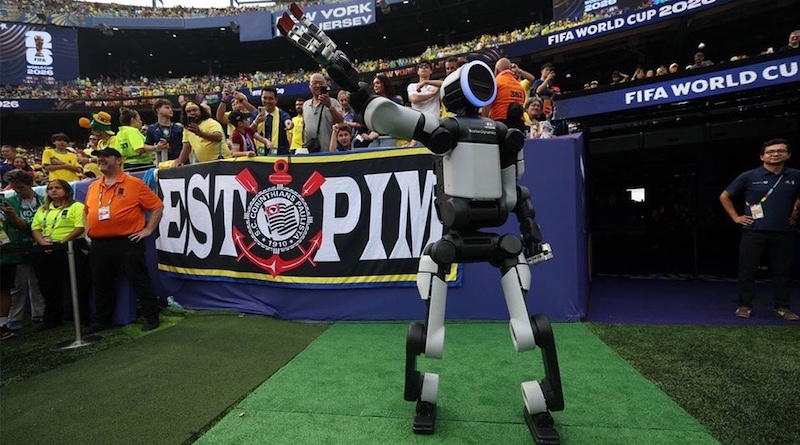
The first tier involves the enhancement of individual units, such as electric vehicles (EVs) and humanoid robots like Boston Dynamics’ Atlas. The second tier, intelligent spaces, focuses on "AI Factories" where logistics, production, and quality control are managed by autonomous systems that learn and optimize in real-time. The final tier envisions a "Smart City" framework where energy grids, public transportation, and robotic services are unified under a single AI-driven operational system.
Strategic Partnerships: NVIDIA, Waymo, and Google DeepMind
To realize this ambitious vision, Hyundai Motor Group is deepening its technical alliances with Silicon Valley’s most influential players. These partnerships are designed to bridge the gap between Hyundai’s hardware manufacturing capabilities and the advanced algorithmic infrastructure of US-based tech firms.
The NVIDIA Robot Reference Platform
Hyundai is collaborating with NVIDIA to develop a "Robot Reference Platform." This initiative combines Hyundai’s robotics hardware with NVIDIA’s high-performance AI computing and the Isaac robotics platform. The goal is to create a standardized framework that allows developers to accelerate the deployment of Physical AI across various industries. This platform is expected to serve as the "operating system" for the next generation of autonomous machines.
Autonomous Mobility with Waymo
In the realm of autonomous driving, the Group’s partnership with Waymo remains a cornerstone of its mobility strategy. By integrating Waymo’s "Driver" technology into Hyundai’s purpose-built vehicles, such as the Ioniq 5, the Group aims to scale robotaxi services globally. This collaboration allows Hyundai to benefit from Waymo’s millions of miles of real-world driving data while providing Waymo with a reliable, mass-produced automotive platform.
Boston Dynamics and Google DeepMind
Perhaps the most forward-looking aspect of the strategy involves Boston Dynamics’ collaboration with Google DeepMind. By incorporating DeepMind’s large language models (LLMs) and vision-language-action (VLA) models into the Atlas humanoid robot, the Group aims to move toward "general-purpose robotics." This would enable robots to understand complex natural language commands and perform tasks in unstructured environments, such as homes or disaster zones, without specific pre-programming.
The Data Flywheel and Manufacturing Competitiveness
A critical differentiator for Hyundai in the Physical AI race is its ability to generate and utilize a "data flywheel." Unlike software companies that lack physical assets, or hardware companies that lack AI depth, Hyundai occupies a middle ground. With approximately 250,000 employees and a massive global footprint in steel, logistics, and manufacturing, the Group can deploy AI in real-world environments to gather performance data, which is then used to refine AI models, which in turn improves physical operations.
This feedback loop is currently being piloted at the Hyundai Motor Group Innovation Center Singapore (HMGICS). This "AI-defined factory" serves as a testbed for human-robot collaboration, where AI manages the flow of parts and monitors assembly precision. The Group plans to export this model to its upcoming facilities, including the Hyundai Motor Group Metaplant America (HMGMA) in Georgia, and eventually to its domestic plants in South Korea.
Timeline of Transformation and Key Milestones
The Group’s transition into a Physical AI leader is the result of a multi-year chronological progression that accelerated following the acquisition of Boston Dynamics in 2021.
- 2021: Hyundai Motor Group acquires a controlling interest in Boston Dynamics, signaling its intent to lead the global robotics market.
- 2022: The establishment of the Boston Dynamics AI Institute in Cambridge, Massachusetts, focused on fundamental research in AI and robotics.
- 2023: Opening of HMGICS in Singapore, the world’s first highly automated urban micro-factory using AI-driven production.
- 2024 (Present): Announcement of the Physical AI Roadmap in San Francisco and the formalization of the Robot Reference Platform with NVIDIA.
- 2025 (Projected): Commercial pilot programs for the all-electric Atlas robot in industrial settings.
- 2026 (Projected): Public showcase of Physical AI technologies at the 2026 FIFA World Cup, where robots are expected to assist in security, logistics, and fan engagement across North American venues.
Domestic Investment and the Saemangeum AI Valley
While the vision is global, Hyundai remains committed to bolstering the technological ecosystem in South Korea. Executive Chair Chung highlighted the development of the Saemangeum AI Valley as a vital component of the Group’s domestic strategy. This initiative involves creating a massive specialized zone for testing autonomous systems, renewable energy integration, and large-scale data centers.
The Saemangeum project is designed to be an "Open Innovation" hub where startups and academic institutions can access Hyundai’s Robot Reference Platform. By fostering a local ecosystem, Hyundai aims to ensure that the advancements made through its international partnerships contribute to South Korea’s industrial competitiveness and job creation in the high-tech sector.
Analysis of Implications for the Global Industry
The shift toward Physical AI represents a calculated response to the plateauing of the traditional internal combustion engine market and the intensifying competition in the EV sector. Industry analysts suggest that Hyundai’s strategy is a direct challenge to companies like Tesla, which is developing its own humanoid robot (Optimus) and Full Self-Driving (FSD) software.

However, Hyundai’s approach differs in its emphasis on "Open Ecosystems." While some competitors pursue closed, vertically integrated stacks, Hyundai is positioning itself as a collaborative partner. By working with NVIDIA and Waymo, Hyundai reduces the immense R&D risks associated with developing foundational AI models from scratch, focusing instead on its strength: the "physicalization" of those models.
Furthermore, the focus on "City-Level Intelligence" suggests that Hyundai is looking beyond vehicle sales toward a service-based revenue model. If the Group can successfully manage urban infrastructure through AI, it opens up new markets in energy management, urban air mobility (UAM), and municipal logistics.
Challenges and Economic Considerations
Despite the optimistic roadmap, several hurdles remain. The transition to AI-defined factories and robotics raises significant questions regarding labor displacement. Hyundai has addressed this by framing the technology as "human-centered," designed to assist workers in hazardous or repetitive tasks rather than replacing them entirely. Nonetheless, the socio-economic impact in manufacturing hubs like Ulsan and Gwangju will require careful management.
Additionally, the reliance on global tech leaders for AI infrastructure introduces geopolitical complexities. As AI technology becomes increasingly scrutinized under national security frameworks, Hyundai’s "bridge" strategy between Korean manufacturing and American software will need to navigate evolving trade regulations and data privacy laws.
Conclusion: A Vision for the 2026 World Cup and Beyond
The San Francisco AI Summit marks a turning point for Hyundai Motor Group. No longer content with being a fast-follower in the automotive industry, the Group is positioning itself at the vanguard of the next industrial revolution. The upcoming 2026 World Cup is set to be the first major global stage where the public will witness the fruits of this labor, with Boston Dynamics’ Atlas and autonomous mobility solutions providing a glimpse into a robotically integrated future.
By combining the "Data Flywheel" of its massive industrial operations with the "Algorithm Infrastructure" of its Silicon Valley partners, Hyundai Motor Group is betting that the future of AI is not just in our screens, but in the physical world we inhabit. As Executive Chair Euisun Chung concluded, the ultimate goal is to foster an innovation ecosystem that enhances the quality of human life through the seamless integration of intelligence into every physical space.
