

The catastrophic flash floods that tore through the Himalayan mountain region in late August 2026 have left an indelible mark on the borderlands of central Nepal and Tibet, precipitating a humanitarian crisis of historic proportions. As of early September, official reports confirm that at least 1,252 people have lost their lives, while more than 4,200 individuals remain missing, buried under mud or swept away by the torrential surge of the Trishuli River. For the survivors, the landscape is unrecognizable; thousands have been displaced, their homes and livelihoods obliterated by a disaster that experts are calling a "Himalayan tsunami." This event serves as a grim harbinger of a new era of climate-related disasters—ones that are becoming more frequent, more deadly, and increasingly unpredictable, forcing a radical rethink of global emergency planning and the ethics of climate responsibility.
The Anatomy of a High-Altitude Catastrophe
The disaster began on August 26, 2026, when an unprecedented ice avalanche high in the Tibetan peaks triggered a chain reaction. While local authorities had been on high alert following a glacial lake outburst just 14 months prior, the nature of this event caught even the most sophisticated monitoring systems off guard. Disaster officials had recently established a comprehensive response plan centered on the Gyirong Port complex at the Nepal-China border, but the sensors were primarily calibrated for rising water levels in known glacial lakes. They were not designed to detect the collapse of massive ice sheets from high-altitude glaciers.
In a matter of minutes, the collapsing ice mass displaced a colossal volume of water, sending a wall of debris and liquid down the mountain slopes. The Trishuli River, a vital artery for the region, surged past its banks with such force that it bypassed border defenses and slammed into the Rasuwa district of Nepal. The speed of the event meant that many downstream communities received no warning. The traditional model of single-hazard monitoring—looking for one specific trigger like rainfall or lake levels—proved tragically outdated. Dr. Saswata Sanyal of the International Center for Integrated Mountain Development (ICIMOD) noted that while sensors for flood risk were active, the lack of cryospheric monitoring for ice avalanches left a fatal gap in the early warning chain.
The Himalayas as a Climate Canary
The tragedy in Nepal and Tibet is not an isolated incident of bad luck; it is the direct result of forty years of accelerated warming. The Himalayas, often referred to as the "Third Pole," have been warming at nearly twice the global average rate. This sustained thermal pressure has led to a trifecta of geological instabilities: melting glaciers, thawing permafrost, and a weakening of the underlying bedrock that once held the mountain face together.
In 2020, researchers identified 47 glacial lakes across Nepal, China, and India that were at immediate risk of flooding. By 2026, updated data from the United Nations Development Program (UNDP) suggested that this number was a conservative estimate, with millions of people now living in the direct path of potential "GLOFs" (Glacial Lake Outburst Floods). The August 26 disaster demonstrated that even when a community prepares for one type of flood, the changing climate introduces new, hybrid threats—such as ice avalanches combined with river surges—that bypass current infrastructure.
The Economic Burden and the Pivot to Climate Justice
The financial toll of the disaster is staggering. For Nepal, a nation with a developing economy, the cost of recovery and reconstruction is estimated at $5 billion. This figure represents approximately 10 percent of the country’s total Gross Domestic Product (GDP). The scale of the loss has moved the conversation from one of "disaster relief" to one of "sovereign liability."
Nepal’s Foreign Minister, Shishir Khanal, has become a leading voice for a new diplomatic framework. In a recent address to the international community, Khanal argued that the era of viewing disaster assistance as "charity" must end. He asserted that major greenhouse gas emitters—specifically naming China, the United States, and India—bear a legal and moral responsibility to compensate vulnerable nations for climate-induced losses.
"We are shifting our diplomatic framework from ‘aid’ to ‘justice and compensation,’" Khanal stated. He emphasized that Nepal contributes a negligible fraction to global carbon emissions yet suffers disproportionately from the atmospheric pollution of its more industrial neighbors. This sentiment echoes the growing "Loss and Damage" movement within international climate negotiations, which seeks to hold the world’s wealthiest and most polluting nations accountable for the environmental destruction they have fueled.
The Global Loss and Damage Fund: A Precarious Lifeline
The mechanism intended to address these grievances is the international Fund for Responding to Loss and Damage, which was formally approved by nearly 200 countries during the COP28 climate talks in 2023. The fund was hailed as a breakthrough for climate justice, intended to provide a financial safety net for nations like Nepal that are on the front lines of the climate crisis.
However, the reality of the fund has been underwhelming. While experts estimate that developing nations will require up to $580 billion annually to cover climate-related losses by 2030, the fund had only received $741 million in pledges as of late 2025. Even more concerning is the delivery of these funds; less than $500 million has actually reached the fund’s accounts, and recent reports suggest the fund could run out of money as early as next year.
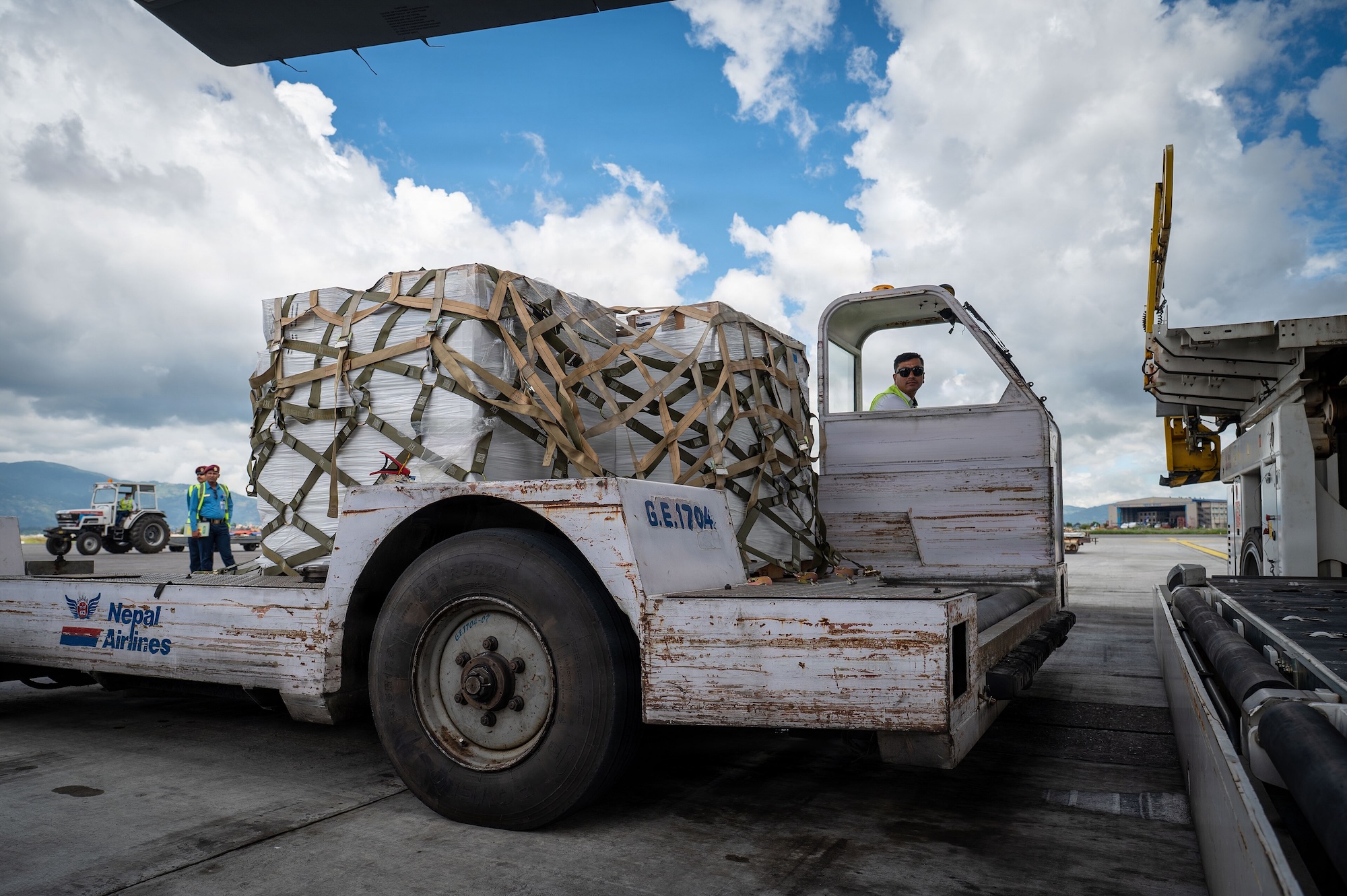
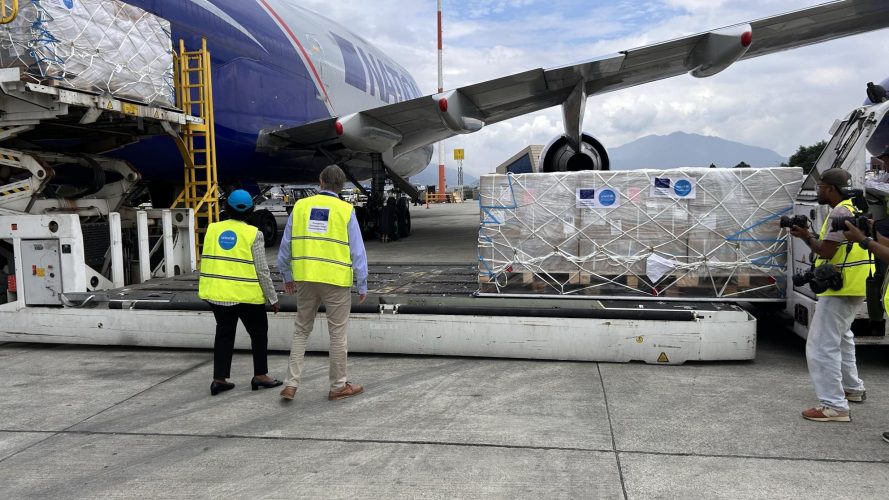
In the immediate aftermath of the Himalayan floods, nearly 30 countries sent emergency relief, including food, medical supplies, and search-and-rescue teams. On September 2, emergency supplies arrived at Tribhuvan International Airport in Nepal, coordinated by international agencies like UNICEF and various national airlifts. While these gestures are vital for immediate survival, they do little to address the long-term structural damage or the multi-billion-dollar deficit required to rebuild resilient infrastructure.
A Universal Threat: 1.8 Billion People at Risk
The disaster in the Himalayas is a localized manifestation of a global systemic risk. According to World Bank data, approximately 1.8 billion people—nearly one-quarter of the global population—live in areas with significant flood risk. This risk is no longer confined to low-lying coastal regions or river deltas; it is increasingly threatening high-altitude regions and inland urban centers.
In developed nations, the crisis is manifesting as an insurance and real estate dilemma. In the United States, for instance, historical flood records are becoming obsolete. Homeowners and businesses are frequently purchasing property in zones they believe to be safe, only to find that climate change has redrawn the flood maps. While a handful of U.S. states, including New York, New Jersey, and Texas, have implemented strict flood disclosure laws requiring sellers and landlords to inform residents of past damage, more than a dozen states have no such requirements. This lack of transparency leaves millions of residents vulnerable to financial ruin when "once-in-a-century" floods begin occurring every few years.
Political Obstruction and the Denial of Responsibility
The path toward global resilience is further complicated by political volatility in the world’s second-largest emitter, the United States. Under the administration of Donald Trump, the federal government has taken a combative stance toward climate science and international cooperation. This approach has included aggressive energy policies aimed at maximizing fossil fuel production while systematically dismantling renewable energy incentives and energy efficiency programs.
More critically, the administration has been accused of "scrubbing" climate awareness from the public record. Federal agencies have been ordered to remove references to climate change from their websites, and the U.S. Department of Agriculture (USDA) has undergone a "restructuring" that critics claim is designed to force out experienced climate scientists and researchers.
The Natural Resources Defense Council (NRDC) has highlighted that this climate denialism is directly contributing to an "affordability crisis." By ignoring the rising costs of flood damage and obstructing mitigation efforts, federal policy is effectively shifting the financial burden of climate change onto individual taxpayers and local governments. This internal policy of denial also hampers international efforts, as the U.S. remains a primary holdout in providing the robust financial contributions needed to make the Loss and Damage fund viable.
Conclusion: The Long Road to Recovery
As the search for the 4,200 missing people in Nepal and Tibet continues, the international community faces a reckoning. The "Himalayan tsunami" of 2026 has proven that current disaster preparedness models are insufficient for the speed and variety of climate-induced events. The transition from a model of reactive aid to one of proactive justice is no longer a theoretical debate; it is a survival necessity for vulnerable nations.
Recovery for the Rasuwa district and the surrounding regions will take years, if not decades. Without a fundamental shift in how the world’s largest economies take responsibility for their environmental footprints, the cycle of destruction and inadequate relief is destined to repeat. The victims in the Himalayas are the latest casualties of a global crisis that knows no borders, but the solutions remain trapped behind political and financial barriers that the world can no longer afford to maintain.
