

For Charlie Hamblen, a resident of the historic farming community in Gorham, Maine, the sound of progress is a series of supersonic shockwaves that rattle the windows of his 19th-century farmhouse. These blasts, originating from a nearby quarry over half a mile away, occurred more than a dozen times last year alone. Hamblen’s experience is no longer an isolated grievance; it is a symptom of a massive industrial shift occurring across the Pine Tree State. As Maine grapples with the escalating effects of climate change—specifically rising sea levels and increasingly violent winter storms—the demand for construction aggregate has reached unprecedented heights. This surge is fueling a rapid expansion of the state’s quarrying industry, creating a complex conflict between environmental necessity, industrial growth, and the rights of local homeowners.
The construction aggregate industry, which produces the sand, gravel, and crushed stone essential for infrastructure, is currently experiencing a gold rush in Maine. According to data from the Maine Department of Environmental Protection (DEP), the number of permits issued for new quarries has more than tripled over the last five years when compared to the preceding decade. While traditional infrastructure needs like road maintenance and residential housing remain steady, the primary catalyst for this recent explosion is the "climate-amplified" demand for stone walls and shoreline stabilization.
The Climate Connection: From Storms to Stone
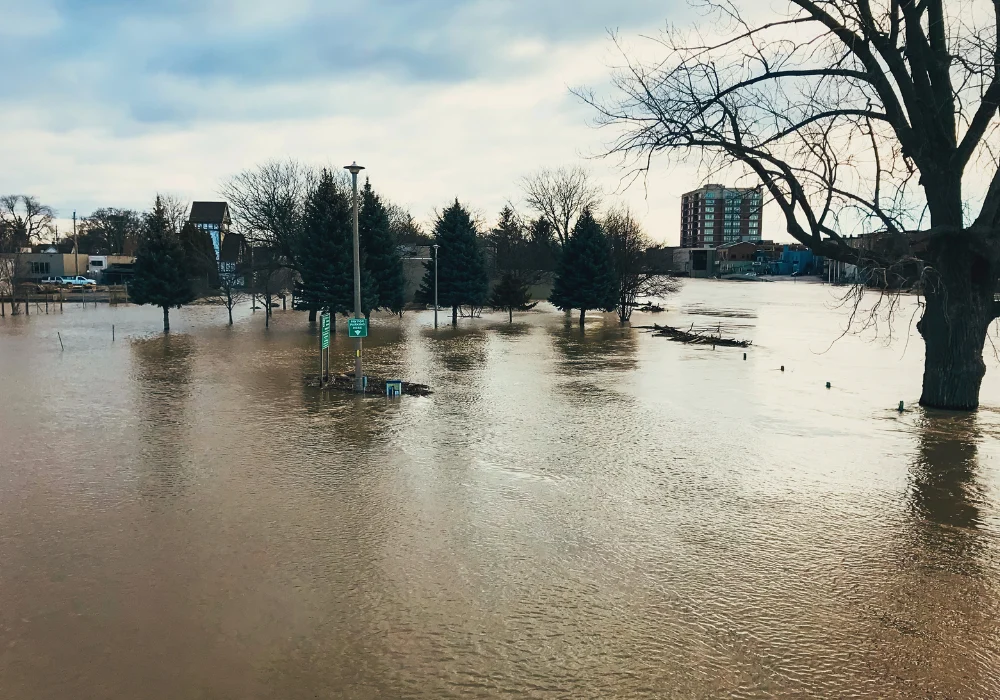
The catalyst for this industrial pivot can be traced back to a series of devastating winter storms in late 2023 and early 2024. These tempests, characterized by record-breaking storm surges and inland flooding, laid bare the vulnerability of Maine’s coastal and riverfront properties. In response, property owners and municipalities rushed to fortify their shorelines. The material of choice is "riprap"—large, angular stone slabs and crushed rock designed to absorb the impact of crashing waves.
The surge in demand is reflected in state permitting data. The Maine DEP reported that applications for shoreline stabilization permits nearly tripled, jumping from 118 in 2022 to 313 in 2024. This spike was facilitated by an emergency permitting provision in state law, designed to allow homeowners to make rapid repairs following natural disasters. Furthermore, a significant influx of federal disaster relief funds from the Federal Emergency Management Agency (FEMA) provided the financial capital necessary for these expensive "hard armoring" projects.
Skip Murray, owner of L.P. Murray & Sons, a construction firm based on the southern Maine coast, noted that the window for emergency repairs created a frantic work environment. "I did a lot of work in municipalities in that timeframe," Murray said, noting that the availability of federal reimbursement made the decision to build stone walls an easy one for many property owners. However, the cumulative effect of hundreds of individual seawall projects has created a massive, sustained demand for the raw materials extracted from Maine’s inland quarries.
Economic Scale and Industrial Growth
The economic impact of this demand is staggering. Data published by the U.S. Geological Survey (USGS) indicates that the value of crushed rock, sand, and gravel produced in Maine has doubled in a very short window. In 2021, the industry value hovered around $100 million; by 2024, that figure ballooned to more than $220 million.
Maine currently hosts approximately 780 active mining facilities. While many of these are small-scale gravel pits, an increasing number are evolving into intensive quarrying operations involving the blasting of solid bedrock, or "ledge." Michael Clark, the mining coordinator for the DEP, observed that from 2015 to 2021, the state averaged roughly three new quarry registrations per year. Between 2022 and 2025, that average jumped to 10 per year, excluding significant expansions of existing sites.
This growth is not limited to Maine. Similar trends are visible across New England. On the Massachusetts islands of Nantucket and Martha’s Vineyard, the volume of construction aggregate barged to the islands has increased by 125 percent over the last decade, driven by coastal resilience projects and a luxury real estate boom.
Local Resistance and the Battle for Regulation
The rapid expansion of quarries has caught many Maine towns off-guard. State regulations on quarries are relatively minimal, focusing primarily on dust emissions, equipment exhaust, and basic blasting limits. Critics argue that these rules are insufficient to protect the quality of life for residents living near expanding pits.
In Gorham, the tension culminated in Charlie Hamblen successfully running for a seat on the Town Council in November 2025. His primary motivation was the proposed expansion of the Brickyard Quarry by Shaw Brothers Construction. The company sought to expand its 6.7-acre operation into a 26-acre parcel, potentially increasing the number of annual blasts.
"If they expand this quarry, we figure it’s going to impact at least another 300 existing houses," Hamblen warned. The Gorham Planning Board recently recommended a rezoning request that would move the expansion forward, leaving the final decision to the Town Council.
Dan Shaw, owner of Shaw Brothers Construction, has defended the industry’s growth as a necessity for the state’s survival. "We need quarries for construction in Maine," Shaw told the planning board. "We need concrete. We need hospitals. We need roads." Shaw also noted that his company has taken steps to mitigate environmental impacts, such as powering operations with energy from a nearby solar farm.
However, other towns are taking a more restrictive approach. Winthrop and South Thomaston have recently adopted some of the state’s most stringent mineral extraction ordinances. These new rules include:
- Strict caps on the number of blasts permitted per year.
- Size limitations on quarry expansions.
- Enhanced requirements for seismic monitoring and public data sharing.
- Increased setback distances from residential property lines.
The "Domino Effect" and Environmental Concerns
While quarries face scrutiny inland, the very seawalls they supply are facing a new wave of environmental skepticism. Coastal engineers and environmentalists have long warned about the "domino effect" of hard armoring. When a stone wall is erected to protect one property, the wave energy is not dissipated; it is deflected to neighboring stretches of coastline. This often accelerates erosion on adjacent beaches, marshes, or unprotected bluffs.
In response to this research, the Maine DEP recently updated its permitting rules to prioritize "nature-based" solutions. These include "living shorelines" that use native vegetation, coir logs (biodegradable rolls made of coconut fiber), and regenerative sediment to stabilize the coast. These methods are designed to absorb wave energy rather than deflect it.
Despite these changes, hard infrastructure remains the preferred choice for many due to its perceived durability. Craig Coolidge, principal engineer at Summit Geoengineering, noted that while the vision for nature-based solutions is sound, the execution is difficult. "Those ‘soft’ approaches can’t always meet the engineering demands that armored infrastructure projects can," Coolidge explained. He added that more stringent permitting for seawalls has slowed the pace of construction, with approvals now taking up to nine months instead of six.
A Growing Movement for Moratoriums
The town of Camden has emerged as a leader in the movement to halt the proliferation of seawalls. In June 2025, voters approved a 180-day moratorium on all coastal shoreline armoring projects. Jeremy Martin, Camden’s planning and development coordinator, said the ban was necessary to give the town time to develop local codes that the state currently lacks.
"Seawall begets seawall," Martin said, describing how residents feel forced to build stone barriers simply because their neighbors did, which changed the way water interacted with their own land. Martin pointed to one specific project where the volume of stone trucked in was so high it physically damaged the public road leading to a boat launch.
The conflict in Maine represents a microcosm of a global challenge: how to adapt to a changing climate without destroying the very environment and community fabric people are trying to save. For residents like Charlie Hamblen, the issue is about the immediate impact on the home. For planners like Jeremy Martin, it is about the long-term health of the ecosystem. And for industrial owners like Dan Shaw, it is about providing the literal bedrock upon which a growing state is built.
As 2026 approaches, the state of Maine stands at a crossroads. The convergence of a budget shortfall at the Maine Department of Transportation—which could slash $400 million in road projects—and the tightening of local ordinances may eventually cool the quarrying boom. However, as long as the sea continues to rise, the demand for Maine’s stone is unlikely to vanish, leaving towns to continue their delicate balancing act between protection and over-extraction.
