

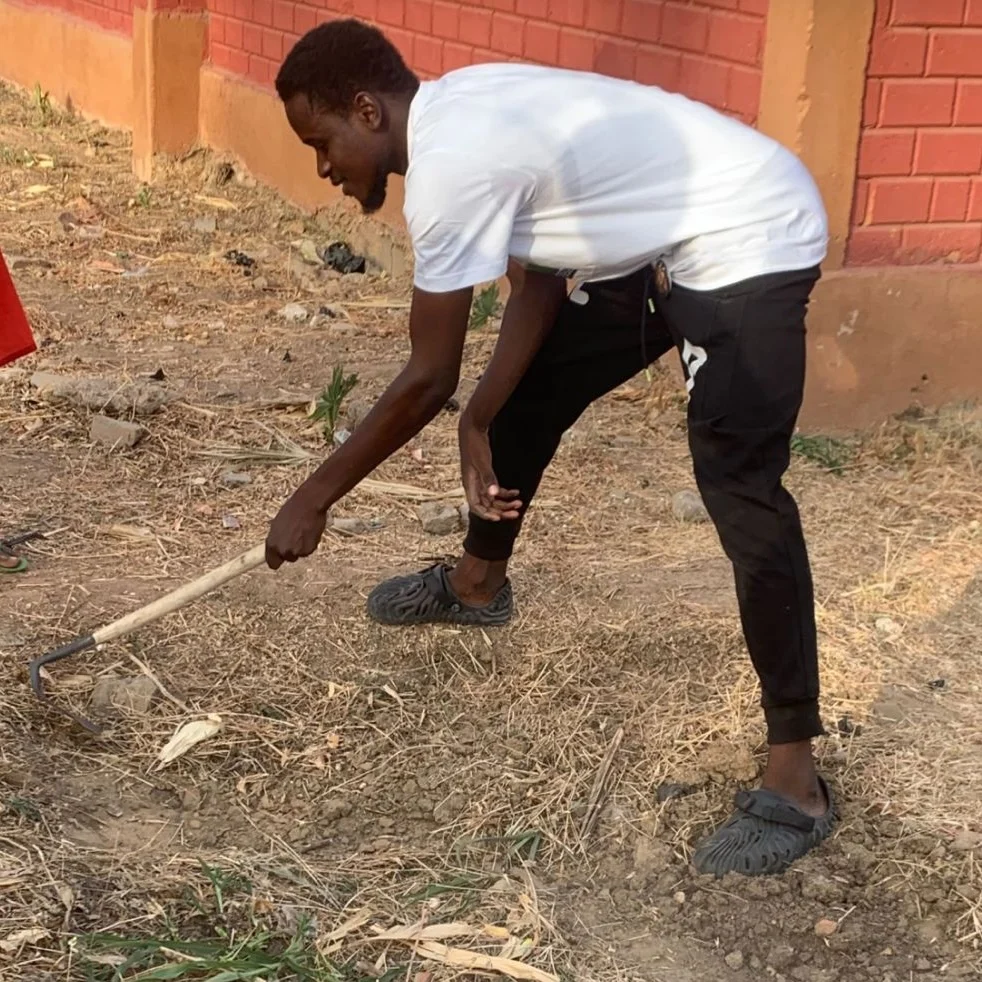
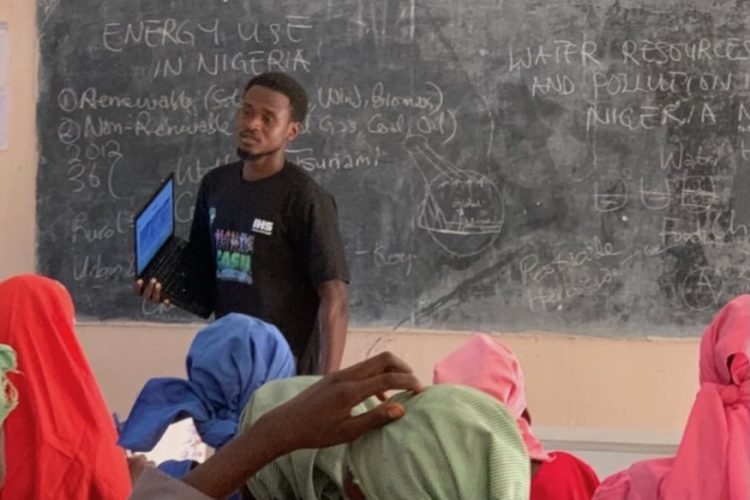
On a sweltering January afternoon in Maiduguri, the capital of Nigeria’s Borno State, 26-year-old climate educator Aliyu Ibrahim stood before a classroom of high school students at the Yerwa Government Girls’ School. The scene, while seemingly ordinary, represents a critical frontline in a battle that is as much about environmental survival as it is about social stability. Ibrahim, a man whose life has been shaped by the very forces he now teaches, is the face of a growing movement known as the Green Panthers. This grassroots organization is working to bridge the gap between climate literacy and community resilience in a region where the scars of armed insurgency and the ravages of a warming planet are inextricably linked.
The mission of the Green Panthers is born from a grim reality. Ibrahim grew up in Izge, a village in Borno State that sat near the epicenter of one of the most violent periods in Nigeria’s modern history. In 2014, the village was the site of a brutal massacre by the extremist group Boko Haram, which claimed the lives of 105 residents. However, for Ibrahim, the tragedy was not limited to the immediate loss of life. As a teenager, he witnessed the slow, agonizing death of the local ecosystem. The sound of gunfire was followed by a haunting silence—the silence of abandoned farmlands, the retreat of the waters of Lake Chad, and the collapse of the traditional livelihoods that had sustained his people for generations. These experiences led Ibrahim and a group of friends to found the Green Panthers in 2019, an initiative designed to mobilize youth against the twin specters of environmental destruction and socio-political violence.
A Chronology of Crisis: The Intersection of War and Warming
To understand the urgency of the Green Panthers’ work, one must look at the timeline of the North East Nigerian crisis. Since the emergence of the Boko Haram insurgency in 2009, the region has been trapped in a cycle of devastation. Between 2011 and 2023, the conflict claimed more than 38,000 lives and displaced millions, creating one of the world’s most severe humanitarian crises. While the human toll is often the focus of international headlines, the environmental impact has been equally catastrophic. Insurgents have frequently employed scorched-earth tactics, polluting natural resources and rendering vast swaths of fertile land inaccessible.
Simultaneously, the region has been hit by the accelerating effects of global climate change. Borno State, situated in the Sahelian belt, is on the front lines of desertification. Research indicates that the Sahara Desert is encroaching into northeast Nigeria at a rate of nearly 0.5 miles (0.8 kilometers) per year. This environmental shift, combined with the instability of the conflict, has decimated the local economy. Historically, Borno State was an agricultural powerhouse, producing over 420,000 tons of wheat annually—nearly a third of Nigeria’s total consumption. Following the onset of the insurgency and the worsening of drought conditions, the production of staple crops like wheat and millet plummeted by 80 percent, a deficit from which the region has yet to fully recover.
The Green Panthers’ Educational Framework
The Green Panthers operate on the philosophy that climate education is a form of civic empowerment. Once a month, volunteers utilize free periods in secondary schools to conduct intensive training sessions. These lessons are tailored to the local context, delivered in English as well as indigenous languages like Hausa and Kanuri to ensure the message reaches every student regardless of their linguistic background.
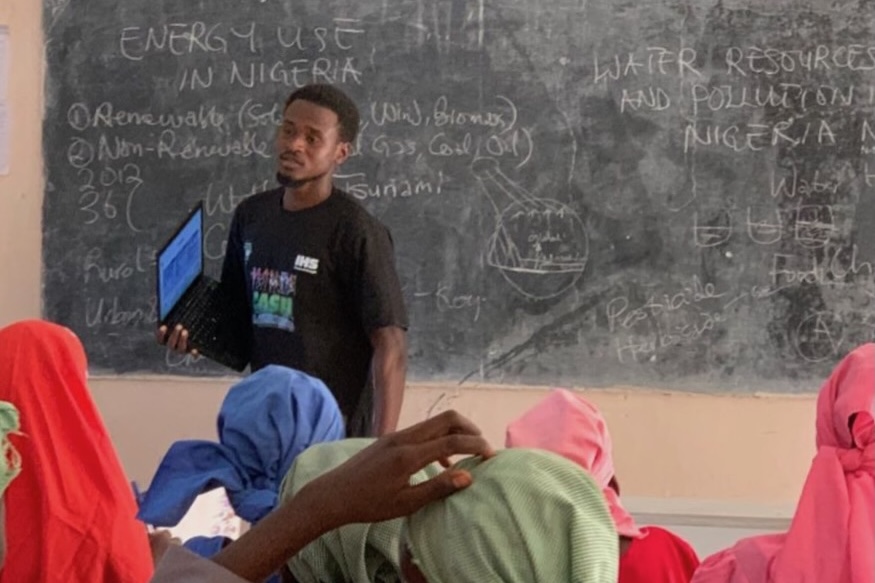
A key component of their pedagogy is the use of visual aids. Recognizing that abstract concepts like "carbon emissions" can feel distant to students in rural Nigeria, Ibrahim and his team use photographs and videos of local landmarks. They show images of parched, cracked earth where rivers once flowed, flooded neighborhoods in Maiduguri, and the receding banks of Lake Chad. According to studies published in the National Institutes of Health (NIH) archives, visual learning significantly enhances memory retention by anchoring complex data to concrete, recognizable imagery. For the students of Borno, these images are not just educational tools; they are mirrors reflecting their own lived experiences.
When physical travel becomes too dangerous due to the presence of armed groups or military operations, the Green Panthers pivot to digital platforms. Using Zoom and mobile messaging apps, they maintain contact with student leaders, ensuring that the momentum of the movement is not stalled by the volatility of the security situation. "I believe young people are the future," Ibrahim says. "We need to start with them because they are the ones who will inherit this land, for better or worse."
Supporting Data: The Economic and Ecological Stakes
The necessity of the Green Panthers’ work is underscored by the sheer scale of the ecological challenges facing Nigeria. A 2025 study published in the International Journal of Agricultural Economics revealed that more than 70 percent of Borno State’s six million residents still depend on agriculture for their survival. The loss of arable land is not merely an environmental concern; it is a direct threat to food security and a driver of further conflict. As fertile land becomes scarce, competition between farming communities and nomadic herders intensifies, often leading to localized violence that exacerbates the broader insurgency.

Mayokun Iyaomolere, an expert from the Institute of Ecology and Environmental Study at Obafemi Awolowo University, notes that northern Nigeria is experiencing "abnormal heat" and prolonged droughts that are directly linked to global warming. These conditions do more than just kill crops; they create a vacuum of opportunity. When young people see their parents’ farms failing and their traditional ways of life disappearing, they become more vulnerable to recruitment by extremist groups. By providing climate literacy, the Green Panthers are offering an alternative path—one rooted in stewardship rather than destruction.
From Literacy to Action: Student Success Stories
The impact of the Green Panthers is best seen in the actions of the students themselves. At Yerwa Government Girls’ School, 17-year-old Mabel Natal Ahmad has transformed her understanding of waste management into a practical skill. Through the program, she learned the art of upcycling, using discarded paper scraps to create papier-mâché bowls and spoons. "We were demonstrated how we can upcycle our discarded papers and sweet candy nylons," Ahmad explains. Her advocacy has extended to her home, where her parents now repurpose discarded beverage cans for use in their flower nursery, reducing the family’s environmental footprint.
Another student, 15-year-old Fatima Muhammed, credits the Green Panthers with helping her find her voice. Previously shy and hesitant to speak in public, Fatima now leads discussions with her peers and family members about the importance of tree planting and water conservation. "I would like to be a climate advocate like Aliyu after my education," she says, highlighting the "multiplier effect" of the program. To date, the Green Panthers have engaged over 200 communities across Borno, Adamawa, and Yobe states, resulting in the planting of more than 4,000 trees and the training of 500 teenage environmental advocates.

Official Responses and Institutional Support
The Green Panthers’ efforts have not gone unnoticed by regional authorities. Most of the club’s activities receive logistical support from government agencies, including the Borno State Ministry of Environment. Bashir Muhammed, a volunteer with the organization, notes that individual donors and local community leaders have also stepped up to provide resources.
However, the path forward remains fraught with obstacles. Ibrahim points to the chronic lack of long-term funding as a major barrier to scaling the initiative. While one-off tree-planting events are successful, "afforestation" requires years of sustained care and protection, which is difficult to guarantee in a conflict zone. Furthermore, complex land ownership laws and usage disputes often complicate the process of selecting sites for new forests.
Broader Implications and the Path Ahead
The work of the Green Panthers serves as a microcosm of a global challenge: how to implement climate adaptation strategies in fragile states. In regions like the Lake Chad Basin, climate change acts as a "threat multiplier," taking existing social and political tensions and pushing them to a breaking point. Ibrahim’s vision is to expand the Green Panthers into neighboring Chad, Cameroon, and Niger—countries that share the same ecological and security challenges.

As the organization continues to develop educational materials in local languages, it is essentially "decolonizing" climate discourse, making it accessible to those who are most affected by it but often least represented in international climate negotiations. The "radicalization" of climate literacy that Ibrahim speaks of is not about violence; it is about a radical shift in consciousness. It is about arming the next generation with the knowledge to hold both their local leaders and the global community accountable for the health of their environment.
In the face of encroaching deserts and persistent conflict, the Green Panthers represent a beacon of pragmatic hope. Their story suggests that while the challenges of the 21st century are daunting, the solution may lie in the classrooms of Maiduguri and the hands of students who refuse to let their future be buried by the sands of the Sahara or the chaos of war. Through education, upcycling, and the planting of a single sapling at a time, they are rewriting the narrative of Borno State—from a land of victims to a land of advocates.
