

The global automotive landscape reached a significant milestone in June 2026 as plugin electric vehicle registrations surged to approximately 2 million units, capturing a record 30% share of the total new vehicle market. According to the latest registration data, the sector experienced an 8% year-over-year growth, driven primarily by a robust resurgence in battery electric vehicles (BEVs), which offset a continuing decline in the popularity of plugin hybrids (PHEVs). While the broader automotive industry continues to navigate economic volatility and shifting regulatory environments, the transition to pure electric mobility appears to be accelerating in most major markets outside of North America and mainland China.
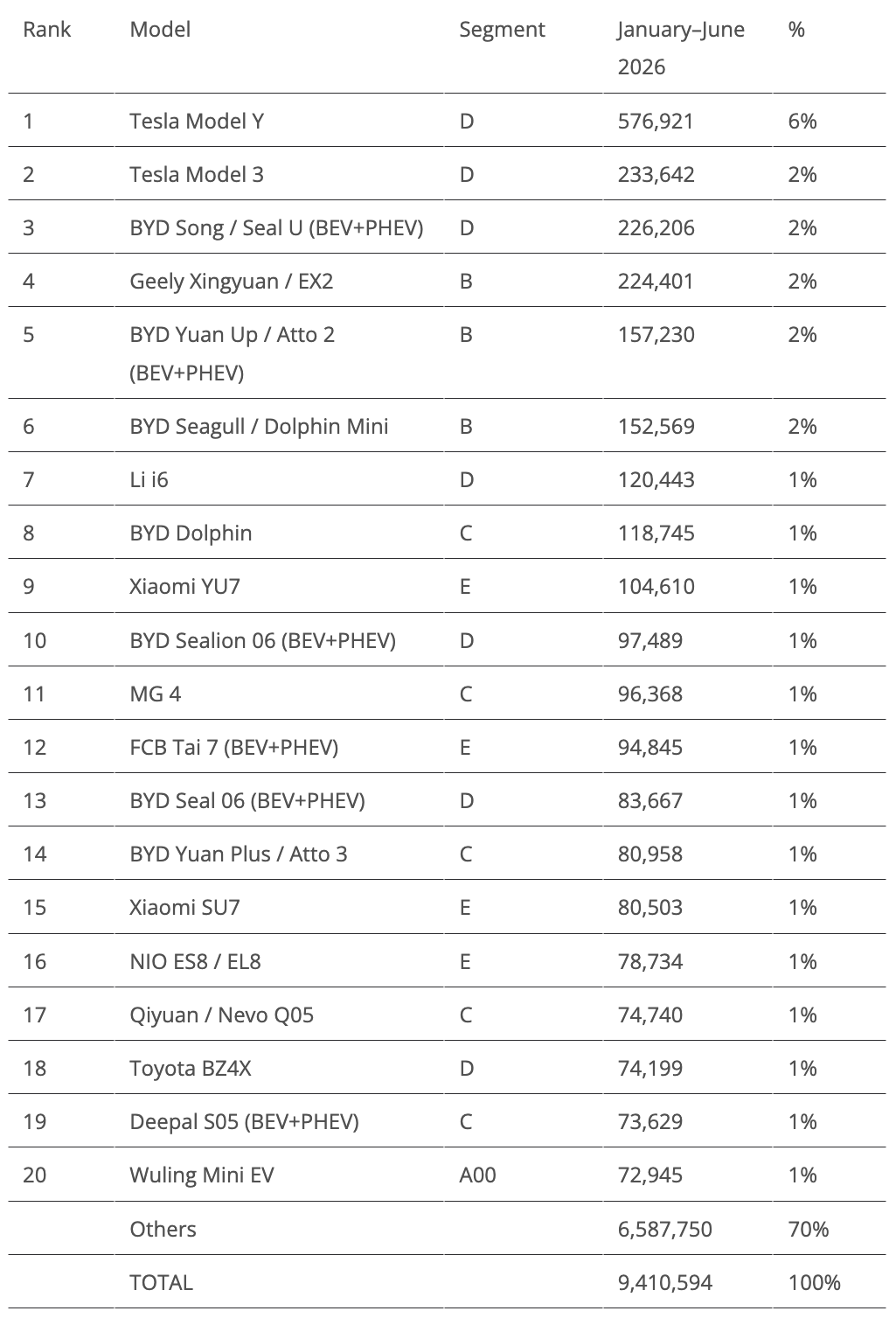
The June performance highlights a stark divergence in drivetrain preferences. BEVs saw a 21% year-over-year increase, marking their highest growth rate since September of the previous year. In contrast, PHEVs remained "in the red," with registrations dropping 14% compared to June 2025. This shift has recalibrated the internal dynamics of the plugin market; BEVs now represent 72% of all plugin sales, their highest proportion of the mix since 2022. On a year-to-date basis, the total EV share for 2026 has climbed to 24%, a staggering increase from the 6% share recorded five years ago and the mere 1% share seen a decade ago.
A Decade of Transformation: Chronology of Market Evolution
The journey to a 30% monthly market share has been defined by rapid technological maturation and shifting consumer confidence. In 2016, the global EV market was a niche segment, accounting for roughly 0.6% of sales for BEVs and 0.4% for PHEVs. By 2021, the share had quintupled to 6%, bolstered by the early success of the Tesla Model 3 and the initial wave of Chinese domestic expansion.

The current 2026 landscape reflects a more mature industry where pure electric models are becoming the default choice for new buyers. The year-to-date growth of 11% for BEVs suggests a return to "normal" growth patterns following a period of post-subsidy stabilization in several regions. However, the PHEV segment continues to struggle, down 11% year-to-date, as consumers increasingly opt for the simplicity and improving range of full battery electrics or the lower entry cost of traditional non-plugin hybrids.
Regional Dynamics and the Impact of Policy Shifts
The global data reveals significant regional disparities, particularly when examining the world’s two largest auto markets. In the United States, the EV sector is still adjusting to the expiration of several federal tax credits. While the first quarter of 2026 saw a sharp 40% drop in plugin registrations, the second quarter showed signs of stabilization, with the decline narrowing to 20%.
In China, the market is undergoing a structural correction. PHEV sales, which previously served as a bridge for cautious consumers, are currently experiencing a sharp contraction. However, when the U.S. and Chinese markets are excluded from the global tally, the rest of the world shows explosive growth. Outside of these two nations, EV registrations jumped 52% year-over-year in June, with BEVs specifically surging by 62%. This suggests that emerging markets in Southeast Asia, Latin America, and established markets in Europe are now providing the primary momentum for the global transition.
Top Selling Models: The Dominance of Tesla and Chinese Manufacturers
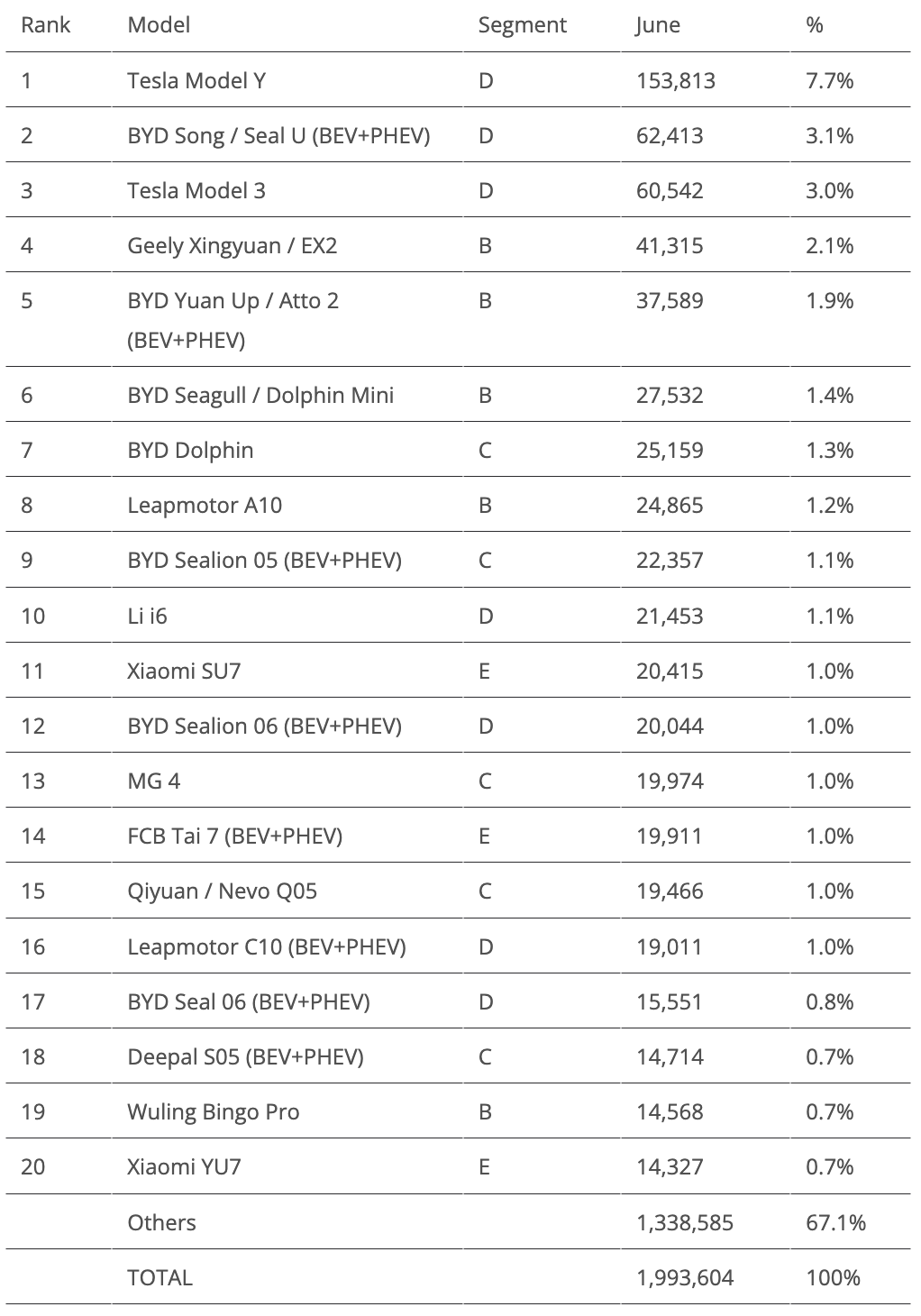
The leaderboard for June 2026 remains dominated by a familiar trio, though the figures behind them tell a story of record-breaking demand. The Tesla Model Y maintained its position as the world’s best-selling vehicle, registering 153,813 units—a 21% increase year-over-year and its strongest monthly performance to date. The introduction of a standard-range version and a "Long" three-row body style has broadened the Model Y’s appeal, particularly in family-oriented segments.

The BYD Song secured the silver medal with 62,000 units. Its performance was bolstered by a significant export push and the launch of the "Ultra" body configuration. Industry analysts note that the Song’s new flash-charging capabilities have made it a formidable competitor to Western SUVs, positioning it as a serious contender for the top spot in the second half of the year.
The Tesla Model 3 took the bronze with 60,000 deliveries. Despite being one of the older platforms in the top 20, the Model 3 saw a 30% volume increase compared to June 2025, marking its best performance since September. The enduring popularity of the Model 3 highlights the brand loyalty Tesla continues to command even as a wave of new Chinese competitors enters the market.
The Rise of the Challengers: Leapmotor and Xiaomi
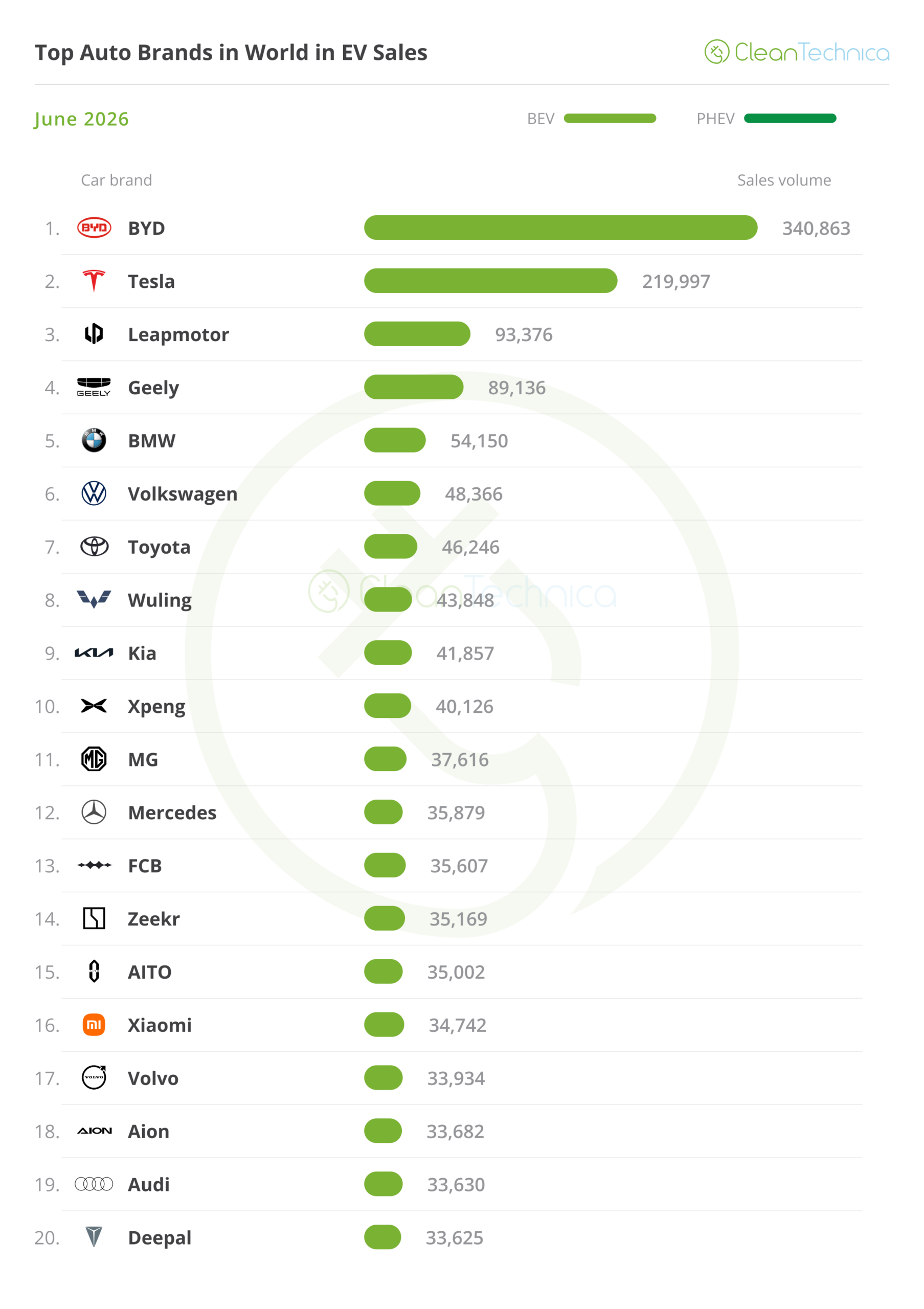
One of the most significant developments in the June report is the meteoric rise of Leapmotor. The startup surpassed Geely to take the third spot in the brand rankings for the month, delivering a record 93,376 units. The Leapmotor A10, a fully electric small crossover, reached 8th place in the model rankings with 25,000 registrations in only its fourth month on the market. With a pipeline that includes the A05 hatchback and the D99 MPV, Leapmotor is positioned to disrupt the established order of the "Big Three" (BYD, Tesla, and Geely).
Similarly, Xiaomi continues to gain ground. The SU7, the tech giant’s first foray into the automotive space, jumped four positions to 15th place. Changan also made significant strides, with its Qiyuan Q05 model entering the top 20 at 17th place. These results indicate that the "new force" of Chinese manufacturers is successfully transitioning from high-volume domestic players to global contenders.
Legacy Manufacturers: Successes and Struggles
Traditional "legacy" automakers continue to find the transition to electric mobility challenging, with none appearing in the top 20 model list for June. However, some brands are showing resilience. BMW remains the top-performing legacy brand, with the iX1 and X1 PHEV twins registering 13,792 units. The new BMW iX3 also set a record with 9,175 registrations as production ramps up to meet European and Asian demand.
Toyota has also seen a resurgence in its electric offerings. The bZ4X crossover reached 12,830 units, helping the Toyota brand climb to 7th place in the overall brand rankings. This performance puts Toyota only 2,000 units behind its primary rival, the Volkswagen Group, suggesting that the Japanese automaker’s "multi-pathway" strategy is beginning to yield higher BEV volumes.
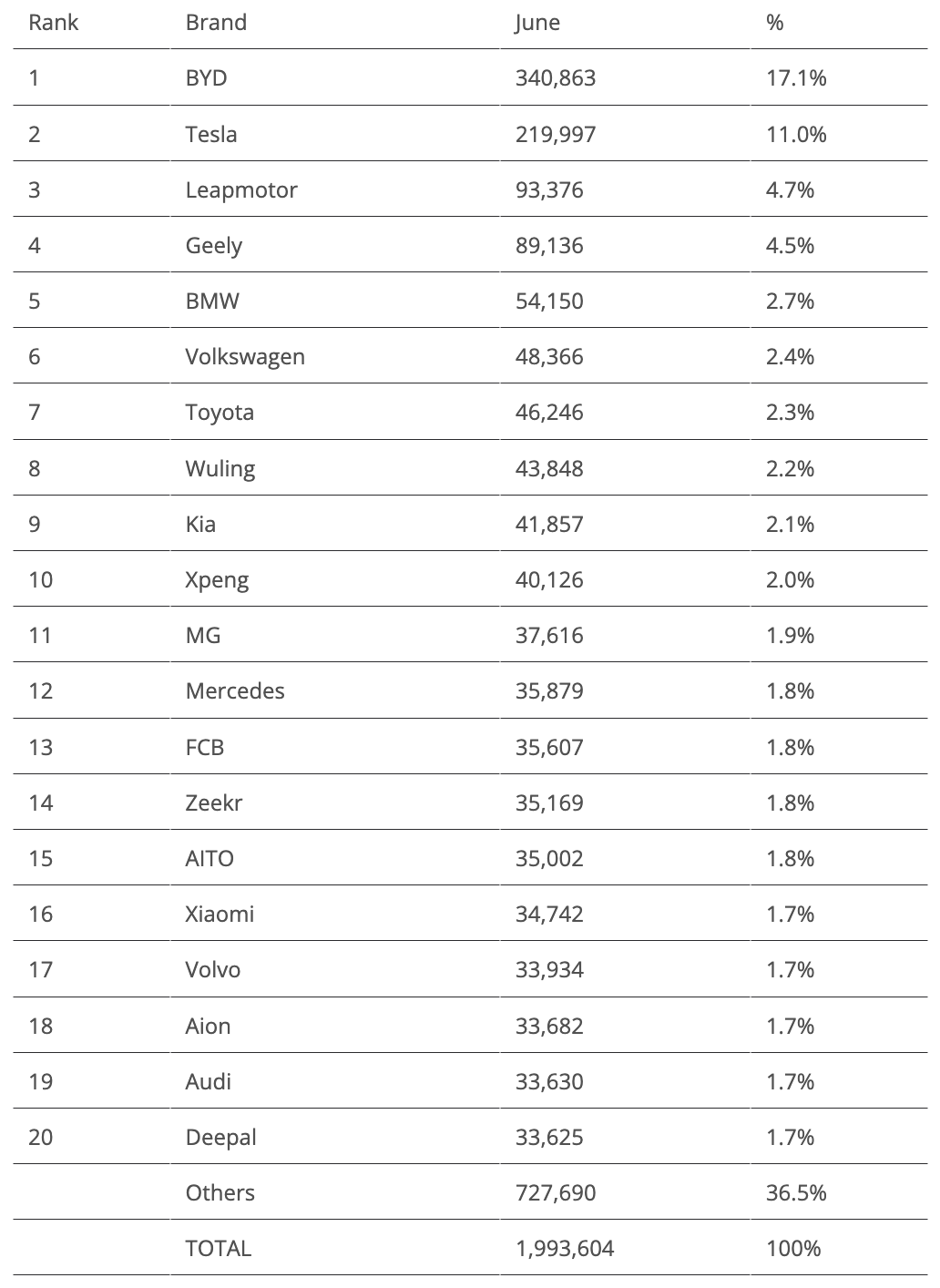
In contrast, Audi continues to struggle to keep pace with its premium peers. While Mercedes-Benz saw strong sales of its new CLA electric sedan (8,500 units in June), Audi’s lack of fresh high-volume BEV metal has seen it slip to 19th in the brand rankings, trailing behind both its German rivals and several Chinese upstarts.
Manufacturer and OEM Rankings: BYD Holds the Lead
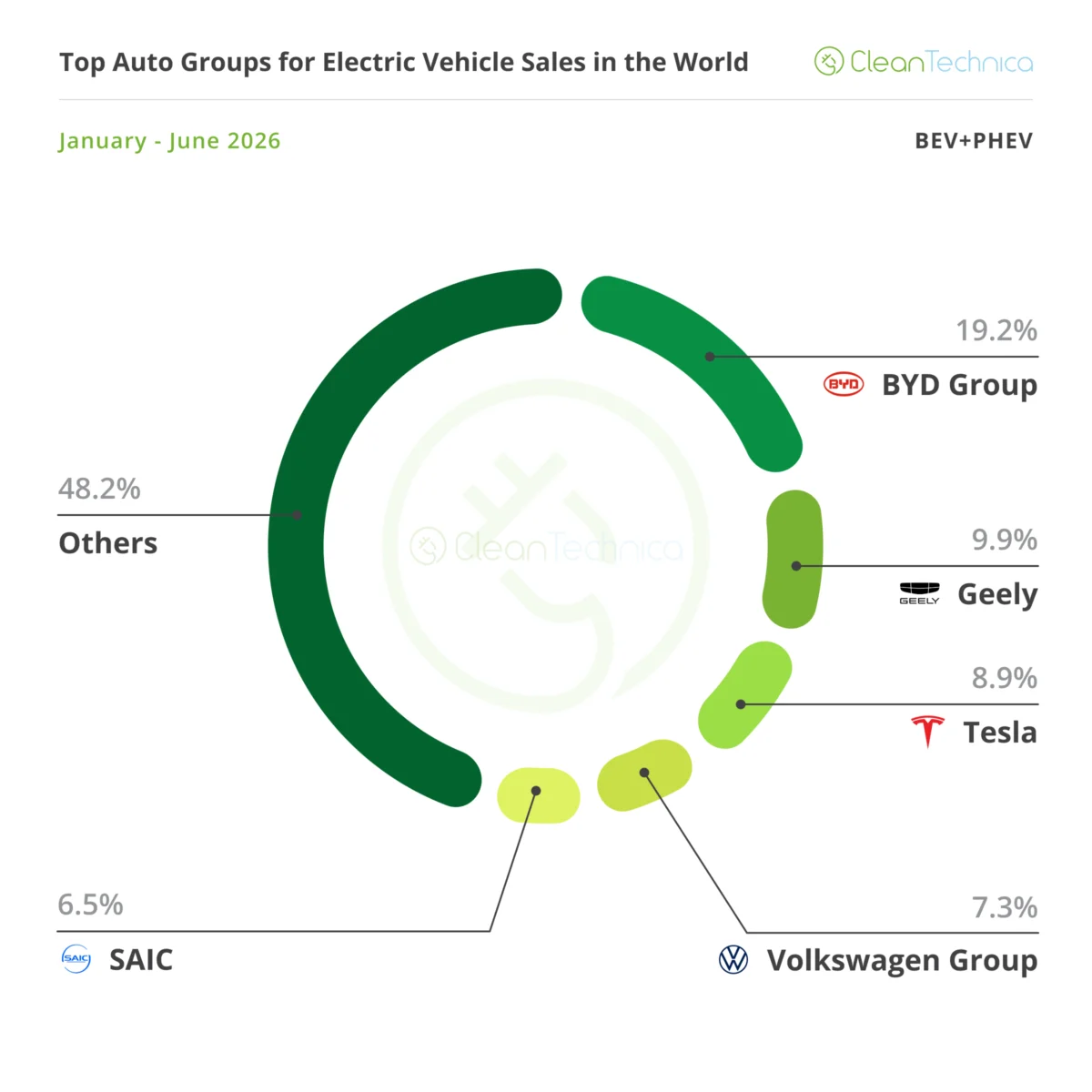
In the battle of the Original Equipment Manufacturers (OEMs), BYD remains the global leader with a 19.2% market share. The company’s focus on export markets has paid off, with international sales now accounting for over 40% of its total volume. Geely Group holds the second position with a 9.9% share, though it saw a slight 0.2% dip as its namesake brand and Lynk & Co faced increased competition.
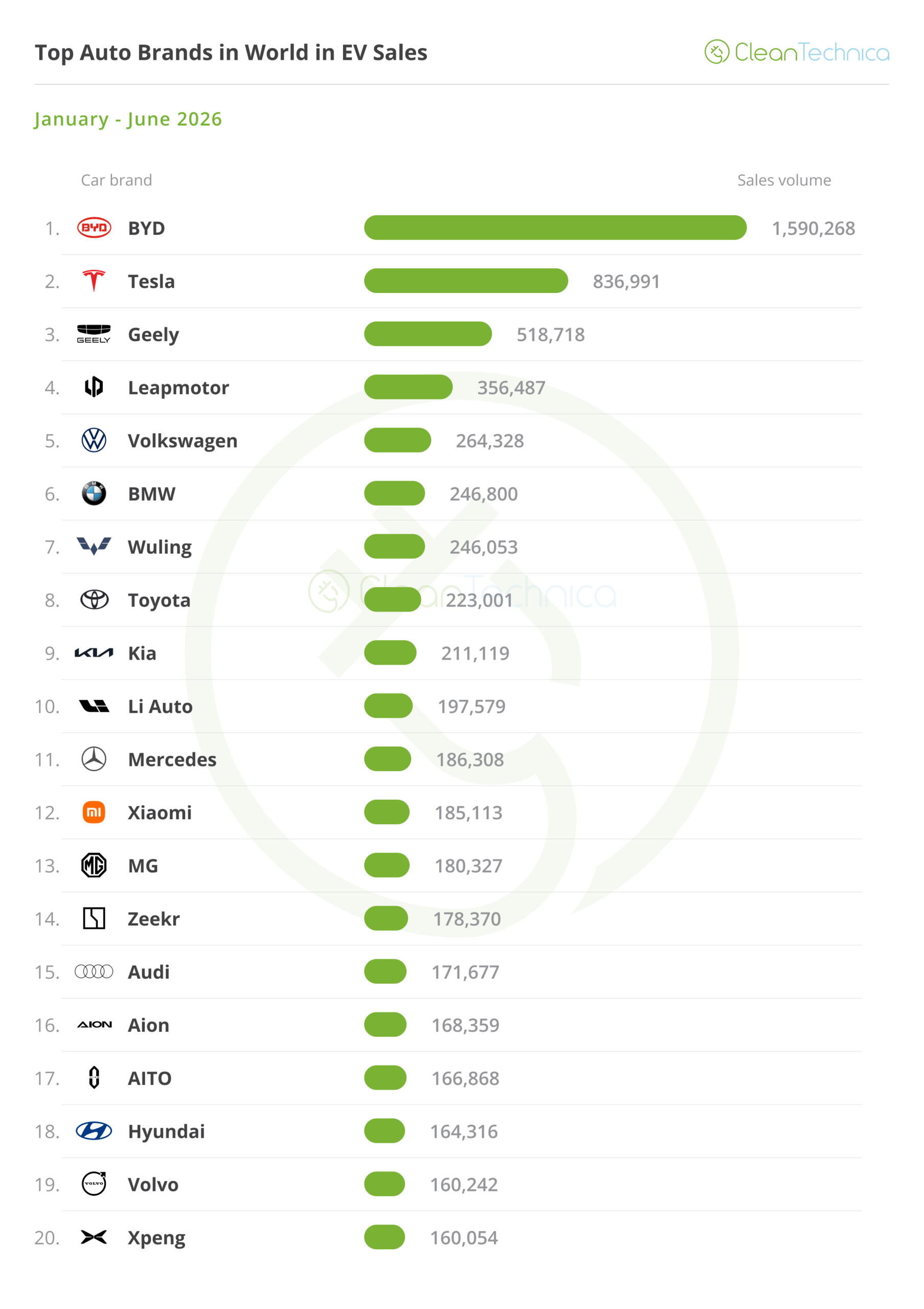
Tesla, benefiting from its typical end-of-quarter delivery surge, saw its share rise to 8.9% in June, up from 8.1% in May. This performance has allowed Tesla to distance itself from the Volkswagen Group (7.3%) and put pressure on Geely for the second-place spot. SAIC rounds out the top five with a 6.5% share, largely supported by the continued success of the MG 4 hatchback and the Wuling Mini EV.
Broader Impact and Industry Implications
The June 2026 data suggests that the global automotive market is nearing a "tipping point." If current trends continue, BEVs could represent over 75% of all plugin sales by the end of the year, a level not seen since the early days of the modern EV era in 2012 when volumes were a fraction of today’s figures.

The rapid ascent of Leapmotor and the entry of tech-centric brands like Xiaomi suggest that the barriers to entry in the automotive world have fundamentally shifted. Traditional manufacturing expertise is being superseded by software integration, battery supply chain management, and rapid iteration cycles. For legacy OEMs, the pressure to accelerate BEV development has never been higher, as Chinese brands are now proving they can compete not just on price, but on technology and global appeal.
Furthermore, the "PHEV blues" observed in June may signal a permanent shift in consumer behavior. As charging infrastructure continues to expand and battery costs decrease, the complexity and dual-maintenance requirements of plugin hybrids are becoming less attractive to the mass market. The 30% share milestone achieved in June 2026 is not just a statistical victory for electric mobility; it is a clear indicator that the era of the internal combustion engine is entering its final chapter. Industry stakeholders now look toward the second half of 2026 to see if this momentum can be sustained in the face of evolving trade policies and the continued rollout of next-generation battery technologies.
