

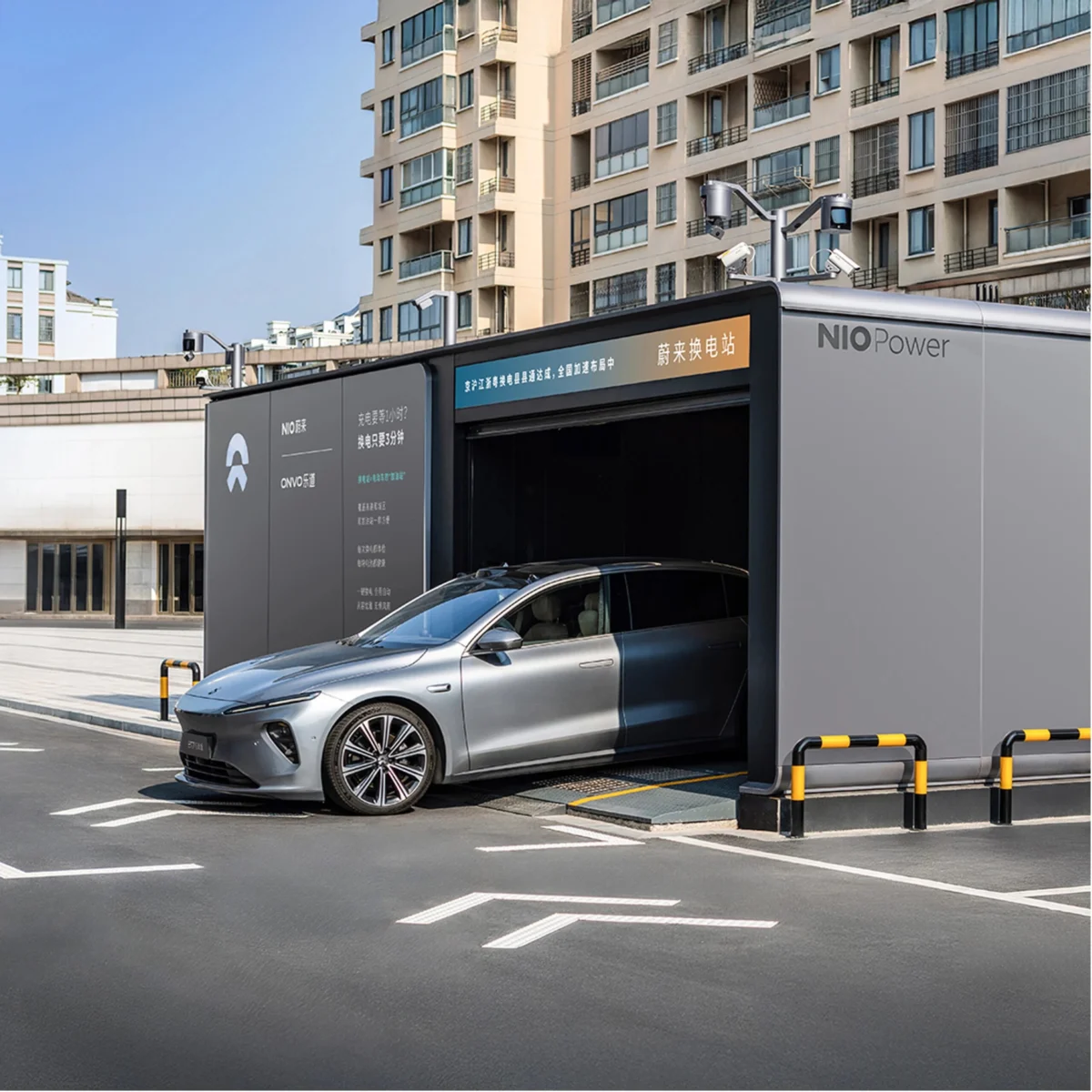
The landscape of electric vehicle (EV) infrastructure underwent a seismic shift as Zhejiang Geely Holding Group (Geely) officially entered into a comprehensive strategic partnership with NIO Power, the energy subsidiary of NIO. In a move that signals a consolidation of the battery-swapping sector in China, Geely has committed to acquiring a 30% stake in NIO Power. This investment represents one of the most significant endorsements of battery-swapping technology to date, positioning the two automotive giants at the center of a burgeoning ecosystem designed to standardize how electric vehicles are powered.
Under the terms of the agreement, Geely Holding Group will secure its 30% equity interest through a combination of assets and capital. This includes the transfer of 100% equity in Yiyi Power, Geely’s existing commercial battery-swapping subsidiary, along with a cash injection of RMB 640 million. In a reciprocal arrangement, NIO will invest in Geely’s Haohan Energy, acquiring a 10% stake in the charging infrastructure provider. The deal effectively merges the technological prowess of NIO’s consumer-facing swap network with Geely’s commercial-focused operations, creating a unified front in the race to solve the "range anxiety" and "charging time" hurdles that have historically slowed EV adoption.
A Strategic Pivot Toward Standardization
The partnership is not merely a financial transaction but a technical alignment. NIO and Geely have pledged to co-develop unified battery-swapping standards for both consumer and commercial vehicles. Historically, the primary criticism of battery swapping has been the lack of interoperability; a NIO car could not use a station designed for another brand, much like the early days of proprietary charging connectors. By aligning their technical architectures, Geely and NIO are laying the groundwork for a "universal" swap station.
Geely Holding Group, which oversees brands such as Volvo, Polestar, Zeekr, and Lotus, brings massive industrial scale to the table. The integration of Yiyi Power into NIO Power means that NIO’s network will now support commercial fleets, including taxis and logistics vehicles, which require high uptime and rapid energy replenishment. Concurrently, Geely has committed to developing new consumer-facing vehicle models that are compatible with NIO’s battery-swapping stations, significantly expanding the potential user base for NIO’s existing infrastructure.
The Evolution and Resilience of Battery Swapping
To understand the weight of this investment, one must look at the history of the technology. For over a decade, battery swapping was viewed by many in the Western automotive industry as a failed experiment. Better Place, an early pioneer in the space, famously filed for bankruptcy in 2013 after failing to secure enough manufacturer support. Even Tesla, which briefly demonstrated a 90-second battery swap in 2013, eventually pivoted its focus almost entirely toward its Supercharger network, citing a lack of consumer interest in swapping.

However, NIO refused to abandon the concept. Since the delivery of its first ES8 in 2018, NIO has treated battery swapping as a core pillar of its brand identity. As of mid-2024, NIO has installed over 2,400 Power Swap stations across China and Europe, facilitating more than 40 million individual swaps. This persistence has transformed battery swapping from a niche curiosity into a viable infrastructure model, particularly in high-density urban environments where many residents lack access to private home charging.
The entry of Geely provides a crucial "vote of confidence" that the industry has been waiting for. Unlike smaller startups, Geely possesses the capital and the multi-brand portfolio to force a market standard. The partnership suggests that the future of EV refueling may not be a binary choice between fast charging and swapping, but rather a hybrid model where both coexist to serve different use cases.
Chronology of the Partnership and Infrastructure Growth
The path to this 30% stake has been paved by several years of incremental collaboration and policy support:
- 2020-2021: The Chinese government officially includes battery-swapping infrastructure in its national "New Infrastructure" plan, offering subsidies specifically for vehicles with swappable batteries.
- November 2023: NIO begins opening its proprietary swap network to other manufacturers, signing initial cooperation agreements with Changan Automobile and Geely.
- Early 2024: NIO expands its partnership circle to include JAC Motors and Chery Automobile, signaling a broader industry move toward a shared network.
- Present: Geely formalizes its role as a primary stakeholder in NIO Power, moving beyond a simple cooperation agreement to a structural capital investment.
This timeline illustrates a shift from NIO acting as a "lone wolf" to becoming the provider of a nationalized utility. The 640 million RMB cash injection, combined with the integration of Yiyi Power, provides NIO Power with the liquidity and operational footprint to accelerate its "Power Swap 4.0" stations, which are capable of performing swaps in under three minutes and are designed to be compatible with multiple brands.
Technical Synergies and Economic Impact
The collaboration between NIO and Geely addresses the economic challenges of infrastructure. Building a swap station is significantly more expensive than installing a row of DC fast chargers. However, the "Battery as a Service" (BaaS) model enabled by this technology allows consumers to purchase the vehicle without the battery, lowering the initial purchase price by as much as $10,000 to $15,000.
By sharing the costs of station development and maintenance, NIO and Geely can achieve better economies of scale. Furthermore, the partnership includes a deep dive into "smart charging" through NIO’s investment in Haohan Energy. This ensures that while swapping remains a premium offering for speed, a robust, interconnected charging network remains available for longer-duration stops.

Andy An Conghui, CEO of Geely Holding Group, emphasized that the goal is to create a "resilient supply chain" and a "more open and collaborative ecosystem." According to An, recharging networks should be treated as public infrastructure. This philosophy mirrors the development of the gasoline station network in the 20th century, where standardized nozzles and fuel grades allowed any car to refuel anywhere.
Broader Industry Implications and Market Analysis
The Geely-NIO alliance poses a significant challenge to the dominance of traditional charging-only networks. In China, the world’s largest EV market, the government has been vocal about its preference for battery swapping as a solution for grid stability. Swap stations can act as massive energy storage units, charging batteries during off-peak hours when electricity is cheap and discharging them (or swapping them into cars) during peak demand.
For the global market, this deal serves as a case study in industrial cooperation. While Tesla’s NACS (North American Charging Standard) has become the de facto standard for plug-in charging in North America, China appears to be moving toward a dual standard of high-speed charging and standardized swapping.
Industry analysts suggest that Geely’s 30% stake could be the first of several such investments. If other major players like SAIC or Dongfeng were to join the NIO Power ecosystem, the "NIO Standard" for batteries could become the mandatory requirement for any manufacturer wishing to remain competitive in the Chinese domestic market.
Conclusion: A New Era for EV Mobility
The partnership between Geely and NIO represents a maturation of the electric vehicle industry. It marks the transition from a period of proprietary, "walled garden" technologies to an era of shared infrastructure and standardized protocols. For consumers, the benefits are clear: faster energy replenishment, lower upfront vehicle costs, and the assurance that their battery technology will not become obsolete, as it can be swapped for a newer, more efficient version at a station.
As NIO Power continues to optimize its network for both commercial fleets and private owners, the data gathered from millions of swaps will provide invaluable insights into battery health and grid management. With Geely’s substantial backing, NIO Power is no longer just a subsidiary of a premium EV maker; it is well on its way to becoming the backbone of the next generation of energy infrastructure. The success of this venture will likely determine whether battery swapping remains a primarily Chinese phenomenon or if it will finally find the footing it needs to expand across the global stage.
