

The global scale of modern transportation has created a persistent environmental paradox: while the movement of goods and people is essential for economic growth, it results in a staggering accumulation of rubber waste. Each year, approximately one billion tires reach the end of their service life globally, posing a significant challenge for waste management systems. These discarded tires are more than just an eyesore; they represent a complex material waste issue that, if left unmanaged, creates severe public health and environmental hazards. However, a sophisticated industrial ecosystem is emerging to transform these "retired" tires into high-value products, ranging from specialized livestock matting to professional-grade sports flooring.
The Environmental Stakes of Tire Waste
Discarded tires are notoriously difficult to manage in traditional landfill settings. Because of their hollow shape and resilient structure, they tend to "float" to the surface of landfills, puncturing liners and disrupting waste stabilization. Furthermore, stockpiles of tires present two primary risks: fire and disease. Tire fires are notoriously difficult to extinguish, often burning for weeks or even months while releasing toxic smoke and pyrolytic oil that can contaminate soil and groundwater.
From a public health perspective, the structure of a tire is an ideal incubator for pests. During the summer months, the interior of a discarded tire collects stagnant rainwater, creating a protected, warm breeding ground for mosquitoes. This has been directly linked to the spread of vector-borne diseases, including West Nile virus and Zika. Consequently, the push for effective tire recycling is driven as much by public safety as it is by environmental stewardship.
Legislative Catalysts: The Ontario IPR Model
The success of tire recycling programs often depends on the strength of the local legislative framework. In Canada, the province of Ontario has emerged as a global leader by implementing a stringent "Individual Producer Responsibility" (IPR) model. This system differs significantly from the more common Extended Producer Responsibility (EPR) or stewardship models used elsewhere.
Under Ontario’s IPR framework, tire producers—the companies that manufacture or import tires—are legally and financially responsible for the entire lifecycle of their products. They must ensure that a specific weight of tires is collected and recycled, corresponding to the volume they sell in the provincial market. This creates a direct incentive for producers to invest in robust recovery networks. Unlike older models where a central government agency might manage the fees, IPR places the burden of proof and performance directly on the industry, requiring an auditable, transparent record of every tire’s journey from the rim to the recycling plant.

The Role of eTracks and Digital Traceability
To navigate the complexities of these regulations, many producers rely on eTracks, a non-profit organization designed to manage the logistics of tire recovery. Operating across Ontario—an area 1.5 times the size of Texas—eTracks manages a network of approximately 5,500 collection sites. These sites include automotive dealerships, independent repair shops, and tire retailers.
The backbone of this operation is the eSRP (Sustainable Recovery Platform), a digital "track and trace" system. Every time a load of tires is picked up from a collection site and delivered to a processor, the transaction is digitally verified. This prevents the illegal dumping that plagued previous decades and ensures that the 13 million tires eTracks handles annually are accounted for. This level of data integrity is essential for producers to meet the strict compliance standards set by provincial regulators.
The Industrial Anatomy of Tire Recycling
When tires arrive at a processing facility, such as the Evolve Recycling plant in Brantford, Ontario, they undergo a rigorous mechanical transformation. Modern tires are composite products made of high-quality rubber, steel wire, and textile fibers. To create a usable raw material, these components must be separated with high precision.
The process typically follows a specific chronology:
- Primary Shredding: Tires are fed into heavy-duty shredders that reduce the bulky casings into rough, palm-sized chunks.
- Granulation and Separation: These chunks are processed through secondary grinders. During this stage, powerful magnets are used to extract the steel wire, which is then sold to steel mills for smelting. High-efficiency air-suction systems are used to pull away the textile fibers (nylon and polyester), which can be used in manufactured fuels or insulation.
- Cleaning and Sizing: The remaining rubber is granulated into "crumb rubber"—small, uniform pellets. This material is then cleaned of any remaining dust or debris to ensure it meets the purity standards required for manufacturing.
The size of the crumb rubber determines its eventual application. Coarser crumbs might be used for civil engineering projects or as infill for artificial turf fields, while finer, high-purity granules are reserved for molded rubber products.
Manufacturing Innovation: Northwest Rubber and Animat
One of the primary beneficiaries of this recycled feedstock is Northwest Rubber, a company that has spent nearly 60 years refining the art of rubber manufacturing. Operating out of Canada, Northwest Rubber and its specialized brand, Animat, have turned more than 160 million tires into new products.
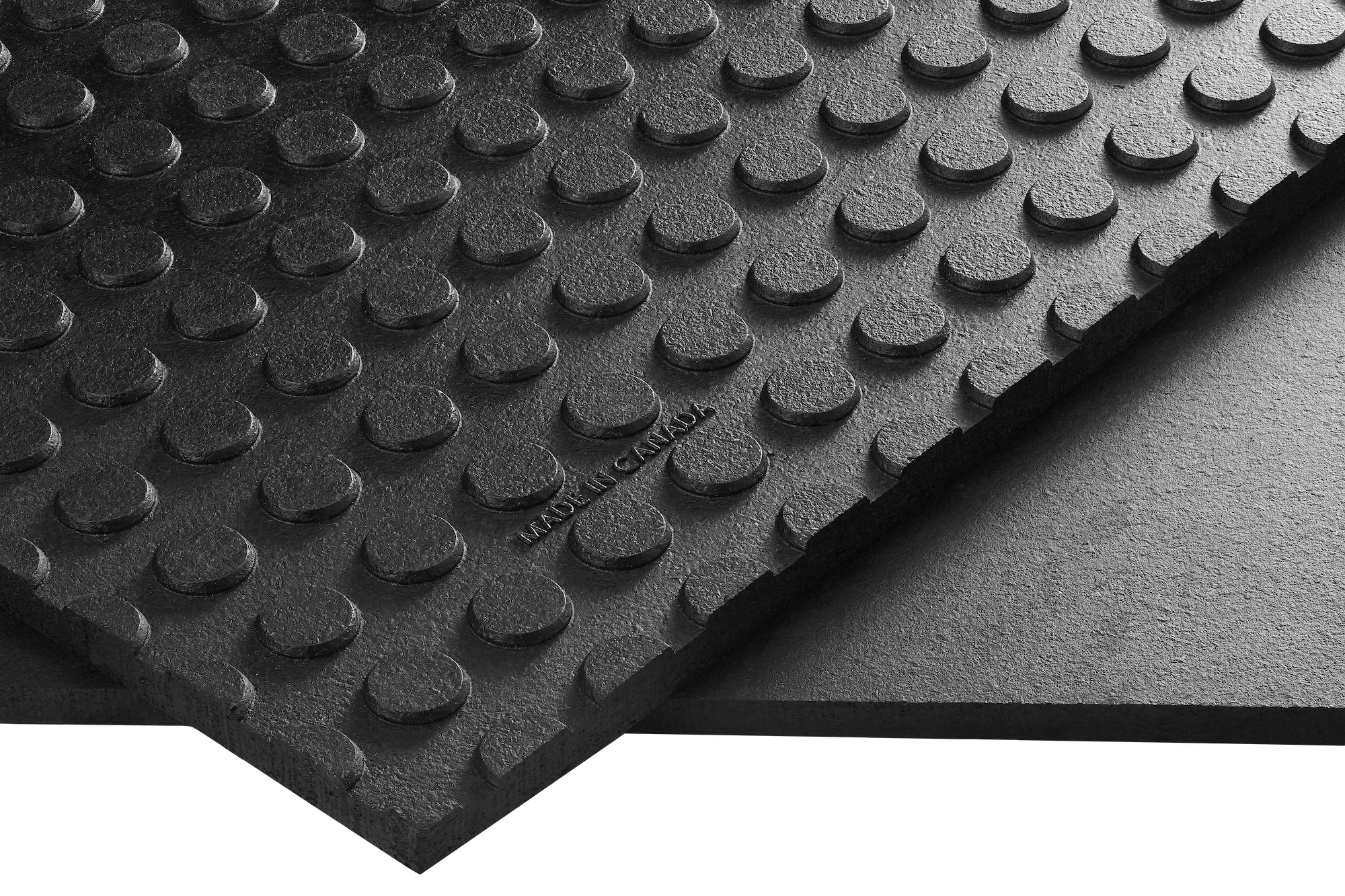
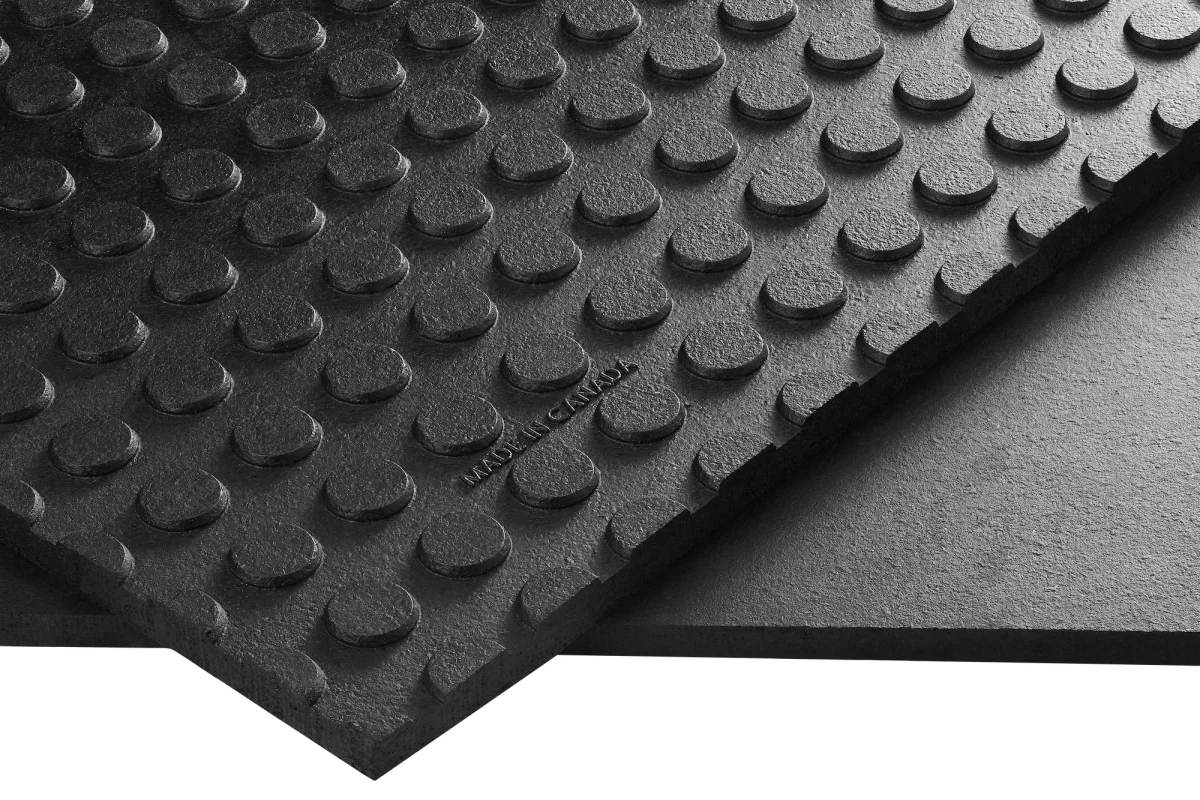
According to David Pruim, CFO of Northwest Rubber, the company utilizes recycled crumb rubber for the vast majority of its product lines. The manufacturing process involves mixing the crumb rubber with specialized binders and pigments before placing the mixture into high-pressure industrial presses. These presses use heat and force to fuse the pellets into solid, durable mats and flooring.
Impact on Animal Welfare and Agriculture
Perhaps the most surprising application of recycled tires is in the agricultural sector. Northwest’s Animat brand specializes in rubber matting designed specifically for livestock and equestrian facilities. For decades, livestock were housed on hard concrete floors, which contribute to joint stress, lameness, and hoof infections in dairy cows and horses.
The introduction of specialized rubber mats has revolutionized barn environments. These mats provide a cushioned, slip-resistant surface that mimics the natural feel of turf. Research has shown a direct correlation between cow comfort and economic output; studies indicate that cows resting on rubber flooring rather than concrete experience less physical stress, leading to increased milk production. By reducing the incidence of injury during transport and daily housing, these recycled products are directly improving animal welfare while supporting the bottom line for farmers.
From Fitness Centers to the NHL
The versatility of recycled tire rubber extends deep into the world of sports and commercial infrastructure. In hockey rinks across North America, the thick, black rubber flooring that players walk on with their skates is frequently made from recycled tires. The material’s ability to withstand the sharp edges of steel blades while providing grip and impact absorption makes it the industry standard.
Similarly, in commercial kitchens, anti-fatigue mats made from recycled tires provide essential support for staff who spend hours on their feet. In the fitness industry, the heavy-duty flooring in weight rooms—capable of absorbing the shock of dropped 100-pound dumbbells—is another primary use case for this resilient material.
Redefining "Recycled": The Ontario Standard
A significant point of distinction in the Ontario model is how the term "recycled" is defined. In many jurisdictions, a tire is considered recycled as soon as it is shredded. However, Ontario’s IPR laws set a higher bar: a tire is only officially recorded as recycled once the resulting rubber crumb is sold to a manufacturer and transformed into a new, beneficial product.

"A tire isn’t truly recycled just because it’s been shredded," says Melissa Carlaw, VP of communications and sustainability for eTracks. "It has to become part of something useful again." This definition prevents the creation of "virtual" recycling, where shredded rubber is simply stockpiled in another form, and ensures that the material actually replaces the need for virgin rubber feedstocks.
The Path Toward Full Circularity
While the current system is a massive improvement over traditional waste disposal, the industry has not yet achieved a perfectly "closed loop." Currently, it is scientifically difficult to recycle an old tire back into a brand-new tire at scale due to the vulcanization process—the chemical cross-linking of rubber molecules that gives tires their durability but makes them hard to melt down and reform.
Furthermore, while Northwest Rubber’s mats are incredibly durable, the industry faces a logistical challenge in recovering those mats at the end of their 10-to-20-year lifespan. "It’s more of a logistical challenge, frankly, than anything else," Pruim notes. The infrastructure to collect, clean, and re-grind used mats is not yet as robust as the system for collecting tires from auto shops.
Conclusion and Future Implications
The transformation of tires from highway hazards to high-performance products represents a major victory for the circular economy. By moving away from a "take-make-waste" model and toward a system of producer responsibility, jurisdictions like Ontario are demonstrating that environmental protection and industrial manufacturing can coexist.
As technology advances, the next frontier will likely involve "devulcanization"—chemical processes that break down the sulfur bonds in rubber to allow it to be used more like virgin material. Until then, the work of organizations like eTracks and manufacturers like Northwest Rubber ensures that the billions of tires rolling across the world’s roads eventually find a soft landing in our barns, gyms, and hockey rinks. This transition not only mitigates the risks of fire and disease but also preserves natural resources by giving one of the world’s most durable waste materials a valuable second life.
