

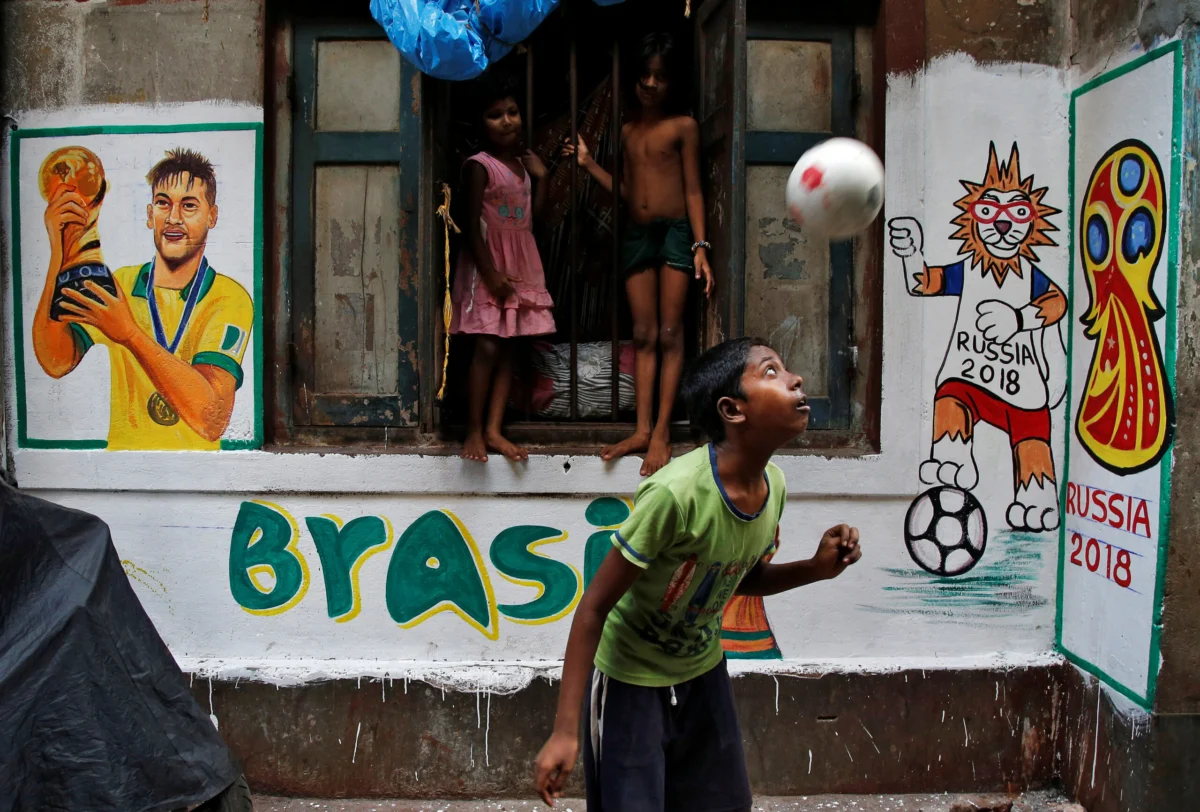
FIFA has successfully concluded a significant media rights agreement with India’s Zee Entertainment, granting the Indian conglomerate exclusive broadcasting rights for the upcoming 2026 and 2030 FIFA World Cups, alongside the 2027 Women’s World Cup and 36 other FIFA tournaments until 2034. This landmark deal brings to an end months of uncertainty regarding the availability of the world’s most-watched sporting event in one of its largest and most rapidly expanding markets, just weeks before the 2026 tournament is set to commence across North America.
A Landmark Deal for Indian Football Fans
The agreement, officially signed on Monday, June 3, marks a pivotal moment for football enthusiasts in India, ensuring comprehensive coverage of premium FIFA content for the next eight years. While the precise financial terms of the package were not publicly disclosed, industry reports had previously indicated that FIFA initially sought approximately $100 million for the rights to the 2026 and 2030 men’s tournaments. However, prolonged negotiations and the unique challenges of the Indian market reportedly led to a revised asking price, with figures around $60 million being speculated as the eventual settlement. This figure, though substantial, reflects a recalibration of expectations in a market traditionally dominated by cricket and grappling with significant time zone discrepancies for the upcoming World Cup.
For Zee Entertainment, this acquisition represents a strategic foray into the highly competitive Indian sports broadcast market. The landscape is currently dominated by the Reliance-Disney joint venture, JioStar, which holds an extensive portfolio of coveted sports properties, ranging from the immensely popular Indian Premier League (IPL) cricket tournament to the English Premier League football. By securing the rights to 39 FIFA events, Zee aims to carve out a significant "toehold" in this lucrative sector, diversifying its content offerings and challenging established players. The news was met with immediate positive sentiment from investors, with Zee shares experiencing a notable surge of approximately 7 percent on the day of the announcement, underscoring the perceived value and strategic importance of the deal.
The Protracted Negotiations and Financial Dynamics
The path to this agreement was far from straightforward, characterized by a "months-long standoff" that left Indian football fans and broadcasters in limbo. FIFA, as the global governing body for football, relies heavily on media rights sales for its revenue generation, which in turn funds global football development initiatives. The Indian market, with its vast population and growing disposable income, represents a critical territory for expanding football’s global footprint and commercial appeal.
Historically, FIFA has sought to maximize the value of its media rights by negotiating country-specific or regional packages. For the 2022 World Cup in Qatar, Viacom18 secured the broadcast rights for approximately $60 million. That tournament, held in a time zone far more favourable for Indian audiences, saw a significant uptake in viewership. However, the 2026 tournament, hosted across the United States, Canada, and Mexico, presented unprecedented challenges. The vast geographical spread of the host nations translates into significant time differences with India, ranging from 10 to 12 hours. This critical factor emerged as the primary impediment in FIFA’s sales efforts, dampening broadcaster appetite and making it difficult to achieve the initial valuation targets.
Industry experts and analysts had closely followed the protracted negotiations. Many speculated that FIFA’s initial valuation was overly ambitious given the logistical viewing challenges. The reported reduction in the asking price from $100 million to $60 million underscores the pragmatic adjustments FIFA had to make to secure a deal in this vital market. This flexibility highlights FIFA’s commitment to ensuring global access to its marquee events, even if it means adjusting financial expectations in certain regions. The last-minute nature of the agreement, just 10 days before the tournament’s kickoff on June 11, further illustrates the complexities and the eleventh-hour scramble to finalize terms.
Zee Entertainment’s Strategic Play in a Competitive Market
Zee Entertainment’s acquisition of FIFA rights represents a bold strategic move, especially considering its recent corporate landscape. The company has navigated a period of significant change, including the recent collapse of its proposed merger with Sony India, which would have created a media behemoth. Despite these challenges, Zee has demonstrated a clear intent to strengthen its content portfolio and market position.
The Indian sports broadcasting market is fiercely competitive. The Reliance-Disney joint venture, JioStar, formed earlier this year, commands a dominant position, controlling rights to not only the IPL – the world’s richest cricket league – but also other major sports like the English Premier League (football), the Pro Kabaddi League, and various Olympic events. This consolidation has created a formidable competitor. By securing FIFA rights, Zee has immediately elevated its standing, providing a significant counterweight to JioStar’s dominance. This move could catalyze a new era of competition, potentially leading to more diversified content offerings and innovative viewing experiences for Indian consumers.
Furthermore, this deal allows Zee to tap into the growing, albeit niche, football viewership in India. While cricket remains paramount, football’s popularity has steadily increased, particularly among younger, urban demographics. The Indian Super League (ISL), along with the avid following of European club football, indicates a solid, albeit smaller, fan base that is hungry for high-quality football content. The inclusion of the 2027 Women’s World Cup rights also aligns with a global trend of increasing interest and investment in women’s sports, offering Zee an opportunity to be at the forefront of this emerging market segment in India.
The Time Zone Conundrum and Viewer Experience
The most significant challenge for Zee and Indian viewers will be the extreme time zone difference with the host nations of the 2026 World Cup. With games spread across the United States, Canada, and Mexico, a substantial portion of the 104 matches will kick off at inconvenient hours for the Indian audience. As highlighted by experts, only 14 of the total 104 games will begin before midnight in India.

To illustrate the scale of this challenge, the final match, scheduled for July 19 in New Jersey, will kick off at 19:00 GMT. For fans in India, this translates to 12:30 AM on July 20. This stark contrast with previous World Cups is critical. For instance, 98.4 percent of matches at the 2018 World Cup in Russia started before midnight in India, and 82.5 percent of games at the 2022 World Cup in Qatar were within favourable viewing hours. The 2026 schedule presents a unique hurdle that could significantly impact live viewership numbers, particularly for linear television broadcasts.
This time zone issue was a major deterrent for potential broadcasters, influencing FIFA’s sales strategy and ultimately leading to the reported price reduction. While dedicated football fans are likely to endure the late nights, the casual viewer – a significant segment for mass sporting events – may be less inclined. This could push consumption towards digital platforms, where replays and highlights can be accessed on demand, rather than live linear television.
India’s Evolving Sports Broadcast Landscape
The Indian sports economy is characterized by its overwhelming devotion to cricket. The IPL, for example, generated an estimated $10.9 billion in enterprise value in 2022 and commands astronomical media rights values. As Karan Taurani, Executive Vice President at investment firm Elara Capital, succinctly put it, "cricket leads the sports economy market in India." He further noted that "only a small fraction of people who watch the Indian Premier League will watch the FIFA World Cup," with an even smaller fraction tuning in past midnight.
This sentiment underscores the core challenge for football in India: converting casual interest into dedicated, live viewership, especially when faced with inconvenient timings. Taurani also highlighted a broader trend in Indian media consumption: "TV as a ‘struggling’ medium in India." He elaborated, "When you have these kinds of sporting events, effectively it is mostly digital that is monetising and raising big money. That is a big reason why no one’s showing interest in the FIFA World Cup."
This observation points to a significant shift in viewer behaviour, accelerated by widespread smartphone penetration and affordable data. Digital platforms, offering flexibility and personalized viewing experiences, are increasingly becoming the preferred mode for sports consumption. While the deal is for "broadcast" rights, it invariably includes digital streaming components, which will be crucial for Zee to leverage to maximize reach and engagement, especially given the late-night match timings. This necessitates robust digital infrastructure and innovative content strategies, such as short-form highlights, delayed broadcasts, and interactive features, to cater to the diverse viewing habits of the Indian audience.
Broader Implications for FIFA and Global Football
For FIFA, securing the Indian broadcast deal, even if at a revised price, is a critical victory. It ensures that its flagship tournament maintains a global presence and continues to penetrate one of the world’s most populous nations. The 2026 World Cup is set to be the largest in history, featuring 48 teams and 104 matches, an expansion designed to boost global participation and interest. Ensuring broad media distribution is paramount to realizing these goals.
The 2030 World Cup, marking the centenary of the tournament, will be hosted across six countries on three continents – Uruguay, Argentina, Paraguay, Spain, Portugal, and Morocco – a testament to FIFA’s ambition for global reach and historical reverence. Including these rights in the package further solidifies FIFA’s long-term commercial strategy in India. Moreover, the inclusion of the 2027 Women’s World Cup rights reflects FIFA’s commitment to growing women’s football globally, an area that has seen significant investment and audience growth in recent years. India, with its vast female population, represents a largely untapped market for women’s sports.
This deal also highlights the evolving dynamics of media rights negotiations in non-traditional football markets. FIFA, like other major sports bodies, must balance its global commercial aspirations with the unique challenges and market realities of diverse regions. The Indian experience with the 2026 rights serves as a valuable case study in this complex landscape, demonstrating the need for flexibility and strategic adaptation.
Looking Ahead: The Future of Sports Content in India
The Zee-FIFA deal sets the stage for an intriguing period in Indian sports broadcasting. It introduces a new major player into the premium sports content arena, potentially intensifying competition for future rights and driving innovation in content delivery. While the immediate challenge of the 2026 World Cup’s timings remains, the long-term nature of the deal (through 2034) suggests a sustained commitment from Zee to build a football audience in India.
The success of this partnership will hinge on Zee’s ability to navigate the digital shift, strategically package content for various viewing habits, and potentially invest in promotional activities to cultivate a deeper appreciation for football beyond the major tournaments. The focus will likely be on leveraging digital platforms to offer flexible viewing options, including extensive highlights, analysis, and interactive features, to compensate for the late-night live broadcasts.
Ultimately, the agreement between FIFA and Zee Entertainment is more than just a broadcast deal; it’s a statement about the enduring global appeal of the FIFA World Cup and the continued strategic importance of the Indian market. Despite the inherent challenges, the commitment from both parties underscores a shared vision for expanding football’s reach and cementing its place in India’s diverse and dynamic sports landscape for the next decade.
