

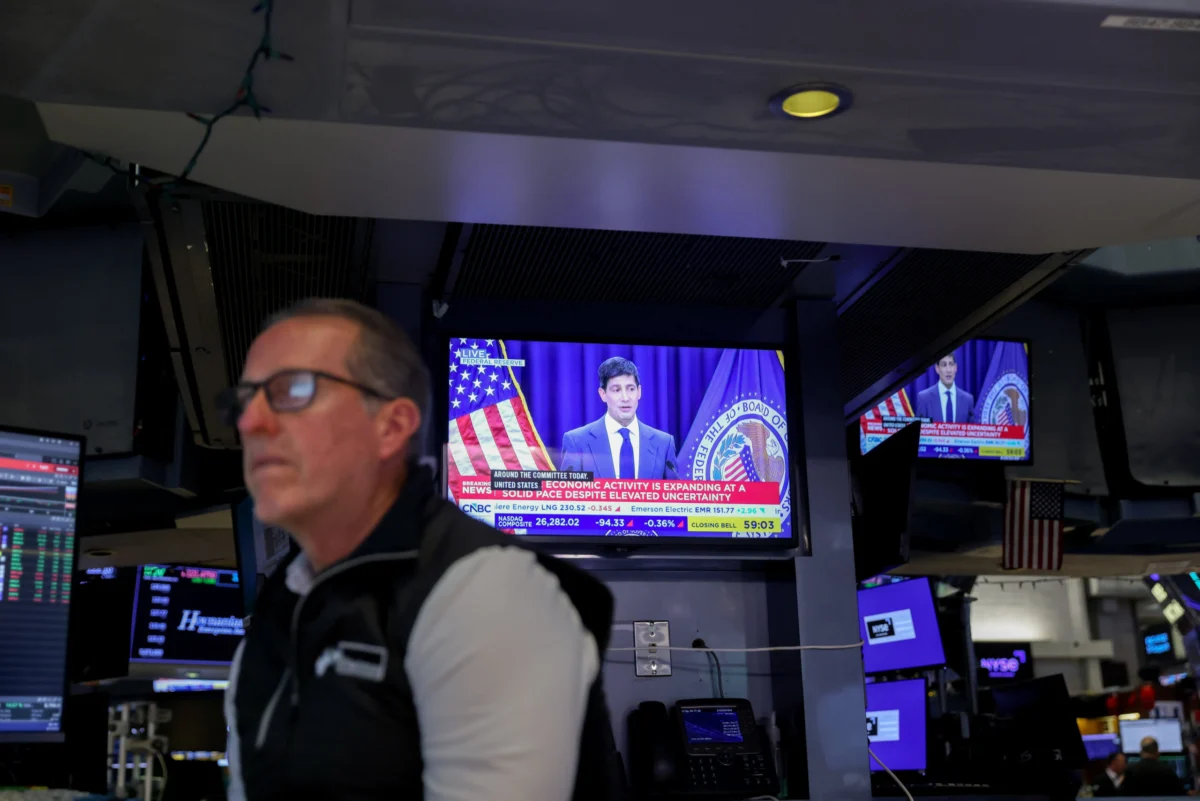
Investors are rapidly recalibrating their expectations for the Federal Reserve’s monetary policy, with a pronounced shift towards anticipating an interest rate hike as global crude oil prices surge and domestic labor market data continues to show surprising strength. The confluence of these factors has injected a fresh wave of uncertainty into financial markets, prompting a significant downturn in equities and a notable rise in bond yields, signaling growing apprehension about the central bank’s next move. This sentiment marks a stark departure from earlier forecasts, as the Fed grapples with its dual mandate of achieving maximum employment and maintaining price stability in an increasingly volatile economic landscape.
Rising Tide of Rate Hike Expectations
The financial markets are increasingly pricing in a more aggressive stance from the Federal Reserve, particularly for its September policy meeting. According to CME’s FedWatch tool, the likelihood of the central bank raising borrowing costs in September has jumped dramatically to approximately 82%. This represents a significant increase from just a week prior, when the odds stood below 53%, underscoring a rapid re-evaluation of the Fed’s potential trajectory. While the broader consensus still anticipates the Fed to hold rates steady at the current 3.50% to 3.75% range at its upcoming meeting next week, a growing minority of traders are now preparing for an immediate increase. Fed funds futures trading indicates a nearly 38% probability of a quarter percentage point hike at that imminent gathering, a substantial rise from less than 12% a week ago. This escalating probability, even for the near-term meeting, reflects the market’s heightened sensitivity to recent economic indicators and geopolitical developments. The shift in sentiment suggests that market participants are viewing upcoming Federal Open Market Committee (FOMC) meetings as "live" – meaning a rate change, whether up or down, is a real possibility rather than a foregone conclusion of inaction. Online prediction markets like Kalshi have mirrored this trend, with traders increasing their bets on a September quarter-point increase, pushing odds to 48% midday Thursday, up from roughly 30% a week ago. This divergence from earlier, more dovish expectations highlights the fluid nature of monetary policy forecasting in the current economic climate.
The Oil Shock: Geopolitical Tensions and Inflationary Pressures
A primary catalyst for the escalating rate hike speculation is the dramatic surge in global oil prices. Brent crude, the international benchmark, breached the critical $100 a barrel threshold on Thursday, marking its first ascent to this level since late May. This sharp rise is directly attributed to a new round of tit-for-tat attacks between the United States and Iran, intensifying geopolitical tensions in the crucial Middle East region. The Strait of Hormuz, a narrow waterway through which a significant portion of the world’s seaborne oil passes, remains a flashpoint, making global energy supply vulnerable to disruptions. Escalations in this area invariably send jitters through oil markets, leading to price spikes.
The immediate impact of rising crude prices is already being felt by consumers. The average price for a gallon of gasoline in the U.S. climbed to $4 this week, according to AAA, reaching its highest level in over a month. This direct pass-through of higher energy costs to consumers fuels inflationary pressures across the economy. Elevated gasoline prices erode household purchasing power, potentially dampening consumer spending on other goods and services. For businesses, higher fuel costs translate into increased operational expenses, particularly for transportation and logistics, which can then be passed on to consumers in the form of higher prices for goods. This phenomenon, known as cost-push inflation, creates a difficult scenario for the Federal Reserve. The central bank must weigh the immediate inflationary threat posed by energy prices against the potential for higher interest rates to cool economic activity, especially if the oil shock is perceived as temporary. Historically, sudden oil price surges have often preceded periods of economic slowdown or recession, as they act as a tax on consumers and businesses. The current geopolitical backdrop suggests that these energy price increases may not be fleeting, further complicating the Fed’s policy calculus.
Resilient Labor Market Fuels Fed’s Inflation Focus
Adding to the Federal Reserve’s inflation concerns is the unexpected strength and resilience of the U.S. labor market. Fresh employment data released on Thursday further bolstered the view that the Fed now has greater latitude to concentrate on combating inflation, even if it means tightening monetary policy. Initial jobless claims, a key indicator of layoffs and labor market health, dropped to a remarkably low 187,000 in the week ended July 18, as reported by the Labor Department. This figure represents the fewest claims since 1969, a staggering comparison given that the U.S. population was approximately 60% of its current size back then. Such robust employment figures suggest that the labor market remains exceptionally tight, with businesses continuing to retain employees and demand for workers still strong.
A historically tight labor market can contribute to inflationary pressures through rising wages, as companies compete for a limited pool of talent. This wage growth, while beneficial for workers, can feed into a cycle of higher production costs and ultimately higher consumer prices. The Fed’s dual mandate requires it to balance maximum employment with price stability. When employment is robust, as current data indicates, the central bank gains more flexibility to prioritize its inflation-fighting mandate. Christopher S. Rupkey, chief economist at FWDBONDS, articulated this dynamic, stating, "At the moment, the outlook for economic growth is showing some signs of overheating if today’s weekly jobless claims figures can be believed." He added a crucial caveat, however: "But for how long is the question if energy prices continue to spiral upward." His statement underscores the delicate balance the Fed must strike, acknowledging strong growth but also recognizing the potential for external shocks like rising energy prices to derail economic stability. The exceptionally low jobless claims reinforce the narrative that the economy is running hot, potentially necessitating monetary tightening to prevent inflationary pressures from becoming entrenched.
Market Turbulence: Stocks Plunge, Yields Climb
The escalating expectations for a Federal Reserve rate hike, coupled with the surge in oil prices and other market factors, triggered significant turbulence across financial markets on Thursday. Major U.S. stock indices experienced sharp declines, reflecting investor anxiety. The blue-chip Dow Jones Industrial Average tumbled more than 600 points in midday trading, signaling broad-based selling pressure. The Nasdaq Composite, heavily weighted towards technology stocks, shed nearly 3%. Technology companies are particularly sensitive to higher borrowing costs because their valuations often rely on future growth expectations, which are discounted more heavily when interest rates rise. Higher rates also increase the cost of capital for these companies, potentially impacting their investment and expansion plans.
Compounding the stock market’s woes was the notable rise in U.S. Treasury yields. The yield on the benchmark 2-year U.S. Treasury, which is highly sensitive to expectations for Fed policy, rose more than 6 basis points on Thursday. Ross Mayfield, an investment strategist at Baird, noted that the 2-year yield offers "a readthrough on what the Fed might do next," indicating that bond market movements are a key barometer for future central bank actions. Rising bond yields can divert investment away from equities, as bonds become a more attractive, lower-risk alternative. Larry Tentarelli, chief technical strategist at the Blue Chip Daily Trend Report, described the current market environment as a "perfect storm of headwinds," attributing the downward pressure to the breakout in oil prices, rising Treasury yields, and even Alphabet’s post-earnings swoon. He advised investors to exercise caution: "We’ve got a Fed meeting in six days, and I think investors should not be in a hurry to buy anything. There’s times where you can just sit it out and be patient." This cautious sentiment highlights the prevalent uncertainty and the heightened risk aversion among investors as they await clearer signals from the Fed. The combination of inflation fears, potential monetary tightening, and geopolitical instability has created a challenging backdrop for equity markets.
Fed’s Dilemma: Navigating Inflationary Pressures Amidst Policy Uncertainty
The Federal Reserve finds itself in a precarious position, tasked with navigating persistent inflationary pressures while trying to maintain economic stability. The upcoming FOMC meeting next week, though widely expected to result in no change, is now being watched with intensified scrutiny. The central bank’s communication will be critical, as any hawkish signals could further cement market expectations for a September hike. The Fed’s policy decisions are informed by a vast array of economic data, including inflation reports, employment statistics, and consumer spending figures. The recent confluence of surging oil prices and a robust labor market complicates this calculus, pushing the Fed closer to a decision point that could significantly impact the broader economy.
Despite the market’s increasing bets on a rate hike, the consensus forecast among economists through 2026, according to FactSet, still does not signal an environment with tighter monetary policy. Many economists continue to anticipate that the Fed will hold rates steady this year and potentially lower borrowing costs by half a percentage point in 2027. This divergence between market expectations and economist consensus highlights the inherent uncertainty in forecasting monetary policy, especially in an environment influenced by unpredictable geopolitical events and rapidly shifting economic data. The Fed’s dilemma is further compounded by the need to manage public perception and market confidence. Overly aggressive tightening could stifle economic growth, while insufficient action could allow inflation to become entrenched, eroding purchasing power and economic stability. The central bank’s challenge is to communicate its strategy effectively, providing clear guidance without pre-committing to actions that might need to be adjusted based on evolving circumstances.
Looking Ahead: The Road to September and Beyond
The immediate focus for market participants and policymakers alike will be the Federal Reserve’s upcoming meeting next week. While a rate hike then is still considered a minority probability, the growing sentiment signals a significant shift in the market’s perception of the Fed’s willingness to act. The September meeting, however, is now squarely in the spotlight as a "live" meeting where a rate adjustment is highly anticipated. The trajectory of oil prices will be a critical determinant, with ongoing geopolitical tensions in the Middle East having the potential to either exacerbate or alleviate inflationary pressures. Any de-escalation of tensions could temper oil price increases, potentially easing the pressure on the Fed, while further conflict could solidify the case for tightening.
Beyond the immediate horizon, the interplay between inflation, labor market dynamics, and global events will continue to shape the Fed’s policy path. Should inflation persist above the central bank’s target, driven by energy costs or other factors, the Fed may be compelled to act more decisively. Conversely, a weakening of the labor market or a significant slowdown in economic growth could temper the need for aggressive tightening. Investors will also closely monitor the statements and speeches from various Fed officials for clues regarding their individual perspectives and the collective sentiment within the FOMC. The balance of hawkish and dovish voices will provide important insights into the internal debate and potential future actions. The current environment demands heightened vigilance from investors and policymakers, as the global economy navigates a complex array of challenges that could necessitate swift and significant adjustments to monetary policy. The decisions made in the coming months will have profound implications for borrowing costs, investment, and economic growth both domestically and internationally.
— With additional reporting by CNBC’s Sean Conlon
— Michael Nagle | Bloomberg | Getty Images
