

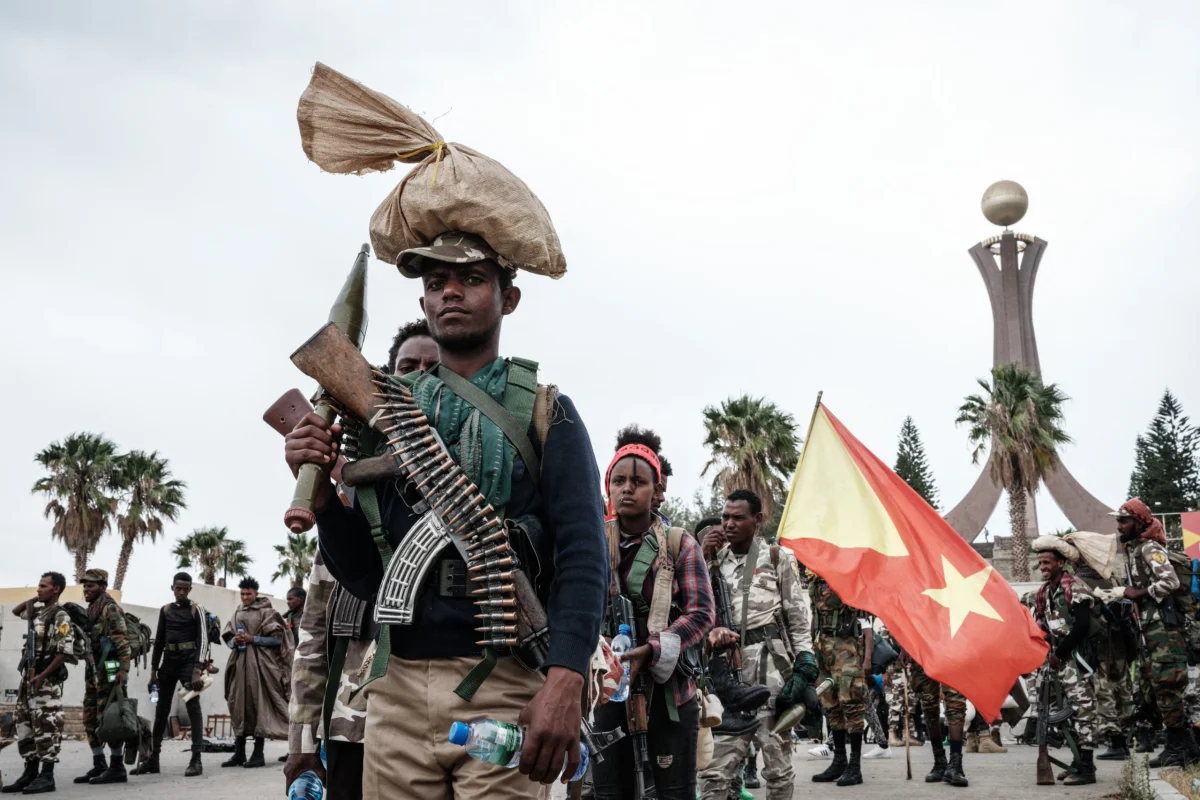
An armed group aligned with the Ethiopian federal government has declared its imminent control over the conflict-ravaged northern Tigray region, a claim that, if verified, would mark a significant shift in the protracted and devastating conflict. The commander of the Tigray Peace Forces (TPF) asserted on social media late Thursday that forces belonging to the Tigray People’s Liberation Front (TPLF) had been entirely eliminated. This bold declaration, which Al Jazeera could not immediately verify, comes amidst a dramatic resurgence of hostilities that reignited in September 2026, provoking fresh diplomatic spats and exacerbating an already dire humanitarian situation for millions of civilians caught in the crossfire.
Renewed Conflict and Shifting Frontlines
The latest claims from the TPF commander underscore the rapidly evolving dynamics on the ground since fighting resumed between Ethiopian federal forces, including the TPF, and an opposition alliance spearheaded by the TPLF. Residents reported to Reuters news agency on Friday that Ethiopian government forces were making swift progress, closing in on Mekelle, the regional capital of Tigray. This offensive follows a period of rapid advances by pro-government forces into Tigray in recent days, a stark contrast to the relative calm that followed the November 2022 peace agreement.
Debretsion Gebremichael, the TPLF chairperson, acknowledged on Thursday that federal forces had indeed occupied some parts of the region. However, he maintained a defiant stance, stating that his forces would launch a counter-attack "in due course," signaling the TPLF’s intent to resist the federal push. The return of hostilities has effectively shattered the fragile 2022 peace deal, which had initially aimed to end the two-year war between the federal government and forces loyal to the Tigray region, bringing a temporary respite to a conflict that claimed hundreds of thousands of lives.
Background to a Protracted Struggle
The roots of the Tigray conflict run deep, tracing back to long-standing political grievances and power struggles within Ethiopia. The TPLF, once the dominant force in Ethiopia’s ruling coalition for nearly three decades, saw its influence wane significantly after Prime Minister Abiy Ahmed came to power in 2018. Abiy’s reforms, which dismantled the TPLF-led coalition and established the Prosperity Party, were viewed by the TPLF as an attempt to centralize power and marginalize their region. Tensions escalated, culminating in a full-blown conflict in November 2020, when federal forces launched a military offensive in response to alleged TPLF attacks on federal army bases in Tigray.
The initial war, lasting two years, was characterized by widespread atrocities, mass displacement, and a devastating humanitarian blockade. It brought Ethiopia to the brink of fragmentation and drew international condemnation. The African Union-brokered Pretoria Peace Agreement, signed in November 2022, offered a glimmer of hope. It mandated a cessation of hostilities, disarmament of Tigrayan forces, restoration of federal authority, and crucially, the provision of humanitarian aid and essential services to the beleaguered region. While the agreement led to a significant reduction in large-scale fighting and some restoration of services, its full implementation remained contentious, with both sides accusing the other of failing to uphold commitments. Issues such as the full disarmament of Tigrayan forces, the withdrawal of Eritrean troops, and the resolution of disputed territories remained unresolved, creating fertile ground for renewed conflict.
A New Alliance and Expanding Fronts
The recent escalation is further complicated by the emergence of a new political and armed alliance against Prime Minister Abiy Ahmed’s administration. On September 20, 2026, seven armed and political groups, including the TPLF, announced their unified front with the explicit aim of removing the current government and establishing an inclusive transitional administration. This alliance signals a broader challenge to Abiy’s authority, potentially drawing in various ethno-nationalist and opposition movements across the country. The formation of such a diverse coalition highlights the deep political fragmentation and widespread discontent that continues to plague Ethiopia.
The fighting has not been confined to Tigray alone. Reports indicate that hostilities have spread from southern Tigray into the neighboring Amhara and Afar regions, threatening to destabilize an even wider geographical area. This expansion raises fears of a return to the multi-front conflict seen during the 2020-2022 war, which had devastating consequences for civilian populations in all affected regions. Earlier, in the preceding month, the African Union had reported that Tigrayan forces had seized control of key airports in Mekelle, Axum, and Shire, and had detained federal personnel, causing significant disruptions to civilian air services and underscoring the TPLF’s operational capabilities prior to the current federal offensive.
Mohammed Taha Tawakel, Al Jazeera Arabic Ethiopia Bureau Chief, noted that the remarks from the commander of the Tigray Peace Forces "shed light on a new phase of this conflict." Tawakel elaborated that while the federal army is clearly providing full support to the TPF, the original TPLF still maintains control over several towns. Significantly, he highlighted the TPLF’s strong historical and strategic link with Eritrea along more than 800 kilometers of frontier. Tawakel’s analysis suggests a complex dynamic, where the conflict is increasingly becoming "an internal struggle among Tigrayans themselves," potentially pitting Tigrayans aligned with the federal government (TPF) against those loyal to the TPLF. This internal division within Tigray adds another layer of complexity to the conflict, making reconciliation and peace-building even more challenging.

Regional Diplomatic Fallout
The renewed conflict has quickly spilled over into the diplomatic arena, triggering heightened tensions with Ethiopia’s neighbors. Ethiopian military officials have openly accused Eritrea, Egypt, and Sudan of providing support to the Tigrayan-led fighting alliance. These accusations have led to a series of tit-for-tat expulsions of diplomats between Ethiopia, Eritrea, and Egypt, signaling a rapid deterioration of regional relations. Eritrea and Egypt have vehemently denied these allegations, asserting that they are not backing efforts to destabilize Ethiopia.
The African Union (AU) has voiced its profound concern over these developments, calling for "maximum restraint" between the three countries. The AU urged all parties to "refrain from actions or statements that could further escalate tensions and undermine regional peace and security." The involvement of neighboring states, whether directly or indirectly, risks transforming an internal Ethiopian conflict into a broader regional proxy war. Ethiopia’s relationship with Sudan and Egypt has been particularly strained in recent years over the Grand Ethiopian Renaissance Dam (GERD) on the Nile River, a dispute that has added to the geostrategic complexities of the Horn of Africa. Any perception of these nations backing opposing sides in Ethiopia’s internal conflict could severely jeopardize regional stability and any future cooperation on shared resources.
A Deepening Humanitarian Catastrophe
Beneath the geopolitical maneuvering and military offensives lies a rapidly worsening humanitarian crisis for millions of civilians in Tigray and the surrounding regions. Mohammed Taha Tawakel painted a grim picture, stating that "the region is home to between six and seven million people, living amid electricity cuts, internet blackouts and a total lack of communications." This deliberate or incidental isolation severely impedes the flow of information, humanitarian aid, and the ability of residents to communicate with loved ones or seek assistance.
The conflict has already led to significant displacement. Some civilians, gripped by fear that the fighting could engulf major urban centers, have begun fleeing their homes, seeking refuge in the neighboring Amhara and Afar regions. This new wave of displacement adds to the already staggering numbers of internally displaced persons (IDPs) and refugees created by the previous phase of the war. Humanitarian agencies, including the United Nations, have been struggling to maintain even a minimum level of humanitarian access. While some operations have managed to relocate to newly secured areas, the widespread insecurity, infrastructural damage, and communication blackouts pose immense challenges.
Millions in Tigray are already facing severe food insecurity, a consequence of repeated harvest failures, disrupted supply chains, and the deliberate destruction of agricultural infrastructure during the previous conflict. The renewed fighting threatens to reverse any modest gains made in humanitarian access and aid delivery following the 2022 peace agreement. Medical supplies are critically low, healthcare facilities are often non-functional, and access to clean water and sanitation remains a significant challenge, increasing the risk of disease outbreaks. The long-term effects on children, including malnutrition and lack of education, are particularly devastating, threatening to create a lost generation in the region.
Implications and Future Outlook
The recent turn of events carries profound implications for Ethiopia’s political landscape, national unity, and regional stability. For Prime Minister Abiy Ahmed, the renewed conflict and the formation of a broad opposition alliance represent a significant challenge to his authority and his vision for a unified Ethiopia. The federal government’s claims of nearing full control of Tigray, if sustained, would mark a tactical victory, but it does not guarantee lasting peace or political reconciliation. The deep-seated grievances and the TPLF’s resilience suggest that military solutions alone are unlikely to resolve the underlying political issues.
The fragmentation within Tigray, as highlighted by the TPF’s emergence, further complicates any future peace efforts. Any resolution would need to address not only the federal-TPLF dynamic but also the internal divisions and competing interests within the Tigrayan community. The international community, including the African Union and the United Nations, faces a renewed challenge in mediating a sustainable peace. Calls for maximum restraint and dialogue will likely intensify, but the effectiveness of such interventions is often limited by the willingness of warring parties to engage meaningfully.
The humanitarian crisis will undoubtedly worsen, demanding an immediate and robust international response. Ensuring unhindered humanitarian access, protecting civilians, and addressing the root causes of food insecurity and displacement must be top priorities. Without a comprehensive political solution that addresses the grievances of all parties and guarantees the safety and well-being of civilians, Ethiopia risks plunging back into a full-scale civil war, with catastrophic consequences for its people and the broader Horn of Africa region. The path to stability and peace in Ethiopia remains fraught with immense challenges, demanding urgent and concerted efforts from all stakeholders.
