

The Middle East finds itself on a precarious precipice as the United States President condemned the recent deaths of two American service members in Jordan as a "sad thing," a somber acknowledgment coming amidst the eighth consecutive night of US forces launching retaliatory strikes against targets linked to Iran. This intensifying cycle of violence has pushed the already volatile region closer to a broader conflict, with the deadly attack on a US military outpost in Jordan serving as a stark reminder of the escalating stakes. The incident, which occurred on July 18, 2026, saw an unmanned aerial system (UAS) strike a US base near the Syrian border, resulting in fatalities and multiple injuries, and prompting immediate and forceful responses from Washington.
The Deadly Attack in Jordan
On the evening of July 18, 2026, a sophisticated drone attack targeted "Tower 22," a small but strategically significant US outpost in northeastern Jordan, close to the Syrian frontier. This base is integral to the US-led coalition’s efforts to counter ISIS and provides logistical support to US forces operating in Syria. The strike, attributed by US intelligence to Iran-backed militia groups operating from Iraq and Syria, resulted in the immediate deaths of two US service members and left several others wounded, some critically. The Pentagon confirmed the fatalities and injuries, stating that the drone managed to evade air defenses, potentially by flying in close proximity to a returning US drone, a tactic known as "swarming" or "spoofing." This attack marked a critical escalation, as it represented the first direct hostile action resulting in US military fatalities in the region since the heightened tensions began months prior, following broader regional instability.
Jordanian authorities swiftly condemned the attack on their sovereign territory, reaffirming their commitment to regional stability and their strategic alliance with the United States. A statement from Amman emphasized the kingdom’s resolve to protect its borders and its partners, while also calling for de-escalation from all parties involved to prevent a wider conflagration that would jeopardize regional security. The presence of approximately 3,000 US troops in Jordan is primarily focused on training, intelligence sharing, and counter-terrorism operations, making such an attack a direct affront to both US and Jordanian security interests.
Eight Nights of Retaliation: A Broadening Campaign
In the immediate aftermath of the Jordan attack, the US administration vowed a decisive response, declaring that those responsible would be held accountable. This pledge translated into an intensified series of retaliatory strikes, marking the eighth consecutive night of military action by US forces against Iran-linked targets across Iraq, Syria, and potentially other areas where these groups operate. These strikes, initiated prior to the Jordan incident in response to an increasing tempo of attacks on US personnel, dramatically escalated in scope and intensity following the loss of American lives.
The targets of these sustained US operations have included command and control centers, munitions depots, logistics facilities, and training sites associated with various Iran-backed militias, such as Kataib Hezbollah and others operating under the umbrella of the Islamic Resistance in Iraq. US Central Command (CENTCOM) confirmed the precision and deliberateness of these strikes, asserting that they were designed to degrade the capabilities of these groups and deter future aggression, without seeking a direct confrontation with Iran itself. However, the sheer duration and geographical spread of these operations underscore the severity of the US commitment to respond to what it perceives as persistent threats to its personnel and interests.
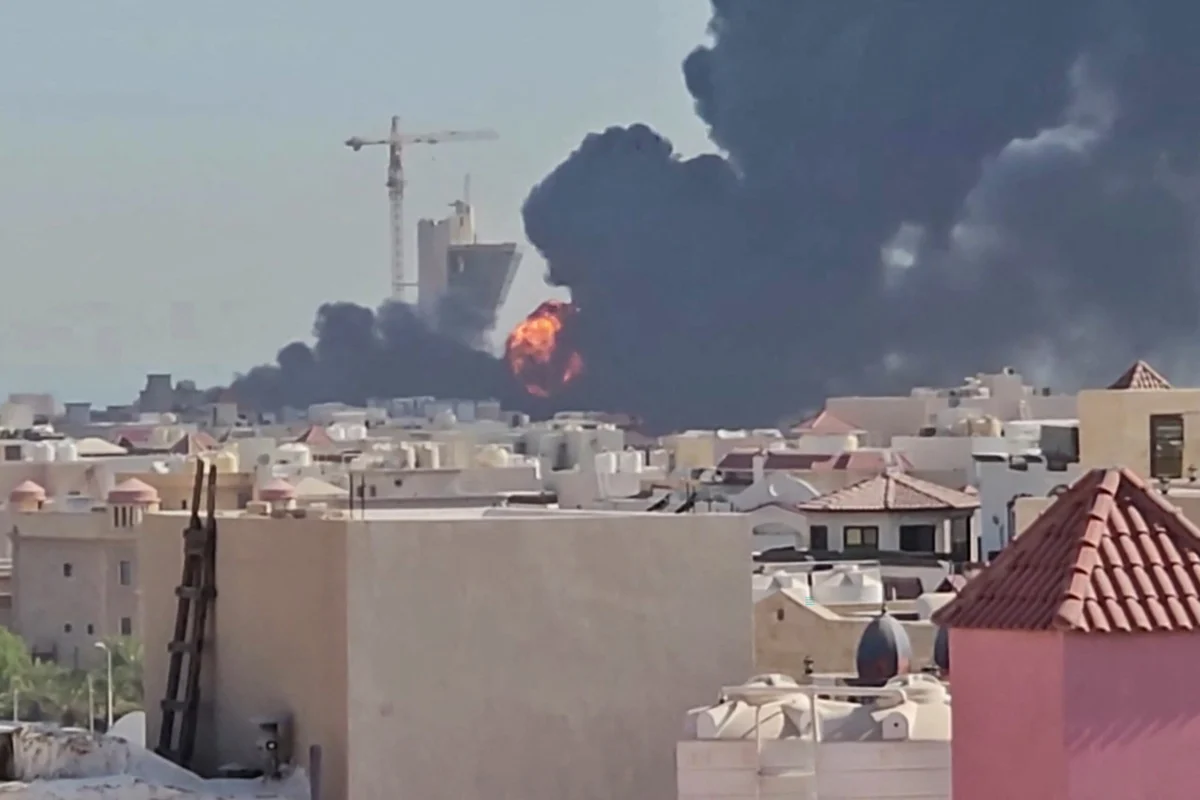
The visual evidence of this regional tumult was starkly captured on July 18, 2026, with user-generated video footage posted on social media showing a plume of black smoke and flames billowing over the town of Mangaf, south of Kuwait City. While the precise nature of the incident in Kuwait was not immediately clear, the image, taken within the broader context of "TopshotKuwaitIranUsIsraelWar" as indicated by its metadata, served as a potent symbol of the pervasive and expanding nature of the regional conflict. It suggested that even nations historically insulated from direct conflict were now feeling the immediate effects of the escalating tensions, whether through direct military action, collateral damage, or the general atmosphere of uncertainty.
Historical Context and Escalating Tensions
The current crisis is not an isolated event but rather the culmination of decades of strained relations between the United States and Iran, exacerbated by a complex web of regional proxy conflicts. Following the 1979 Iranian Revolution, US-Iran ties have been characterized by mutual suspicion, sanctions, and indirect confrontations. The withdrawal of the US from the Joint Comprehensive Plan of Action (JCPOA) in 2018 and the subsequent imposition of a "maximum pressure" campaign by Washington further intensified this antagonism.
Iran, in turn, has leveraged its influence through a network of proxy forces across the Middle East, including Hezbollah in Lebanon, Houthi rebels in Yemen, and various Shiite militias in Iraq and Syria. These groups often serve as an extension of Iran’s strategic depth, allowing Tehran to project power and counter perceived threats without direct state-on-state warfare. US forces in Iraq and Syria, primarily there to combat ISIS and support local partners, have frequently found themselves targeted by these Iran-backed entities. In the months leading up to the Jordan attack, US bases in Iraq and Syria had experienced dozens of rocket and drone attacks, leading to numerous injuries but, until now, no fatalities. This pattern of harassment and retaliation created a volatile environment where a deadly escalation was increasingly anticipated.
The broader regional instability, largely fueled by the ongoing Israel-Hamas conflict that erupted months prior, has significantly contributed to the current dangerous dynamic. The conflict in Gaza has galvanized anti-US sentiment among some regional actors and provided a pretext for Iran-backed groups to intensify their operations against US interests, framing their actions as solidarity with the Palestinian cause. This interconnectedness means that any incident, such as the one in Jordan, has the potential to ripple across multiple fronts, drawing in more actors and broadening the scope of hostilities.
Official Reactions and International Appeals
The US President’s statement, while expressing sorrow for the fallen soldiers, underscored a firm resolve to protect American personnel and interests. Senior Pentagon officials echoed this sentiment, confirming the ongoing strikes and emphasizing that the US response would be "multi-tiered, sustained, and proportional," aimed at deterring further attacks without precipitating an all-out war with Iran. The Secretary of State, engaging in a flurry of diplomatic calls, reiterated the US commitment to de-escalation while simultaneously asserting the right to self-defense. Calls were reportedly made to key regional allies, including Saudi Arabia and the United Arab Emirates, to coordinate responses and prevent the situation from spiraling out of control.
From Tehran, the reaction was predictably defiant. Iranian officials vehemently denied direct involvement in the Jordan attack, attributing it to "resistance groups" acting independently in response to US and Israeli actions in the region. They warned the US against further aggression, stating that any direct attack on Iranian soil would be met with a "crushing response." This rhetoric, while denying direct command and control, implicitly acknowledges the ideological and material support provided to these proxy forces, effectively creating a dangerous grey zone of deniable warfare.
International bodies and allied nations have watched the escalation with growing alarm. The United Nations Secretary-General called for an immediate cessation of hostilities and urged all parties to exercise maximum restraint, warning of the catastrophic humanitarian and economic consequences of a wider regional conflict. European Union leaders, through their High Representative for Foreign Affairs, issued a joint statement expressing grave concern over the deteriorating security situation and reiterating the need for diplomatic solutions to prevent a full-scale regional war.
Implications and Future Outlook
The killing of US service members in Jordan and the subsequent sustained US retaliatory campaign carry profound implications for regional stability and global security. The most immediate concern is the increased risk of a direct military confrontation between the United States and Iran. While both sides have publicly expressed a desire to avoid an all-out war, the continuous cycle of attack and retaliation, coupled with the inherent unpredictability of proxy warfare, significantly raises the probability of miscalculation or unintended escalation.
Economically, the situation poses a serious threat to global energy markets and international trade. Disruptions to oil supplies from the Persian Gulf, a vital artery for global energy, could send crude prices soaring. Furthermore, the security of critical shipping lanes, particularly in the Strait of Hormuz and the Red Sea, remains a major concern, potentially impacting global supply chains and increasing shipping costs. The image from Kuwait serves as a stark reminder that the economic ramifications of conflict are not confined to the immediate battlegrounds.
Diplomatically, the crisis strains existing alliances and challenges the effectiveness of international mediation efforts. The US finds itself under pressure to demonstrate resolve while simultaneously navigating complex relationships with regional partners, many of whom are wary of being drawn into a larger conflict. For Iran, its proxy strategy faces increased scrutiny and potential military degradation, yet it also solidifies its image as a regional power capable of challenging the US.
Domestically, the US administration faces heightened political pressure to respond decisively to attacks on its forces, particularly in an election year. The human cost of military engagement invariably brings public opinion into sharp focus, influencing strategic decisions and the scope of military operations.
In the short term, the region can anticipate continued volatility, with both kinetic and cyber operations likely to persist. The long-term outlook remains uncertain, contingent on the ability of international diplomacy to de-escalate the situation and the willingness of all parties to seek a path away from direct confrontation. The deadly incident in Jordan and the ensuing US response underscore the urgent need for a comprehensive regional dialogue to address the underlying drivers of instability and prevent the Middle East from plunging into an even deeper and more destructive conflict. The coming days will be critical in determining whether the region steps back from the brink or descends further into a broader, more devastating war.
