

The intersection of environmental conservation and socioeconomic development is increasingly defined by a shift away from traditional, top-down philanthropic models toward a philosophy of local empowerment. Two prominent organizations, the Honnold Foundation and Blue Ventures, are at the forefront of this movement, demonstrating that the most effective solutions to the climate and biodiversity crises are those envisioned, designed, and owned by the communities living on the frontlines. Supported by the Everpure Foundation, the corporate philanthropic arm of the data management firm Everpure, these nonprofits have successfully scaled their operations to provide renewable energy to the Amazon rainforest and restore depleted fisheries in Madagascar.
The core conviction shared by these organizations is that local stewardship is not merely a moral imperative but a practical necessity for long-term sustainability. Whether providing solar-powered mobility to Indigenous nationalities in the Upper Amazon or implementing community-based fishery management in the Indian Ocean, the focus remains on equipping marginalized populations with the resources and technical expertise required to manage their own futures. This approach addresses the dual challenges of poverty and environmental degradation by fostering economic mobility through culturally relevant and ecologically sound innovations.

The Amazonian Frontier: Solar Energy as a Tool for Sovereignty
In the Upper Amazon of Ecuador, four Indigenous nationalities—the Kofán, Siekopai, Waorani, and Siona—faced a mounting existential threat from oil dependency and environmental encroachment. In 2014, these groups formed the Ceibo Alliance, a unified initiative dedicated to defending their ancestral territories and building a sustainable future. The alliance focuses on practical interventions, such as rainwater harvesting and the installation of off-grid solar systems, to reduce reliance on external fossil fuel supplies that often come at a high environmental and social cost.
The Honnold Foundation, established by professional rock climber Alex Honnold, became a critical partner in this mission. Honnold, famous for his historic rope-free ascent of El Capitan, founded the organization in 2012 with the goal of using solar energy to improve lives while reducing environmental impact. Today, Honnold contributes one-third of his personal income to the foundation, which has supported 135 projects across more than 30 countries.
In the Amazon, the partnership between the Honnold Foundation, the Ceibo Alliance, and Fundación Kara Solar has revolutionized local transportation and energy access. By introducing electric motors and solar-powered boats, the initiative has provided clean mobility for approximately 3,500 people. In a region where travel often depends on expensive and polluting gasoline-powered canoes, solar boats offer a silent, carbon-free alternative that respects the local ecosystem. Crucially, the project trains local Indigenous technicians to build and maintain these systems, ensuring that the technology remains operational long after the initial funding has been deployed.

Coastal Madagascar: Restoring Fisheries Through Community Management
While the Ceibo Alliance works in the rainforest, the nonprofit Blue Ventures is tackling a different but equally urgent crisis on the coasts of Madagascar. For generations, the Vezo people and other coastal communities have depended on small-scale fisheries for food security and income. However, overfishing and the pressures of global export markets led to a severe depletion of octopus stocks, threatening the very survival of these seafaring cultures.
Blue Ventures intervened by facilitating "Locally Managed Marine Areas" (LMMAs). The strategy centers on temporary fishing closures—brief periods where specific areas are off-limits to harvesting. This allows octopus populations, which grow rapidly, to recover and reach larger sizes. The results were immediate and measurable: when the fisheries reopened, catches were significantly larger and more valuable, providing a direct economic incentive for conservation.
Gildas Andriamalala, Blue Ventures’ regional director for Southern Africa and a Madagascar native, noted that this success has sparked a grassroots movement. Since the organization’s founding in 2003, community-based management practices have expanded to cover at least half of Madagascar’s coastline. This model has since been exported globally, with Blue Ventures now supporting fisheries across 11 countries in Southeast Asia, the Caribbean, and the Indian Ocean. To date, the nonprofit has dispersed approximately $5.2 million in support of these efforts, empowering communities to collect their own data and negotiate more effectively with international seafood buyers.

The Role of Strategic Philanthropy and Risk Tolerance
The scaling of these initiatives has been made possible through the support of the Everpure Foundation. By providing grants to organizations that advance locally-led solutions, the Everpure Foundation acknowledges that the communities closest to the problems are best positioned to solve them. This alignment of corporate social responsibility with grassroots activism allows nonprofits like the Honnold Foundation and Blue Ventures to bridge the "funding gap" that often prevents small-scale pilots from becoming regional or global standards.
Peter Walle, director of partnerships for the Honnold Foundation, emphasizes that their philanthropic model differs from traditional aid by being intentionally risk-tolerant. While many donors avoid projects in remote or politically unstable areas, the Honnold Foundation views these as the areas of greatest need. "Philanthropy should be the first form of capital deployed in a really risk-tolerant way to fund proof-of-concept projects," Walle stated. He argued that for the communities served, the "risk" is not a financial abstraction but a matter of life or death regarding energy access, healthcare, and economic survival.
The Honnold Foundation’s grant process is designed to be accessible, featuring an open call for projects that allows grassroots organizations to apply directly. In 2025 alone, the foundation received 1,200 applications from over 100 countries. Although they currently have the capacity to fund just under $5 million worth of projects annually, the high volume of applications underscores a massive global demand for community-owned renewable energy.

Data and Context: The Global Challenge
The work of these foundations is set against a backdrop of urgent global statistics. According to the International Energy Agency (IEA), approximately 770 million people worldwide still lack access to electricity, with the vast majority living in sub-Saharan Africa and remote parts of Asia and Latin America. Solar energy is increasingly seen as the most viable solution for these "last-mile" communities because it is modular, scalable, and requires no centralized grid infrastructure.
Similarly, the Food and Agriculture Organization (FAO) of the United Nations reports that small-scale fisheries support the livelihoods of over 500 million people globally. However, nearly 35% of global fish stocks are overfished. The community-based management model championed by Blue Ventures offers a blueprint for reversing this trend. By treating local fishers as stakeholders rather than obstacles to conservation, the model ensures that environmental protections also support human development.
Broader Impact and Future Implications
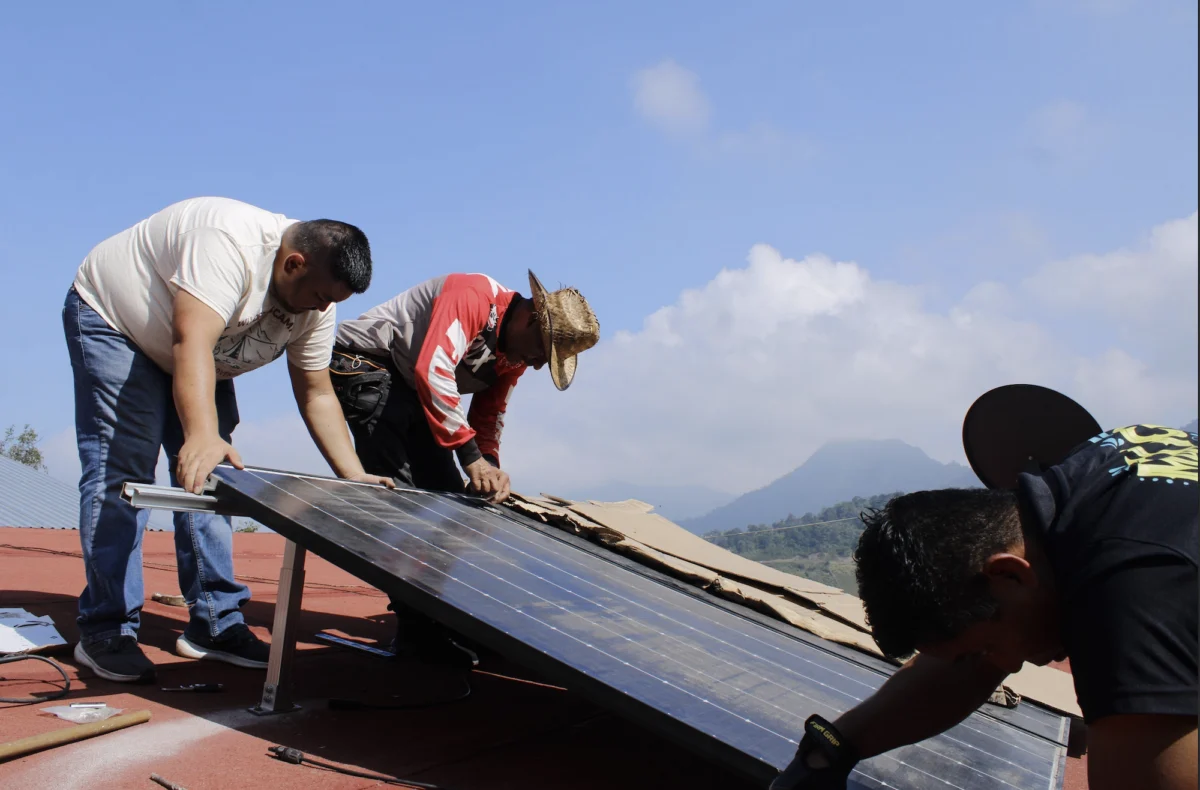
The impact of these projects extends beyond environmental metrics. By integrating solar energy with education and healthcare, the Honnold Foundation is fostering holistic community development. For example, in Mexico, the foundation partnered with the nonprofit Psicología y Derechos Humanos (PSYDEH) to power 11 digital resource centers for Indigenous women in the Sierra Madre mountains. In Puerto Rico, they helped establish the island’s first cooperatively managed solar microgrid in the town of Adjuntas, providing energy resilience in the face of increasingly frequent hurricanes.

Furthermore, both the Honnold Foundation and Blue Ventures emphasize the importance of storytelling and "giving community members a seat at the table." By bringing Indigenous leaders to international environmental conferences and amplifying their voices through media, these nonprofits are helping to shift the global narrative on climate action.
As the world faces the compounding crises of climate breakdown and biodiversity loss, the success of these locally-led models provides a roadmap for the future of international development. The transition to a sustainable world requires more than just new technology; it requires a fundamental redistribution of power and resources to those who have historically been marginalized. Through the collaborative efforts of the Honnold Foundation, Blue Ventures, and the Everpure Foundation, communities in the Amazon and Madagascar are proving that when given the tools and the agency, they can not only survive the challenges of the 21st century but thrive within them.
