

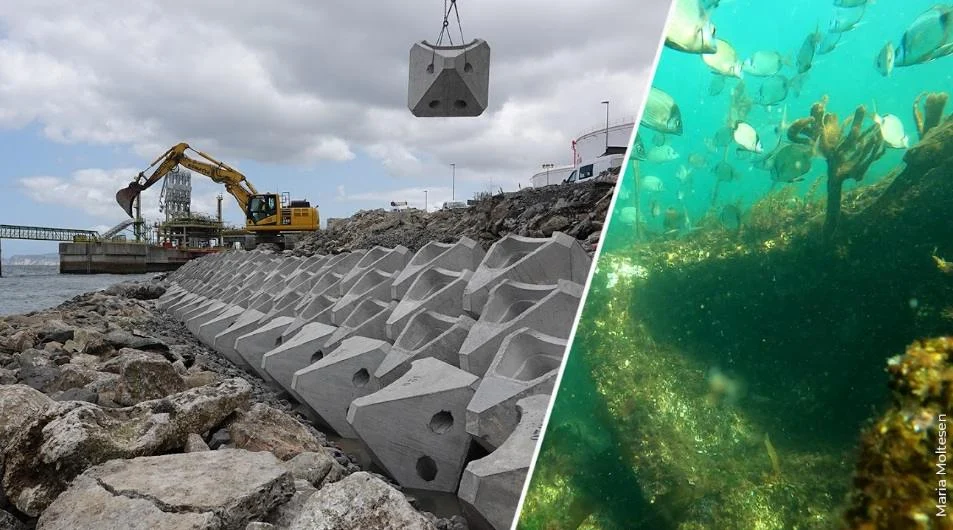
New York-based biotechnology and coastal engineering firm ECOncrete has announced the successful completion of a $14 million funding round, a strategic capital injection designed to accelerate the global deployment of its ecological concrete technologies. This latest investment comes at a pivotal moment for the maritime and construction industries, which are facing increasing pressure to harmonize essential infrastructure development with the preservation of marine ecosystems. The funding round was led by Builders Vision, a prominent impact-led investment platform, and saw significant participation from a diverse group of existing and new investors, including Barclays Climate Ventures, the Prince Albert II of Monaco Foundation, and Monaco Asset Management’s ReOcean Fund. Additional backing was provided by BDT & MSD Partners through its Oceans Catalyst platform, DCP, and a financing facility from Open Road Impact.
The infusion of capital follows a period of unprecedented growth for ECOncrete, which was founded in 2012 by marine biologists Dr. Ido Sella and the late Dr. Shimrit Perkol-Finkel. Over the past 18 months, the company has seen its revenue grow by 3.4 times, a testament to the surging demand for "nature-inclusive" infrastructure. The company’s patented technology is currently utilized in more than 20 major marine projects worldwide, covering approximately 90,000 square meters of marine habitat. With the new funds, ECOncrete aims to scale its operations to meet the needs of a global market that is increasingly prioritizing climate resilience and biodiversity alongside traditional structural performance.
The Technological Core: Bridging Civil Engineering and Marine Biology
At the heart of ECOncrete’s value proposition is a fundamental redesign of how concrete—the world’s most widely used construction material—interacts with the ocean. Traditional marine concrete is often characterized by high pH levels and toxic chemical compositions that inhibit the growth of marine life, resulting in "biological deserts" around ports, piers, and seawalls. Furthermore, the smooth surfaces of standard concrete blocks offer little protection for juvenile fish or attachment points for calcifying organisms like oysters and corals.
ECOncrete’s solution addresses these challenges through a three-pronged approach involving chemical composition, surface texture, and macro-design. By utilizing a proprietary bio-enhancing additive, the company reduces the alkalinity of the concrete, making it more hospitable to marine flora and fauna. The surface of the concrete is engineered with complex textures that mimic natural rock formations, encouraging the settlement of larvae. On a larger scale, the structural units are designed to include rock pools and crevices that provide essential habitats.
This "bio-protection" does more than just support biodiversity; it also enhances the structural integrity of the infrastructure. As organisms like barnacles and oysters colonize the concrete, they create a biogenic crust—a process known as biocalcification. This living layer acts as a natural shield against the corrosive effects of seawater and the mechanical wear of waves, potentially extending the lifespan of the infrastructure while reducing long-term maintenance costs.
Strategic Market Expansion and Project Chronology
Since its inception over a decade ago, ECOncrete has transitioned from a research-heavy startup to a commercially viable leader in the "Blue Economy." The company’s growth trajectory reflects a broader shift in the global construction industry toward sustainable practices. The chronology of ECOncrete’s deployment reveals a steady expansion from localized pilot projects to large-scale industrial applications.
In its early years, the company focused on proving the efficacy of its materials through rigorous scientific monitoring in various climates. By the mid-2010s, ECOncrete had established a presence in the Mediterranean and the United States. However, the last two years have marked a significant scaling phase. Notable recent projects include the lining of quay walls at the Port of Rotterdam, one of the world’s busiest maritime hubs, where the technology is being used to foster aquatic life in a highly industrialized environment.
In the United States, the company has been instrumental in coastal preservation efforts in New York and California. In the Port of San Diego and the Port of San Francisco, ECOncrete installations are actively increasing local biodiversity in areas previously dominated by sterile gray infrastructure. Internationally, the company’s reach has extended to Denmark and New Zealand, where its solutions are helping to reinforce coastlines against the rising sea levels associated with climate change. Furthermore, the company has entered the energy sector, providing specialized protection for subsea cable infrastructure in the Mediterranean and Atlantic, as well as pipeline protection in the Adriatic.
Investment Dynamics and Stakeholder Perspectives
The $14 million funding round reflects a sophisticated mix of venture capital, impact investment, and institutional support. The leadership of Builders Vision signifies a strong endorsement of ECOncrete’s ability to deliver both financial returns and environmental impact. Cristin Pacifico, Vice President of Investments at Builders Vision, emphasized that the market for high-performance, adaptive materials is expanding rapidly as global investment pours into coastal protection and offshore wind energy.
The participation of the Prince Albert II of Monaco Foundation and the ReOcean Fund highlights the strategic importance of this technology to the Mediterranean region and the global ocean conservation community. Similarly, the involvement of Barclays Climate Ventures underscores the growing interest of major financial institutions in supporting technologies that mitigate climate risk.
Dr. Ido Sella, Co-Founder and CEO of ECOncrete, noted that the company’s mission is to ensure that ecology is "built in, not bolted on." This philosophy distinguishes ECOncrete from traditional "greenwashing" efforts, as the ecological benefits are inseparable from the structural function of the concrete. Sella stated that the latest fundraise would allow the company to shift the entire marine construction industry toward a more responsible and accountable model.
Supporting Data and the Economic Case for Green Infrastructure
The economic implications of ECOncrete’s technology are significant when viewed through the lens of global infrastructure spending. According to industry data, nearly 70% of coastal infrastructure is currently made of concrete. With over 50% of the world’s population living within 100 kilometers of a coastline, the demand for seawalls, ports, and breakwaters is projected to grow exponentially as sea levels rise.
The traditional approach to coastal defense—building higher and thicker walls of standard concrete—is increasingly seen as unsustainable due to high carbon footprints and ecological degradation. ECOncrete offers a way to mitigate these issues while potentially tapping into the emerging market for "Biodiversity Net Gain" (BNG) credits. In jurisdictions like the United Kingdom, new legislation requires developers to ensure that their projects leave the natural environment in a measurably better state than it was before. ECOncrete’s ability to create 90,000 square meters of habitat provides a tangible metric for developers looking to meet these regulatory requirements.
Furthermore, the 3.4x revenue growth reported by the company suggests that the "green premium"—the extra cost often associated with sustainable materials—is becoming less of a barrier as the long-term benefits of durability and regulatory compliance become clearer to asset owners and port authorities.
Broader Implications for the Offshore Wind and Energy Sectors
One of the most promising avenues for ECOncrete’s expansion is the burgeoning offshore wind industry. As nations race to meet net-zero targets, thousands of offshore wind turbines are being installed globally. Each turbine requires significant amounts of concrete for foundations and "scour protection" (materials placed on the seabed to prevent erosion).
Traditional scour protection often involves dumping large quantities of quarry rock, which can disrupt local benthic ecosystems. By using ECOncrete’s bio-enhancing solutions for turbine bases and scour protection, energy companies can transform these industrial sites into artificial reefs. This not only aids in gaining environmental permits but also supports local fishing industries by providing nurseries for commercially important species. The company’s recent work in reinforcing subsea cables in the Atlantic and Mediterranean serves as a precursor to this larger entry into the renewable energy space.
Conclusion: Setting a New Standard for Coastal Resilience
The successful $14 million funding round for ECOncrete marks a definitive step toward the institutionalization of nature-inclusive design in civil engineering. By proving that ecological enhancement can coexist with rigorous structural requirements, ECOncrete is challenging the long-standing dichotomy between development and conservation.
As the company scales its operations across new sectors and geographies, the data collected from its 20+ global projects will continue to provide a scientific roadmap for the future of the Blue Economy. In an era defined by the dual crises of climate change and biodiversity loss, the ability to build "living" infrastructure represents a critical tool for the protection of both human assets and the marine environment. The support from a diverse array of investors—from impact funds to traditional financial institutions—indicates a broad consensus that the future of marine construction must be as resilient biologically as it is structurally.
