

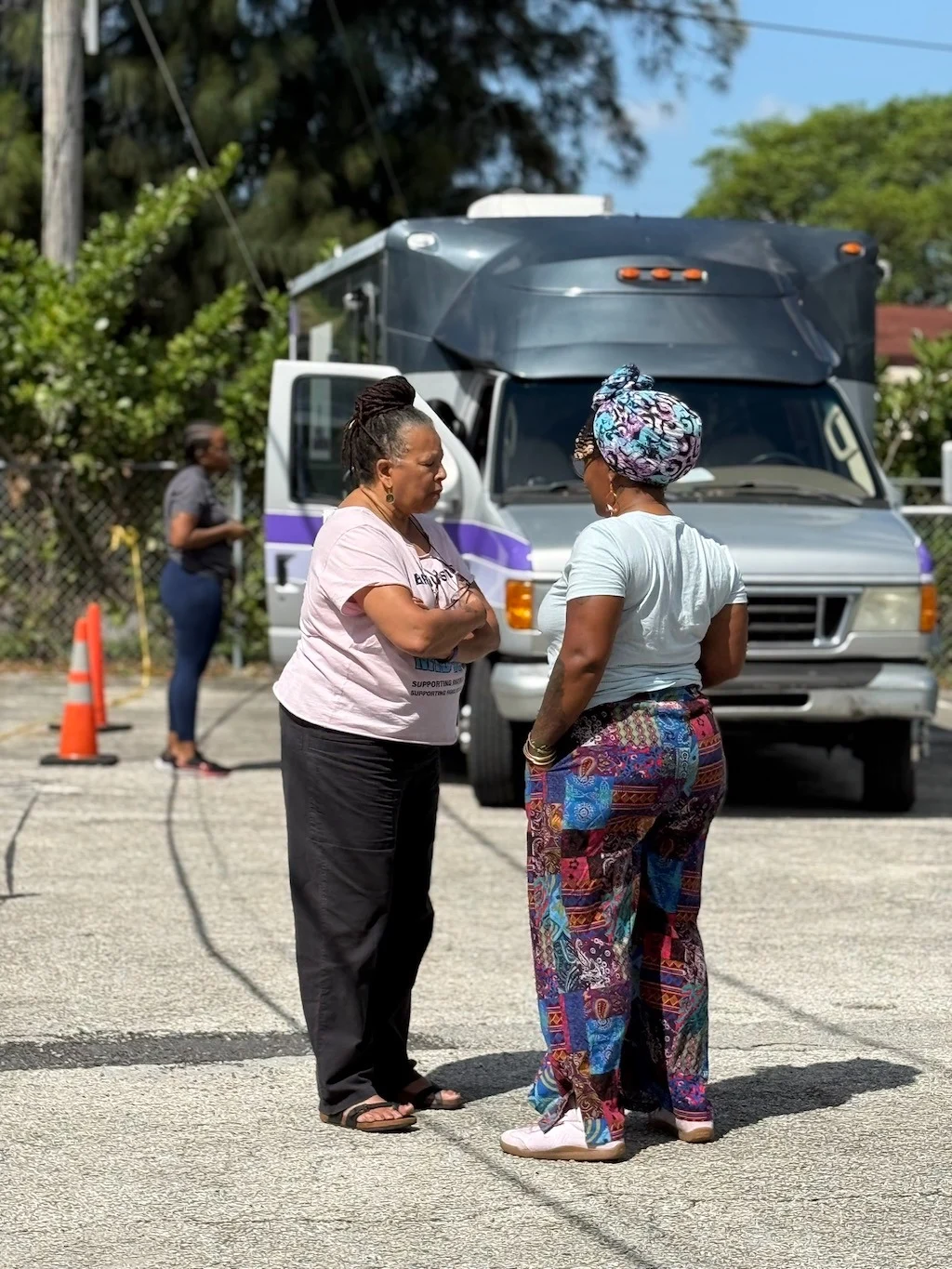
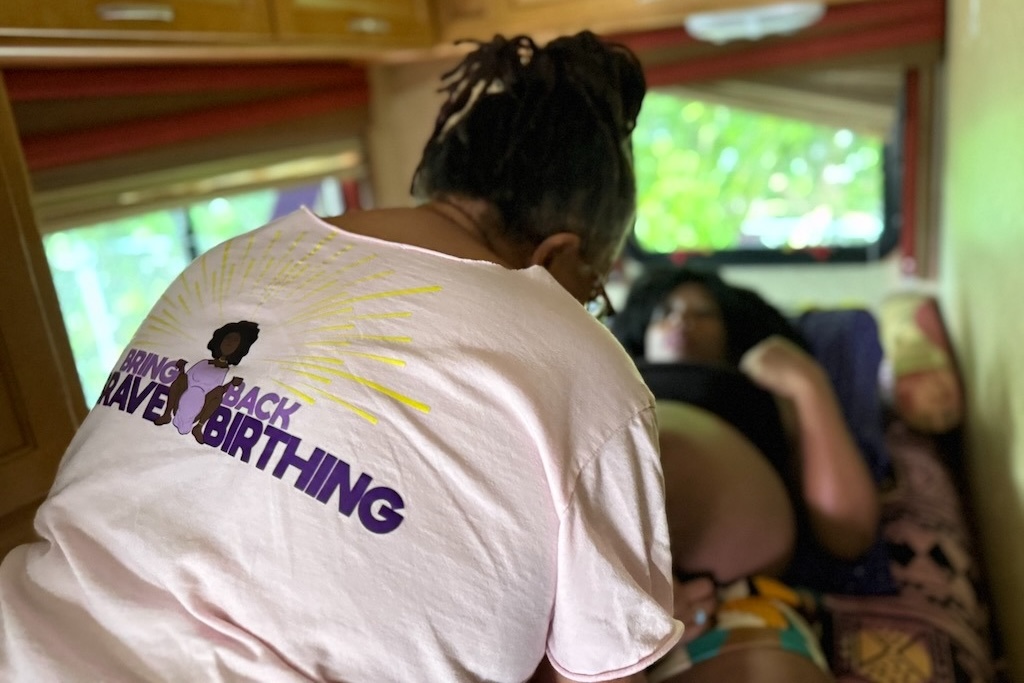
Inside a converted recreational vehicle parked in a Miami-Dade lot, the clinical atmosphere of a traditional hospital is replaced by the soft glow of purple tie-dyed sheets and the calm, attentive voice of Sheila Simms Watson. Known affectionately by her patients as "Mama Sheila," Watson is a midwife with the Southern Birth Justice Network, a non-profit organization working to dismantle the barriers that prevent Black and Latino women from receiving equitable maternal health care. This mobile midwifery clinic represents a radical shift in how prenatal and postpartum services are delivered, moving away from centralized, often intimidating medical institutions and directly into the neighborhoods that need them most.
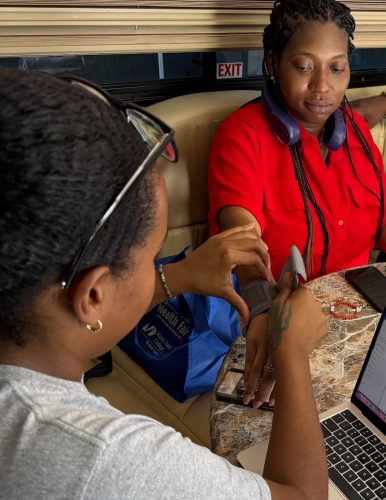
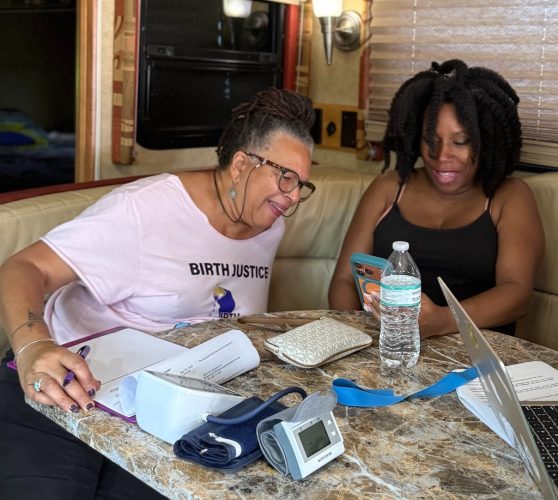
The clinic serves as a lifeline for women like Me’Asia Taylor, who is pregnant with her first child. For Taylor, the stakes of her pregnancy are compounded by a family history of pre-eclampsia—a potentially fatal condition characterized by high blood pressure that disproportionately affects Black women. In a traditional medical setting, Taylor feared her concerns might be dismissed, a common experience reported by women of color in the United States. Inside the RV, however, appointments are unrushed. Watson and her team of doulas and midwives-in-training focus not just on vitals like blood pressure and fetal heart tones, but on the holistic well-being of the mother, asking about mental health, sleep quality, and the stability of their home environments.
The Crisis of Maternal Mortality and the Rise of Care Deserts
The emergence of mobile midwifery in South Florida comes at a critical juncture for American healthcare. The United States currently maintains the highest maternal mortality rate among high-income nations, a statistic that is even more staggering when broken down by race. According to the Centers for Disease Control and Prevention (CDC), Black women are three times more likely to die from pregnancy-related causes than white women. These deaths are often preventable and are frequently linked to systemic issues including implicit bias in medical treatment, lack of access to consistent prenatal care, and the stressors of poverty.
Compounding this crisis is the rapid expansion of "maternal health deserts." In 2023 alone, more than two dozen hospital labor and delivery units across the country shuttered their doors due to staffing shortages and financial pressures. South Florida has not been immune to this trend, leaving many pregnant residents miles away from the nearest obstetrician. For those without reliable transportation or those working multiple jobs, the distance to a hospital can be an insurmountable barrier to receiving the early prenatal care necessary to detect complications like gestational diabetes or pre-eclampsia.
By bringing the clinic to the patient, the Southern Birth Justice Network disrupts the traditional requirement that patients must navigate complex, often hostile systems to receive life-saving care. This community-centered model is designed to be responsive to the specific needs of the population it serves, roughly 70 percent of whom are uninsured or rely on Medicaid.
A Legacy of Resistance: From Granny Midwives to Modern Practice
The work of the Southern Birth Justice Network is deeply rooted in the historical legacy of Black midwifery in the United States. For centuries, "Granny Midwives" were the backbone of maternal health in the South, particularly during the Jim Crow era when Black families were systematically denied access to white hospitals. These midwives, many of whom carried traditions brought from West Africa, were not only medical providers but also spiritual leaders and community pillars.
However, the 20th century saw a concerted effort by the burgeoning medical establishment to delegitimize midwifery. Professional medical organizations launched campaigns that characterized midwives as "unhygienic" or "barbarous," lobbying for state regulations that eventually pushed many out of practice. This shift coincided with the rise of modern obstetrics, a field that, in its infancy, often involved unethical experiments on enslaved Black women.
Jamarah Amani, the executive director of the Southern Birth Justice Network, views the mobile clinic as a continuation of the resistance shown by those ancestral midwives. "We talk about the legacy of Black midwives as health care providers, but also as social pillars, as community leaders, as resistors of oppression," Amani noted. The clinic even incorporates cultural symbols, such as a small drum used to represent the heartbeat and ancestral reverence, bridging the gap between modern clinical needs and cultural heritage.
Regulatory Hurdles and the Fight for Autonomy
While the benefits of midwifery are well-documented—including lower rates of C-sections, reduced preterm births, and higher patient satisfaction—the practice faces significant legal challenges. In many Southern states, midwives are restricted from practicing independently and are required to have formal "collaborative agreements" with physicians.
Advocates argue these rules are often used to gatekeep the profession rather than protect patients. Recently, the American College of Nurse-Midwives filed a lawsuit against Mississippi over such restrictions. Similarly, Jamarah Amani has joined a lawsuit in Georgia challenging regulations that limit maternal health providers. Supporters of the midwifery model, including Dr. Jamila Perritt, an OB-GYN and president of Physicians for Reproductive Health, argue that expanding access to midwifery and fostering collaboration between doctors and midwives is essential to improving national health outcomes.
The Southern Birth Justice Network operates through a combination of federal and university grants and private donations. This funding allows them to offer services free of charge, transforming what is often viewed as a "luxury concierge" service into a grassroots community resource.

A Chronology of the Mobile Clinic’s Evolution
The mobile clinic’s journey began nearly two decades ago, reflecting a long-term commitment to the Miami-Dade area:
- 2008: The late midwife Ada “Becky” Sprouse launches the mobile midwifery clinic. She primarily serves the agricultural hub of Homestead, Florida, providing care to migrant farmworkers who lacked the resources to visit traditional doctors.
- 2010s: The clinic is passed to Jamarah Amani, who integrates it into the broader mission of the Southern Birth Justice Network. The scope expands from migrant care to serving Black and Latino neighborhoods across the county.
- 2020-2023: Amid the COVID-19 pandemic and a wave of hospital unit closures, the clinic intensifies its outreach, providing a safe, socially distanced alternative for prenatal care.
- 2024: The clinic continues its bi-monthly rotations at sites like the Freedom Lab, a community center in Miami that also hosts food distribution and urgent care services.
- 2025 and Beyond: The organization has recently purchased a building to establish its first freestanding birth center. Plans are also underway to commission a larger, more advanced RV to expand the mobile fleet.
Cultivating Trust Through Lived Experience
For many patients, the decision to use the mobile clinic is driven by a lack of trust in the standard hospital system. Isis Daaga, a mental health therapist who is currently 35 weeks pregnant, sought out the clinic after a traumatic experience during her first birth at a hospital. Daaga recalls being told she could not deliver her baby because the doctor had not yet arrived, despite her body’s natural urge to push.
"They literally held my knees together," Daaga said, describing a 15-hour labor that ended in a severe perineal tear because she was forced to wait for a physician to oversee a delivery that nurses were purportedly "scared" to handle. In contrast, the mobile clinic offers a "safe space" where patients feel heard and supported. Daaga, who travels over two hours via public transit to reach the clinic, emphasizes that the midwives treat her with the same dignity and lack of judgment she strives to provide her own therapy clients.

Implications for the Future of Maternal Health Equity
The success of the Southern Birth Justice Network’s mobile unit offers a potential blueprint for addressing the maternal health crisis on a national scale. By prioritizing "cultural humility"—the practice of acknowledging and respecting a patient’s cultural background and personal agency—midwifery clinics can bridge the gap between marginalized communities and the healthcare system.
The broader implications of this model suggest that health equity cannot be achieved simply by building more hospitals. Instead, it requires a decentralized approach that addresses the social determinants of health, such as transportation, trust, and the historical context of medical racism. As the Southern Birth Justice Network prepares to open its permanent birth center, it remains committed to the mobile model, ensuring that care remains accessible to those who cannot come to them.
By integrating doula support, telehealth referrals, and advocacy for equitable state policies, the network is not just delivering babies; it is attempting to heal a fractured system. As maternal health care deserts continue to expand, the sight of a purple-sheeted RV in a Miami parking lot may become an increasingly vital symbol of safety and survival for the next generation.
