

In a significant move for the global impact investing landscape, Lightrock, a leading global private equity firm focused on sustainable and purposeful investments, has announced the successful closure of a $500 million funding round for its latest vehicle, Accelerate7. This new fund is specifically engineered to bridge the widening energy gap in the Global South, providing much-needed growth capital to businesses that are pioneering clean energy solutions and expanding electricity access across Sub-Saharan Africa, South Asia, and Southeast Asia. The initiative represents a major milestone in the mobilization of private capital toward the United Nations Sustainable Development Goal 7 (SDG 7), which advocates for universal access to affordable, reliable, sustainable, and modern energy.
The launch of Accelerate7, also known as the Energy Access Acceleration Fund, comes at a critical juncture for international development. While the global community has made strides in renewable energy deployment, the distribution of these advancements remains starkly uneven. According to current data from the International Energy Agency (IEA) and the World Bank, approximately 660 million people worldwide still lack basic access to electricity. Furthermore, the crisis of "energy poverty" extends to cooking; nearly 2.1 billion people rely on hazardous and polluting fuels such as wood, charcoal, and kerosene for their daily needs. These practices not only contribute to massive carbon emissions but also cause millions of premature deaths annually due to indoor air pollution, disproportionately affecting women and children.
A Strategic Partnership for the Global South
Accelerate7 is the result of a strategic collaboration between Lightrock and TRIREC, a prominent investment platform based in Singapore that specializes in decarbonization and energy transition within the Southeast Asian market. By combining Lightrock’s global private equity expertise with TRIREC’s localized technical knowledge, the fund is positioned to identify and scale high-potential companies that are often overlooked by traditional venture capital or infrastructure funds.
The fund’s investment mandate is focused on growth-stage companies. Unlike early-stage venture capital that takes bets on unproven technologies, Accelerate7 targets businesses that have already established a "proof of concept" and possess resilient, scalable business models. With initial investment tickets ranging from $10 million to $50 million, the fund aims to provide the "missing middle" of financing—the capital required to transform regional players into national or international leaders.
Lightrock’s commitment to this sector is not new, but the scale of Accelerate7 marks a significant escalation. With this latest fund, Lightrock’s total capital dedicated to the energy transition, energy access, and climate-related investments has reached approximately $2 billion. This reinforces the firm’s position as a heavyweight in the impact investing arena, particularly in markets where institutional capital has historically been hesitant to enter.
Targeted Sectors and Current Portfolio
The investment strategy of Accelerate7 is structured around three primary pillars: direct access to electricity, clean cooking solutions, and enabling technologies such as electric mobility and energy storage. By diversifying across these verticals, the fund seeks to create a holistic ecosystem of sustainable development.
To date, the fund has already deployed capital into four cornerstone investments that illustrate its broad geographic and sectoral reach:
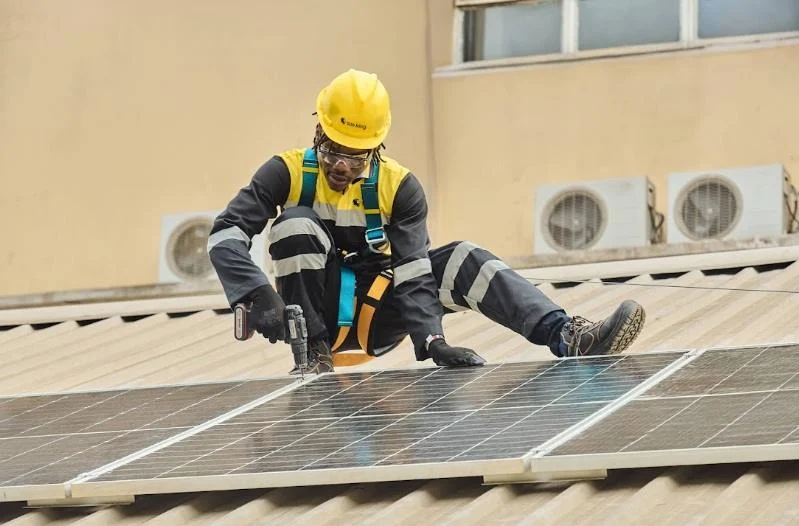
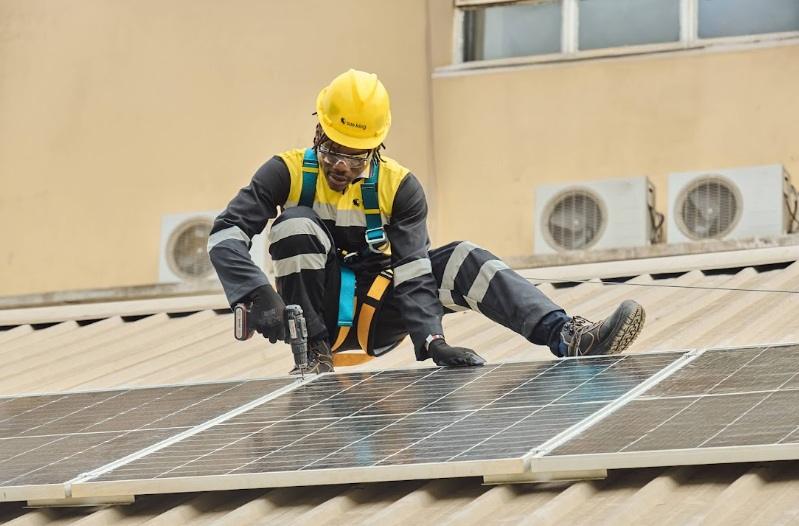
- Sun King (Off-Grid Solar): As a leader in the off-grid solar industry, Sun King provides solar home systems and lanterns to millions of households in Africa and Asia. Their pay-as-you-go (PAYGO) model allows low-income consumers to pay for solar energy in small increments via mobile money, making clean power more affordable than traditional kerosene.
- SolarSquare (Residential Solar): Based in India, SolarSquare is focused on the rapidly growing rooftop solar market. By providing end-to-end solutions for residential consumers, the company is helping to decentralize the power grid in one of the world’s most populous nations, reducing reliance on coal-fired electricity.
- Euler Motors (Electric Mobility): Targeting the commercial transport sector in South Asia, Euler Motors manufactures electric three-wheelers designed specifically for the rigors of last-mile delivery. Their technology addresses both urban pollution and the rising costs of fossil fuels for small business owners.
- ATEC Global (Clean Cooking): ATEC utilizes Internet of Things (IoT) technology to provide induction and biodigester cooking solutions. By moving households away from biomass, ATEC’s products significantly reduce household smoke and carbon footprints while providing data-backed carbon credit opportunities.
Institutional Backing and the Role of Corporate Giants
One of the most notable aspects of Accelerate7 is the caliber of its limited partners. The fund has secured commitments from a diverse group of investors, including major global energy corporations such as Equinor, Shell, and TotalEnergies. The involvement of these "Big Oil" entities reflects a broader trend of traditional energy giants seeking to diversify their portfolios and meet internal ESG (Environmental, Social, and Governance) targets by investing in the decentralization of energy in emerging markets.
In addition to corporate investors, the fund is backed by LGT, the international private banking and asset management group owned by the Princely House of Liechtenstein. LGT has been a long-term proponent of impact investing, and its continued support of Lightrock—which was originally incubated within LGT—underscores the institutional confidence in the financial viability of sustainable energy projects in the Global South.
Ademidun (Demi) Edosomwan, Partner and Head of Energy Access at Lightrock, emphasized the economic rationale behind the fund. "Across the Global South, access to reliable energy and modern cooking solutions remains one of the clearest drivers of economic opportunity and improved quality of life," Edosomwan stated. "With Accelerate7, we are backing businesses that have already demonstrated strong execution and are ready to scale. Our focus is on finding proven operators with resilient business models that can deliver both meaningful impact and long-term value."
Analysis of Implications and Market Context
The successful raising of $500 million for Accelerate7 sends a powerful signal to the global financial markets. It suggests that the "perceived risk" of investing in emerging markets is being recalibrated as the demand for clean energy reaches a fever pitch. In many parts of Sub-Saharan Africa and Southeast Asia, the lack of reliable centralized grid infrastructure is not just a challenge; it is an opportunity for "leapfrogging." Much like how mobile phones allowed these regions to bypass landline telecommunications, decentralized solar and storage solutions are allowing them to bypass traditional, carbon-intensive utility models.
From a macroeconomic perspective, the fund addresses the productivity gap. Without electricity, businesses cannot operate after dark, students cannot study, and essential medical services are limited. By scaling companies like Sun King and SolarSquare, Accelerate7 is effectively investing in the infrastructure of future economic growth.
Furthermore, the focus on electric mobility in markets like India (via Euler Motors) is timely. As urban centers in the Global South face some of the highest air pollution levels in the world, the transition to electric commercial fleets is a public health necessity. The integration of IoT in clean cooking, as seen with ATEC Global, also opens the door to the burgeoning carbon credit market. By verifying the reduction in carbon emissions through smart devices, these companies can generate high-quality carbon offsets, creating an additional revenue stream that subsidizes the cost of the technology for the end-user.
Future Outlook and Chronology of Impact
The journey of Lightrock and the launch of Accelerate7 represents a decade-long evolution in the field of sustainable finance. Lightrock emerged from the LGT Group’s impact investing initiatives, eventually spinning off to become a distinct entity that could attract a wider range of global institutional capital. This evolution has been marked by a shift from purely philanthropic or "impact-first" investing to a model that demands competitive financial returns alongside measurable social and environmental outcomes.
Looking ahead, the deployment of the remaining capital in Accelerate7 will likely focus on the "enabling technologies" sector. As more solar assets are deployed, the demand for battery storage and smart grid management software will skyrocket. The fund is expected to announce further investments in the coming 12 to 18 months, particularly in Southeast Asian markets where industrial growth is creating an insatiable demand for green energy.
In conclusion, the $500 million raised for Accelerate7 is more than just a capital infusion; it is a catalyst for systemic change. By targeting the intersection of technology, entrepreneurship, and basic human needs, Lightrock is demonstrating that the transition to a net-zero world must be inclusive. If the Global South is left behind in the energy transition, global climate goals will remain out of reach. Through Accelerate7, the path to a cleaner, more equitable energy future is being paved with strategic, large-scale private investment.
