

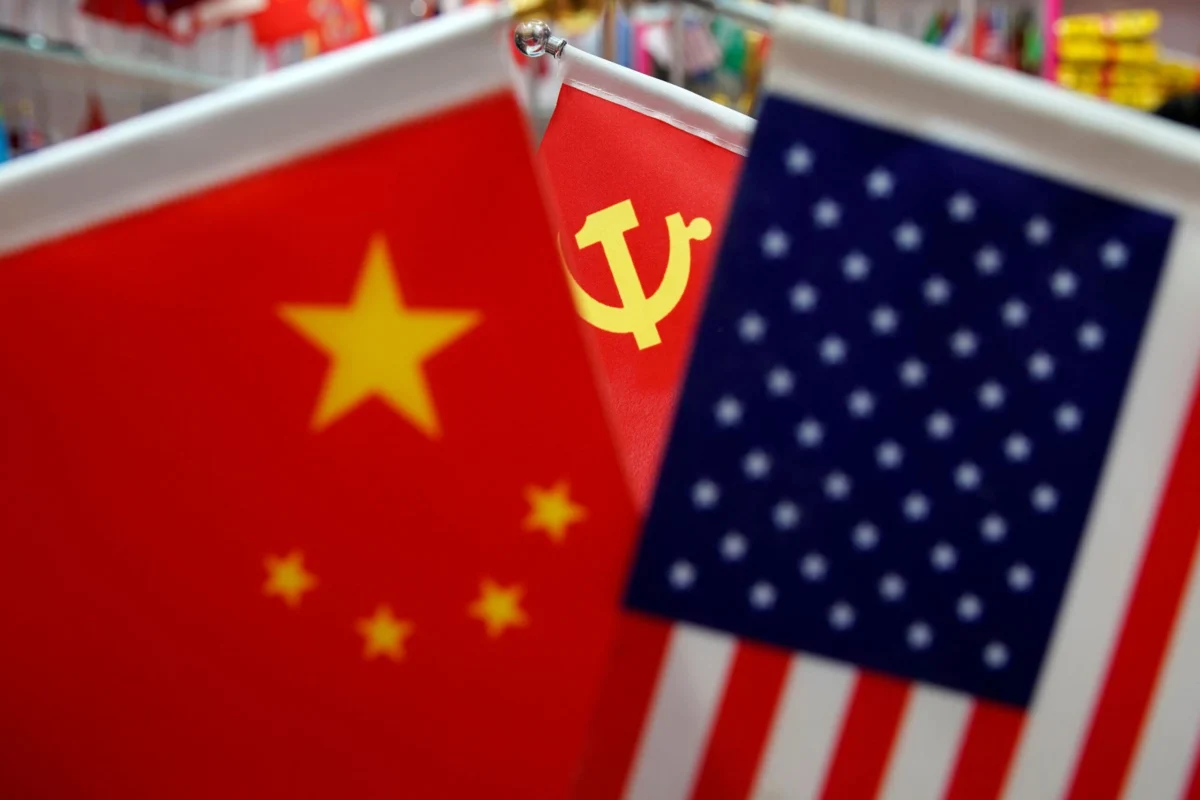
BEIJING – Following a high-stakes summit in Beijing, U.S. President Donald Trump maintained a conspicuous silence regarding Taiwan, a move that sent ripples through diplomatic circles despite the recent announcement of a record $11 billion arms sale to the self-governing island. The two-day meeting with Chinese leader Xi Jinping, which concluded on Friday, was anticipated by many to address the contentious issue of Taiwan, particularly in light of Beijing’s vehement opposition to U.S. military support for Taipei. However, initial U.S. readouts conspicuously omitted any mention of the island, drawing scrutiny and prompting speculation about the delicate balance of U.S.-China relations.
The Beijing Summit: A Tense Backdrop
The summit between President Trump and President Xi Jinping took place against a complex geopolitical backdrop, characterized by escalating trade tensions, technological rivalry, and fundamental disagreements over regional security. U.S.-China relations were already strained by a burgeoning trade war, with the U.S. imposing tariffs on Chinese goods and Beijing retaliating in kind. Beyond economics, the two global powers were also at odds over issues ranging from intellectual property theft and cyber security to human rights and maritime disputes in the South China Sea. Amidst these multifaceted challenges, Taiwan consistently loomed as one of the most sensitive and potentially volatile flashpoints in the bilateral relationship.
For decades, U.S. policy towards Taiwan has been guided by the "One China" policy, which acknowledges Beijing’s claim that Taiwan is part of China but does not endorse it. Simultaneously, the U.S. maintains "strategic ambiguity" regarding whether it would militarily intervene if China were to attack Taiwan. This delicate balancing act aims to deter Beijing from an unprovoked invasion while also discouraging Taiwan from declaring de jure independence, which Beijing views as a red line. The 1979 Taiwan Relations Act, a cornerstone of U.S. policy, mandates that the U.S. "will make available to Taiwan such defense articles and defense services" as necessary to "enable Taiwan to maintain sufficient self-defense capabilities," thereby providing a legal framework for arms sales.
Taiwan’s Pivotal Role: A Looming Flashpoint
Taiwan, a vibrant democracy with a population of approximately 23 million, holds immense strategic and economic importance. It is a critical node in the global supply chain, particularly for advanced semiconductors. Manufacturers on the island, notably Taiwan Semiconductor Manufacturing Company (TSMC), produce a significant majority of the world’s most sophisticated microchips, essential components for everything from smartphones and artificial intelligence systems to military hardware. This technological dominance has led some analysts to describe Taiwan’s semiconductor industry as a "silicon shield," implying that its economic indispensability offers a layer of protection against aggression.
However, Beijing views Taiwan as an "inseparable part" of its territory, a renegade province that must eventually be "reunified" with the mainland, by force if necessary. China has consistently ramped up military exercises near the island and frequently reiterates its sovereignty claims, creating a persistent sense of unease in the region. The U.S.’s announcement in December of a substantial $11 billion arms package for Taiwan — reportedly including advanced F-16 fighter jets, M1A2 Abrams tanks, and various missile systems — was met with predictable outrage from Beijing. This sale, one of the largest in recent memory, was seen by China as a direct violation of its sovereignty and a provocative interference in its internal affairs, further raising the stakes for the Trump-Xi summit. President Trump himself had previously indicated that these arms sales would be a key topic of discussion during his talks with Xi.
The Diplomatic Dance: Summit Proceedings and Initial Silence
The summit unfolded over two days, with intense discussions covering a wide array of bilateral and global issues. On Thursday, the first day of meetings, expectations were high for a direct engagement on Taiwan. However, Secretary of State Marco Rubio, speaking to NBC News after the initial sessions, revealed that the topic "did not feature primarily in today’s discussion." This statement immediately signaled a departure from prior expectations and set a tone of deliberate omission.
Adding to the impression of a consciously sidelined issue, the initial White House readout of the discussions also notably refrained from mentioning Taiwan. This absence was particularly striking given the island’s strategic importance and the recent contentious arms sale. While Treasury Secretary Scott Bessent told CNBC he anticipated President Trump would "say more on Taiwan in coming days," the immediate silence fueled speculation about the U.S.’s strategy and potential concessions or agreements made behind closed doors. The diplomatic community watched closely, aware that the omission could be a strategic move to de-escalate tensions during the summit itself, or it could signify a more profound shift in U.S. policy.
Xi’s Stern Warning and Beijing’s Stance
The silence from the U.S. side contrasted sharply with Beijing’s immediate and unambiguous posture. More than 24 hours after the conclusion of the first day’s meetings, China published its official readout, which included a stark and direct warning from President Xi Jinping. Xi unequivocally stated that mishandling the Taiwan issue would put the U.S.-China relationship in "great jeopardy." This was not merely a reiteration of a long-held position but a forceful articulation of the gravity Beijing attaches to the matter.
Wendy Cutler, a former acting deputy U.S. trade representative, underscored the significance of Xi’s statement on CNBC’s "The China Connection." "This is a pretty direct and strong comment by President Xi," Cutler observed. She further interpreted Xi’s remarks as explicitly linking "economic stability to developments with respect to Taiwan," suggesting that Beijing perceives the Taiwan issue as foundational to the entire U.S.-China economic relationship, not merely a political or security concern. This integrated view implies that any perceived transgression on Taiwan could have far-reaching economic repercussions for the U.S. The official Chinese readout of the closing Trump-Xi meeting on Friday morning, while emphasizing the benefits of cooperation, also conspicuously omitted any specific mention of Taiwan, reinforcing Beijing’s narrative of sovereignty and internal affairs.
Trump Breaks Silence: "Cool It" and Strategic Ambiguity Reaffirmed
The prolonged silence from the U.S. side finally broke on Friday afternoon, when President Trump addressed the Taiwan issue in an interview with Fox News. His remarks, delivered post-summit, offered a nuanced and somewhat equivocal stance, urging both sides to "cool it."

"I will say this: I’m not looking to have somebody go independent, and you know, we’re supposed to travel 9,500 miles to fight a war," Trump stated, appearing to express reservations about the prospect of the U.S. directly defending Taiwan if it were attacked, particularly if Taipei were to aggressively pursue independence. "I’m not looking for that. I want them to cool down, I want China to cool down." This statement suggested a potential linkage between Taiwan’s actions and the extent of U.S. commitment, a subtle but significant distinction from previous broad affirmations of support.
Trump further emphasized that long-standing U.S. policy on Taiwan remained unchanged, stating that the people of Taiwan should feel "neutral" about his visit. He also revealed that he had yet to approve another potential large sale of weapons to Taiwan, adding, "I may do it, I may not do it." This indicated a degree of leverage he perceived over Taipei and Beijing, signaling a transactional approach to military assistance. "We’re not looking to have somebody say ‘Let’s go independent because the United States is backing us,’" Trump cautioned, reinforcing the U.S.’s commitment to strategic ambiguity. "Taiwan would be very smart to cool it a little bit. China would be very smart to cool it a little bit. They ought to both cool it," he concluded, framing the issue as a bilateral responsibility to de-escalate.
Notably, Trump also stated that he refused to directly answer Xi when asked if the U.S. would defend Taiwan against a Chinese attack, a refusal that aligns perfectly with the U.S.’s long-standing "strategic ambiguity." He further disclosed that Taiwan was not part of the discussion when he met with Xi in South Korea the previous fall, suggesting a pattern of sidestepping direct engagement on the issue in high-level talks.
The Taiwan Relations Act and U.S. Defense Commitments
The U.S.’s position on Taiwan is complex, governed by a delicate balance of diplomatic recognition, legal obligations, and strategic interests. While the U.S. formally recognized Beijing in 1979 and acknowledges China’s position that Taiwan is part of China, it simultaneously maintains robust unofficial relations with Taiwan. The Taiwan Relations Act (TRA) of 1979 is the bedrock of this unofficial relationship. Beyond mandating arms sales for Taiwan’s self-defense, the TRA declares that "peace and stability in the area are in the political, security, and economic interests of the United States, and are of international concern." It also states that the U.S. will consider "any effort to determine the future of Taiwan by other than peaceful means, including by boycotts or embargoes, a threat to the peace and security of the Western Pacific area and of grave concern to the United States." While the TRA does not explicitly commit the U.S. to military intervention, it leaves the door open, allowing for the "strategic ambiguity" that has defined U.S. policy for decades. Trump’s post-summit remarks, particularly his refusal to directly commit to defense and his urging for Taiwan to "cool it," were interpreted by some as a subtle reaffirmation of this ambiguity, perhaps even leaning towards a more cautious interpretation of U.S. commitments if Taiwan were to provoke Beijing.
Taipei’s Measured Response: Upholding the Status Quo
In response to President Trump’s statements, Taiwan adopted a measured tone, emphasizing its commitment to regional peace and stability. Taiwan’s presidential spokesperson Karen Kuo issued a statement on Saturday, asserting that comments by Trump and Secretary Rubio signaled that U.S. policy toward the island remained unchanged.
"It is a clear fact that [Taiwanese] President Lai Ching-te has consistently advocated for continuing to contribute to regional peace and stability and remaining committed to maintaining the status quo across the Taiwan Strait," Kuo stated. She then squarely placed the blame for regional instability on Beijing, adding, "China’s escalating military threat is the sole destabilizing factor within the Indo-Pacific region, including the Taiwan Strait." This statement highlighted Taiwan’s defensive posture and its perception of China as the primary aggressor, while also subtly reinforcing its commitment to avoiding actions that would unilaterally alter the status quo, a key concern for both Washington and Beijing.
Expert Analysis: Continuity Amidst Uncertainty
Analysts largely interpreted the post-summit developments as a continuation of established U.S. policy, despite the initial silence and Trump’s distinctive rhetoric. Rush Doshi, director of the China strategy initiative at the Council on Foreign Relations, speaking on CNBC’s "Squawk Box Asia," noted a consistent pattern in U.S. readouts of Trump-Xi meetings. "If you look at the readouts of all Trump-Xi meetings before this [week], just the last several that have occurred since maybe April of last year, you see the U.S. readouts have a much smaller portion focused on Taiwan," Doshi observed. He concluded, "There’s really no sign that there’s been a significant change in [the U.S.] Taiwan policy, at least not yet from the summit."
This perspective suggests that the U.S. administration, despite its unpredictable style, ultimately adheres to the fundamental tenets of strategic ambiguity and the "One China" policy in its engagement with Beijing on Taiwan. The deliberate silence during the summit itself could be seen as a tactical move to avoid derailing discussions on other critical issues like trade or global security, allowing for a more controlled public narrative post-summit.
Broader Geopolitical Implications
The delicate handling of the Taiwan issue during and after the Trump-Xi summit carries significant geopolitical implications. For U.S.-China relations, it underscores the persistent tension surrounding Taiwan and Beijing’s unwavering resolve on the matter. While the immediate aftermath did not signal a dramatic shift, the exchange reinforced the deep-seated mistrust and competing interests that define the relationship. The linking of Taiwan to broader economic stability by Xi also suggests that Beijing is prepared to wield its economic leverage more forcefully if it perceives U.S. actions on Taiwan as overly provocative.
For regional stability in the Indo-Pacific, the episode highlights the precarious balance. Any perceived wavering in U.S. commitment to Taiwan’s defense could embolden Beijing, while a strong, unequivocal commitment could be seen as provocative. The "cool it" rhetoric, while seemingly aimed at de-escalation, also places a burden on Taiwan to exercise restraint, potentially limiting its diplomatic space. The ongoing U.S. arms sales, even with Trump’s conditional tone, signal a continued commitment to bolstering Taiwan’s defensive capabilities, a critical factor for deterrence.
Economically, the security of Taiwan remains paramount, given its irreplaceable role in the global semiconductor supply chain. Any escalation of tensions or conflict would have catastrophic consequences for the world economy, underscoring the interconnectedness of geopolitics and global commerce. The summit, and the subsequent rhetoric, therefore, serve as a potent reminder of the fragility of peace in one of the world’s most critical geopolitical hotspots and the complex dance required to maintain a delicate equilibrium. The future trajectory of U.S. foreign policy towards Taiwan and China will continue to be closely scrutinized, as Washington navigates the challenging terrain of strategic competition and indispensable cooperation with Beijing.
