

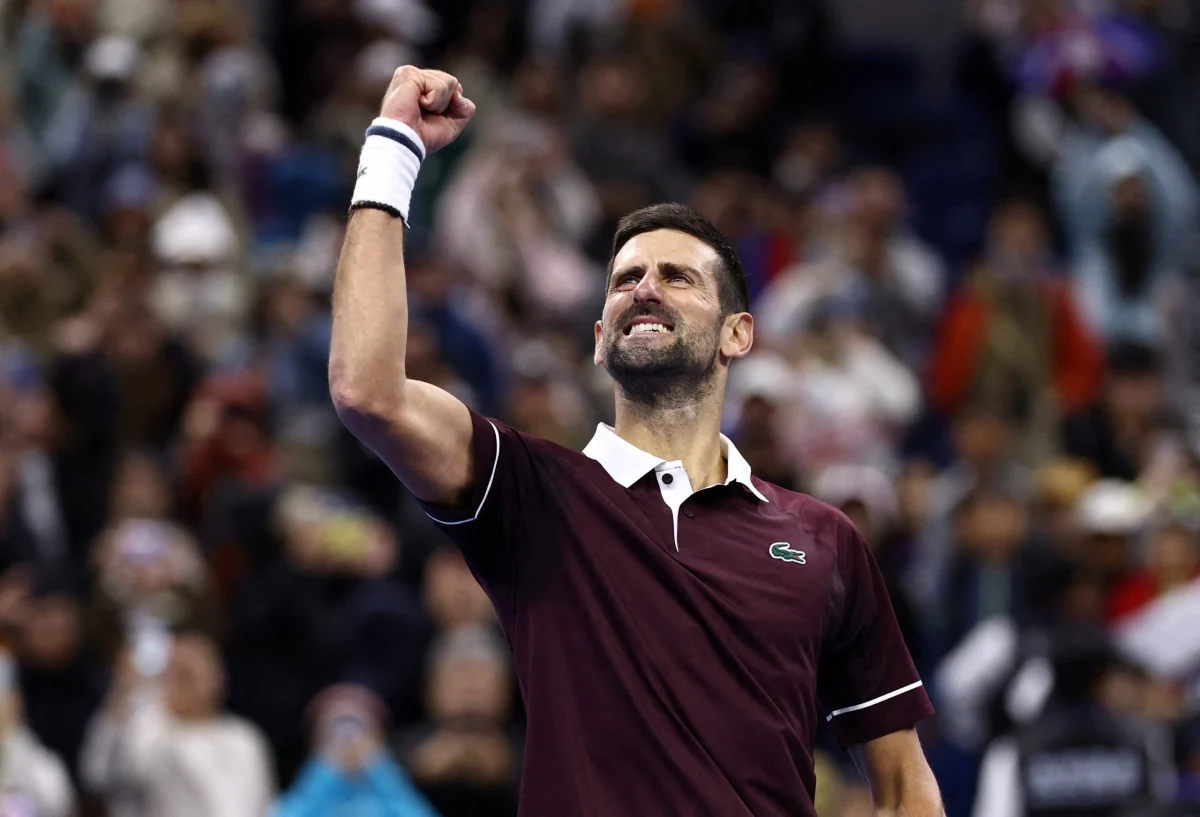
Novak Djokovic, defying persistent injury concerns that have plagued his 2026 season, delivered a quintessential display of resilience and strategic mastery to overcome top seed Alexander Zverev 4-6, 6-4, 6-4 in a gripping quarterfinal clash at the China Open. The victory propels the Serbian maestro into the semifinals of the ATP 500 event in Beijing, further extending his formidable unbeaten record at the tournament, which now stands at an impressive 30-0. He is set to face Daniil Medvedev, who secured his semifinal berth by defeating Francisco Cerundolo 7-6(4), 6-3 earlier in the day.
A Battle of Generations and Grand Slam Champions
The highly anticipated encounter marked the first meeting between Djokovic and Zverev in nearly 16 months, reigniting a rivalry between two of tennis’s most dominant figures. Zverev, at 29 years old, entered the match in formidable form, having recently claimed his maiden Grand Slam titles at the French Open and the US Open in 2026, solidifying his status as a major force in men’s tennis. His powerful serve and aggressive baseline game were immediately evident, as he delivered 19 aces throughout the match, putting immense pressure on the six-time China Open champion.
Djokovic, returning to Beijing for the first time since his last triumph in 2015, found himself on the back foot from the outset. Reflecting on his slow start, the 39-year-old Serb conceded, "I had a terrible start – two double faults at the beginning. It was quite cold, and honestly, I didn’t feel warmed up, but my fault. I gave him an early break, and then it was hard to come back in the first set." Zverev capitalized on Djokovic’s initial struggles, securing an early break and maintaining his advantage with a barrage of unreturnable serves and penetrating groundstrokes to comfortably claim the opening set 6-4.
Mid-Match Controversy and Djokovic’s Mental Fortitude
The second set witnessed a gradual shift in momentum, though not without its dramatic interlude. With the score finely poised and both players battling intensely, a moment of controversy briefly halted proceedings. During a crucial rally, Zverev argued that the electronic advertising signage along the baseline had momentarily gone dark, impacting his vision and contributing to him missing a forehand. He immediately requested a video review. Replays confirmed that a section of the signage had indeed switched off, although it appeared to do so just after Zverev had already made contact with the ball, not directly during his stroke.
Despite the visual evidence, the chair umpire, after deliberation and consultation, made the contentious decision to replay the point. This ruling visibly frustrated Djokovic, who engaged in a heated exchange with the official, arguing that the disruption had not directly interfered with Zverev’s shot and that the point should stand. Such incidents, while rare, highlight the increasing integration of technology in sports and the subjective interpretations that can still arise, testing the composure of even the most seasoned professionals. Despite his visible irritation, Djokovic quickly refocused, demonstrating the mental fortitude for which he is renowned.

The Turning Point: Second Set Break and Decisive Third Set
The turning point of the match arrived late in the second set. After navigating several challenging service games and gradually finding his rhythm, Djokovic seized his opportunity. With Zverev serving at 4-5, the Serb elevated his game, unleashing a series of precise returns and drawing errors from his opponent. He secured a crucial break, leveling the match at one set all and decisively shifting the psychological momentum in his favour. This pivotal moment underscored Djokovic’s uncanny ability to perform under pressure and capitalize on the slightest lapse from his opponents.
The third set became a testament to the high-stakes nature of quarterfinal tennis, with both players trading powerful blows and holding serve resolutely. The intensity escalated with every point, neither man willing to cede an inch. With the score locked at 4-4, Djokovic once again demonstrated his championship pedigree. Applying relentless pressure on Zverev’s serve, he engineered another decisive break point opportunity. A meticulously constructed rally culminated in Zverev sending a forehand wide, handing Djokovic the crucial break at 5-4. Serving for the match, Djokovic showed no signs of faltering, closing out the contest in two hours and 35 minutes with a dominant service game.
"I was trying to be aggressive and come to the net and change up the pace, not giving the same pattern," Djokovic explained, outlining his tactical adjustments. "I am just glad that I held my nerves, played good shots at important moments, 5-4 in the second and third." His performance was a stark reminder of his enduring class and ability to overcome physical discomfort, especially after a season marked by undisclosed health issues, which he has publicly described as "a big, big struggle for me."
Djokovic’s Unmatched China Open Legacy and Season Context
Novak Djokovic’s record at the China Open is unparalleled. His six previous titles (2009, 2010, 2012, 2013, 2014, 2015) and an unbroken winning streak dating back to his first appearance make him the most dominant player in the tournament’s history. His return this year, after an eight-year hiatus, was met with considerable anticipation, especially given his recent struggles with form and fitness. This victory, against a reigning two-time Grand Slam champion, signifies a potential resurgence and a strong bid for his elusive first trophy of the year.
For Alexander Zverev, the loss is a minor setback in what has been a career-defining season. Having finally broken his Grand Slam duck and now holding two major titles, his ambition to reach the world number one ranking is palpable. While this defeat denies him immediate ranking points and a shot at the Beijing title, his consistent deep runs in major tournaments indicate his continued ascent. The head-to-head record between Djokovic and Zverev now stands at 9-5 in favour of the Serb, reflecting a rivalry that has often seen Djokovic emerge victorious in critical encounters.
Semifinal Showdown: Djokovic vs. Medvedev
The semifinals will feature another blockbuster clash as Novak Djokovic prepares to face Daniil Medvedev. Medvedev, currently ranked world number three, advanced to the last four with a straight-sets victory over Francisco Cerundolo. The Russian’s unique defensive-aggressive style, characterized by deep court positioning and precise counter-punching, has often troubled Djokovic. Their head-to-head record stands finely balanced at 10-7 in favour of Djokovic, with many of their encounters proving to be epic battles, including multiple Grand Slam finals.

This semifinal is not just about a place in the China Open final; it carries significant implications for the ATP race to the year-end finals and the overall ranking landscape. For Djokovic, a deep run here could provide the crucial momentum needed to salvage a challenging season and add another prestigious title to his collection. For Medvedev, it’s an opportunity to further solidify his position among the elite and potentially deny Djokovic a shot at a record-extending seventh Beijing title.
Broader Implications for the ATP Tour
The China Open, a key event in the "Asian Swing" of the ATP Tour, holds significant weight for players vying for year-end ranking points and qualification for the ATP Finals in Turin. Djokovic’s strong showing here, despite his injury-plagued season, demonstrates his enduring threat to the younger generation. His ability to produce peak tennis in crucial moments, even when not at his physical best, continues to be a defining characteristic of his legendary career. For Zverev, while disappointed, the experience against Djokovic in a high-pressure environment serves as valuable preparation for future major tournaments and his pursuit of the top spot. The tournament’s competitive depth, featuring multiple Grand Slam champions, underscores its importance in the global tennis calendar.
Rybakina’s Withdrawal: A Blow to the WTA Tour
In other significant news from the tennis world, women’s world number one Elena Rybakina announced her withdrawal from the upcoming Wuhan Open due to a persistent foot injury. This announcement came just a day after the Kazakh suffered a surprising defeat in her opening match at the China Open, falling to world number 118 Alina Charaeva.
Rybakina, 27, has endured a challenging season marked by recurring physical issues. She had previously retired from her Cincinnati quarterfinal against Iga Swiatek in August due to a similar lower leg and foot problem. Despite these setbacks, Rybakina managed to recover spectacularly for the US Open, where she claimed her third Grand Slam title, defeating Aryna Sabalenka in a thrilling final. Her stellar performance in New York not only secured her the major title but also propelled her to the top of the WTA rankings and made her the first player to officially qualify for the prestigious season-ending WTA Finals.
In a statement posted on the Wuhan Open’s Instagram account, Rybakina expressed her regret: "I’m very sorry to the fans who were looking forward to seeing me play. I’ll take some time to rest and recover. Thank you for your understanding and continued support." Her decision to prioritize recovery highlights the immense physical demands of professional tennis, especially for players competing at the highest level and battling for major titles and the world number one ranking.
Rybakina’s withdrawal from the Wuhan Open, scheduled to take place from October 12 to 18, is a significant loss for the tournament, which is one of the premier events on the WTA calendar. Her absence deprives fans of seeing the reigning US Open champion in action and impacts the competitive field. The world number one is next expected to compete later this month at the Ningbo Open in China, where she is the defending champion. Her recovery and preparation for the WTA Finals will be closely watched, as she aims to cap off an otherwise historic season on a strong note, health permitting.
