

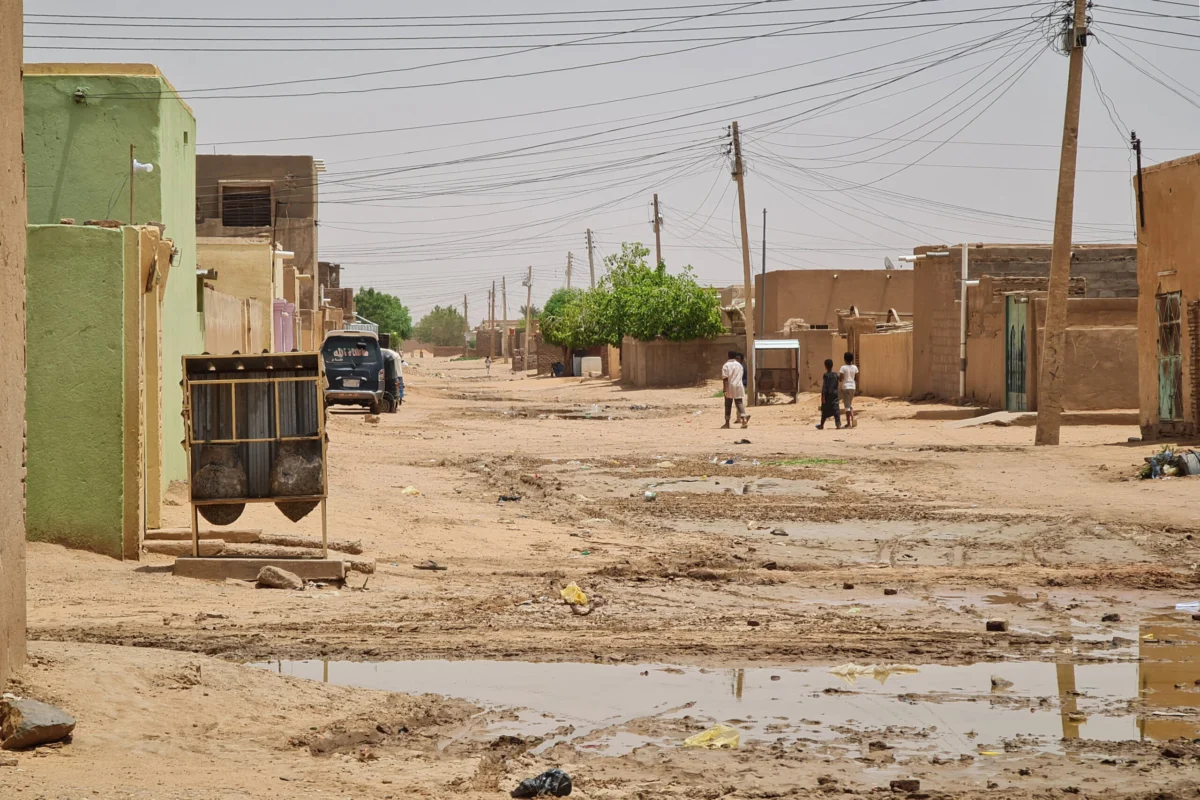
A devastating airstrike targeted the Yormouk neighborhood in southern Khartoum on Saturday, resulting in the deaths of at least 17 civilians, including five children. This latest escalation in the Sudanese capital marks one of the deadliest single incidents since the power struggle between the Sudanese Armed Forces (SAF) and the paramilitary Rapid Support Forces (RSF) began in mid-April. Health officials confirmed that the strike leveled at least 25 residential houses, leaving dozens of families trapped beneath the rubble and forcing a surge of casualties into local medical facilities that are already struggling to operate under siege-like conditions.
The attack occurred in an area of strategic importance, as the Yarmouk district houses a significant military industrial complex. While the SAF, led by General Abdel Fattah al-Burhan, possesses air superiority and has frequently utilized fighter jets and drones to target RSF positions, the RSF has increasingly employed anti-aircraft weaponry and its own fleet of unmanned aerial vehicles. The Ministry of Health’s report highlighted the indiscriminate nature of the violence, noting that among the deceased were women and elderly residents. Local volunteer groups, known as "Emergency Rooms," which have emerged as the primary providers of humanitarian aid in the absence of international NGOs, reported that at least 11 others were severely wounded, with the death toll expected to rise as search-and-recovery efforts continue.
The Escalation of Urban Warfare in Khartoum
The conflict in Sudan is characterized by its shift from peripheral border skirmishes to high-intensity urban warfare within one of Africa’s largest metropolitan areas. The June 17 strike underscores the increasing reliance on heavy weaponry in densely populated neighborhoods. The RSF, commanded by General Mohamed Hamdan "Hemedti" Dagalo, has largely embedded its fighters within residential districts, occupying private homes, hospitals, and schools. This tactic has turned the capital’s suburbs into a complex battlefield where the SAF’s aerial bombardments often result in significant collateral damage.
In a statement released shortly after the strike, the RSF accused the military’s aircraft of deliberately targeting civilian infrastructure. The paramilitary group also claimed to have downed a military MiG fighter jet during the engagement, though this claim has not been independently verified. The Sudanese military has remained largely silent regarding the specific casualties in Yarmouk, typically framing such operations as "surgical strikes" against rebel gatherings. However, the destruction of 25 homes and the high number of child casualties tell a different story of the humanitarian cost of these operations.
Chronology of the Conflict: From Transition to Total War
The current war is the culmination of months of friction between the two generals who jointly orchestrated a coup in October 2021 to derail Sudan’s transition toward civilian democracy. The primary point of contention was the integration of the RSF into the regular army—a key requirement of a planned transition to civilian rule. Hemedti sought a 10-year timeline for integration, while Burhan insisted on a two-year window, leading to a breakdown in trust and the eventual outbreak of violence on April 15, 2023.
Key Milestones in the Conflict:
- April 15, 2023: Heavy gunfire and explosions erupt in Khartoum as RSF and SAF forces clash over control of the presidential palace, the international airport, and the army headquarters.
- Late April 2023: Multiple short-term ceasefires, brokered by the United States and Saudi Arabia, are repeatedly violated. Thousands of foreign nationals are evacuated via Port Sudan and airlifts.
- May 2023: The "Jeddah Declaration" is signed, where both parties commit to protecting civilians and allowing humanitarian aid. Despite the agreement, fighting intensifies in Khartoum and the Darfur region.
- June 2023: The conflict expands significantly in West Darfur. The governor of West Darfur is assassinated, and the RSF seizes control of several military bases in the capital.
- June 17, 2023: The deadly Yarmouk airstrike occurs, signaling a move toward more destructive aerial campaigns in the capital’s southern districts.
Humanitarian Crisis and Mass Displacement
The humanitarian situation in Sudan has reached a breaking point. According to data from the International Organization for Migration (IOM) and the United Nations, more than 2.2 million people have been displaced within the first two months of the conflict. Of these, over 500,000 have fled to neighboring countries, including Egypt, Chad, and South Sudan. The influx of refugees into Chad is particularly concerning, as the country is already hosting hundreds of thousands of Sudanese refugees from previous conflicts and is struggling with its own internal food insecurity.
In Khartoum, the collapse of the healthcare system is nearly total. The World Health Organization (WHO) reports that approximately 60% of health facilities in the capital are non-functional. Many hospitals have been bombed, shelled, or occupied by combatants to be used as sniper nests or barracks. For the survivors of the Yarmouk strike, finding medical care is a perilous journey through checkpoints and active fire zones. The lack of electricity, clean water, and medicine has turned even minor injuries into life-threatening conditions.
The Resurgence of Ethnic Violence in Darfur
While Khartoum remains the primary political prize, the conflict has reignited long-standing ethnic tensions in the Darfur region. In West Darfur, the provincial capital of Genena has become a site of horrific violence that many observers compare to the genocide of the early 2000s. Arab militias, known as the Janjaweed—from which the RSF originated—have reportedly joined the paramilitary forces in attacking non-Arab Masalit communities.
The assassination of West Darfur Governor Khamis Abdalla Abkar on June 14 served as a grim indicator of the region’s descent into lawlessness. Abkar was abducted and killed just hours after he gave a televised interview accusing the RSF and allied militias of genocide. While the RSF denied responsibility for the killing, blaming "outlaw elements," the United Nations and various human rights organizations have pointed to a pattern of targeted killings of political leaders and activists by RSF-aligned forces. The displacement from Genena is staggering, with tens of thousands of people crossing the border into the Chadian town of Adre, many arriving with gunshot wounds and harrowing accounts of ethnic cleansing.
Official Responses and Diplomatic Stagnation
The international community has struggled to find leverage to stop the fighting. The "Jeddah talks," mediated by the U.S. and Saudi Arabia, have been suspended several times due to the blatant disregard for ceasefire agreements by both sides. The African Union and the Intergovernmental Authority on Development (IGAD) have proposed mediation plans, but the warring generals have shown little interest in a negotiated settlement that does not result in the total elimination of their rival.
The United Nations Secretary-General’s spokesperson has repeatedly called for an immediate cessation of hostilities, emphasizing that there is no military solution to the crisis. However, the SAF believes it can eventually wear down the RSF through air power and superior numbers, while the RSF relies on its mobility and deep roots in the gold-mining and security sectors to fund its insurgency. The strike in Yarmouk is a testament to this "war of attrition" mentality, where civilian lives are viewed as secondary to the goal of territorial control.
Broader Implications and Geopolitical Risks
The protracted conflict in Sudan poses a significant threat to the stability of the Horn of Africa and the Red Sea region. Sudan’s strategic location makes it a focal point for various regional powers. There are growing concerns that the conflict could draw in neighboring states, either through direct military involvement or by supporting different factions.
Furthermore, the collapse of the Sudanese state would create a massive security vacuum. This could be exploited by extremist groups or human rights violators, and it could lead to a permanent disruption of the vital trade routes through the Red Sea. The economic impact is already being felt across the region, with food prices skyrocketing and trade routes blocked.
The Yarmouk airstrike is not just a localized tragedy; it is a symptom of a nation in freefall. As the death toll rises and the infrastructure of the capital is systematically dismantled, the prospects for a return to a unified, civilian-led Sudan grow increasingly dim. The international community faces the daunting task of not only brokering a peace deal but also addressing a humanitarian catastrophe of historic proportions. Without a significant shift in the diplomatic approach and a genuine commitment to a ceasefire from Burhan and Hemedti, the cycle of airstrikes and urban combat will likely continue to claim the lives of Sudan’s most vulnerable citizens.
