

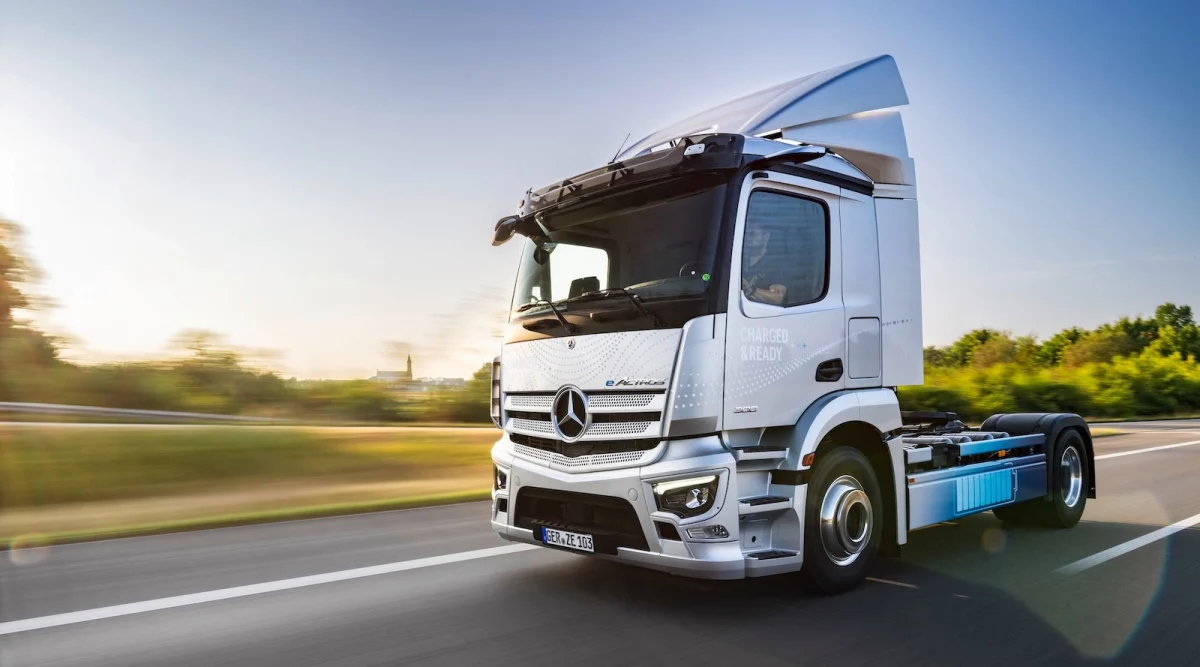
The European Commission is currently the staging ground for a significant policy confrontation that pits some of the continent’s largest logistics and utility corporations against the very manufacturers that supply their fleets. At the heart of the dispute is the future of heavy-duty vehicle (HDV) emissions standards, a cornerstone of the European Union’s broader strategy to achieve climate neutrality by 2050. While major fleet operators such as IKEA, EDF, Geopost, and DFDS are petitioning Brussels to maintain strict decarbonization timelines, truck manufacturers are warning of an "alarming delay" in infrastructure that they claim makes the current targets technologically and economically unfeasible.
This divide highlights a fundamental shift in the transition to green energy: the argument for climate action is increasingly being driven by corporate self-interest and the pursuit of long-term price stability rather than purely altruistic environmental concerns. As diesel prices fluctuate across Europe due to geopolitical instability and shifting energy markets, the Total Cost of Ownership (TCO) for electric trucks has become a primary metric for logistics giants. These companies argue that any weakening of emissions standards would jeopardize their multi-billion-euro investments in fleet electrification and create a period of regulatory uncertainty that could stifle the transition for years to come.
The Legislative Landscape and the 2030 Roadmap
The current regulatory framework for heavy-duty vehicles in the European Union is among the most ambitious in the world. Established to align with the "Fit for 55" package, the rules mandate a trajectory of carbon dioxide (CO2) reductions based on a 2019 baseline. Specifically, the standards require a 43 percent reduction in CO2 emissions by 2030, increasing to a 64 percent reduction by 2035, and culminating in a 90 percent reduction by 2040.
For the medium and heavy-duty truck sector, which accounts for roughly 25 percent of road transport emissions in Europe despite making up only 2 percent of vehicles on the road, these targets necessitate a rapid pivot toward zero-emission vehicles (ZEVs). Battery-electric trucks (BETs) and hydrogen fuel cell trucks are the primary technologies expected to fill this gap. However, the adoption rate remains in its infancy, creating a high-stakes environment where policy decisions will determine the winners and losers of the next industrial era.
The EV100 Coalition: A Push for Regulatory Certainty
The push to maintain these standards is led by the Climate Group’s EV100, a global initiative of influential businesses committed to accelerating the transition to electric vehicles. In a formal letter addressed to European Commission President Ursula von der Leyen on October 1, 2026, members of the coalition emphasized that the transition to electric heavy-duty vehicles is already underway and requires a stable regulatory environment to succeed.
The signatories, which include IKEA, the Swedish home furnishings giant; EDF, the French multinational electric utility; Geopost, the parcel delivery arm of the French postal service; and DFDS, a major Danish logistics and shipping provider, represent a significant portion of the demand side of the European truck market. Their argument is twofold: first, that electric trucks are becoming more economically viable as diesel costs rise; and second, that a consistent policy framework is essential for securing the investments needed for charging infrastructure.
Dominic Phinn, the head of transportation at Climate Group, noted that businesses have already made significant capital allocations based on the understanding that the EU would provide an ambitious framework. According to Phinn, the demand for zero-emission trucks is growing, and what the industry requires now is certainty. He argued that weakening the rules would not only undermine investment decisions but also threaten Europe’s position as a global leader in zero-emission transport.

The Manufacturers’ Counter-Argument: The Infrastructure Gap
On the opposite side of the debate are the major truck manufacturers. During the IAA Transportation show in Hannover, executives from DAF Trucks, Daimler Truck, Ford Otosan, Iveco Group, MAN Truck & Bus, Scania Group, and Volvo Group collectively voiced their concerns. They are calling for a three-year delay in the 2030 compliance timeline, citing a lack of "enabling conditions" that are beyond their direct control.
The manufacturers argue that while they have invested billions in developing zero-emission models, the market uptake is being throttled by a lack of public charging infrastructure and a slow-moving electrical grid. Karin Rådström, CEO of Daimler Truck, stated that while a wide range of CO2-free vehicles is available today, making them commercially viable at scale depends on an ecosystem that is currently developing too slowly.
The manufacturers face staggering penalties if they fail to meet the 2030 targets. Industry estimates suggest that collective fines could exceed €2 billion if the 43 percent reduction target is enforced without a corresponding surge in electric truck sales. Currently, the market share for electric heavy-duty trucks in Europe stands at a mere 2.4 percent. While Germany shows a slightly higher adoption rate of 4.3 percent, other major markets like Poland, Spain, and Italy remain below 1 percent.
Technical and Operational Hurdles: Weights, Dimensions, and the Grid
Beyond the lack of charging stations, manufacturers have pointed to specific legislative hurdles that hinder the adoption of electric trucks. One primary concern is the "Weights and Dimensions" directive. Because electric truck batteries are significantly heavier than internal combustion engines and fuel tanks, they often face a payload disadvantage. Manufacturers have urged the EU to adapt rules to allow for higher gross vehicle weights for zero-emission trucks to ensure they remain competitive with diesel counterparts in terms of cargo capacity.
Furthermore, the deployment of Megawatt Charging Systems (MCS)—designed to charge a heavy-duty truck during a driver’s mandatory 45-minute break—is lagging. Connecting such high-power equipment to the electrical grid can take several years due to bureaucratic delays and the need for significant grid reinforcements. Manufacturers argue that it is unfair to penalize them for low sales when the infrastructure required to operate these vehicles is not yet in place.
Economic Analysis: The Total Cost of Ownership
The core of the EV100 members’ argument lies in the Total Cost of Ownership (TCO). While the initial purchase price of an electric truck can be two to three times higher than a diesel equivalent, the operational savings are substantial. Electricity is generally cheaper and more price-stable than diesel fuel, especially as Europe seeks to decouple its energy market from volatile fossil fuel imports.
For a company like Geopost, which operates thousands of delivery vans and trucks, the reduction in maintenance and fuel costs over a seven-year vehicle lifespan can offset the higher upfront investment. However, this math only works if there is a reliable network of chargers and if carbon-based tolls—such as Germany’s Eurovignette—provide a financial advantage to zero-emission vehicles. The EV100 members believe that maintaining strict emissions standards will force the hand of member states to accelerate infrastructure development, thereby lowering the TCO for everyone.
Global Context and Competitive Pressures
The debate in Europe does not exist in a vacuum. Similar struggles are playing out in the United States, where manufacturers are also pushing back against stringent emissions standards. In California, the Advanced Clean Trucks (ACT) regulation has faced legal challenges and opposition from industry groups, despite being a model for other states.

European policymakers are acutely aware that the global race for zero-emission technology is intensifying. China currently leads the world in electric truck deployment, supported by massive state subsidies and a rapid build-out of charging networks. Proponents of the EU’s current standards argue that any retreat would allow China and the United States to seize the lead in the next generation of automotive manufacturing, ultimately hurting European competitiveness and energy security.
Social and Environmental Implications
The conflict between purchasers and manufacturers also carries profound social weight. Proponents of the strict standards point to the immediate public health benefits of reducing tailpipe emissions, including lower levels of nitrogen oxides (NOx) and particulate matter in urban areas.
Furthermore, the broader climate context cannot be ignored. Europe has experienced record-breaking heatwaves and droughts in recent years, which have been linked to thousands of premature deaths and significant economic disruption. The transport sector is the only major sector in the EU where emissions have continued to rise over the last three decades, making it a critical target for the European Green Deal.
The Path Forward for the European Commission
The European Commission now faces a delicate balancing act. On one hand, it must support its industrial base—the truck manufacturers—who are vital employers and innovators. On the other, it must provide the regulatory certainty demanded by the continent’s largest corporations and meet its own legally binding climate targets.
Potential compromises could include a "mid-term review" mechanism that allows for adjustments based on the actual rollout of charging infrastructure, or increased financial incentives to bridge the price gap between diesel and electric trucks. However, the EV100 coalition warns that any signal of retreat will lead to a "wait and see" approach from investors, effectively stalling the transition.
As the October 2026 deadline for further policy deliberations approaches, the tension between these two powerful interest groups underscores the complexity of the energy transition. Whether the Commission chooses to stay the course or grant the manufacturers the requested three-year reprieve will have lasting consequences for the European economy, the health of its citizens, and the global effort to mitigate climate change.
