

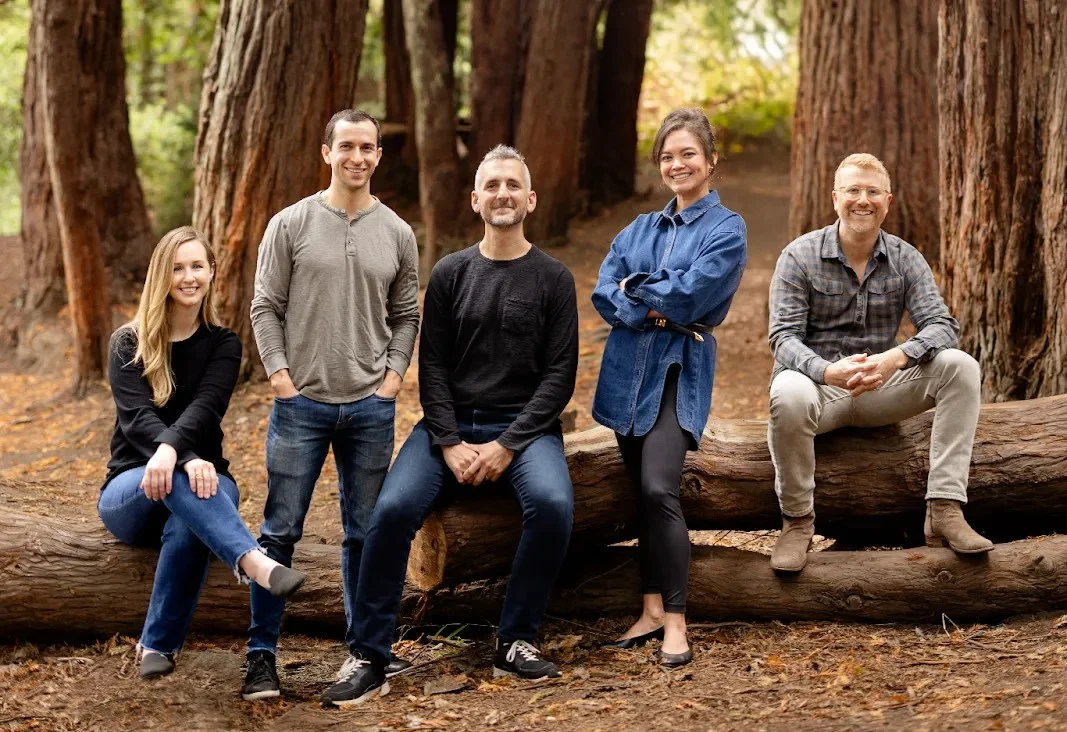
As the 2024 wildfire season began with an aggressive early start in California, sending flames toward a decommissioned nuclear test site on the outskirts of Los Angeles, the venture capital landscape in Silicon Valley is signaling a decisive shift toward climate adaptation. Convective Capital, an early-stage venture fund focused on the intersection of technology and disaster mitigation, has officially announced the closing of its second fund at $85 million. This new vehicle represents a significant expansion from its inaugural $35 million fund raised in 2022 and underscores a growing recognition among institutional investors that disaster resilience is no longer a niche concern but a critical frontier for global real estate and infrastructure protection.
Led by Bill Clerico, the co-founder and former CEO of the payments platform WePay, Convective Capital is positioning itself as the primary architect of a specialized "firetech" ecosystem. Clerico, who transitioned into the venture space after selling WePay to JPMorgan Chase for $300 million in 2017, has spent the last several years arguing that the traditional methods of managing natural disasters are no longer sufficient in an era of climate volatility. The launch of Fund II marks a transition from a fund supported primarily by high-net-worth individuals to one anchored by major institutional players, including insurance companies and large-scale asset managers who are increasingly exposed to the physical risks of a warming planet.
The Evolution of Disaster Resilience and the Rise of Firetech
The foundational thesis of Convective Capital began with "firetech"—a term used to describe a suite of technologies specifically designed to detect, suppress, and mitigate the impact of wildfires. In its first iteration, the fund focused on startups that addressed the immediate tactical needs of fire management. This included investments in companies like Pano, which utilizes high-definition, AI-powered cameras mounted on towers to detect smoke and flames with greater speed and accuracy than human lookouts or satellite imagery.
Other early portfolio companies included Raine, a firm developing autonomous aircraft capable of delivering water or fire retardant to remote areas where human pilots might face extreme danger, and Burnbot, which manufactures specialized robots designed to clear hazardous brush and grasses—a process known as fuel reduction—without the risks associated with manual labor or prescribed burns in high-wind conditions.
However, with the closing of the $85 million Fund II, Clerico has announced an evolution in the firm’s mandate. While wildfire remains a core pillar, the fund is expanding its focus toward a broader definition of "disaster resilience." This evolved thesis aims to provide comprehensive risk management in the physical world, addressing the cascading effects of climate-driven disasters on the economy, housing, and critical infrastructure.
A Chronology of Growth and Market Urgency
The timeline of Convective Capital’s growth mirrors the escalating severity of natural disasters in the United States. In 2022, when the first fund was launched, the insurance industry was already beginning to reel from record-breaking payouts related to wildfires in the American West. By the time Fund II was finalized in mid-2024, the crisis had reached a tipping point. Major insurance carriers, including State Farm and Allstate, had ceased writing new homeowners’ policies in California, citing the increased risk of catastrophe and the rising costs of reinsurance.
This withdrawal of traditional capital from high-risk markets has created what Clerico describes as a "silver lining" for private market investors. As utilities face bankruptcy—exemplified by the multi-billion-dollar liabilities of Pacific Gas and Electric (PG&E)—and insurers exit vulnerable regions, a massive vacuum has formed. This vacuum is now being filled by a new generation of technology-driven companies that can price risk more accurately and deploy preventative measures that traditional institutions have historically overlooked.
The economic stakes are staggering. According to data cited by Convective Capital, there is currently $60 trillion worth of real estate globally at high risk from natural disasters. In the United States alone, the annual expenditure for disaster mitigation and recovery has surpassed $1 trillion. This massive expenditure represents a significant market opportunity for startups that can reduce the frequency or severity of these events.
Deep Dive into Fund II Portfolio and Strategy
The first four investments from the new $85 million fund demonstrate the breadth of Convective’s expanded mandate. These companies represent a shift toward addressing the underlying economic and structural drivers of disaster risk:
- The Lumber Manufactory: This company is revitalizing the timber industry by building modern timber mills. The strategic goal is to make forest management more economically viable. By creating a market for the small-diameter timber that must be thinned from forests to prevent "ladder fuels" from carrying fire into the canopy, the company provides a financial incentive for large-scale forest restoration.
- Drafted: An AI-driven home design firm, Drafted focuses on creating structures that are inherently resilient to environmental threats. By integrating disaster-mitigation standards into the initial design phase, the company aims to lower insurance premiums and increase the longevity of real estate in high-risk zones.
- Voltaire: A Y Combinator-backed startup, Voltaire utilizes advanced drone technology to inspect power lines and utility infrastructure. Faulty power lines have been the ignition source for some of the most destructive wildfires in history; Voltaire’s automated inspection systems allow utilities to identify and repair hazards before they lead to catastrophic failures.
- Edge Technologies: This firm is developing specialized insurance products designed to hedge against the volatility of commodity prices—a risk that is often exacerbated by large-scale natural disasters that disrupt supply chains and resource extraction.
These investments complement Fund I’s successes. Clerico reports that the first fund’s portfolio companies have already generated $100 million in collective revenue and are currently valued at approximately $2 billion. Perhaps most notably, 79% of the first fund’s companies have successfully transitioned from seed stage to Series A, a graduation rate that significantly exceeds the venture capital industry average.
Supporting Data: The Insurance Crisis as a Catalyst
The interest from institutional investors in Fund II is largely driven by the current instability in the insurance sector. In California, Florida, and other disaster-prone states, the "protection gap"—the difference between total economic losses and insured losses—is widening.
Supporting data from the reinsurance industry suggests that global insured losses from natural catastrophes have consistently exceeded $100 billion annually in recent years. This has forced insurers to seek out "insurtech" solutions that Convective supports, such as Stand and Delos. Stand, for instance, works directly with homeowners to "harden" their properties through fire-resistant materials and landscaping, while Delos uses sophisticated data modeling to identify homes in high-risk areas that are actually safer than traditional models suggest, allowing them to offer coverage where others won’t.
Clerico notes that a "wave of new insurers" is stepping into the void left by legacy incumbents. These newcomers rely on real-time sensor data, AI simulations, and robotic mitigation—the very technologies Convective is funding—to build more resilient business models.
The AI Paradox: Tool and Stressor
The role of artificial intelligence within the disaster resilience sector is complex. On one hand, AI is the primary engine behind Pano’s detection software and Voltaire’s inspection drones. It allows for the processing of massive datasets to predict fire behavior and model flood risks with unprecedented precision.
On the other hand, the global "AI arms race" is creating new physical risks. The rapid construction of massive data centers to support AI workloads is placing immense strain on the energy grid and water systems. These data centers require enormous amounts of electricity for processing and water for cooling, often in regions already struggling with resource scarcity.
Clerico observes that this creates a feedback loop: the demand for AI is stressing the very physical systems that his portfolio companies are designed to protect. This increased stress on the grid makes the need for Voltaire’s line inspections or Edge Technologies’ commodity hedging even more urgent.
Broader Impact and Implications for the Future
The success of Convective Capital’s fundraising efforts suggests that "Resilience Tech" is emerging as a distinct and vital sub-sector of Climate Tech. While much of climate venture capital has historically focused on "mitigation" (reducing carbon emissions), there is a growing realization that "adaptation" (preparing for the changes already underway) is equally necessary.
The broader implications for public policy and governance are also significant. For decades, disaster response has been viewed as a government-led effort, funded by taxpayers after the damage has been done. Convective Capital’s model proposes a shift toward proactive, private-sector-led mitigation. By proving that disaster resilience can be a profitable venture, Clerico is attempting to align the incentives of Silicon Valley with the safety of communities on the front lines of climate change.
However, challenges remain. The "nascent" nature of the field means that many founders must navigate complex regulatory environments and work with "tricky" customers like state agencies and bankrupt utilities. The success of Convective’s $85 million fund will likely depend on its ability to continue bridging the gap between high-tech innovation and the slow-moving, risk-averse world of public infrastructure and global insurance.
As California enters what is expected to be a grueling fire season, the deployment of Fund II capital will serve as a high-stakes test of whether technology can truly stay ahead of the flames. For Clerico and his investors, the goal is clear: turning the trillion-dollar problem of natural disasters into a trillion-dollar market for resilience.
