

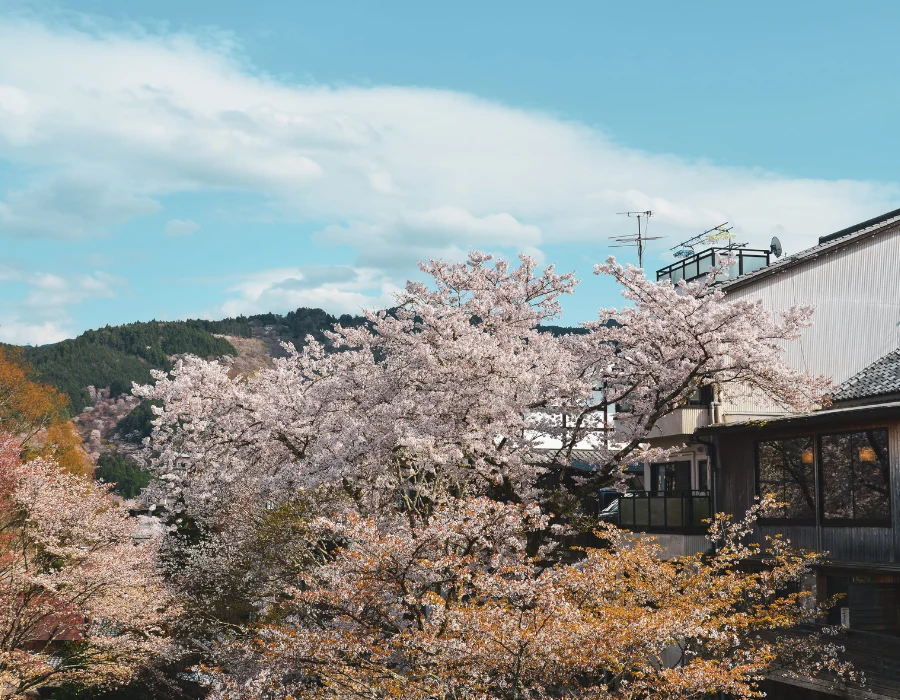
The arrival of spring in Japan has long been heralded by the ephemeral bloom of the cherry blossom, or sakura, a phenomenon that draws millions of international travelers—often called "sakura chasers"—to the archipelago. These intrepid tourists journey from every corner of the globe to witness a floral spectacle that traditionally defines the Japanese aesthetic. However, the window of opportunity to witness these blossoms is famously narrow, typically lasting only five to seven days in any given region. In recent years, this delicate timing has been thrown into disarray by the escalating effects of global climate change, transforming a predictable seasonal rite into a volatile and moving target.
In 2024, Tokyo’s sakura reached its peak bloom around March 19, nearly a week earlier than the historical average. This follows a concerning trend observed between 2021 and 2023, during which the city of Kyoto experienced its earliest peak blooms in recorded history, shattering records that stretched back more than 1,200 years. While rising global temperatures are identified as the primary driver of this shift, scientists warn that erratic winter weather patterns also threaten the biological mechanisms that allow these trees to bloom at all. Current research indicates that under medium-emission scenarios, the peak bloom dates across Japan could advance by an additional week by the turn of the century, fundamentally altering the country’s ecological and cultural landscape.
The Deep History of Phenological Documentation
Japan possesses what is arguably the world’s most comprehensive and longest-running phenological dataset. For over a millennium, the flowering of cherry trees in Kyoto has been meticulously documented in imperial court diaries, temple ledgers, aristocratic journals, and historical chronicles. These records, which began as early as 812 CE, provide a unique window into the climate of the past.
Yasuyuki Aono and Shizuka Saito, researchers affiliated with Osaka Metropolitan University and Fujicco Co. Ltd., have utilized these historical records to reconstruct the temperatures of medieval Kyoto. By "gap-filling" the dates of cherry blossom festivals and sightings, they have been able to map out long-term climatic trends. Their findings reveal that for the vast majority of the last 1,200 years, peak bloom dates remained remarkably stable, usually occurring in mid-April. It is only within the last century, and particularly the last few decades, that the dates have begun to lurch forward into March. This deviation from a millennium of stability highlights the unprecedented speed of modern warming compared to natural historical fluctuations.
The Science of the Bloom: Why Timing Matters
The study of recurring biological events, known as phenology, has become a critical instrument for climate scientists. Elizabeth Wolkovich, an associate professor at the University of British Columbia, emphasizes that the cherry blossom record is a powerful indicator of environmental health. Her research suggests that for every degree Celsius of global warming, plant phenology shifts by approximately four to six days.
The biological process of the cherry blossom is a two-stage cycle. First, the trees require a period of sustained cold during the winter to break their dormancy—a process known as vernalization. Once this "chilling requirement" is met, the trees await the warmth of spring to trigger the actual budding and flowering. Climate change creates a dual threat to this cycle. While warmer springs cause the trees to bloom earlier, increasingly mild winters may fail to provide the necessary cold for the trees to break dormancy properly. If the winter is too warm, the bloom may be delayed, sparse, or fail to occur entirely, leading to significant ecological stress for the trees.
Furthermore, Wolkovich’s research has found that experimental models often underestimate the sensitivity of plants to warming. Observational data from long-term records, such as those in Kyoto, show that plants are responding to temperature increases far more rapidly than laboratory simulations suggest. This "underestimation gap" means that the future of the sakura may be even more unpredictable than current climate models predict.
The Economic and Social Impact of a Shifting Calendar
The economic implications of the sakura season are vast. The "Sakura Economy" is estimated to be worth billions of dollars, encompassing everything from international airfare and hotel bookings to seasonal food products and local festivals. In a typical year, the Japan Meteorological Agency (JMA) and various private weather services, such as Weathernews Inc., release highly anticipated "Sakura Maps" that track the "bloom front" (kaika-zensen) as it moves from the southern islands of Kyushu up toward Hokkaido.
For the tourism industry, the lack of predictability is a growing logistical nightmare. Travelers often book trips months in advance, basing their itineraries on historical averages. When the peak bloom shifts by a week or more, it can result in visitors arriving to find bare branches or petals already scattered on the ground. This volatility forces local businesses to remain in a state of constant readiness, often having to move festival dates at the last minute, which complicates staffing and supply chain management for the food and hospitality sectors.
Socially, the shift is straining the tradition of hanami—the centuries-old practice of gathering under blooming trees for picnics and celebrations. Hanami is more than a leisure activity; it is a vital social lubricant in Japanese society, often involving coordinated outings for companies, schools, and extended families. These gatherings are traditionally anchored to a predictable window in the calendar. As the bloom becomes more variable, the synchronization of these social rhythms is becoming increasingly difficult. What was once a reliable annual milestone is now a period of high-stakes monitoring, requiring locals to recalibrate their lives in real-time to an unstable climate.
Urban Heat Islands and Localized Warming
The early blooming in major metropolises like Tokyo is exacerbated by the "urban heat island" effect. Concrete, asphalt, and the concentration of human activity trap heat, making cities significantly warmer than the surrounding countryside. This localized warming acts as a catalyst, pushing urban cherry blossoms to open days ahead of those in rural areas.
While this provides an early treat for city dwellers, it creates a fragmented bloom season that can disrupt local ecosystems. Cherry blossoms provide early-season nectar for pollinators like bees and butterflies. If the trees bloom too early—before these insects have emerged from their own winter dormancy—it can lead to a "phenological mismatch," where the symbiotic relationship between plants and pollinators is severed, potentially leading to a decline in both populations.
Global Context: A Worldwide Trend
Japan is not alone in facing this challenge. Similar shifts have been documented in Washington D.C., where the Yoshino cherry trees—originally a gift from Japan in 1912—are also reaching peak bloom earlier. In South Korea, the spring festival circuit has faced similar disruptions, with cities like Jinhae seeing blossoms weeks ahead of schedule.
The global nature of this trend reinforces the consensus among the scientific community: the shifting of the seasons is a universal symptom of a warming planet. The cherry blossom has become a "canary in the coal mine" for climate change, offering a highly visible and culturally resonant example of how environmental shifts are rewriting the rules of the natural world.
Future Projections and the Necessity of Adaptation
Looking toward the end of the 21st century, the outlook remains uncertain. If carbon emissions continue at their current rate, the very concept of "spring" in Japan may be redefined. Some projections suggest that by 2100, the cherry blossoms in southern parts of Japan may struggle to bloom at all due to a lack of winter chill, while northern regions may see blooms as early as February.
In response, Japanese authorities and researchers are looking into adaptation strategies. This includes the development of more sophisticated AI-driven forecasting models that incorporate a wider array of environmental variables. There is also ongoing research into the resilience of different cherry tree varieties. While the Somei Yoshino variety is the most popular and iconic, it is a clone, meaning every tree is genetically identical and equally vulnerable to specific climatic stresses. Diversifying the types of cherry trees planted in urban areas could provide a more staggered and resilient bloom season.
Conclusion: A Ritual of Appreciation and Adaptation
The cherry blossom has always been a symbol of the beauty of impermanence in Japanese culture—a concept known as mono no aware. In the past, this impermanence referred to the brief life of the flower itself. Today, it increasingly refers to the impermanence of the season as we once knew it.
As the climate continues to change, the tradition of hanami is evolving. It is no longer just a ritual of aesthetic appreciation, but also an exercise in climate adaptation. For the "sakura chasers" and the millions of residents who cherish these trees, the pursuit of the bloom has become a poignant reminder of the fragility of natural cycles. The 1,200-year-old records of Kyoto serve as a testament to a stable past, but they also provide a stark warning of an increasingly unpredictable future, where the arrival of spring is no longer a guarantee, but a moving target in a warming world.
