

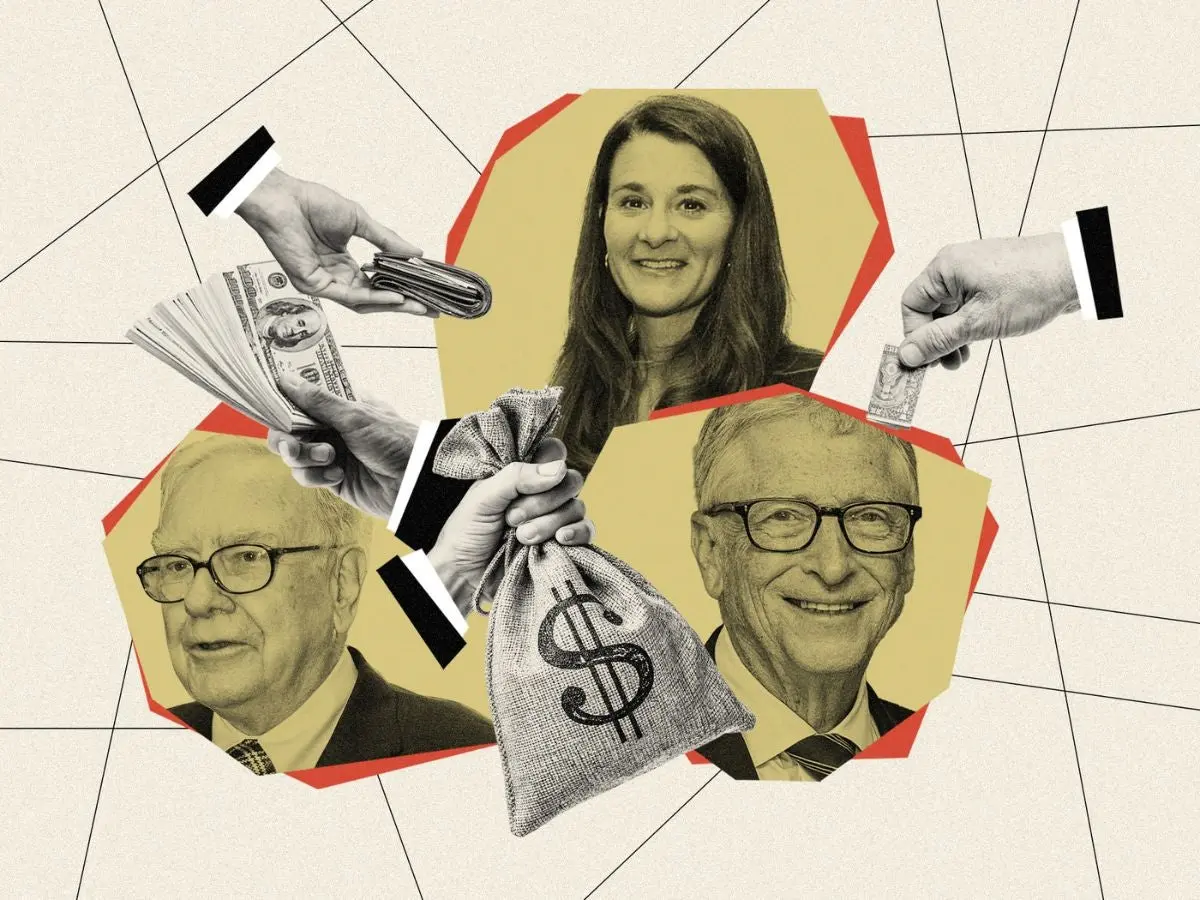
For many of the world’s most successful and affluent individuals, belonging to the right circles is a significant aspect of their lives. The landscape of exclusive organizations catering to the ultra-high-net-worth (UHNW) is vast, offering opportunities for networking, asset preservation, and, increasingly, philanthropic engagement. Among these, The Giving Pledge stands out, not merely as a club for the wealthy, but as a public commitment to a significant act of generosity: dedicating at least half of one’s fortune to charitable causes.
Initiated in 2010 by tech titans Bill Gates and Melinda French Gates, alongside investment legend Warren Buffett, The Giving Pledge emerged from deep discussions about the responsibilities that accompany immense wealth. The initiative aims to foster a global norm around philanthropy, encouraging dialogue about its role in society and inspiring others to contribute to the greater good. Over the past decade and a half, it has attracted a constellation of the world’s most recognized and seemingly selfless plutocrats. However, as of 2026, the Pledge finds itself navigating a period of slower growth and facing scrutiny, even from within its own distinguished membership.

The Genesis of a Generous Commitment
The concept for The Giving Pledge was born from a series of conversations between Bill Gates, Melinda French Gates, and Warren Buffett, who pondered the ethical implications of accumulating vast fortunes and the societal expectations placed upon those who possess such abundance. Their collective vision was to create a platform that could unite individuals committed to making a substantial philanthropic impact.
Olivia Leland, who was instrumental in establishing The Giving Pledge as its founding director, recalls the palpable excitement surrounding the project. "The trio considered how to bring people together under an umbrella of a commitment that could be broad enough that anybody could take it," Leland shared. The core tenet of the Pledge is straightforward: signatories commit to giving away at least half of their wealth, either during their lifetime or through their will. This commitment, however, extends beyond a personal financial pledge; it aims to cultivate "a global norm around giving and encourage conversations around the role of philanthropy in society."
The official launch of The Giving Pledge in June 2010 was met with significant fanfare. Just two months later, the inaugural group of 40 signatories was unveiled, featuring prominent figures of American wealth and influence. This initial cohort included George Lucas, the visionary behind Star Wars; Michael Bloomberg, then Mayor of New York City; Larry Ellison, co-founder of Oracle; David Rockefeller, a scion of one of America’s most enduring financial dynasties; Paul Allen, co-founder of Microsoft; Barron Hilton, heir to the hotel empire; and CNN founder Ted Turner, among others.

Early Momentum and Growing Influence
The early trajectory of The Giving Pledge was marked by impressive growth. Within six months of its launch, the number of signatories expanded from 40 to 57. At the time, this represented approximately one in seven of America’s billionaires, a substantial portion of the country’s wealthiest individuals. The business publication Fortune hailed the initiative, suggesting that The Giving Pledge "could change the face of philanthropy."
A key component of the Pledge has been the practice of signatories explaining their motivations in personal letters. These letters, often shared publicly, offer insights into the personal philosophies and driving forces behind their commitment to giving.
Barry Diller, co-founder of Fox Broadcasting Company, and his wife, fashion designer Diane von Furstenberg, addressed the Gateses and Buffett, expressing their gratitude for the community the Pledge had fostered. "I don’t know if you contemplated at the beginning, beyond the initial pledge, what benefits and inspiration you would be bringing to all these fairly isolated individuals in their own castles, but I can tell you that Diane and I are lucky and grateful you’ve stepped outside your own glorious philanthropy to give us a forum for so very much more than we could ever accomplish on our own," they wrote.

Michael Bloomberg echoed this sentiment in his letter, stating, "I am thrilled that my friends Bill Gates and Warren Buffett are bringing together this group, which could have an unprecedented impact on what philanthropy can achieve."
Evolving into a Community of Connectors
Sixteen years after its inception, the foundational philosophy of The Giving Pledge remains central to its mission. Jill Rademacher, who took the helm as president after nearly a decade at the World Economic Forum, emphasized in an exclusive interview with Spear’s that while "the more people who join, the better," the Pledge’s primary function is to act as a "dot connector, facilitator and convenor" for its philanthropic members.
In practice, this translates into creating a robust network where some of the world’s wealthiest individuals can exchange ideas, navigate the complexities of their philanthropic endeavors, and identify opportunities for collaborative action. This is facilitated through a private website and app, where members can engage in discussions and connect with fellow signatories. Additionally, the Pledge organizes a global program of events and conferences.

Notable sessions have included discussions on Ray Dalio’s ocean conservation initiatives and explorations of "patriotic philanthropy" led by financier David Rubenstein. Rademacher describes it as "a learning community and peer network like no other." The level of engagement varies among signatories, but a significant outcome is that approximately 25 percent of pledgers have collaborated on philanthropic projects together, a testament to the community’s effectiveness, though often an aspect that receives less public attention.
Emerging Criticisms and Internal Discontent
Despite its successes, The Giving Pledge has not been immune to criticism. In March 2026, tech entrepreneur Peter Thiel publicly described the Pledge in an interview with The New York Times as an "Epstein-adjacent, fake boomer club," leveling a barrage of accusations against the initiative. Thiel’s critique extended to actively discouraging wealthy individuals from joining and, in some instances, encouraging them to retract their commitments. He reportedly advised Elon Musk, a signatory, that his wealth might ultimately be directed towards "left-wing non-profits that will be chosen by Bill Gates."
This wave of criticism was amplified by a report published by the Charity Reform Initiative at the Institute for Policy Studies (IPS) titled "The Giving Pledge at 15." The report’s authors concluded that the initiative was "unfulfilled, unfulfillable and not our ticket to a fairer, better future." The IPS analysis argued that the Pledge provided "great press and a rosy reputational glow" while signatories’ net worth had generally increased since their commitment. The report estimated that only one living couple among the original US signatories, Laura and John Arnold, had technically fulfilled their pledge. Furthermore, out of 22 deceased US signatories examined, only eight had reportedly fulfilled the commitment to leave at least half their wealth to charity.

The Giving Pledge has contested the methodology of the IPS report, asserting that it relied on incomplete data and overlooked "significant forms of charitable giving," such as contributions to foundations and other intermediaries. The organization contends that these omissions present a misleading picture of the actual philanthropic efforts of its members.
The extent to which these criticisms and the IPS report have prompted signatories to reconsider their commitments remains somewhat opaque. However, one notable departure from the Pledge’s roster occurred in 2024 when crypto billionaire Brian Armstrong’s name was removed. Armstrong had joined in 2018. While he has not offered specific reasons for his withdrawal from the Pledge, he garnered attention in September 2026 for stating that "a lot of charities and philanthropies are actually net negative on the world."
Diverse Approaches to Giving
The discourse surrounding The Giving Pledge also highlights the varied approaches to philanthropy among the ultra-wealthy. George Soros, the Hungarian-American business magnate, has reportedly given away an estimated 76 percent of his wealth, according to Forbes, despite never having signed The Giving Pledge. His remaining fortune is estimated at $9.7 billion by the Bloomberg Billionaires Index.

Dmitry Bukhman, co-founder of mobile games developer Playrix, and his brother Igor, who ranked tenth on The Sunday Times Rich List with a combined fortune of £14.26 billion, have also pursued their philanthropic endeavors outside the Pledge framework. Dmitry’s wife, Daria, has spearheaded their philanthropic efforts since the couple established their foundation in 2025, committing nearly $100 million in multi-year grants. Daria Bukhman expressed her respect for the initiative, stating, "I’ve met a lot of wonderful people committed to The Giving Pledge and I respect the initiative a lot. But right now I want to focus on doing rather than making public pledges about things."
Jill Rademacher, still relatively new to her role as president, has found herself addressing what she perceives as misconceptions surrounding the Pledge. "The funds do not come to the Gates Foundation," she clarified. "We are not directing people’s philanthropy." Regarding accountability, Rademacher emphasized the organization’s role as a facilitator, stating, "We certainly receive updates from people on where they are in their giving and any large gifts they recently made, but we see our role as creating the space for peers to encourage one another."
Badr Jafar, an Emirati billionaire businessman and the UAE’s special envoy for business and philanthropy, supports this view, describing The Giving Pledge as "a community and a public promise, not an oversight body." He posits that accountability "should go far enough to distinguish intention, activity and impact, but not so far that we pretend complex social change can be reduced to a neat dashboard." Jafar and his wife, Razan, conduct their own progress reviews every three years to assess lessons learned and adjust their philanthropic strategy.

Craigslist founder Craig Newmark, a more recent signatory, whose philanthropic interests span Wikipedia, veterans’ causes, journalism, and even pigeon rescue, articulated the literal interpretation of charitable giving. "Someone once said something about selling one’s possessions and feeding the poor. How literally do you take that? That’s a problem for me since, as a nerd, I’m very literal. I’m a rule follower," he told Spear’s. "The problem is that a lot of people become very successful, particularly in the dot-com world, and they should stand for something, and it should be something that helps people."
Addressing the Next Generation and Future Growth
The Giving Pledge has expanded its reach beyond its initial focus on American billionaires, now boasting 262 signatories from over 30 countries. However, the rate of new recruits has demonstrably slowed. While 113 individuals joined in the Pledge’s first five years, this number decreased to 72 in the subsequent five years, and further to just 43 in the following five-year period, with only four new signatories in 2024. A modest rebound occurred in 2025 with 11 new members, the largest cohort since 2021. This contrasts with Forbes’ count of a record 3,428 billionaires worldwide in 2026.
In response to this trend, the organization is increasingly focusing its attention on the "next generation" – the heirs who will inherit these vast fortunes and shape their philanthropic legacies. Katherine Lorenz, granddaughter of early signatory George Mitchell, a Texan oil and gas billionaire, has been at the forefront of this initiative. Lorenz, who took over the family’s philanthropic foundation presidency in 2011, observed, "It became clear that in many of these cases, while the signatory makes the pledge, it’s their children and grandchildren who ultimately end up doing the bulk of the philanthropy."

This realization led Lorenz to approach other inheritors whose parents or grandparents had signed the Pledge, inviting them to form their own group under the Giving Pledge umbrella. The result is Giving Pledge Next Gen, a network of over 300 individuals united by a shared commitment to responsible and impactful philanthropy. "It’s not a social group or a self-help group. It’s very much a group focused on how we carry out our family’s philanthropy in the most responsible and impactful way possible," Lorenz stated.
Vibhai Masiyiwa, whose father Strive Masiyiwa is a prominent signatory and one of Africa’s wealthiest individuals, shares this sentiment. "The Giving Pledge has encouraged me to think more deeply about the responsibility that comes with having the ability to give," she commented. "There’s a real openness to sharing experiences and it’s helped me become more intentional about how I approach philanthropy."
Lorenz maintains that the Pledge has lost none of its relevance. "Bill, Melinda and Warren have created an expectation that if you have this amount of wealth, it’s an expectation that you give. Twenty years ago, that was probably different, but to me, and maybe I’m biased, but if you’re a billionaire and you’re not signing The Giving Pledge, I think the question is why not?"

The Future of The Giving Pledge
Looking ahead, Rademacher acknowledges the need for the organization to evolve. "I think that commitment [to give 50 percent or more of one’s wealth] will remain at the heart of it, but the opportunity isn’t necessarily to reinvent the Pledge," she explained. "It’s to build on that strong foundation, make sure our offerings meet the needs of as many people as possible, and attract new voices and new people."
This organic growth is already evident. John Caudwell, the first British billionaire to sign the Pledge, shared his perspective from Monaco, with his young children present. He emphasized his aspiration for his children to be happy and, crucially, "to leave the world a better place than they found it." This intergenerational focus on legacy and impact underscores the enduring, albeit evolving, mission of The Giving Pledge.
As The Giving Pledge navigates its current challenges and looks towards the future, its core commitment to inspiring transformative philanthropy remains. The ongoing dialogue and evolving landscape of wealth distribution and charitable giving will undoubtedly shape its trajectory, ensuring its continued relevance in the pursuit of a more equitable and impactful world.
