

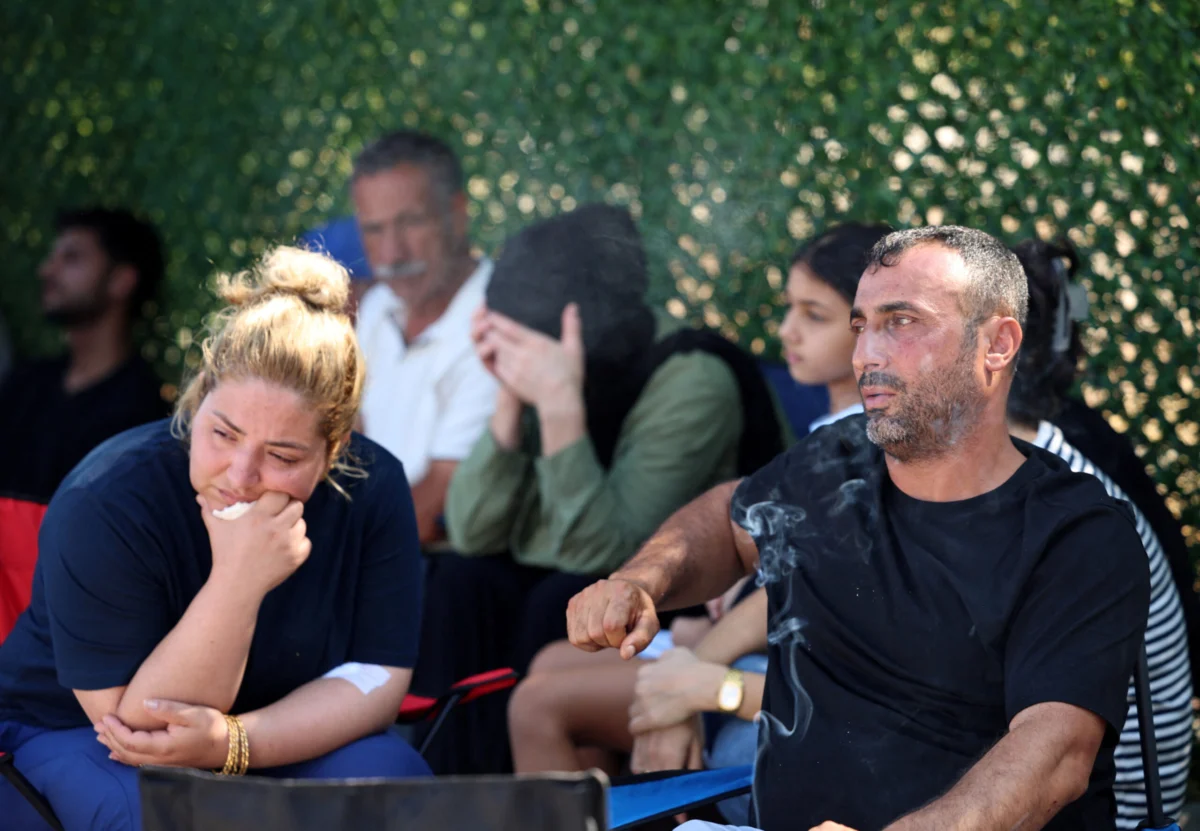
The captain and eight crew members of a ferry that capsized off the coast of Northern Cyprus have been placed under formal arrest as rescue teams continue a desperate search for 18 people still missing. The judicial proceedings began early Monday morning as the self-declared Turkish Republic of Northern Cyprus (TRNC) entered a three-day period of national mourning to honor the eight confirmed victims of the maritime disaster. The incident, which occurred on Sunday, has sent shockwaves through the region, raising urgent questions regarding maritime safety standards, vessel maintenance, and emergency response protocols in the Eastern Mediterranean.
The ferry, a vital link in the daily sea shuttle service between the island and mainland Turkiye, was carrying 267 passengers and crew when it encountered catastrophic difficulties shortly after departing from the northern port of Girne, also known as Kyrenia. According to official reports from the TRNC state news agency, the vessel was bound for the Turkish port of Tasucu in Mersin province, a route frequently used by commuters, tourists, and traders. While 241 individuals were successfully pulled from the water in a massive multi-agency rescue operation, the fate of 18 others remains unknown, and the death toll is feared to rise as the search enters its second critical day.
Chronology of the Maritime Disaster
The timeline of the tragedy began around midday on Sunday, approximately 09:00 GMT. The ferry had just cleared the coastal waters of Girne and was roughly 7.5 kilometers (4 nautical miles) offshore when the first signs of distress were recorded. According to preliminary maritime logs and survivor testimony, the vessel began taking on water rapidly, leading to a loss of stability.
By 12:30 PM, the situation had escalated from a mechanical failure to a full-scale emergency. Witnesses on board reported a sudden list to one side, followed by reports of an explosion near the bow of the ship. The rapid ingress of water gave the crew and passengers little time to deploy lifeboats or organize an orderly evacuation. By the time emergency signals reached coastal monitors, the ferry had already begun to capsize, eventually turning completely over and leaving dozens of passengers clinging to the exposed orange hull.
The rescue operation was launched almost immediately, involving the TRNC Coast Guard, the Turkish Navy, and several private vessels that happened to be in the vicinity. Throughout Sunday afternoon and evening, helicopters and patrol boats combed the area, pulling survivors from the sea. However, as night fell, the search became increasingly difficult due to visibility issues and shifting currents. By Monday morning, the focus shifted to a coordinated dive operation and the use of sonar technology to scan the seabed, where the vessel is currently resting at a depth of more than 500 meters (1,640 feet).
Survivor Accounts and the Struggle for Survival
The harrowing accounts of those who survived the sinking paint a picture of chaos and desperation. Many passengers alleged that the vessel was ill-equipped for such an emergency, citing a lack of accessible life jackets and safety equipment. Serkan Kunduraci, one of the survivors who managed to escape the sinking hull, described a scene of absolute terror. Kunduraci recounted how he had to haul himself through a broken window as the ship tilted.
"I saw children and others drowning in the sea," Kunduraci told the DHA news agency. "I saw some who didn’t know how to swim die in the sea. We saw and witnessed a family’s children, boys and girls, very young children, drowning." His testimony highlights the speed with which the vessel went down, leaving those in the lower decks with almost no chance of escape.
Another survivor, Efe Multici, spoke to CNN Turk about the "fight for survival" that ensued once the ship began to capsize. He noted that the lack of lifebuoys forced many to jump into the open sea without any flotation devices. "It was literally a fight for survival," Multici said, describing the panic as passengers scrambled to find anything that would keep them afloat in the deep waters off the Cypriot coast.
The heroism of local rescuers has also come to light. Muhammed Ozcelik, who operates a water sports company in the area, was among the first to reach the scene. He described the agonizing decisions he had to make as his small boat reached its maximum capacity. "We tried to do more than we could. People were saying, ‘Take me too, take me too,’ but the capacity was full," Ozcelik told the Associated Press. His account underscores the scale of the disaster and the limitations of the initial rescue efforts before the arrival of larger naval assets.
Judicial Proceedings and Official Response
The legal aftermath of the tragedy began swiftly. Early Monday, the captain and eight crew members were brought before a judge in a Girne court. The prosecution argued that the crew failed in their duty of care and that there were significant lapses in safety protocols. The judge ordered that all nine individuals be held under formal arrest pending a full investigation into the cause of the capsize.
The TRNC government has declared three days of national mourning, with flags flying at half-mast across the northern part of the island. Officials have promised a "transparent and exhaustive" investigation. A primary focus for investigators will be the recovery of the vessel’s "black box" data recorder. However, the extreme depth at which the ship lies—over 500 meters—presents a significant technical challenge. Specialized divers and deep-sea recovery equipment from Turkiye have been dispatched to assist in the effort.
The nationalities of the deceased and the missing have not yet been officially released, as authorities are still in the process of notifying next of kin. The ferry service between Girne and Tasucu is a major transit point for a diverse range of nationalities, including Turkish nationals, international students studying at Northern Cypriot universities, and foreign workers.
Technical and Environmental Factors
The cause of the capsize remains the subject of intense speculation and investigation. While some survivors reported an explosion, maritime experts suggest that structural failure or cargo shifting could also have played a role. The "shuttle" ferries operating in this region are often older vessels that undergo heavy daily use. If the hull’s integrity was compromised or if the water pumps failed to keep up with a leak, the vessel’s center of gravity would have shifted rapidly, leading to a capsize.
The depth of 500 meters is particularly concerning for investigators. At such depths, the pressure is immense, and any recovery of the physical wreckage would require multi-million dollar salvage operations involving remotely operated vehicles (ROVs). If the "black box" cannot be recovered, investigators will have to rely heavily on survivor testimony and maintenance records to piece together the final moments of the ferry.
Environmental conditions at the time of the incident were reported to be relatively calm, which further deepens the mystery of why the vessel took on water so rapidly. This has led to increased scrutiny of the ferry’s maintenance history and whether it was carrying more than its authorized capacity of passengers or cargo.
Geopolitical Context and Maritime Safety
The incident occurs within a complex geopolitical landscape. Cyprus has been divided since 1974, with the northern third of the island functioning as the self-declared Turkish Republic of Northern Cyprus, recognized only by Turkiye. This political status often complicates international cooperation in maritime safety and search-and-rescue operations.
Because the TRNC is not recognized by the International Maritime Organization (IMO) or the Republic of Cyprus (the internationally recognized government in the south), the northern ports operate under a unique set of regulations heavily influenced by Turkish maritime law. The ferry route to Tasucu is essentially the "lifeline" for the North, providing the primary means of transporting goods and people to the mainland. Any disruption to this service, or a perceived decline in its safety, has significant economic and social implications for the region.
The Republic of Cyprus, while not directly involved in the TRNC’s judicial proceedings, monitors maritime incidents in the region closely. The tragedy has reignited discussions about the need for better communication and standardized safety protocols across the divided island to prevent such loss of life in the future.
Broader Implications and the Path Forward
As the search for the 18 missing passengers continues, the maritime industry in the Eastern Mediterranean faces a moment of reckoning. The disaster highlights the potential risks associated with aging ferry fleets and the necessity of rigorous, independent safety inspections.
For the families of the victims, the coming days will be marked by grief and a demand for accountability. The arrest of the captain and crew is the first step in a legal process that will likely take months, if not years, to conclude. Investigators will need to determine if the reported explosion was a cause or a consequence of the sinking, and whether the vessel was truly equipped with the safety gear required by international standards.
The tragedy also serves as a reminder of the fragility of maritime travel in busy corridors. While the sea shuttle between Girne and Turkiye is usually a routine journey, the events of Sunday prove that without strict adherence to safety regulations, a routine trip can turn into a national catastrophe in a matter of minutes.
In the immediate term, the priority remains the search and rescue—or recovery—of the missing 18 individuals. As Turkish divers and specialized equipment arrive on the scene, there is a glimmer of hope that more answers, and perhaps more survivors, may be found. However, as time passes, the likelihood of finding anyone alive in the open sea diminishes, leaving a community in mourning and a maritime sector under intense pressure to reform.
