

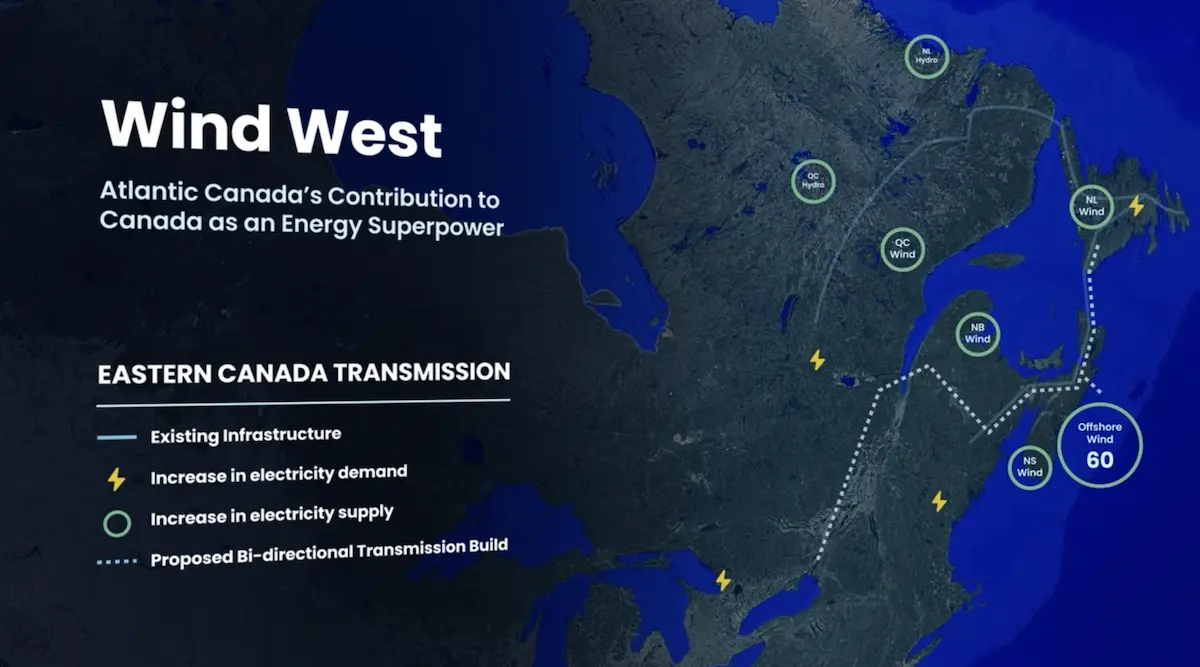
The Government of Canada has officially unveiled a comprehensive strategy to harness the significant wind resources off the coast of Nova Scotia, signaling a major shift in the North American energy landscape. Natural Resources Canada (NRC) announced on October 15 a federal investment of $100 million designed to catalyze the offshore wind sector in Atlantic Canada. This initiative, known as "Wind West," aims not only to achieve energy self-sufficiency for Nova Scotia but also to establish a robust export pipeline to supply clean electricity to energy-intensive markets in the United States, particularly in the New England region. This strategic move comes at a time of significant political and regulatory divergence between the Canadian federal government and the current United States administration regarding the development of renewable energy infrastructure.
The $100 million commitment is positioned as a foundational investment to de-risk the industry for private developers and international investors. According to the NRC, the Atlantic coast of Canada possesses some of the most consistent and powerful wind speeds in the world, comparable to the North Sea in Europe, which currently leads the global offshore wind market. By leveraging these natural advantages, Canada seeks to secure a prominent position in a global offshore wind market that economists estimate could reach a valuation of $1 trillion by the middle of the century.
Strategic Objectives and the Wind West Initiative
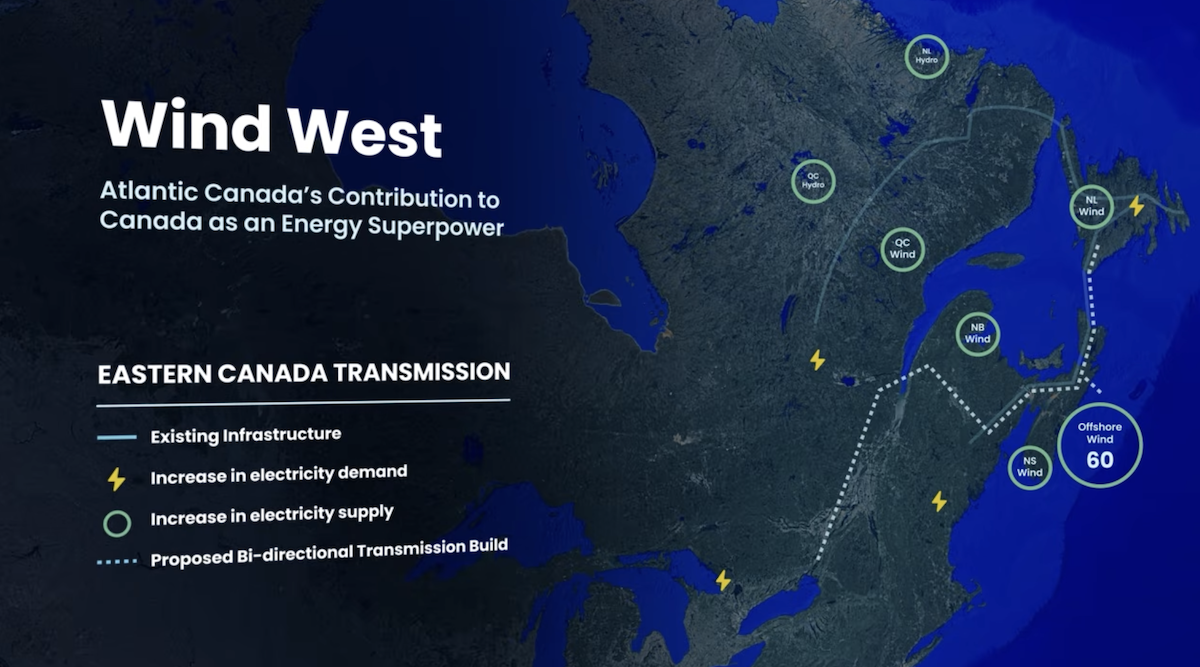
The Wind West initiative is a central pillar of the broader Atlantic Energy Strategy, a multi-provincial framework established to modernize the Atlantic Canadian power grid. While the strategy includes provisions for nuclear and hydropower, offshore wind is viewed as the most scalable and rapidly deployable solution to meet immediate decarbonization targets. The primary objective of Wind West is to generate enough zero-emissions electricity to power the entirety of Nova Scotia’s domestic demand, with the surplus being designated for export via new subsea and terrestrial transmission infrastructure.
A significant portion of the initial $100 million investment has already been earmarked for specific technical and logistical preparations. Approximately $5 million will be utilized for the deployment of advanced meteorological buoys equipped with LiDAR (Light Detection and Ranging) sensing technology. These buoys will provide precise data on wind speeds, wave heights, and atmospheric conditions, which are essential for developers to secure financing and design turbine arrays optimized for the North Atlantic environment. Furthermore, $3 million has been allocated to Net Zero Atlantic, a research and policy organization tasked with conducting feasibility studies for transmission corridors that will link Nova Scotia’s offshore arrays to the Quebec grid and southward into the United States.
Chronology of the North Atlantic Wind Development
The path toward this large-scale offshore wind development has been marked by several years of diplomatic and economic preparation. The timeline below illustrates the progression of the project and the evolving regional energy cooperation:
- Early 2000s: Initial friction regarding offshore wind begins in the North Atlantic region, highlighted by high-profile legal disputes over the visibility of turbines from coastal properties, most notably in Scotland. These early conflicts set the stage for long-term political debates over the aesthetic and environmental impacts of wind farms.
- February 2026: The Province of Nova Scotia and the Commonwealth of Massachusetts sign a formal Memorandum of Understanding (MOU). The agreement outlines a framework for cooperation on clean energy, specifically targeting the export of Canadian offshore wind power to help Massachusetts meet its statutory greenhouse gas reduction requirements.
- June 2026: Progress is made on the Champlain Hudson Power Express and related transmission projects, demonstrating the feasibility of long-distance clean energy transmission from Canada to major US urban centers like New York City.
- September 2026: Natural Resources Canada teases the preliminary details of the Nova Scotia offshore wind venture, citing the region’s "world-class" wind resources.
- October 15, 2026: The Canadian federal government officially announces the $100 million investment and the formal launch of the Wind West initiative.
- Early 2027: Scheduled commencement of large-scale data collection via sensing buoys and the opening of the first competitive bidding rounds for offshore lease areas.
Economic Impact and Workforce Transition
The transition to offshore wind is expected to provide a significant economic boost to Atlantic Canada, a region that has historically relied on offshore oil and gas extraction. Minister of Energy and Natural Resources Tim Hodgson emphasized that Canada possesses a "competitive advantage" due to its highly skilled offshore workforce. The technical expertise required for maintaining offshore oil rigs—including marine engineering, subsea cable installation, and heavy-lift logistics—is directly transferable to the offshore wind industry.
Economic analysts suggest that the development of a domestic supply chain for wind turbine components, including blades, nacelles, and floating foundations, could create thousands of high-paying jobs in Nova Scotia and New Brunswick. By pivoting from fossil fuel extraction to renewable energy production, the region aims to insulate its economy from the volatility of global oil prices while contributing to Canada’s national goal of achieving net-zero emissions by 2050.
Cross-Border Energy Dynamics and Political Context
The plan to export wind power to the United States introduces a complex layer of geopolitical and regulatory challenges. Currently, the US administration under President Donald Trump has maintained a skeptical stance toward wind energy, frequently citing concerns over costs, environmental impact on avian populations, and aesthetic disruptions. The administration has actively sought to halt or delay several major offshore wind projects along the US Atlantic coast, including the 65-turbine Revolution Wind project intended to serve Connecticut and Rhode Island.
Despite these domestic hurdles in the US, the demand for clean energy at the state level remains high. States like Massachusetts, New York, and Connecticut have enacted ambitious renewable energy mandates that they may struggle to meet through domestic production alone. This creates a market opportunity for Canada. Historically, Canada has been a primary provider of renewable energy to the US through large-scale hydropower exports. The integration of wind power into this existing trade relationship is seen by many energy experts as a logical evolution.
Legal analysts point out that while the US federal government can influence leasing in US federal waters, it has limited authority to prevent state-level utilities from entering into commercial contracts for imported power, provided the transmission infrastructure meets regulatory standards. The recent filing by the US administration to rescind approval for the Revolution Wind project is currently being contested in federal court, a process that reflects the ongoing tension between federal executive policy and state-level energy goals.
Supporting Data and Technical Specifications
The potential scale of the Nova Scotia offshore wind resource is supported by data from the Global Wind Atlas, which ranks the North Atlantic as one of the premier locations for wind energy density. Average wind speeds in the targeted lease areas often exceed 10 meters per second at turbine hub height, significantly higher than the averages found at most onshore wind sites.
To capitalize on these speeds, developers are looking toward the next generation of wind technology. While traditional fixed-bottom turbines are suitable for shallower waters, the deep waters off the coast of Nova Scotia will likely require floating offshore wind platforms. This technology, though more capital-intensive, allows for the placement of turbines further out at sea where winds are stronger and more consistent, and where the visual impact from the shoreline is minimized.
The $100 million federal investment is intended to bridge the gap between initial research and commercial viability. By funding the "de-risking" phase—which includes environmental impact assessments, seabed mapping, and grid integration studies—the Canadian government hopes to attract billions of dollars in private equity from global energy firms that have already successfully deployed similar projects in the UK, Denmark, and Germany.

Environmental and Regulatory Oversight
The development of the Nova Scotia offshore wind sector will be subject to rigorous environmental oversight. The Canadian government has stated that all projects must undergo comprehensive reviews to assess their impact on marine life, including migratory whale populations and commercial fisheries. The NRC is working closely with the Department of Fisheries and Oceans (DFO) to establish "exclusion zones" and "best practice" guidelines for construction and operation.
Furthermore, the regulatory framework is being designed to ensure that Indigenous communities are consulted and involved in the development process. The "Atlantic Energy Strategy" emphasizes the importance of shared benefits and economic partnerships with First Nations in the region, ensuring that the transition to a green economy is inclusive and equitable.
Broader Implications and Future Outlook
The launch of the Wind West initiative represents a pivotal moment for North American energy policy. If successful, Canada will not only decarbonize its own eastern provinces but will also become a critical "green battery" for the Northeastern United States. This interdependency could lead to a more resilient and integrated North American power grid, capable of balancing the intermittent nature of wind and solar power through the strategic use of Canada’s vast hydropower reservoirs as storage.
Looking ahead to 2029 and beyond, industry observers anticipate a potential shift in US federal policy that could align more closely with Canada’s renewable energy ambitions. Until then, the cooperation between Canadian federal authorities and US state governments serves as a workaround to federal-level resistance. The "steel in the water" off the coast of Nova Scotia may soon become a symbol of a broader shift toward a sustainable energy future, regardless of the political headwinds currently blowing across the border.
As the first sensing buoys are deployed in 2027, the global energy community will be watching closely. The success of Nova Scotia’s offshore wind strategy will depend on the ability of stakeholders to navigate technical challenges, secure long-term power purchase agreements, and maintain a stable regulatory environment. With $100 million in initial funding and a clear mandate for export, Canada is positioned to lead the next wave of renewable energy development in the North Atlantic.
