


The resurgence of Coal Workers’ Pneumoconiosis, commonly known as black lung disease, has reached a critical threshold in the United States, particularly within the central Appalachian region. Despite decades of federal intervention intended to eradicate this preventable occupational hazard, recent data from the National Institute for Occupational Safety and Health (NIOSH) indicates that infection rates among veteran miners have returned to levels not seen since the early 1970s. This public health crisis is unfolding against a backdrop of significant administrative shifts, including massive staffing reductions at federal oversight agencies and the freezing of critical safety regulations aimed at limiting exposure to toxic silica dust.
The Historical Context of Coal Mine Safety
To understand the current crisis, one must look back to the Federal Coal Mine Health and Safety Act of 1969. Before this landmark legislation, coal mining was largely unregulated regarding respiratory health, and black lung was an expected, albeit tragic, consequence of the profession. The 1969 Act established the first mandatory health and safety standards for all U.S. mines and created a federal surveillance program under NIOSH to monitor the health of the workforce.
The initial results of this surveillance were staggering. In 1974, the first completed survey of the coal workforce revealed that 32.5% of miners with 25 or more years of experience were suffering from black lung. The implementation of stricter dust control measures, improved ventilation requirements, and regular inspections led to a period of dramatic improvement. By the year 2000, the prevalence of the disease among long-tenured miners had plummeted to less than 5%. For a brief window, it appeared that the industry was on the verge of eliminating the disease entirely.
The Appalachian Anomalies and the Rise of Silica
The progress achieved in the late 20th century began to reverse shortly after the millennium. While national averages remained relatively stable, central Appalachia—comprising Kentucky, Virginia, and West Virginia—saw a sharp and alarming spike in cases. According to a recent update published in The American Journal of Respiratory and Critical Care Medicine, the prevalence of black lung in this region has returned to 32.5%, mirroring the dire statistics of 1974.
The modern iteration of the disease is often more aggressive and occurs earlier in a miner’s career. Medical experts attribute this to a fundamental change in the geology of mining. As thicker coal seams in Appalachia have been exhausted, miners are increasingly forced to cut through "overburden" or "parting"—the layers of rock, often high in quartz, that surround thinner coal seams. When machinery grinds this rock, it releases respirable crystalline silica dust.
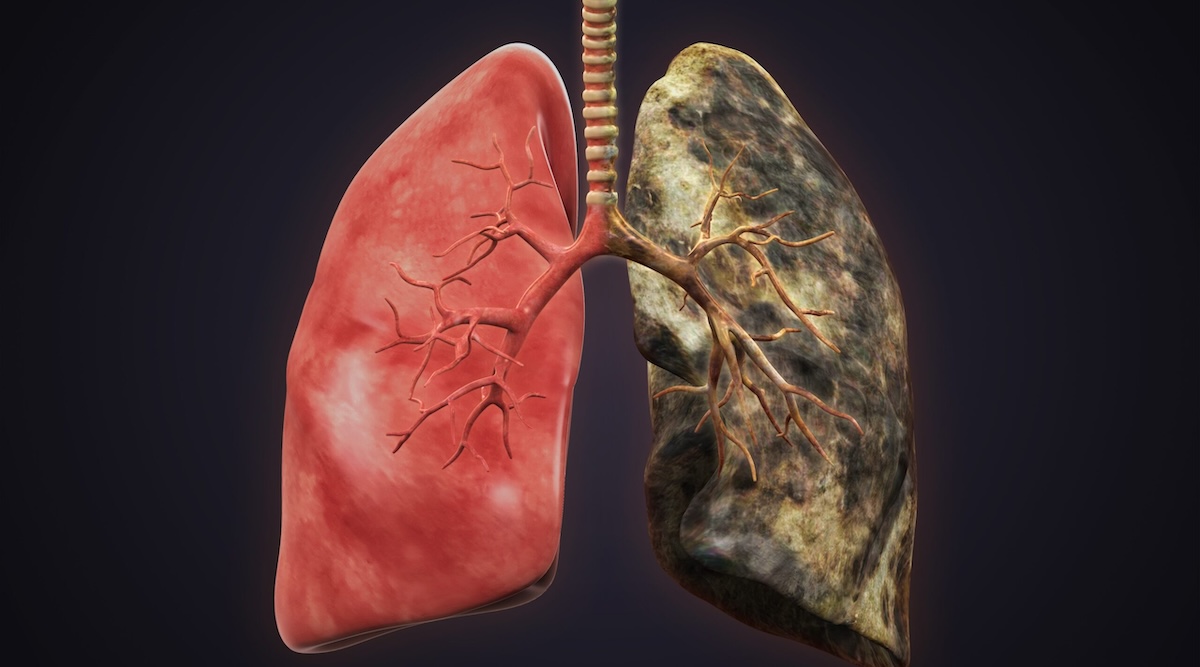
Silica dust is significantly more toxic than coal dust alone. It causes a more rapid and severe form of lung scarring, often leading to Progressive Massive Fibrosis (PMF), the most advanced and lethal stage of black lung. NIOSH reports that younger miners, some with as little as ten years of experience, are now being diagnosed with PMF, a condition for which there is no cure other than a double lung transplant.
Regulatory Deadlock: The 2024 Silica Rule
In response to the growing body of evidence regarding silica toxicity, the federal Mine Safety and Health Administration (MSHA) proposed a new rule in 2024. The "Silica Rule" was designed to lower the permissible exposure limit (PEL) for respirable crystalline silica to 50 micrograms per cubic meter of air for an 8-hour shift—a standard already adopted by the Occupational Safety and Health Administration (OSHA) for other industries.
The rule emphasized "engineering controls," such as enhanced ventilation and water sprays to suppress dust at the source, rather than relying on personal protective equipment (PPE) like respirators. Labor advocates, including the United Mine Workers of America (UMWA), have long argued that respirators are an insufficient primary defense because they can fail, leak, or become unbearable to wear in the high-heat, high-exertion environment of an underground mine.
However, the implementation of the 2024 Silica Rule has been stymied by legal challenges from mining industry stakeholders. Opponents of the rule argue that the costs of implementing advanced engineering controls are prohibitive and that current PPE standards are sufficient if properly enforced. Following the transition in federal leadership, the MSHA announced it would not enforce the new rule pending the outcome of ongoing litigation. This move has left miners in a regulatory limbo while the disease continues to spread.
The Impact of Administrative Downsizing and "DOGE"
The safety of coal miners has been further complicated by broader shifts in federal administrative policy. In 2025, the Department of Government Efficiency (DOGE), an advisory body led by Elon Musk, began a sweeping initiative to reduce federal spending and personnel. These cuts have directly impacted the agencies responsible for miner safety.
By early 2025, MSHA lost approximately 200 employees, representing roughly 10% of its total workforce. This reduction has hampered the agency’s ability to conduct mandatory inspections. Federal law requires surface mines to be inspected twice a year and underground mines to be inspected four times a year. Reports from the American Federation of Government Employees indicate that inspectors are struggling to meet these minimum requirements. An analysis of MSHA data from 2025 and 2026 shows that the total number of completed inspections dropped by 5%, a decrease of nearly 2,000 inspections nationwide.
Simultaneously, Department of Health and Human Services (HHS) Secretary Robert F. Kennedy Jr. announced a massive reduction in staff that hit NIOSH particularly hard. Approximately 900 employees—nearly two-thirds of the NIOSH workforce—were cut. This included significant staffing losses at the NIOSH facilities in Pittsburgh, Pennsylvania, and Morgantown, West Virginia. These offices are the nerve centers for mine safety research, respirator certification, and the administration of the Coal Workers’ Health Surveillance Program. The disruption of these programs has slowed the processing of health screenings and halted critical research into new dust-suppression technologies.
Labor and Industry Reactions
The United Mine Workers of America (UMWA) has been vocal in its condemnation of the regulatory freeze and staffing cuts. In a press release issued in August 2026, the union described the delay of the silica rule as a "death sentence" for miners. "Our lives are not a cost of doing business," the union stated, emphasizing that the surge in black lung cases to a 50-year high is a direct result of prioritizing industry profits over worker health.

The UMWA also pointed out that non-union mines are at the heart of the crisis. Without union safety committees to empower workers to report hazardous conditions, miners in non-union shops are often hesitant to speak up about dust levels for fear of retaliation. The union argues that the combination of high-powered machinery and inadequate ventilation in these mines is creating a "perfect storm" for silica exposure.
On the other side of the debate, industry groups maintain that the coal sector is already one of the most heavily regulated industries in the world. They argue that the focus should be on better compliance with existing rules rather than the introduction of new, costly mandates. Some industry representatives have suggested that the increase in black lung cases may be due to better screening and reporting rather than an actual increase in disease prevalence—a claim that NIOSH researchers have largely refuted with data showing increased severity of the disease.
Economic Realities and the Future of Coal Jobs
While political rhetoric often focuses on "saving coal jobs," the economic reality for Appalachian mining communities remains grim. Despite some efforts to revitalize the industry through deregulation and the opening of federal lands for mining, the total number of coal jobs continues to decline. In Virginia and Kentucky alone, more than 1,600 coal jobs were lost between early 2025 and early 2026.
Several factors contribute to this decline:
- Global Market Shifts: Demand for U.S. thermal coal has fallen as international markets transition toward renewable energy and natural gas.
- Trade Relations: Trade tensions and tariffs have impacted the export of metallurgical coal, which is used in steelmaking and is a primary product of Appalachian mines.
- Automation: Modern mining relies on high-output machinery that requires fewer human workers to extract the same amount of coal, meaning that even when production remains stable, employment often drops.
- Investor Hesitancy: Private sector investors are increasingly wary of the long-term viability of coal, making it difficult for companies to secure the capital needed for new projects or safety upgrades.
Implications and Analysis
The resurgence of black lung disease represents a significant failure of the occupational safety net. The data suggests that when regulatory enforcement is weakened and staffing at oversight agencies is reduced, the health of workers in high-risk industries suffers almost immediately.
The situation in Appalachia serves as a cautionary tale for the broader debate over federal deregulation. While cutting "red tape" is often framed as a way to boost economic growth, the "red tape" in the mining industry often consists of the very rules that prevent incurable terminal illnesses. The cost of the black lung crisis is not just measured in federal benefits claims—which are also on the rise—but in the loss of life and the economic devastation of families in some of the country’s most impoverished regions.
As the litigation over the 2024 Silica Rule continues and the impact of the DOGE-led cuts becomes fully realized, the coal mining industry faces a crossroads. Without a commitment to modernizing safety standards and maintaining a robust inspection workforce, the "shards of remaining coal" in Appalachia will continue to be extracted at an increasingly high human cost. The 50-year peak in disease prevalence suggests that for the American coal miner, the dangers of the job are not a relic of the past, but a growing threat of the present.
