

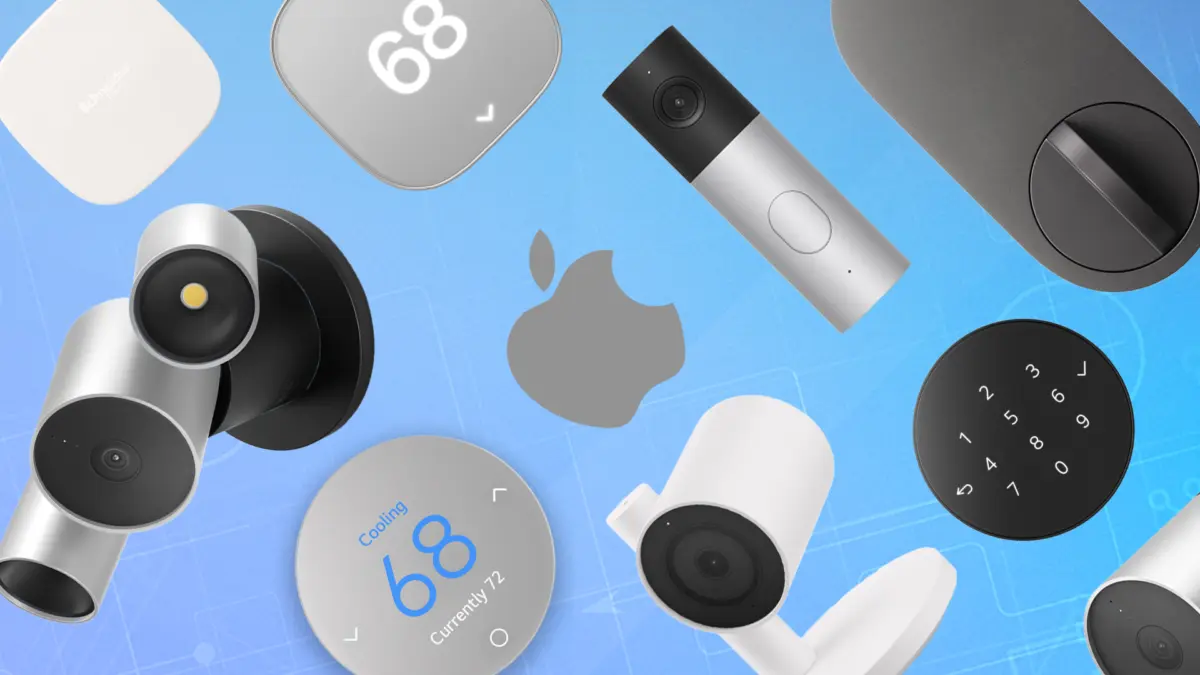
In a significant strategic move to capture a larger share of the burgeoning smart home market, Apple recently unveiled a comprehensive suite of hardware and software solutions, headlined by its first dedicated smart panel, the HomeView. This launch, which includes a refreshed HomePod mini, a more powerful Apple TV 4K, and a "Home Collection" consisting of nine specialized devices, marks a pivot from Apple’s traditional role as a software platform provider to a more direct competitor in the hardware space. While the premium pricing—ranging from $40 for basic sensors to $400 for advanced security systems—positions these products at the higher end of the consumer spectrum, the collection’s utility for the millions of individuals living in rental properties remains a central point of industry analysis.
The New Architecture of the Apple Home Ecosystem
The center of Apple’s renewed home strategy is the HomeView, a $299 smart home hub designed to act as a centralized command center for the modern household. Available in both tabletop and wall-mounted configurations, the HomeView utilizes a customized interface that prioritizes accessibility and visual control of HomeKit-enabled devices. Alongside this, the updated Apple TV 4K now features an "always listening" Siri capability, designed to facilitate hands-free control of the environment, and a new HomePod mini aims to refine the audio and Thread-border routing capabilities of the ecosystem.
The most notable expansion, however, is the Apple Home Collection. Developed in partnership with industry stalwarts LG and Schneider Electric, this collection includes:
- LG Indoor Cam: A $200 pan/tilt camera with automated privacy shutters.
- LG Outdoor Cam: A $300 high-resolution (2.5K) plug-in security camera.
- LG Video Doorbell: A $250 wired unit featuring dual-camera technology for package detection.
- LG Floodlight Cam: A $400 motion-activated lighting and security solution.
- LG Smart Deadbolt: A $350 Ultra-Wideband (UWB) enabled lock.
- LG & Schneider Smart Thermostat: A $200 climate control unit.
- Associated Sensors: Including contact, motion, and temperature sensors starting at $40.
A Chronology of Apple’s Smart Home Evolution
To understand the weight of this announcement, one must look at the timeline of Apple’s involvement in the domestic sphere. Apple introduced HomeKit in 2014, but for years, the company relied almost exclusively on third-party manufacturers like Eve, August, and Lutron to provide the hardware. While Amazon’s Alexa and Google’s Nest aggressively expanded their first-party hardware lineups, Apple remained a software-centric player.

The 2020 launch of the HomePod mini marked the beginning of a shift, emphasizing the "Thread" networking protocol, which allows devices to talk to each other more efficiently without taxing a home’s Wi-Fi. By 2023, Apple became a founding member of the Matter standard, ensuring cross-platform compatibility. The 2026 Home Collection represents the final stage of this evolution: a unified, Apple-branded (though partner-manufactured) hardware experience that integrates seamlessly with the iPhone, iPad, Apple Watch, and Mac.
Technical Enrichment: Security and Integration
Apple’s primary differentiator remains its commitment to privacy and on-device processing. In an era where consumer trust in cloud-based security cameras is fluctuating, Apple has designed the Home Collection to utilize HomeKit Secure Video (HKSV).
Unlike competitors that often process video data on remote servers, HKSV analyzes footage locally on an Apple Home hub (such as an Apple TV or HomePod). This ensures that facial recognition and object detection (identifying people, pets, or vehicles) occur within the home’s walls. When data must be sent to the cloud for storage, it is encrypted end-to-end and stored via iCloud+, where even Apple cannot access the decryption keys. Furthermore, the LG Indoor Cam within the collection features a physical privacy mode that can be triggered automatically based on the user’s iPhone location, providing a tangible layer of security for those concerned about indoor surveillance.
The Renter’s Dilemma: Installation and Portability
For the approximately 36% of U.S. households that rent their homes, the Apple Home Collection presents a mixed value proposition. Smart home technology in rental units is often limited by lease agreements that prohibit permanent modifications to electrical wiring or plumbing.
Renter-Friendly Highlights:
The LG Indoor Cam and the LG Outdoor Cam (Plug-in) are the standout choices for renters. Because these devices rely on standard power outlets rather than hardwiring, they can be installed and removed without leaving permanent damage. The Indoor Cam’s tabletop design eliminates the need for wall mounting, while the Outdoor Cam’s plug-in nature allows it to be positioned on balconies or near entryways where an outdoor outlet is available.

Barriers for Renters:
Conversely, several flagship products in the collection are likely "non-starters" for those without homeownership. The LG Video Doorbell and Floodlight Cam require existing low-voltage wiring and the replacement of existing fixtures—actions that usually require landlord approval and professional installation. Similarly, the LG Smart Deadbolt requires a complete replacement of the door’s locking mechanism. While technically reversible, the $350 price tag plus the labor of installation makes it a difficult investment for a temporary living situation.
Comparative Market Analysis and Alternatives
The premium pricing of the Apple Home Collection suggests that Apple is not targeting the budget-conscious "DIY" market dominated by brands like Wyze or Blink. Instead, it is targeting "ecosystem loyalists"—users who prioritize a frictionless experience over cost.
| Product | Apple Home Collection (LG/Schneider) | Renter-Friendly Alternative | Price Difference |
|---|---|---|---|
| Indoor Camera | $200 (LG Indoor Cam) | $60 (Eufy E220) | -$140 |
| Outdoor Camera | $300 (LG Outdoor Cam) | $60 (Tapo MagCam) | -$240 |
| Smart Lock | $350 (LG Deadbolt) | $150 (Aqara U200 Retrofit) | -$200 |
| Thermostat | $200 (LG/Schneider) | $99 (Sensibo Sky – IR based) | -$101 |
The "Retrofit" market is particularly relevant here. Devices like the Aqara U200 or the Nuki Smart Lock allow users to add smart functionality to their existing deadbolts without replacing the exterior hardware or keys, making them far more suitable for renters than Apple’s first-party deadbolt.
Industry Implications and Market Reaction
Industry analysts suggest that Apple’s move into a curated "Home Collection" is an attempt to reduce the "fragmentation frustration" that has long plagued the smart home industry. By vetting and co-branding hardware with LG and Schneider Electric, Apple is offering a "it just works" guarantee that has been the hallmark of its success in the smartphone and PC markets.
"Apple is essentially creating a ‘Pro’ tier for the smart home," says a market analyst specializing in consumer IoT. "By integrating Schneider Electric’s expertise in energy management and LG’s prowess in imaging, they are moving away from the ‘toy’ phase of smart home gadgets and into the ‘infrastructure’ phase. However, by ignoring the specific needs of renters—such as battery-powered doorbells or adhesive-based sensors—they may be leaving a significant portion of the market to competitors like Ring and Arlo."

Privacy as a Product Feature
A central pillar of the Apple Home Collection’s marketing is the "Private Cloud Compute" architecture. In instances where local processing is insufficient for complex AI tasks, Apple utilizes a specialized cloud environment that extends the same security properties as the iPhone’s "Secure Enclave." This ensures that even in the cloud, personal data is ephemeral and never stored in a way that is accessible to third parties. For many users, this peace of mind justifies the $200-$400 price points of the cameras and hubs.
Future Outlook: Toward a Unified Domestic OS
The release of the HomeView and the Home Collection indicates that Apple views the home as the next great frontier for its "Services" revenue. With iCloud+ becoming a requirement for the full suite of HKSV features, Apple is ensuring that hardware sales drive long-term subscription growth.
For renters, the path forward involves a selective approach. While the entire nine-device collection may be overkill or physically impossible to install in an apartment, the core components—the HomeView hub, the HomePod mini, and the plug-in cameras—offer a sophisticated entry point into a high-security, high-privacy lifestyle. As the "Matter" protocol continues to mature, it is expected that more renter-friendly, battery-operated devices will eventually join the official Apple Home Collection, further lowering the barrier to entry for those who do not own their own four walls.
In conclusion, the Apple Home Collection is a bold, high-stakes expansion. It successfully leverages Apple’s strengths in privacy and ecosystem integration but remains a luxury investment that requires careful consideration of one’s housing status and long-term residency plans. For the homeowner, it is a streamlined path to a futuristic dwelling; for the renter, it is a menu of premium options that must be navigated with an eye toward portability and lease compliance.
