

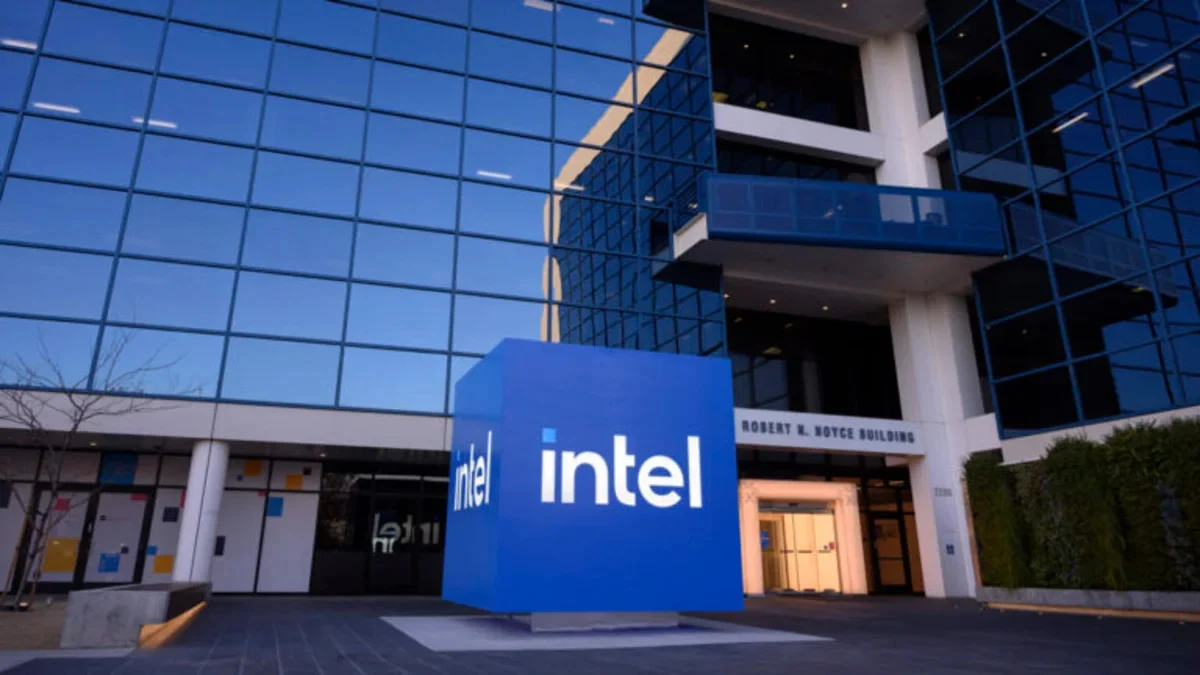
Programmable-chip pioneer Altera is poised for a significant return to the public markets, confidentially filing for a U.S. Initial Public Offering (IPO) on September 15, 2026. This move comes less than a year after Intel Corporation (NASDAQ: INTC) divested a controlling stake in the company to private equity firm Silver Lake, marking a pivotal moment for a business whose technology, Field-Programmable Gate Arrays (FPGAs), is experiencing renewed investor interest driven by the accelerating demand for artificial intelligence (AI) hardware. Reports suggest the offering could raise upwards of $2 billion, signaling a robust appetite for specialized semiconductor firms. Silver Lake currently holds a 51% controlling interest in Altera, having invested $4.46 billion, while Intel retains a substantial 49% stake.
The confidential filing underscores a broader trend within the semiconductor industry, where specialized processing units are gaining prominence alongside traditional CPUs. FPGAs, known for their reconfigurability and ability to accelerate specific workloads, are finding new applications in data centers, edge computing, and AI inference tasks. Altera’s re-emergence as an independent entity, backed by a significant private equity investment and a strategic minority stake from Intel, positions it directly against formidable rivals, most notably Advanced Micro Devices, Inc. (NASDAQ: AMD), which solidified its position in the FPGA market through its acquisition of Xilinx in 2022.
A Detailed Chronology: Altera’s Journey Through Ownership Shifts
The trajectory of Altera is a fascinating case study in strategic corporate maneuvers within the volatile semiconductor landscape. The company was originally an independent pioneer in the FPGA space for decades before Intel’s significant acquisition in 2015.
- 2015: Intel Acquires Altera for $16.7 Billion. This landmark acquisition was driven by Intel’s then-strategy to integrate FPGAs with its Xeon processors, aiming to create highly optimized, heterogeneous computing solutions for data centers. The vision was to leverage Altera’s programmable logic alongside Intel’s dominant CPUs to accelerate specific workloads like networking, storage, and early AI applications. It was a bold move by Intel to expand beyond its core CPU business and address the growing demand for workload-specific acceleration.
- 2022: AMD Acquires Xilinx for Approximately $49 Billion. In a parallel and ultimately more expansive strategic move, AMD completed its acquisition of Xilinx, the long-standing market leader in FPGAs. This acquisition was pivotal for AMD, providing it with a comprehensive portfolio of adaptive System-on-Chips (SoCs), FPGAs, and robust software tools. It enabled AMD to offer integrated solutions comprising its EPYC CPUs, Instinct AI accelerators, and Xilinx’s programmable logic, directly challenging Intel’s strategy in the data center and high-performance computing markets.
- Last Year (Circa 2025): Intel Divests Controlling Stake to Silver Lake. Under the leadership of CEO Pat Gelsinger, Intel embarked on its "IDM 2.0" strategy, focusing on revitalizing its core CPU manufacturing and design capabilities, establishing a robust foundry business, and streamlining its diverse portfolio. As part of this strategic realignment, Intel opted to sell a 51% controlling interest in its FPGA business unit (which retained the Altera brand) to Silver Lake. This transaction allowed Intel to unlock capital, sharpen its focus on key strategic areas, and potentially benefit from Altera’s renewed growth trajectory as a financially de-risked minority shareholder. The move signaled Intel’s intent to maintain a strategic connection to the FPGA market while shedding the operational burden of managing a standalone, specialized division.
- September 15, 2026: Altera Confidentially Files for U.S. IPO. This confidential filing initiates the process for Altera to become a publicly traded company once again, seeking to capitalize on current investor enthusiasm for AI-enabling technologies and a desire for specialized semiconductor pure-plays.
The Resurgence of FPGAs in the Age of AI
The timing of Altera’s IPO is particularly salient, coinciding with an unprecedented boom in AI investment and development. While Graphics Processing Units (GPUs) have largely dominated the AI training landscape, FPGAs are carving out a critical niche, especially in AI inference, edge computing, and specialized data center applications where adaptability, low latency, and power efficiency are paramount.
FPGAs offer a unique blend of flexibility and performance. Unlike ASICs (Application-Specific Integrated Circuits), which are designed for a single purpose and are immutable once manufactured, FPGAs can be reconfigured post-deployment to adapt to evolving algorithms, protocols, or workloads. This characteristic makes them ideal for applications requiring custom hardware acceleration that can change over time, such as network functions virtualization (NFV), software-defined radio, and rapidly evolving AI models.
The global FPGA market, valued at approximately $7 billion in 2025, is projected to grow significantly, potentially reaching over $15 billion by the early 2030s, driven largely by demand from data centers, automotive electronics, industrial automation, and 5G telecommunications infrastructure. The AI segment within this growth is particularly robust, as companies seek efficient ways to deploy AI models at scale without the prohibitive costs and inflexibility of custom ASICs. Altera’s management has projected mid-20% revenue growth for 2026, a testament to the strong underlying market dynamics, though investors will meticulously evaluate how much of this growth is genuinely AI-driven versus traditional FPGA applications.
Altera’s Strategic Positioning and Investment Thesis
Altera’s confidential IPO filing suggests a strategy to leverage its renewed independence and the "AI halo effect" to attract significant investor capital. The $2 billion-plus target valuation implies a robust assessment of its market potential and technological prowess. With Silver Lake’s significant investment, Altera has likely undergone operational optimizations and strategic refocusing, preparing it for the rigors of the public market.
The company’s core strengths lie in its established intellectual property, a broad portfolio of programmable chips, and a global customer base spanning industrial controls, communications infrastructure, aerospace and defense, and data center applications. The ability to offer highly customizable hardware solutions allows customers to optimize performance and power consumption for specific workloads, a critical advantage in today’s performance-hungry computing environment.
The investment thesis for Altera hinges on several factors:
- AI Acceleration: Its FPGAs are increasingly deployed for AI inference, particularly in scenarios requiring real-time processing and custom neural network architectures.
- Diverse End Markets: Altera’s presence across multiple high-growth sectors provides resilience against downturns in any single market.
- Technological Leadership: Continued innovation in FPGA architectures, design tools, and software ecosystems is crucial for maintaining competitiveness.
- Operational Independence: Freed from Intel’s larger corporate structure, Altera can potentially be more agile and responsive to market shifts.
The Competitive Arena: Altera vs. AMD (Xilinx)
The most direct and illuminating strategic comparison for Altera is Advanced Micro Devices, Inc. and its Xilinx division. AMD’s acquisition of Xilinx in 2022 was a transformative event, solidifying its position as a comprehensive provider of high-performance and adaptive computing solutions.
- AMD’s Integrated Ecosystem: Xilinx brought AMD not only leading FPGA technology but also adaptive SoCs (ACAPs) and a sophisticated software stack (Vitis) that enables developers to leverage programmable hardware more easily. This allows AMD to offer compelling integrated solutions where its EPYC CPUs, Instinct AI accelerators, and Xilinx FPGAs work in concert within a heterogeneous computing environment. This "bundle" approach can be highly attractive to data center operators and system integrators looking for unified platforms.
- Altera’s Pure-Play Focus: In contrast, Altera will emerge as a pure-play FPGA company. While this might lack the broad portfolio integration of AMD, it allows for a laser focus on FPGA innovation, customer support, and market development. Altera can potentially differentiate itself through specialized architectures, unique IP blocks, or a more tailored ecosystem for specific vertical markets.
- Market Dynamics and Workload Migration: The "bear case" for AMD’s Xilinx integration often centers on the high cost of the acquisition and the challenge of ensuring that every potential FPGA workload naturally migrates into AMD’s broader ecosystem. Customers may still prefer standalone FPGA solutions from a focused vendor like Altera, especially if they already have existing design flows or prefer vendor diversification. Altera will aim to capture these opportunities, emphasizing its dedicated expertise and potentially more competitive offerings in specific FPGA segments.
Ultimately, the competition between Altera and AMD (Xilinx) will revolve around performance, power efficiency, ease of use (software tools), ecosystem support, and pricing, particularly as both vie for market share in the burgeoning AI hardware acceleration space.
Implications for Intel: Capital, Valuation, and Strategic Clarity
For Intel, Altera’s IPO holds significant implications, primarily concerning capital generation and the valuation of its retained 49% interest.
- Crystallizing Value: Intel bought Altera for $16.7 billion in 2015. While the terms of its divestment to Silver Lake are not fully public, the upcoming IPO will create a new, publicly traded market valuation for the entire Altera entity. This will directly put a price on Intel’s remaining 49% stake, effectively crystallizing value in an asset that was previously "buried" within Intel’s much larger, complex corporate structure and its ongoing turnaround efforts.
- Capital Needs: Intel is in a period of unprecedented capital expenditure. Its ambitious IDM 2.0 strategy involves massive investments in new fabrication plants (foundries) and advanced manufacturing technologies, aiming to restore its leadership in process technology. These "mega-fabs" cost tens of billions of dollars each. A strong valuation for Altera, and potentially a future sale of its remaining stake, could provide Intel with additional capital or validate the strategic divestment as a prudent financial move.
- Strategic Focus: By divesting control of Altera, Intel can further sharpen its focus on its core CPU business, its burgeoning foundry services (IFS), and its graphics/AI accelerator efforts (e.g., Gaudi). While it maintains a strategic tie to FPGAs through its minority stake, the operational burden is lifted, allowing Intel to allocate resources more efficiently towards its primary objectives. The IPO serves as a benchmark for the success of this portfolio rationalization.
Investor Sentiment and Market Dynamics
The IPO market for technology companies, particularly those linked to AI, has shown periods of both euphoria and caution. While the general sentiment towards AI remains overwhelmingly positive, investors are increasingly scrutinizing the underlying business fundamentals and the true extent of AI-driven revenue for new listings. Altera’s projected mid-20% revenue growth for 2026 will be a key metric for evaluation, with analysts keen to discern the precise contribution from AI applications versus more traditional FPGA deployments.
Recent hedge fund activity reflects a broader interest in the semiconductor sector. According to Insider Monkey’s Q2 data, Intel saw an increase in hedge fund holdings from 112 to 138, although a prominent holder like AQR Capital Management trimmed its stake. More notably, AMD experienced a significant jump in ownership, from 134 to 164 funds, with Marshall Wace slightly increasing its position. This indicates a strong institutional belief in the long-term growth prospects of chipmakers, especially those with diverse portfolios or strong AI plays. However, Intel also recorded approximately 152.2 million shares sold short on August 31, representing about 3% of its public float, suggesting some investor skepticism regarding its turnaround timeline or certain segments of its business. The Altera IPO could potentially alleviate some of this skepticism by demonstrating Intel’s ability to unlock value from its non-core assets.
Future Outlook and Challenges
Altera’s journey back to the public market is fraught with both immense opportunity and significant challenges. The company will need to demonstrate sustained innovation in its FPGA architectures, develop compelling software tools that simplify programmability, and effectively communicate its value proposition in an increasingly crowded and competitive semiconductor landscape.
Key challenges include:
- Sustaining AI-Driven Growth: Converting the general enthusiasm for AI into concrete, high-margin revenue streams will be critical. This requires close collaboration with AI developers and system architects.
- Intense Competition: Beyond AMD’s Xilinx, Altera faces competition from other specialized chip designers, custom ASIC providers, and even GPU manufacturers expanding into new territories.
- Technological Evolution: The rapid pace of innovation in computing architectures means Altera must continuously invest in research and development to stay ahead.
- Market Volatility: The semiconductor industry is cyclical, and investor appetite for IPOs can shift rapidly based on macroeconomic conditions.
Altera’s IPO marks a new chapter for a foundational technology in an era defined by data and AI. Its performance as an independent, publicly traded entity will serve as a bellwether for the broader FPGA market and offer crucial insights into the evolving strategies of semiconductor giants like Intel and AMD as they navigate the complexities of heterogeneous computing and the relentless pursuit of AI acceleration.
