

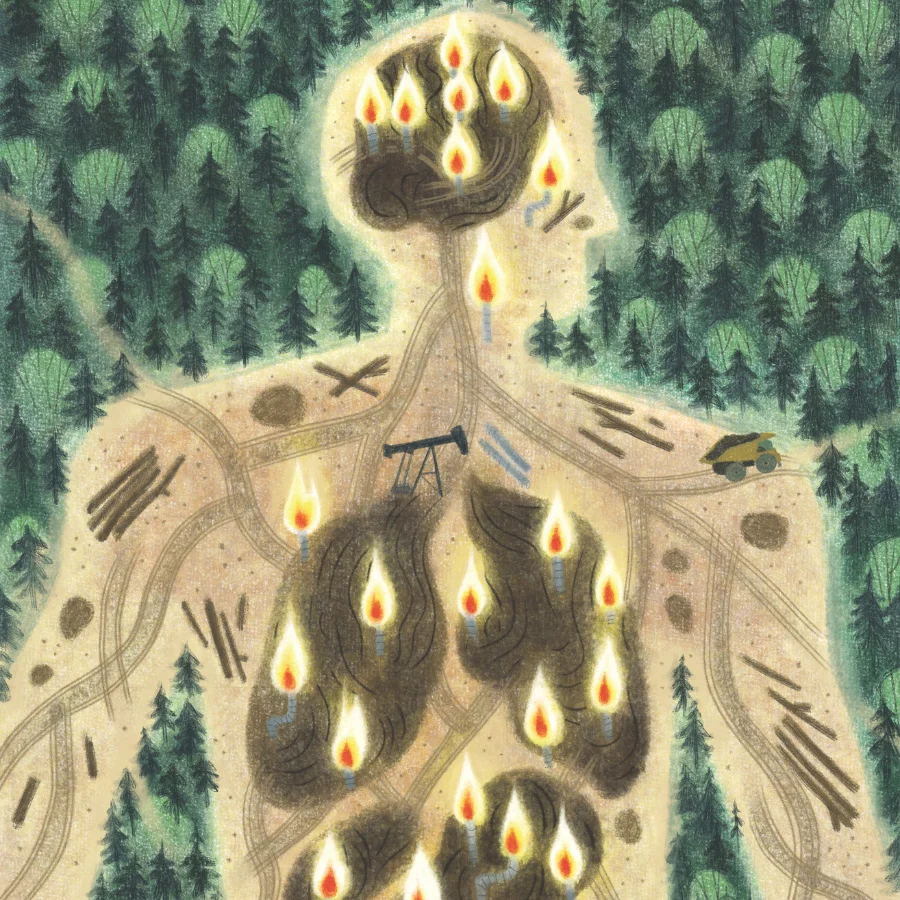
The landscape of Alberta, Canada, is defined by its vast energy reserves, but beneath the economic prosperity of the oil and gas industry lies a growing concern regarding the long-term health of its residents and the integrity of its environment. For nearly two decades, physicians, environmental advocates, and Indigenous community leaders have raised alarms about the potential link between industrial activity and rare health conditions. As the province grapples with a massive inventory of aging infrastructure—often referred to as mature assets—the call for comprehensive health monitoring and regulatory transparency has reached a critical juncture. The debate, which began in the remote community of Fort Chipewyan, now encompasses the entire province, highlighting a systemic tension between industrial development and public health.
The Fort Chipewyan Catalyst and the Legacy of Dr. John O’Connor
The contemporary movement for environmental health accountability in Alberta can be traced back to 2006. At that time, Dr. John O’Connor, a family physician serving the 1,200 residents of Fort Chipewyan, identified a statistical anomaly that would spark a decades-long controversy. He observed three cases of cholangiocarcinoma—a rare and aggressive form of bile duct cancer—within the small community. Nationally, Canada sees only about 600 cases of this cancer annually, making its appearance in such a concentrated, small population highly unusual.
Fort Chipewyan is situated downstream from the Alberta oil sands, and its predominantly Indigenous population relies heavily on the local ecosystem for subsistence through hunting, trapping, and fishing. Community members reported visible changes to their environment to Dr. O’Connor, including rainbow-colored films on the surface of Lake Athabasca, dwindling fish stocks, and sickly waterfowl. These observations led O’Connor to conclude that the community was suffering the downstream effects of upstream industrial activity.
However, his public call for an investigation was met with institutional resistance. Three physicians with Health Canada filed formal complaints against O’Connor with the Alberta College of Physicians and Surgeons, accusing him of causing "undue alarm." While O’Connor was eventually cleared of all wrongdoing, the incident underscored the political and economic sensitivities surrounding the oil sands. In the eight years following his report, provincial health authorities conducted several small-scale studies, but the results remained inconclusive, often hampered by a lack of granular data and the inherent difficulty of proving direct causation in environmental health research.
A Chronology of Environmental Health Concerns in Alberta
The timeline of Alberta’s environmental health debate reflects a slow progression from localized concerns to a broader recognition of systemic risks.
- 2006: Dr. John O’Connor reports elevated cancer rates in Fort Chipewyan.
- 2007–2009: O’Connor faces professional scrutiny and complaints from Health Canada before being exonerated.
- 2009–2014: Various provincial and federal agencies conduct limited health assessments; critics label them insufficient due to narrow scopes.
- 2020: A landmark study in JAMA Pediatrics links proximity to fracking sites in Alberta to higher risks of congenital anomalies and infants born small for their gestational age.
- 2021: Research published in Frontiers in Oncology suggests a correlation between dense oil and gas infrastructure and increased incidences of solid tumor cancers.
- 2022–2023: A major communication breakdown occurs when Imperial Oil and the Alberta Energy Regulator (AER) fail to notify downstream communities of a massive wastewater seepage containing arsenic and hydrocarbons at the Kearl Lake project.
- 2024: The federal government commits $12 million over ten years for the Fort Chipewyan Health Study, the first large-scale, community-led initiative of its kind in Canada.
The Crisis of Mature Assets and Aging Infrastructure
While the oil sands often dominate the national conversation, a quieter crisis is unfolding across the rest of the province. Alberta is currently home to approximately 275,000 "mature assets." This category includes marginal wells, inactive wells, and decommissioned sites that have not yet been fully reclaimed. Many of these wells exist in a state of regulatory limbo; they are no longer economically viable for production, yet they have not been formally declared inactive because there is little financial incentive for companies to begin the expensive reclamation process.
The Alberta government’s "Mature Asset Strategy," detailed in a 2023 report, outlines recommendations for managing these sites. However, critics argue the strategy lacks a robust framework for monitoring the environmental and health impacts of non-producing wells. Amanda Bryant, a climate policy expert with the Pembina Institute, emphasizes that the province is missing vital data. Bryant argues that the Alberta Energy Regulator and provincial health authorities currently lack the depth of information required to definitively state that these wells do not pose a public health risk.
The physical reality of these aging sites is a significant concern for experts like Paul Belanger, an environmental engineer and science adviser to Keepers of the Water. Belanger notes that as wells age, they are prone to corrosion—a process he describes with the phrase "rust never sleeps." This corrosion can lead to saltwater spills and the leaching of contaminants into groundwater and soil. Because many of these sites are located in remote rural areas, they often lack the "sentinels" or whistleblowers necessary to report leaks or structural failures in real time.
Supporting Data: Quantifying the Risk
Recent scientific research has begun to fill the data gaps that have long stymied public health advocates. These studies suggest that the risks associated with both active and inactive wells may be significantly higher than previously estimated.
- Methane Emissions: A study from McGill University, published in Environmental Science & Technology, found that methane emissions from non-producing wells across Canada are likely seven times higher than official government estimates. Methane is not only a potent greenhouse gas but is often co-emitted with volatile organic compounds (VOCs).
- Cardiovascular and Respiratory Health: Research led by Martin Lavoie of FluxLab at St. Francis Xavier University found that 13% of Albertans live within 1.5 kilometers of an active well. These residents face a 9% to 21% higher risk of cardiovascular and respiratory issues compared to the general population. The risk increases the closer a person lives to a well site.
- Cancer Correlation: The 2021 Frontiers in Oncology report was the first in Canada to analyze cancer risks related specifically to orphan and inactive wells. It found a significant correlation between living near one to three orphan sites and an increased risk of solid tumors, potentially due to a lack of proper maintenance and remediation.
- The Cleanup Gap: The Orphan Well Association (OWA), funded by industry levies, is responsible for cleaning up sites where the original owners have gone bankrupt. For the 2025/2026 fiscal year, the AER set the industry levy at $144.45 million. However, the OWA estimates the total cost to remediate the sites currently under its management is $1.12 billion, leaving a massive funding shortfall.
Official Responses and Regulatory Challenges
The response from the Alberta government and the Alberta Energy Regulator has historically focused on the "polluter pays" principle. This principle dictates that the party responsible for environmental damage must bear the costs of cleanup. However, the surge in corporate bankruptcies within the junior oil and gas sector has left the province with a growing number of "orphan" sites.
Premier Danielle Smith’s government is expected to take formal action on the Mature Asset Strategy later this year. While the government maintains that its regulatory framework is among the most stringent in the world, community advocates and health professionals remain skeptical. The primary criticism is that the regulator focuses on active production while allowing inactive sites to languish without regular inspections for methane leaks or groundwater contamination.
Stephen Wilton, an associate professor and cardiologist at the University of Calgary, argues that the lack of definitive "causation" in existing studies should not be an excuse for inaction. He points to the "precautionary principle" of public health: if there is plausible evidence of harm, precautions should be taken even if the scientific evidence is not yet absolute.
Broader Impact and the Path Forward
The situation in Alberta serves as a cautionary tale for energy-producing regions worldwide. As the global energy transition progresses, the legacy of fossil fuel infrastructure will remain a significant environmental and public health challenge. For the Indigenous communities of northern Alberta, the issue is also one of environmental justice. The failure to monitor and remediate downstream impacts is seen by many as a violation of treaty rights and a failure of the Crown’s duty to protect the health of Indigenous peoples.
The upcoming Fort Chipewyan Health Study represents a potential turning point. By putting the research into the hands of the Athabasca Chipewyan First Nation, the Mikisew Cree First Nation, and the Fort Chipewyan Métis Nation, the study aims to bypass the political roadblocks that have historically hindered such investigations.
Ultimately, the resolution of Alberta’s health and infrastructure crisis will require a fundamental shift in how data is collected and shared. Accurate mapping of well locations, transparent reporting of methane leaks, and long-term longitudinal health studies are essential components of a responsible energy sector. As the province moves to address its 275,000 aging wells, the health of its citizens will depend on whether the government chooses to prioritize rigorous scientific monitoring over the economic convenience of the status quo.
