

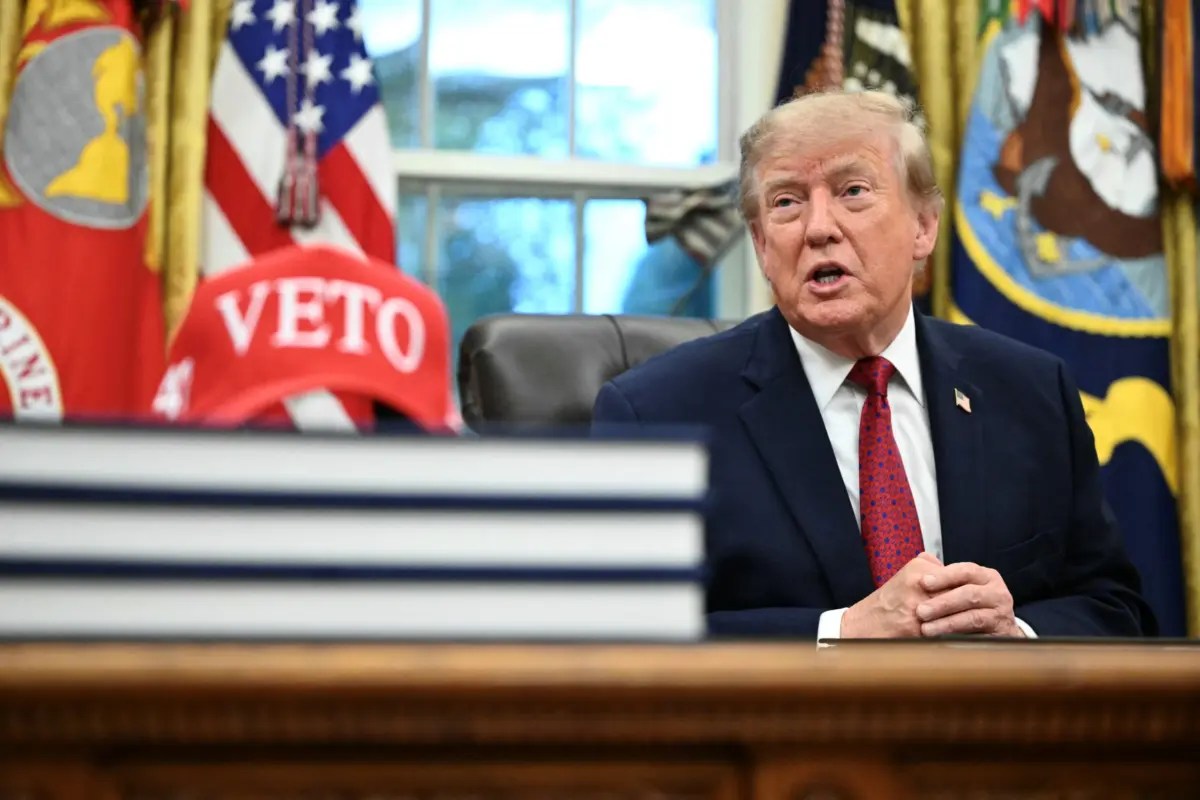
As the United States midterm election results solidified late on Tuesday night, marking a significant shift in the nation’s political landscape, United States President Donald Trump took a pivotal phone call from the news outlet Politico. The outcome represented a profound repudiation for the Republican Party, as a powerful wave for the Democratic Party swept across the country, decisively sinking Trump’s Republican Party. For the first time in his two stints as president, President Trump found his party stripped of control over either chamber of Congress, facing a newly empowered Democratic majority in both the House of Representatives and the Senate. This electoral earthquake has set the stage for a tumultuous yet potentially transformative period of governance, forcing a president known for his confrontational style to grapple with the realities of divided government.
Despite the stark electoral setback, President Trump presented a defiant yet pragmatic front in his phone interview, offering what he described as an "olive branch" to his political adversaries. He stated his willingness to work with Democrats, a surprising concession given his often-combative rhetoric. "They’ve already called, and they want to work with me. I have the right to veto everything, but I don’t want to be just sitting there for two years just vetoing everything," he asserted, laying bare a strategic dichotomy between potential cooperation and the undeniable assertion of presidential power. This statement encapsulates the complex dynamic that will define the next two years of American politics: a president with broad executive authority facing a determined legislative branch eager to advance its agenda and hold the administration accountable.
The Democratic Surge: A Deeper Dive into the Midterm Results
The 2026 midterm elections delivered a resounding victory for the Democratic Party, reshaping the balance of power in Washington D.C. While a handful of races were still undergoing final counts and certifications, the Democrats had secured comfortable majorities in both legislative bodies. In the House of Representatives, they clinched at least 253 seats out of 435, far exceeding the 218 needed for a simple majority. This commanding lead empowers Democrats to control committee chairmanships, set the legislative agenda, and initiate investigations into the executive branch without obstruction from the Republican minority. The shift means that key legislative priorities, from healthcare reform to infrastructure spending and climate initiatives, will now be driven by Democratic leadership.
The Senate also witnessed a significant Democratic triumph, where the party secured at least 54 out of the 100 seats. This majority is particularly crucial, as it grants Democrats greater control over judicial appointments, cabinet nominations, and treaty ratifications. A 54-seat majority, while not filibuster-proof (which requires 60 votes for most legislation), significantly enhances the party’s ability to push through their agenda, especially when combined with the unified House. The implications for the Supreme Court, federal judiciary, and the president’s cabinet are immediate and profound, as Trump will now require Democratic consent for any new appointments, a stark contrast to his previous terms where he enjoyed Republican majorities.
The "wave for the Democratic Party" was fueled by a complex interplay of factors, including voter dissatisfaction with the current administration’s policies, economic concerns, and a strong emphasis on issues like healthcare access and affordability. Many voters also expressed a desire for a return to political normalcy and stability, signaling a mandate for checks and balances on presidential power. Exit polls indicated that concerns over the economy, healthcare costs, and the administration’s foreign policy decisions played a significant role in motivating Democratic voters and swaying independents. This electoral outcome marks a historic turning point, as President Trump now faces the unprecedented challenge of governing with an opposition-controlled Congress, a scenario he had not encountered in his previous presidential terms.
President Trump’s Initial Response and Strategic Posturing
President Trump’s immediate reaction to the midterm results, as conveyed during his phone interview with Politico, revealed a calculated blend of defiance and strategic flexibility. His assertion of the presidential veto power was swiftly reinforced by a subsequent post on his Truth Social account. The image featured a Make America Great Again red baseball hat prominently emblazoned with the word "VETO," a clear visual reminder of the constitutional authority he retains. This seemingly contradictory messaging – offering an olive branch while simultaneously brandishing the veto threat – underscores a characteristic political maneuver by Trump: signaling strength and non-negotiable power while leaving a narrow opening for deal-making on his terms.
Article I, Section 7 of the U.S. Constitution explicitly grants the president the power to reject legislation passed by Congress. While Congress can override a presidential veto, it requires a two-thirds majority vote in both the House and the Senate. With the Democrats holding 253 seats in the House and 54 in the Senate, they are far short of the necessary two-thirds supermajority in either chamber. This mathematical reality gives President Trump significant leverage. He can effectively block any legislation he opposes, forcing Democrats to either compromise on bills or face legislative gridlock. His statement to Politico, therefore, can be interpreted as a strategic communication: a warning to Democrats that he possesses a formidable defensive weapon, coupled with an invitation to engage in negotiations that could avert its frequent deployment.
The Three Paths Forward: Veto, Executive Orders, or Deal-Making
With a Democratic-controlled Congress, President Trump’s operational landscape has fundamentally shifted. As Andrew Proctor, a lecturer in US politics at University College London, observes, the president now has "even less leverage than before with Congress," implying that his options are more constrained. Broadly, Trump now faces three primary avenues for governance: the strategic use of his veto power, the enforcement of executive orders, or the pursuit of bipartisan deals.
The veto power remains his most potent legislative defense. While Trump has historically not been the most frequent user of the veto, his willingness to wield it strategically has been evident. In his current term, he has already employed the veto twice. During his first term, he used it 10 times. To put this in historical context, President Joe Biden, in his single term, used the veto 12 times. President Barack Obama, over two terms, exercised the veto a dozen times. Presidential use of the veto has generally declined over recent decades; Bill Clinton vetoed legislation 37 times between 1993 and 2001, while his predecessor, George H.W. Bush, used it 44 times in his single term—almost once a month. Ronald Reagan, over his two terms, vetoed legislation 78 times. This historical trend suggests that while Trump’s usage isn’t exceptionally high, the threat of the veto against a unified opposition can be as impactful as its actual application. Proctor’s analysis highlights the likely outcome: "I think the biggest thing is we’re probably going to see a decent amount of gridlock. The Democrats are going to try to pass policies, but he’s got the power to veto them, and Democrats don’t have enough seats in either chamber to overcome any vetoes that he has."
Beyond legislative action, President Trump can continue to rely on executive orders. These presidential directives carry the force of law without requiring congressional approval, allowing the administration to implement policies unilaterally. Since his inauguration in January 2025, Trump has issued a remarkable 292 executive orders: 67 this year alone, building on the 225 from the previous year, according to the Federal Register. This prolific use of executive authority demonstrates a clear preference for bypassing a potentially obstructionist Congress. However, executive orders are not without their limitations; they can be challenged in courts, overturned by subsequent administrations, or be narrower in scope than full legislation.
The third path, and perhaps the most unpredictable, is bipartisan negotiation. Despite the anticipated gridlock, Trump’s comment about not wanting to "just veto everything" leaves open the possibility of making deals. "So that raises questions about, will he try to work with the Democrats at all on passing legislation? I think recent history says that’s unlikely," Proctor commented, reflecting the general skepticism about sustained cooperation. However, the political landscape dictates that some level of negotiation may be inevitable, particularly on critical issues that demand federal action.
Democratic Willingness to Engage: Examples and Priorities
Despite the deep ideological divides and the often-heated rhetoric that defines American politics, several prominent Democrats have indicated a pragmatic willingness to engage with President Trump to advance shared objectives. This signals a potential, albeit narrow, pathway for legislative progress.
One notable voice is Michigan’s Abdul El-Sayed, who made history as the first Muslim elected to the U.S. Senate. Despite being a target of President Trump’s racist and Islamophobic rhetoric during the campaign, El-Sayed has expressed a readiness to collaborate. Speaking to MSNOW on Thursday, El-Sayed articulated his core priorities: "If Trump was interested in getting money out of politics, putting money in pockets and passing Medicare for All, that’s what I ran to do, and I’m looking forward to working with anyone who is willing to do that." He adopted a professional stance, acknowledging the president’s office: "He is the president of the United States. I’m going to be one United States senator, and if he’s interested in working on issues that I want to work on – getting more people healthcare, ending the Medicare cuts, ending the stupid war, stopping these stupid tariffs with Canada – then let’s talk about doing that and go and deliver for the public." His willingness to set aside personal grievances for policy outcomes underscores a potential shift in Democratic strategy, focusing on deliverable results for their constituents.
Progressive stalwart Senator Bernie Sanders has also echoed a similar sentiment in recent interviews. Known for his unwavering advocacy for universal healthcare, Sanders stated that he would not rule out President Trump signing a Medicare for All bill if Democrats manage to pass it through both chambers of Congress. Sanders characterized Trump as a "politician" who was "not too ideological," suggesting that the president’s transactional approach to politics could, paradoxically, make him open to supporting policies that might not align with traditional Republican platforms if they could be framed as a political win or beneficial to his base.
Proctor elaborated on potential areas of common ground, particularly within healthcare. While passing a comprehensive Medicare for All bill in the next two years appears highly improbable, Proctor suggested a more modest yet impactful area for cooperation: "I do think that a place where common ground could emerge on healthcare is rolling back, specifically the sort of subsidies that were cut" under Trump’s earlier legislation. He pointed out that this action "would make healthcare more affordable for millions of Americans." He recalled that some Republicans in 2025 had expressed willingness to negotiate with Democrats on healthcare reforms, even if those discussions ultimately faltered. "That didn’t end up happening, but I could imagine that might be a place for healthcare-specific policy where we could see something emerge," he said, while cautioning, "I don’t think that a broader healthcare debate on passing Medicare for All, though, is really in the cards." This pragmatic assessment suggests that while grand legislative ambitions may be stalled, targeted reforms with tangible benefits could find bipartisan traction.
Congressional Obstruction Tactics: The Filibuster
Beyond the president’s veto power, Republicans in the Senate possess another formidable tool to impede the Democratic legislative agenda: the filibuster. This procedural tactic allows a minority of senators to delay or entirely block a vote on a specific piece of legislation by extending debate indefinitely, effectively preventing a bill from ever reaching a final vote unless 60 senators vote to end the debate (cloture).
As Andrew Proctor explained, this tactic could significantly impact the Democrats’ ability to pass legislation, even with their 54-seat majority. "This is what they did to [former President Barack] Obama," Proctor told Al Jazeera, referencing the frequent use of the filibuster by Senate Republicans during Obama’s presidency. "Senate Republicans will probably try to do the same thing, and it also means that we don’t even get to the point of Trump having the power to veto because the legislation never reaches him in the first place." The strategic deployment of the filibuster by the Republican minority could effectively create a legislative bottleneck, ensuring that only bills with broad bipartisan support, or those passed through reconciliation (a budget-specific process that bypasses the filibuster), stand a chance of becoming law. This dynamic sets the stage for protracted procedural battles and further exacerbates the potential for legislative gridlock.
The Specter of Investigations and Impeachment
The Democratic sweep in the midterms has not only altered the legislative landscape but has also immediately raised the specter of intensified congressional oversight and potential impeachment proceedings against the administration. For President Trump, this is not unfamiliar territory. During his first term, he faced impeachment twice: first for abuse of power and obstruction of Congress related to his dealings with Ukraine, and a second time for "inciting" the January 6th Capitol riots. While he was acquitted by the Senate on both occasions, the investigations consumed significant political capital and cast a shadow over his presidency.
The immediate reactions from key Democratic figures underscore the party’s intent to leverage its new majority for accountability. On Tuesday night, U.S. Representative Robert Garcia, who is poised to become chairman of the influential House Oversight Committee, issued a terse but pointed message on X: "LAWYER UP." Simultaneously, Senator Ron Wyden, expected to lead the powerful Senate Finance Committee, posted simply: "Subpoenas." These statements signal a clear intention to launch extensive investigations into various aspects of the Trump administration, from financial dealings and ethical conduct to policy decisions and potential abuses of power. The Democratic-controlled committees will now possess subpoena power, enabling them to demand documents, compel witness testimony, and scrutinize executive branch operations in unprecedented detail.
The White House, however, has swiftly dismissed these threats as politically motivated. White House spokesperson Lauren Bis responded on Wednesday, stating, "If Democrats choose to pursue sham investigations and radical left policies, they are choosing to work against the American people." This retort suggests a strategy of portraying any investigative efforts as partisan attacks rather than legitimate oversight, setting the stage for bitter confrontations between the executive and legislative branches.
Reports have also emerged suggesting that impeachment proceedings against Defense Secretary Pete Hegseth might be imminent. Hegseth has faced criticism over the administration’s involvement in the Iran war, which some Republicans and Democrats alike have blamed for contributing to the party’s midterm losses. The impeachment of a cabinet secretary, though rare, would represent a significant escalation of congressional oversight and a direct challenge to the president’s authority to appoint his own team. Such a move would undoubtedly ignite a fierce political battle, diverting attention and resources from legislative efforts and further entrenching the adversarial relationship between the branches of government.
Conclusion: A Landscape of Confrontation and Limited Cooperation
The aftermath of the 2026 midterm elections ushers in a new and complex era for American politics. President Donald Trump faces a unified and invigorated Democratic Congress, poised to exercise its legislative power, implement its agenda, and rigorously oversee the executive branch. The next two years will be defined by a delicate balance between potential gridlock and the pragmatic search for common ground.
While the president’s robust veto power and the Republicans’ strategic use of the filibuster ensure that no major Democratic legislative initiatives will pass without significant compromise, the door remains ajar for targeted bipartisan cooperation on issues like healthcare reform or specific economic policies. The willingness of some Democrats, like Abdul El-Sayed and Bernie Sanders, to engage with the president, despite profound ideological differences and past animosity, offers a glimmer of hope for incremental progress.
However, the dominant theme is likely to be one of intense confrontation, particularly through congressional investigations and the ever-present threat of impeachment. The signals from incoming committee chairs suggest a determined effort to hold the administration accountable, potentially leading to a period of unprecedented scrutiny. This dynamic will test the resilience of American democratic institutions, shaping not only the remainder of President Trump’s term but also the trajectory of the nation’s political future. The stage is set for a gripping period of checks and balances, where every legislative battle and every investigative subpoena will carry significant weight in a deeply divided nation.
