

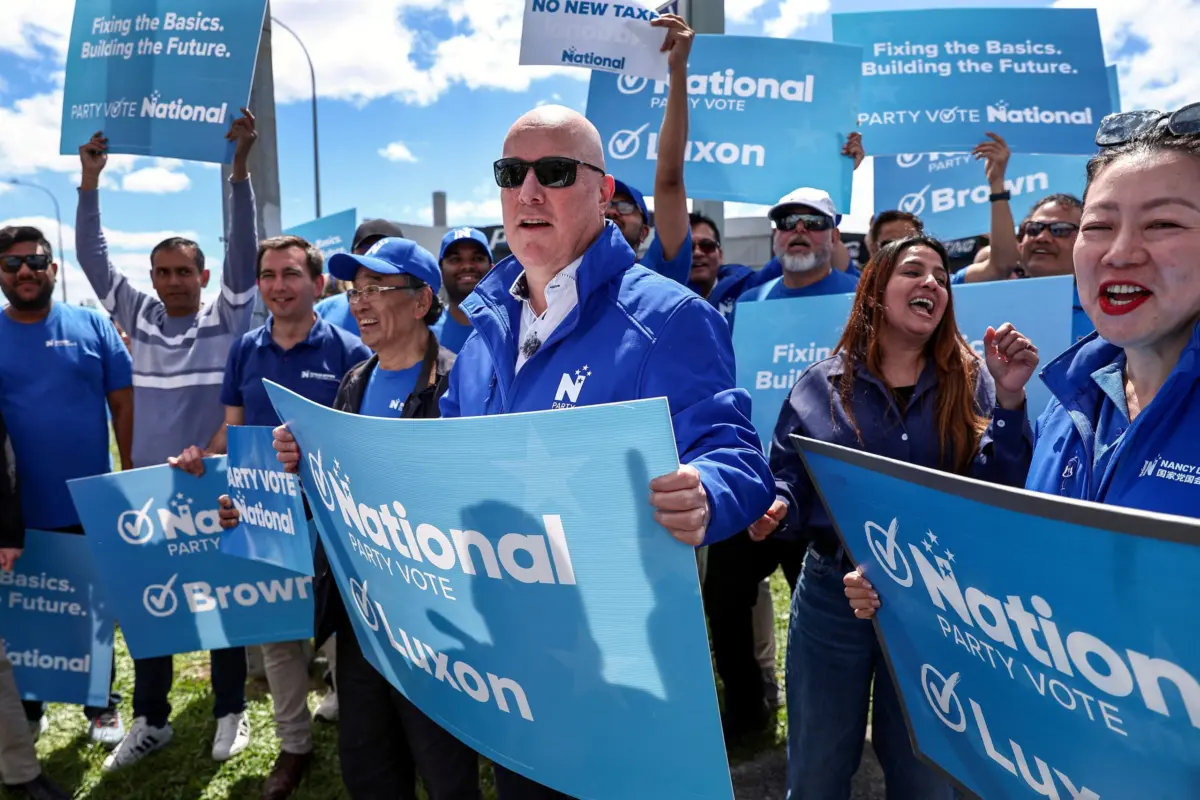
Days ahead of what is shaping up to be one of New Zealand’s most closely contested general elections on November 7, polls indicate a razor-thin margin separating the governing centre-right National Party and the opposition centre-left Labour Party. Neither of the traditional dominant parties appears poised to secure an outright majority in the 120-seat Parliament, setting the stage for smaller parties to assume the influential role of "kingmakers" under the country’s distinctive mixed-member proportional (MMP) electoral system. The outcome is not merely a contest between two leaders, but a complex calculus of party votes, electorate wins, and post-election negotiations that will shape the nation’s policy direction for the next three years.
Understanding New Zealand’s Mixed-Member Proportional (MMP) System
New Zealand operates under a triennial parliamentary cycle, with general elections held every three years. The MMP system, introduced in 1996, was designed to ensure greater proportionality between a party’s share of the national vote and its representation in Parliament, a significant departure from the previous "first-past-the-post" system. This hybrid model empowers voters with two distinct ballots, fostering a nuanced political landscape where broad national support and local representation are both critical.
Voters cast two ballots:
- Electorate Vote: This vote is for a specific candidate in their local geographic electorate. New Zealand is currently divided into 71 electorates. The candidate who wins the most votes in their electorate automatically secures a seat in Parliament. Seven of these electorates are specifically reserved for Māori, New Zealand’s Indigenous people, allowing Māori voters the unique choice to enrol on either the Māori electoral roll or the general roll, influencing whether they vote in a Māori or general electorate. This ensures direct Indigenous representation.
- Party Vote: This ballot is for a political party. It is the more crucial of the two, as it largely determines the overall number of seats each party receives in Parliament. Approximately 49 additional seats are allocated from party lists to ensure that a party’s total representation in Parliament closely aligns with its proportional share of the national party vote.
To gain representation in Parliament, a party must either secure at least 5 percent of the national party vote or win at least one electorate seat. In a 120-seat Parliament, a working majority typically requires 61 seats. However, a unique feature of MMP is the concept of "overhang" seats. If a party wins more electorate seats than its proportional share of the party vote would entitle it to, it retains those extra seats, and the total size of Parliament is temporarily increased to accommodate this. This occurred in the 2023 election, where Te Pāti Māori (the Māori Party) secured six of the seven Māori electorates despite receiving only 3.1 percent of the overall party vote. This mechanism can slightly alter the number of seats required for a majority, potentially raising it from 61 to 62 or more if several overhang seats are created.

The inherent proportionality of MMP means that single-party majorities are rare. Since its introduction in 1996, every New Zealand government, with the notable exception of Jacinda Ardern’s Labour Party in 2020, has been a coalition or relied on confidence and supply agreements with smaller parties. This history underscores the critical role that post-election negotiations and the smaller parties play in forming stable governments.
The Contenders: A Battle for Leadership
The current election pits two prominent leaders against each other, each with distinct backgrounds and visions for New Zealand.
The Incumbent: Christopher Luxon and the National Party
Christopher Luxon, 53, is seeking a second term as Prime Minister. A former chief executive of Air New Zealand, Luxon transitioned from a successful corporate career into politics, entering Parliament in 2020 as the Member for Botany, an Auckland electorate. Within a year, he ascended to the leadership of the National Party.
He successfully led National back to power in the 2023 election, ending six years of Labour-led government. His administration, a three-party coalition with the populist New Zealand First and the classical liberal ACT Party, has focused on promises of robust economic management, fiscal discipline, and a reduction in what he termed "red tape."
However, Luxon’s leadership has not been without its challenges. He notably survived two attempted no-confidence votes by National MPs in April and August of 2024, the second reportedly orchestrated by his then-defence minister. These internal pressures, coupled with a decline in his personal popularity amid rising economic strain and political tensions within his governing coalition, have marked a turbulent period for the incumbent. His government’s economic strategy has emphasized cutting government spending, reducing debt, and aiming for a budget surplus, while also advocating for an expansion of the national pension scheme.

The Challenger: Chris Hipkins and the Labour Party
Chris Hipkins, 48, leads the Labour Party and is bidding to reclaim the top job. A seasoned politician, Hipkins was first elected to Parliament in 2008, representing the Remutaka electorate. He rose through the Labour ranks, holding several key portfolios, before unexpectedly becoming Prime Minister in January 2023 following the surprise resignation of his predecessor, Jacinda Ardern.
Hipkins led Labour into the October 2023 election, where his party lost power to the National-led coalition. Despite the electoral defeat, he chose to remain as the leader of the Labour Party, leading the opposition. His campaign for the upcoming election is largely centred on addressing the cost of living crisis, promising cheaper healthcare and public transport, and advocating for increased investment in jobs, housing, infrastructure, and strengthening public services. Labour also aims to address economic inequalities through targeted social spending and support for vulnerable communities.
The Kingmakers: Smaller Parties and Their Agendas
Given the anticipated tight race, the smaller parties are poised to play a decisive role in government formation. Their individual policy platforms and willingness to coalesce will determine the next government.
- New Zealand First (NZ First): Led by the veteran politician Winston Peters, NZ First is a right-wing populist party known for its nationalist stance and ability to appeal to a segment of the rural and older voter base. Peters has previously advocated for New Zealand to withdraw from the Paris Climate Agreement, and for the central bank’s mandate to explicitly target both employment and inflation. The party also champions breaking up major electricity companies and splitting large supermarket operators to enhance competition and reduce consumer prices. NZ First has a history of playing kingmaker for both National and Labour.
- ACT Party: Led by David Seymour, ACT (Association of Consumers and Taxpayers) describes itself as a classical liberal and right-libertarian party. It advocates for significant tax cuts, reduced government spending, deregulation, and individual freedoms. ACT currently holds 11 seats in the 123-seat Parliament (including overhang seats from 2023). A key policy includes deporting serious offenders regardless of their length of residency in New Zealand, reflecting a tough-on-crime approach.
- Green Party: A left-leaning environmental party, co-led by Chloe Swarbrick and Marama Davidson. The Greens’ campaign focuses on social justice, addressing the cost of living, environmental protection, and political funding reform. Their economic proposals include advocating for a wealth tax, higher taxes on large corporations and banks, while simultaneously reducing income tax for most people. They also propose establishing a state-owned power company and a publicly owned supermarket chain, alongside tougher regulations to combat excessive grocery prices. Environmentally, they push for expanded home insulation programmes and zero-interest loans for household solar panels and batteries.
- Te Pāti Māori (Māori Party): Co-led by Rawiri Waititi and Debbie Ngarewa-Packer, Te Pāti Māori champions Indigenous rights and constitutional transformation. Their campaign prioritizes enrolling more voters on the Māori electoral roll, alongside addressing critical issues in housing, health, education, and environmental protection from a Māori worldview. Their ability to win electorate seats, often disproportionately to their party vote, makes them a significant factor in parliamentary arithmetic due to the overhang rule.
- The Opportunity Party (TOP): Founded by economist Gareth Morgan in 2016, TOP is a centrist party that positions itself as neither left nor right, focusing on evidence-based policy. Led by Auckland businesswoman Qiulae Wong, the party’s platform includes a land value tax, aimed at boosting economic growth and addressing housing affordability. TOP has yet to win a seat in Parliament, peaking at 2.6 percent of the vote in 2017. However, in a tight election, even a small percentage of the vote or an unexpected electorate win could make them a crucial partner for either major bloc.
Key Issues Dominating the Election Discourse
The upcoming election is largely being fought on economic grounds, though parties offer vastly different solutions to the nation’s challenges.
- Economy and Cost of Living: This remains the paramount concern for most New Zealanders. Inflation has been a persistent issue, impacting household budgets and purchasing power. National pledges fiscal discipline, aiming to return the budget to surplus, while Labour prioritizes targeted interventions to ease living costs, such as cheaper healthcare and transport. Smaller parties like NZ First and the Greens are specifically targeting the market power of major corporations, proposing structural changes to the electricity and supermarket sectors to reduce prices.
- Housing and Infrastructure: Both major parties acknowledge the housing crisis and infrastructure deficit. Labour plans significant investment in these areas, while National emphasizes efficiency and private sector involvement. TOP’s land value tax proposal directly addresses housing affordability and speculative investment.
- Healthcare and Social Services: Labour advocates for strengthening public services, including healthcare, promising cheaper access and greater investment. National also aims for efficient service delivery but emphasizes fiscal responsibility.
- Immigration and Voting Rights: ACT seeks stricter immigration enforcement, particularly concerning the deportation of serious offenders. New Zealand First advocates restricting voting rights solely to citizens, a departure from the current system that allows legal residents who have lived in the country continuously for over 12 months to vote.
- Climate Change: While not the dominant economic issue, climate change remains a significant concern, particularly for the Green Party, which proposes ambitious targets and investments in renewable energy and sustainable practices. NZ First’s stance on the Paris Agreement highlights a potential divergence within a future National-led coalition.
The Path to Government: Coalition Complexities and Implications
The absence of a clear frontrunner means the real contest is between two potential rival blocs. National would almost certainly need to reform its current coalition with New Zealand First and ACT. Labour, on the other hand, would likely depend on the Greens and potentially the Opportunity Party to form a governing majority. Te Pāti Māori could also be a factor, having previously supported both Labour and National governments.

Recent polls consistently show no single party or pre-formed bloc commanding a clear majority. This makes the 5 percent party vote threshold, or the winning of an electorate seat, exceptionally crucial for smaller parties. If a party narrowly misses the 5 percent threshold and fails to win an electorate, its votes are effectively "wasted" in terms of seat allocation, which could decisively cost its preferred bloc the majority. For example, if Opportunity aims to support Labour, it must either clear the 5 percent threshold or win an electorate for its votes to contribute to a potential Labour-led coalition’s majority.
The final size of Parliament, influenced by overhang seats, further complicates the arithmetic. Should Te Pāti Māori again win more electorates than their party vote entitles them to, Parliament could expand beyond 120 seats, raising the bar for a majority (e.g., to 62 seats if Parliament grows to 122).
Historically, this dynamic has made coalition formation a central feature of New Zealand politics since 1996. In 2017, despite National winning more seats (56) than Labour (46), it could not form a majority. Labour ultimately took power by forming a coalition with New Zealand First, with the additional support of the Greens on confidence and supply. New Zealand First has repeatedly played the kingmaker role, backing National after the 1996 election and Labour in 2017. Te Pāti Māori has also demonstrated its willingness to support both major parties, backing National-led governments after the 2008, 2011, and 2014 elections.
This critical role often secures senior posts for leaders of junior parties. For instance, Winston Peters served as Deputy Prime Minister in Luxon’s government until May 2025, and ACT’s David Seymour has held the position since mid-2025 (as inferred from the article’s dates). This time, the Opportunity Party, if it garners sufficient support, could emerge as a new kingmaker, potentially playing this role for the first time in its decade-long history.
A Look Back: Recent Political History and Trends
New Zealand’s political landscape has been marked by both stability and significant shifts in recent years. The 2020 election saw an unprecedented outcome under the MMP system, with Jacinda Ardern’s Labour Party securing an outright majority and governing alone—an anomaly in post-1996 politics. This reflected a surge in support for Ardern’s leadership during the COVID-19 pandemic. However, this period of single-party dominance proved brief, with the subsequent 2023 election returning to the more familiar pattern of a fractured Parliament requiring coalition formation.

The regular occurrence of kingmakers underscores the enduring influence of smaller parties. Their ability to negotiate policy concessions and secure ministerial positions has ensured their platforms remain relevant, even when their vote share is modest. The fluidity of alliances, particularly with parties like New Zealand First, which has partnered with both National and Labour, highlights the pragmatic nature of coalition politics in New Zealand. These negotiations often lead to compromises on key policy areas, shaping the legislative agenda in ways that reflect the diverse interests of the coalition partners.
Timeline of Key Events Leading to the November 7 Election
- October 2020: Labour Party, under Jacinda Ardern, wins a historic outright majority in the general election, the first under MMP.
- November 2021: Christopher Luxon, a former airline CEO, becomes leader of the National Party.
- January 2023: Jacinda Ardern unexpectedly resigns as Prime Minister and Labour Party leader; Chris Hipkins assumes both roles.
- October 2023: General election results in National-led coalition with ACT and New Zealand First taking power, with Christopher Luxon as Prime Minister. Chris Hipkins remains Labour leader, leading the opposition.
- April 2024: Prime Minister Luxon faces and survives his first no-confidence vote from within the National Party.
- August 2024: Luxon survives a second no-confidence vote, reportedly orchestrated by his then-defence minister, highlighting internal coalition tensions.
- September-October 2026: Intensive campaigning period, with polls showing a tight race and the increasing importance of smaller parties.
- November 7, 2026: General Election Day in New Zealand.
As the nation approaches election day, the stakes are exceptionally high. The final outcome will not only determine who governs but also the policy direction for critical areas like the economy, healthcare, and social welfare. With neither of the two major parties expected to secure a clear majority, the negotiation skills and strategic positioning of New Zealand’s smaller parties will be paramount in forging the next government, ushering in a period of intense political bargaining and potential shifts in national priorities.
