

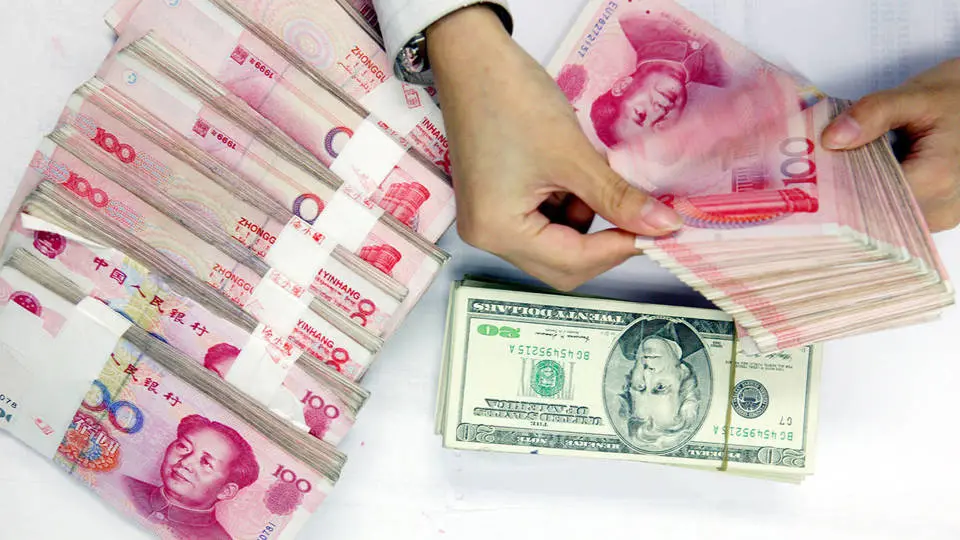
WASHINGTON, DC – November 4, 2026 – China’s burgeoning role as a financial intermediary for Iran and Russia, nations under stringent US sanctions, presents a complex geopolitical and economic landscape. While Beijing offers these countries a crucial lifeline to circumvent American financial pressures and maintain trade, this strategy comes with an inherent, often overlooked, cost. Transactions are increasingly settled in onshore, non-convertible Renminbi (RMB), forcing Iran and Russia to navigate underground financial networks to convert these yuan holdings into US dollars. Paradoxically, this intricate process, born out of a desire to reduce reliance on the dollar, inadvertently reinforces its global dominance.
The Weaponization of the Dollar and the Rise of Alternative Channels
The landscape of international finance has been dramatically reshaped in recent years by the United States’ strategic deployment of economic sanctions. Following Russia’s full-scale invasion of Ukraine in February 2022, the US and its allies moved swiftly to isolate Moscow from the global financial system. This aggressive stance, aimed at crippling Russia’s war machine through financial exclusion, fueled widespread speculation that the very "weaponization" of the US dollar’s preeminence would accelerate a global pivot away from the greenback.
This speculation gained further traction earlier this year when the United States intensified its economic pressure on Iran, implementing even tighter financial sanctions. The stated objective of these sanctions has consistently been to curb Iran’s nuclear program and its support for regional proxies. However, the cumulative effect of these measures has been to create significant challenges for Tehran in conducting international trade and accessing global capital markets.
China’s Economic Entente with Sanctioned States
In this environment, China has emerged as a critical counterweight for both Russia and Iran. Beijing, itself engaged in a protracted trade dispute with the US, has a vested interest in demonstrating alternative models of international commerce that are less susceptible to American influence. The expansion of trade with Russia, particularly in energy, and continued economic engagement with Iran, despite sanctions, have become hallmarks of China’s foreign policy.
For Russia, the imposition of sanctions has necessitated a reorientation of its export markets, with China becoming a primary destination for its oil and gas. Similarly, Iran, heavily reliant on oil exports, has found a significant, albeit sometimes reluctant, buyer in China. These transactions, however, have presented a logistical and financial challenge due to the US-led sanctions regime, which aims to cut off access to the dollar-dominated global financial infrastructure.
The Renminbi Conundrum: A Double-Edged Sword
The core of China’s strategy involves facilitating these transactions using the Renminbi. This move is ostensibly designed to promote the internationalization of China’s currency and diminish the reliance of its trading partners on the US dollar. However, the practical implementation of this policy for countries like Iran and Russia, which are under severe US sanctions, is far from straightforward.
The Renminbi, particularly the onshore version (CNY), is not freely convertible on international markets in the same way as the US dollar. This means that while Iran and Russia can receive payments in RMB for their goods and services sold to China, they cannot easily use this currency to purchase goods and services from other countries or to settle debts denominated in other major currencies.
Navigating the Shadows: Underground Networks and Dollar Reinforcement
The necessity for Iran and Russia to convert their accumulated RMB holdings into dollars has led them to rely on a complex and often opaque system of financial intermediaries. These "underground financial networks," as described, are not formal, regulated institutions but rather a web of private brokers, informal exchange houses, and potentially even cryptocurrencies, operating in the grey areas of international finance.
The process typically involves Iranian or Russian entities selling their RMB balances at a discount to these intermediaries. These intermediaries, in turn, then use their own channels and networks to convert the RMB into US dollars, often through transactions that are designed to avoid direct scrutiny from US authorities. The discount at which the RMB is converted reflects the risk involved and the demand for dollars by entities seeking to bypass sanctions.
Data Points and Economic Indicators
While precise figures for these underground transactions are difficult to obtain, the trend is discernible through various economic indicators. Bilateral trade between China and Russia, measured in RMB, has surged since 2022. Similarly, China’s oil imports from Iran, even when not openly declared as such, have been a consistent feature, with payments often routed through third countries or facilitated via RMB.
- Russia-China Trade: In 2023, bilateral trade between Russia and China reached a record high of $218.1 billion, with a significant portion of transactions increasingly denominated in RMB and Russian rubles. This represents a substantial increase from pre-invasion levels.
- Iran’s Oil Exports: While official figures are scarce due to sanctions, estimates suggest Iran has managed to export significant volumes of oil, with China being a primary, albeit unofficial, buyer. Payments for these exports are often structured to avoid direct dollar transactions.
- RMB’s Share in International Payments: While the RMB has seen a modest increase in its share of global payments, it remains far behind the dollar. However, within specific bilateral trade relationships involving sanctioned countries, its use has become more pronounced.
The Strategic Implications for Global Finance
This intricate dance between China’s efforts to internationalize the RMB and the practical realities faced by sanctioned nations has several profound implications:
- Enduring Dollar Dominance: The very act of needing to convert RMB back into dollars to participate in the broader global economy underscores the dollar’s continued indispensability. The US dollar remains the world’s primary reserve currency, the undisputed medium of exchange for most international trade, and the unit of account for a vast array of global financial assets.
- Increased Transaction Costs and Risks: For Iran and Russia, the reliance on underground networks means higher transaction costs due to conversion discounts and increased exposure to financial risks, including fraud and illicit activities. This erodes the economic benefits of circumventing sanctions.
- China’s Geopolitical Positioning: By providing these financial channels, China positions itself as a key player in a multipolar financial order, offering an alternative to the US-led system. However, it also walks a tightrope, balancing its strategic interests with the risk of secondary sanctions from the US.
- Challenges for RMB Internationalization: While the increased use of RMB in these specific contexts might seem like a win for its internationalization, the non-convertible nature of onshore RMB and the need for conversion back to dollars ultimately limits its genuine global adoption. It highlights that true currency internationalization requires free convertibility and broad market acceptance, not just forced usage.
Historical Context and Evolving Dynamics
The current scenario is not entirely unprecedented. Throughout history, economic blocs have sought to establish alternative financial systems to counter dominant powers. The Bretton Woods system, which cemented the dollar’s post-World War II supremacy, was itself a product of a specific geopolitical and economic order.
The current situation, however, is characterized by the speed and scope of technological advancement and the interconnectedness of the global financial system. The US has demonstrated a sophisticated ability to leverage its financial infrastructure to exert influence. China’s response, while innovative, is constrained by the inherent limitations of its own financial system and the deep-seated network effects that favor the US dollar.
Official Reactions and Expert Analysis
Official responses from the US Treasury Department have consistently highlighted the commitment to enforcing sanctions and monitoring financial flows that seek to undermine them. While specific comments on the underground networks are rare, the broader message is clear: entities facilitating evasion will face consequences.
Economists and geopolitical analysts widely observe this trend. Dr. Emily Carter, a senior fellow at the Peterson Institute for International Economics, notes, "The irony is palpable. Countries seeking to escape dollar dominance are, in practice, creating demand for it, albeit through less transparent channels. This highlights the ‘network effects’ of the dollar – its value is reinforced by its widespread acceptance and the infrastructure built around it."
Similarly, Professor David Chen, specializing in international finance at Georgetown University, suggests, "China’s strategy is a calculated one, aimed at both supporting its allies and gradually increasing the RMB’s global footprint. However, the current reliance on shadow banking for dollar conversion indicates that a genuine dethroning of the dollar is a long-term aspiration, not an immediate reality."
The Path Forward
As the global financial architecture continues to evolve, the interplay between sanctions, alternative payment systems, and currency dynamics will remain a critical area of focus. China’s willingness to absorb the costs associated with facilitating trade for sanctioned nations, coupled with the persistent need for those nations to access dollars, paints a complex picture.
For the foreseeable future, while the Renminbi may see increased usage in specific bilateral relationships, the US dollar is likely to retain its preeminent position. The intricate, and often costly, process of converting RMB into dollars through less-than-transparent channels serves as a potent reminder of the dollar’s deep integration into the fabric of global commerce and finance. The question remains whether this intricate financial maneuvering will ultimately lead to a more diversified international monetary system or simply reinforce the existing one through a different, more circuitous route.
