

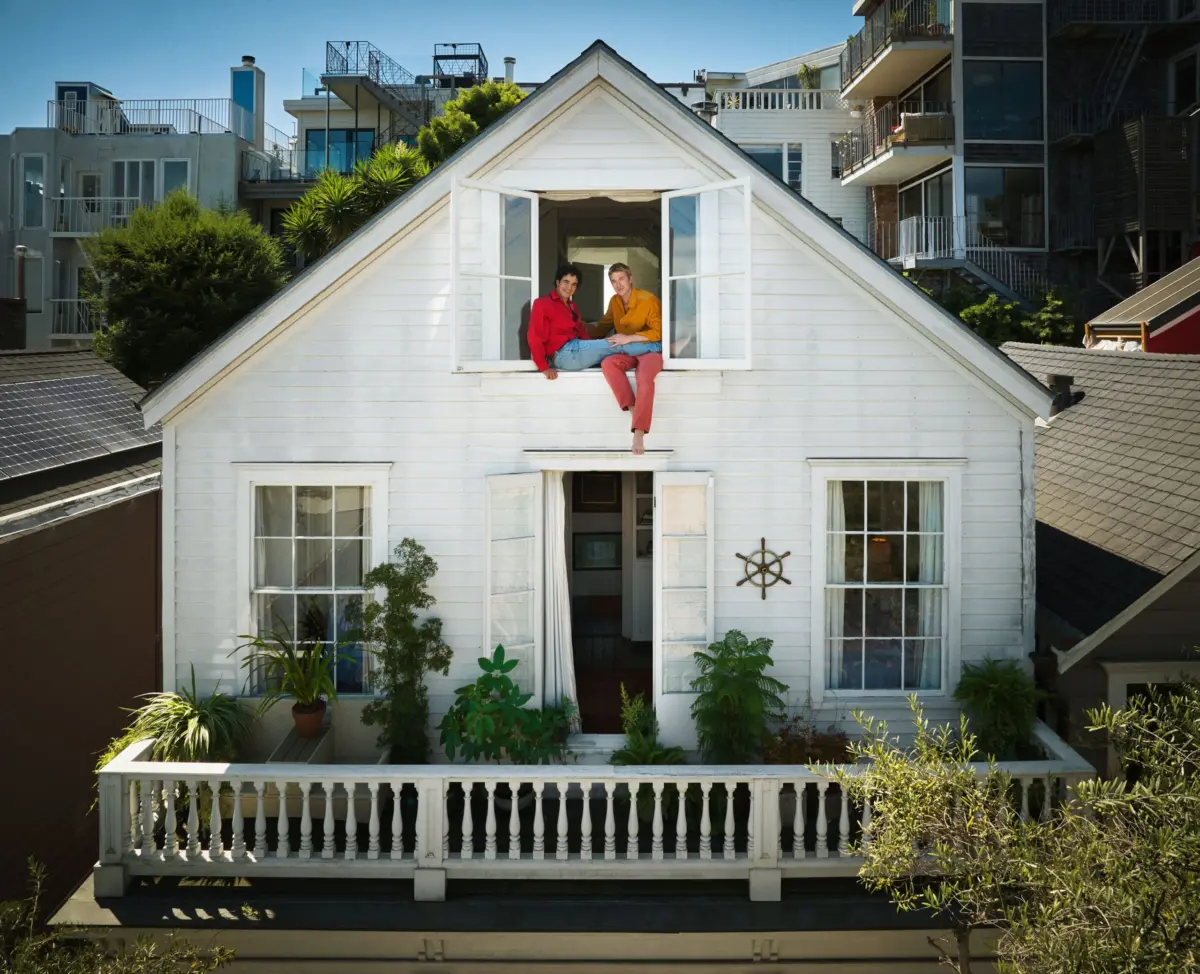
The relocation of fashion luminary Zac Posen and acclaimed performer Harrison Ball to San Francisco marks a significant intersection of high fashion, performing arts, and historic preservation. Following Posen’s appointment as executive vice president and creative director at Gap Inc., as well as chief creative officer at Old Navy, the couple transitioned from a New York-centric lifestyle to a bicoastal existence, settling into an 1850s captain’s cottage in the historic Telegraph Hill neighborhood. This move, which began approximately two and a half years ago, has resulted in a residential project that challenges contemporary interior design norms, favoring a philosophy of "delightful imperfection" over the rigid curation typically associated with celebrity homes.

The Professional Catalyst and Westward Migration
The impetus for the move was Posen’s high-profile recruitment by Gap Inc., a cornerstone of San Francisco’s corporate and cultural identity. Posen’s role was designed to revitalize the creative direction of one of America’s most storied apparel conglomerates. As Posen integrated into the corporate infrastructure at Gap’s headquarters, Harrison Ball—who recently concluded a distinguished career as a principal dancer with the New York City Ballet—managed the physical logistics of the cross-country transition.
Ball’s journey across the United States was a symbolic undertaking, described by Posen as being in the "spirit of the pioneers." Accompanied by his father and the couple’s two miniature poodles, Tsuki and Bizet, Ball transported a curated selection of personal effects, including a notable painting of a man on horseback discovered in Bucks County, Pennsylvania. This migration coincided with Ball’s own professional pivot from the world of elite ballet to the acting stage, a transition highlighted by his recent performance in Brokeback Mountain at the Chicago Shakespeare Theater.

Historical Significance of the Telegraph Hill Cottage
The property selected by the couple is an 1850s captain’s cottage, a rare architectural survivor in San Francisco’s Telegraph Hill. The neighborhood, known for its steep inclines and the iconic Coit Tower, is one of the city’s oldest residential districts. The cottage itself boasts a storied lineage that mirrors the bohemian and aristocratic history of San Francisco.
Following its original inhabitant—a sea captain—the residence was reportedly home to a Russian aristocrat before serving as a private club during the Prohibition era. Its cultural footprint expanded in the mid-20th century; local lore suggests that folk icon Joan Baez resided there, and the property frequently hosted figures such as Martha Stewart. Furthermore, the cottage is situated on the same street where author Armistead Maupin lived while penning his seminal work, Tales of the City, which chronicled the eclectic lives of San Francisco residents.

Upon discovery by Ball, whom Posen playfully refers to as a "Zillow queen," the house was functional but lacked character, possessing what Ball described as a sterile "Airbnb vibe." The revitalization of the property required a restoration of its "higgledy-piggledy" architecture and the neglected exterior spaces.
The Ken Fulk Collaboration: An Anti-Decorator Approach
To breathe life into the historic structure, the couple sought the expertise of Ken Fulk, an AD100 interior designer renowned for his theatrical and layered approach to spaces. The collaboration was born out of a long-standing acquaintance; Posen first met Fulk at the age of 22 during a trunk show at Neiman Marcus in San Francisco.

Unlike traditional high-end design projects, the transformation of the cottage eschewed formal concept presentations and mood boards. Fulk’s approach focused on preserving the "bohemian quality" of the house, aiming for an aesthetic he described as "junk shop meets Central Saint Martins student bedsit." The objective was to create a space that felt lived-in and authentic rather than over-curated.
Living and Dining Spaces
The living room serves as a gallery for both family history and modern retail synergy. It is anchored by an artwork by Stephen Posen, Zac’s father, and furnished with a red velvet sofa from the Banana Republic Home collection—a nod to Posen’s creative leadership at Gap Inc. This is complemented by blue velvet armchairs from Les Trois Garçons and a vintage burl-wood coffee table.

In the dining room, the walls are enveloped in Gregorius Pineo’s Madagascar Basketweave, providing a tactile, organic backdrop. The room features a vintage pendant light and a 1960s sea urchin lamp by Curtis Jere, sourced from the iconic, now-shuttered Café Jacqueline. The table settings frequently mix Fulk’s own designs with vintage candelabras and Summerill & Bishop linens, creating a sophisticated yet unpretentious environment for entertaining.
The Culinary Heart and the "Crow’s Nest"
The kitchen remains a testament to the home’s mid-century history. Rather than undergoing a modern overhaul, the couple chose to retain the vintage cabinetry and appliances, including a 1950s O’Keefe & Merritt stove. The space reflects a DIY spirit; Ball personally repainted sections of the kitchen, embracing the "mistakes" as part of the home’s evolving character.

The top floor of the cottage, referred to as the "crow’s nest" guest room, features whitewashed beams and sloping ceilings. Its design evokes a classic Montauk beach shack, emphasizing the couple’s desire for a metropolitan feel tempered by "island time."
Horticultural Restoration and Exterior Design
A significant portion of the home’s transformation took place in the garden, which Ball personally restored. Previously a barren space dominated by moss, the backyard is now a lush sanctuary featuring a variety of locally sourced flora. The botanical composition includes:

- Pink Begonias: Providing vibrant color and traditional cottage charm.
- Brugmansia (Angel’s Trumpet): Adding a dramatic, tropical flair with its large, pendulous flowers.
- Ligularia: Known for its bold foliage and yellow blooms.
- Coyote Mint: A California native that attracts local pollinators.
- Tumbling Ferns: Enhancing the "secret garden" aesthetic.
The garden is furnished with vintage rattan chairs and a chaise longue, where Ball and the poodles spend significant time. A sculpture inspired by the Winged Victory of Samothrace, provided by Ken Fulk, serves as a focal point among the greenery.
Chronology of the Transformation
- Late 2021/Early 2022: Zac Posen begins negotiations and eventual transition to his executive role at Gap Inc. in San Francisco.
- Relocation Phase: Harrison Ball manages the cross-country move, bringing key art pieces and pets to the West Coast.
- Property Discovery: Ball identifies the 1850s captain’s cottage on Telegraph Hill as the ideal residence.
- Initial Renovation (Late 2022 – 2023): The couple begins the "undecorating" process with Ken Fulk. Ball starts the extensive replanting of the garden.
- Integration of Career and Home: Posen incorporates elements from Banana Republic’s design lines into the home decor, bridging his professional and private lives.
- 2024: The home reaches its current "lived-in" state, featured as a study in anti-perfectionism in major architectural publications.
Broader Impact and Design Analysis
The Posen-Ball residence represents a broader shift in the luxury rental market. Traditionally, high-net-worth tenants might shy away from investing significant creative energy into a rental property. However, this project demonstrates a trend toward "temporary permanence," where residents treat rental spaces with the same reverence and investment as owned estates.

Fulk’s "anti-decorator" philosophy also reflects a growing fatigue within the design industry regarding "over-curated" or "Instagrammable" spaces that lack soul. By intentionally incorporating "wrong" elements—such as a deeply unfashionable mahogany desk or a mismatched Persian rug—the design achieves a level of cool that is difficult to replicate through traditional, high-budget staging.
Furthermore, Posen’s presence in San Francisco is viewed as a vital sign of the city’s ongoing cultural resilience. As the creative head of Gap Inc., his personal investment in the city’s historic fabric reinforces San Francisco’s status as a hub for both corporate innovation and bohemian artistic expression.

In the final analysis, the cottage on Telegraph Hill is more than a celebrity residence; it is a collaborative art piece that honors the history of San Francisco while providing a sanctuary for two of the most influential figures in contemporary American culture. As Ball concludes, the home "is what it is"—a remarkably authentic, unpretentious, and historically grounded refuge in one of the world’s most scenic urban landscapes.
