

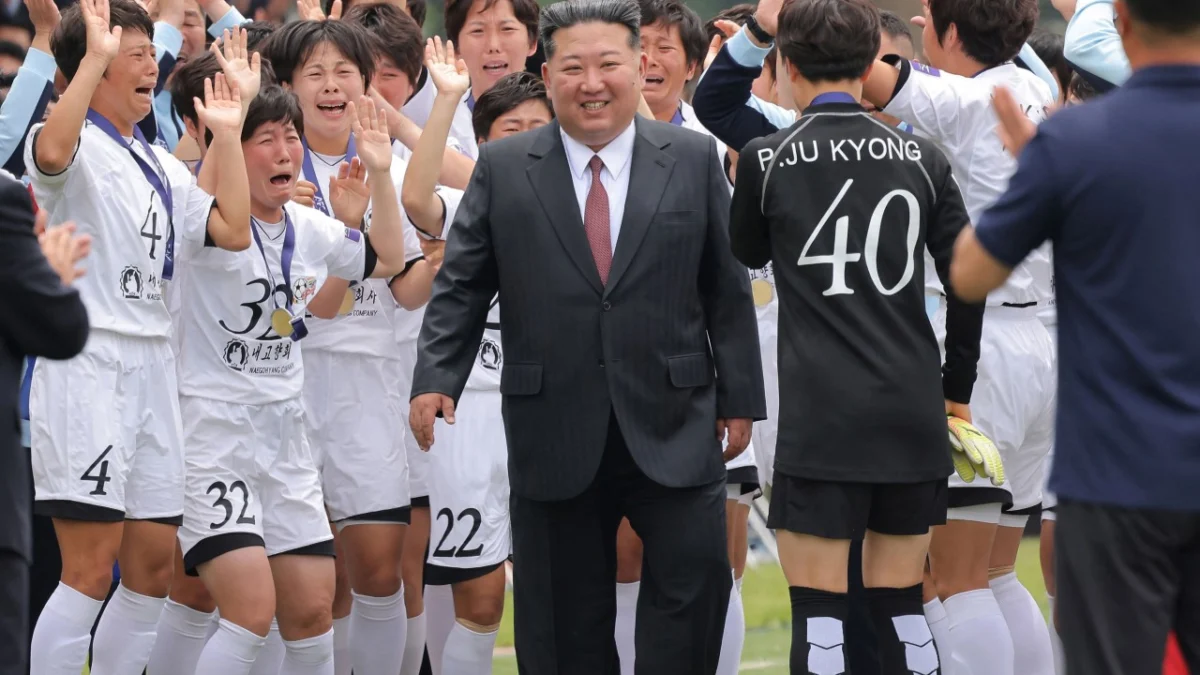
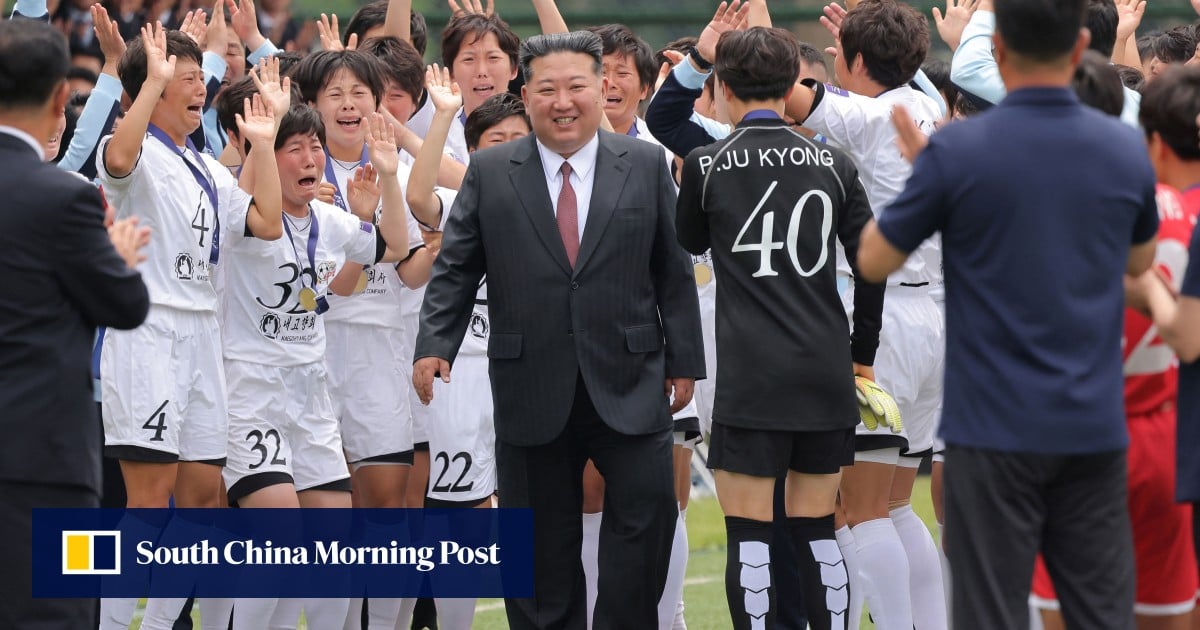
North Korean leader Kim Jong-un personally received the players and coaching staff of Naegohyang Women’s FC in Pyongyang this week, marking a high-profile celebration of the club’s recent victory in the AFC Women’s Champions League. The reception, characterized by emotional scenes of players weeping with joy and leaping in celebration, underscored the significant political and cultural value the North Korean leadership places on international sporting success. Kim Jong-un congratulated the squad for their historic achievement, which saw them become the first club from the Democratic People’s Republic of Korea (DPRK) to secure Asia’s most prestigious women’s club football title.
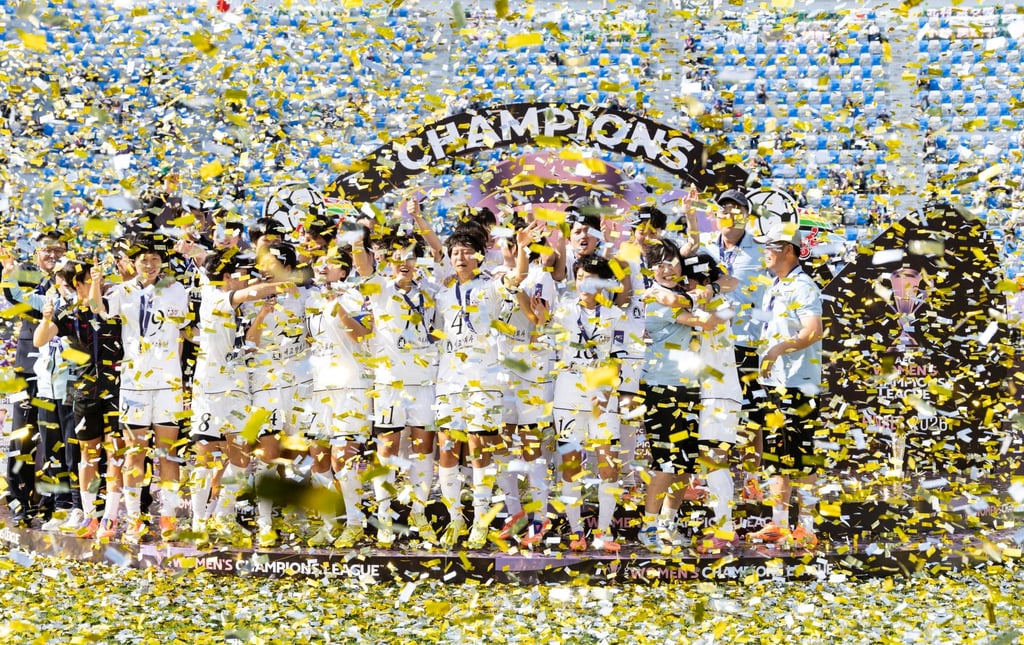
The victory is being hailed as a landmark moment for North Korean sports, particularly given the diplomatic and logistical complexities surrounding the tournament. The final, which took place on May 23 in Suwon, South Korea, saw Naegohyang defeat the Japanese powerhouse Tokyo Verdy Beleza 1-0. This win not only secured the trophy but also signaled a triumphant return for North Korean football to the international stage following years of relative isolation exacerbated by the global pandemic and regional tensions.
A Historic Victory in Suwon
The path to the title was a rigorous one for Naegohyang Women’s FC. The tournament, organized by the Asian Football Confederation (AFC), brought together the premier women’s clubs from across the continent. Naegohyang’s journey culminated in a tense final against Tokyo Verdy Beleza, a club with a storied history in Japanese football. The 1-0 victory was a testament to the tactical discipline and physical conditioning that have become hallmarks of North Korean women’s football.
The choice of venue added a layer of geopolitical intrigue to the match. By competing in Suwon, South Korea, the Naegohyang players became the first North Korean footballers to travel to the South since the 2014 Asian Games held in Incheon. This decade-long hiatus in cross-border sporting exchanges highlights the volatile nature of inter-Korean relations. The presence of the North Korean squad on South Korean soil was managed under strict security and protocol, yet it offered a rare moment of sporting engagement in an otherwise frozen diplomatic landscape.
During the reception in Pyongyang, Kim Jong-un was seen embracing players and posing for commemorative photographs. State media reported that the leader expressed immense pride in the team’s ability to uphold the "spirit and mettle" of the nation. In a gesture of further support for the development of the sport, Kim also attended a friendly match between the senior Naegohyang squad and the under-17 women’s national side, signaling a focus on the long-term pipeline of talent within the country’s football programs.
Domestic Celebration and State Narrative
The North Korean state media apparatus has moved swiftly to frame the victory as a triumph of the national system. Rodong Sinmun, the official newspaper of the ruling Workers’ Party, dedicated significant coverage to the event, describing the players as "proud daughters of the motherland." The editorial content emphasized that the "back-to-back victories" in the semi-finals and the final were not merely athletic feats but demonstrations of the ideological strength of the Korean people.
Footage released by digital broadcaster APT News showed a meticulously organized homecoming. Dozens of high-ranking ruling party officials joined members of the public at the reception, where crowds waved miniature national flags and presented the players with bouquets of flowers. Such displays are common in North Korea following international successes, serving to bolster domestic morale and reinforce the legitimacy of the leadership’s focus on national strength through various sectors, including sports.
Analysts of North Korean affairs note that Kim Jong-un has long viewed sports as a tool for both domestic unity and international prestige. Since taking power, he has invested in sporting infrastructure, such as the Masikryong Ski Resort and various football academies, aiming to transform the DPRK into a "sports powerhouse." The success of Naegohyang Women’s FC provides a tangible return on these investments and offers the regime a positive narrative to project both internally and to the outside world.
The Sanctions Dilemma and Financial Implications
Despite the prestige of the win, a significant shadow hangs over the $1 million prize money awarded by the AFC. Under current United Nations Security Council sanctions, which were implemented and tightened in response to Pyongyang’s nuclear weapons and ballistic missile programs, the transfer of large sums of "bulk cash" to North Korean entities is strictly prohibited.
UN Resolution 2397 and subsequent measures aim to limit the flow of hard currency into the country, fearing such funds could be diverted to military programs. This creates a complex legal and ethical dilemma for the Asian Football Confederation. While the prize money is earned through legitimate sporting competition, international banks and governing bodies must navigate a minefield of compliance regulations.
In previous instances involving North Korean athletes or teams winning international prize money, funds have often been frozen in escrow accounts or diverted toward the purchase of approved sporting equipment under strict monitoring. However, the $1 million sum for the AFC Women’s Champions League is substantial, and whether the club will ever see the full amount remains a matter of international legal debate. The AFC has not yet issued a definitive statement on how the payout will be handled, though it is expected to consult with UN sanctions committees.
Background: North Korea’s Dominance in Women’s Football
To understand the significance of Naegohyang’s victory, one must look at the broader context of North Korean women’s football. Unlike the men’s team, which has struggled to find consistent success on the world stage, the North Korean women’s program has been a global force for decades.
The DPRK women’s national team has historically ranked within the top 10 of the FIFA World Rankings. They are three-time winners of the AFC Women’s Asian Cup (2001, 2003, and 2008) and have seen immense success at the youth level, winning the FIFA U-17 Women’s World Cup and the FIFA U-20 Women’s World Cup multiple times.
The success of a club side like Naegohyang suggests that the domestic league structure in North Korea remains robust despite the country’s economic challenges. Naegohyang, whose name translates to "My Hometown," is one of the premier clubs in the North Korean Women’s Premier League. Their victory over Tokyo Verdy Beleza—a club from Japan, a nation that won the FIFA Women’s World Cup in 2011—is a clear indicator that the technical level of North Korean club football is currently among the best in Asia.
Chronology of the 2024 AFC Women’s Champions League Campaign
The tournament’s final stages were a whirlwind of high-stakes matches that tested the endurance and resolve of the North Korean side:
- Mid-May: Naegohyang Women’s FC travels to South Korea, marking a rare instance of North Korean citizens entering the South.
- May 19-21: The squad competes in the knockout stages, demonstrating a defensive solidity that saw them concede very few goals throughout the tournament.
- May 23: The Final in Suwon. A disciplined Naegohyang side scores the decisive goal to defeat Tokyo Verdy Beleza 1-0. The trophy presentation is held on South Korean soil.
- May 26: The team returns to Pyongyang via train and air routes, met by cheering crowds and state officials.
- Early June: Kim Jong-un hosts the official reception, meets the players, and watches a celebratory friendly match, cementing the victory as a state-level event.
Broader Implications for Regional Diplomacy
The participation of a North Korean team in a tournament hosted by South Korea is always more than just a sporting event. In the past, "ping-pong diplomacy" and joint Olympic marches have been used as barometers for the temperature of inter-Korean relations.
While the current victory does not necessarily signal a broader diplomatic thaw—especially given the recent increase in missile tests and rhetoric from Pyongyang—it does demonstrate that sports remains one of the few remaining channels where the two Koreas can occupy the same physical space. The fact that the North Korean team was able to travel, compete, and return without incident provides a template for future athletic participation, such as the upcoming regional qualifiers for the 2026 FIFA World Cup.
However, the "sports-only" nature of this interaction is clear. There were no high-level diplomatic meetings on the sidelines of the Suwon final, and the South Korean government maintained a professional but distanced stance. For North Korea, the victory serves as a "soft power" win, showing that despite international pressure and isolation, the nation can still produce world-class talent capable of defeating regional rivals like Japan.
Future Outlook for Naegohyang and Asian Football
As the first winners of the newly rebranded and expanded AFC Women’s Champions League, Naegohyang Women’s FC has set a high bar for club football in the region. The AFC intends for this competition to mirror the success of the men’s Champions League, driving commercial interest and professional standards across Asia.
For Naegohyang, the challenge will be maintaining this level of excellence. The potential lack of access to the $1 million prize money could hinder their ability to invest in better training facilities or international travel for future friendlies. Nevertheless, with the explicit backing of Kim Jong-un and the state’s sports ministry, the club is likely to remain the flagship of North Korean women’s football.
The international community will continue to watch how the AFC and the UN handle the financial rewards of this victory. The outcome could set a precedent for how North Korean athletes are compensated in international competitions moving forward. For now, the players of Naegohyang Women’s FC remain celebrated heroes in their homeland, their 1-0 victory in Suwon etched into the annals of North Korean sporting history as a moment of "spirit and mettle."
