

The inaugural direct negotiations between representatives of the Sudanese Armed Forces and the paramilitary Rapid Support Forces commenced on Saturday in the Saudi Arabian port city of Jeddah, marking the first high-level diplomatic attempt to broker a ceasefire after weeks of devastating urban warfare. Brokered by the United States and Saudi Arabia, these "pre-negotiation talks" represent a critical juncture for a nation teetering on the brink of a full-scale civil war, yet early reports from the ground and the rhetoric from both warring factions suggest that a definitive resolution remains a distant prospect. While international mediators have framed the discussions as a necessary step toward establishing a humanitarian corridor and a durable truce, the sounds of heavy artillery and airstrikes continuing to echo across Khartoum serve as a grim reminder of the volatility of the situation.
The Diplomatic Initiative in Jeddah
The joint U.S.-Saudi initiative is a response to the rapid deterioration of security in Sudan, which began on April 15, 2023. Riyadh and Washington have spent weeks coordinating with regional partners to bring the two rival generals—Army Chief Abdel Fattah al-Burhan and RSF leader Mohamed Hamdan Dagalo, widely known as Hemedti—to the negotiating table. The primary objective of the Jeddah talks is not yet a comprehensive political settlement, but rather a "technical" discussion focused on securing a humanitarian ceasefire that actually holds.
Previous attempts at ceasefires, numbering nearly half a dozen, were violated within hours of their announcement. The mediators are now pushing for a more formal monitoring mechanism to ensure that aid can reach the millions of civilians trapped in the crossfire. White House National Security Adviser Jake Sullivan’s travel to Saudi Arabia during this period underscores the high priority the Biden administration has placed on stabilizing the Horn of Africa. Saudi Arabia’s involvement is equally pivotal, given its long-standing economic and security ties with both military leaders and its strategic interest in maintaining stability across the Red Sea.
On the Ground: A Capital Under Siege
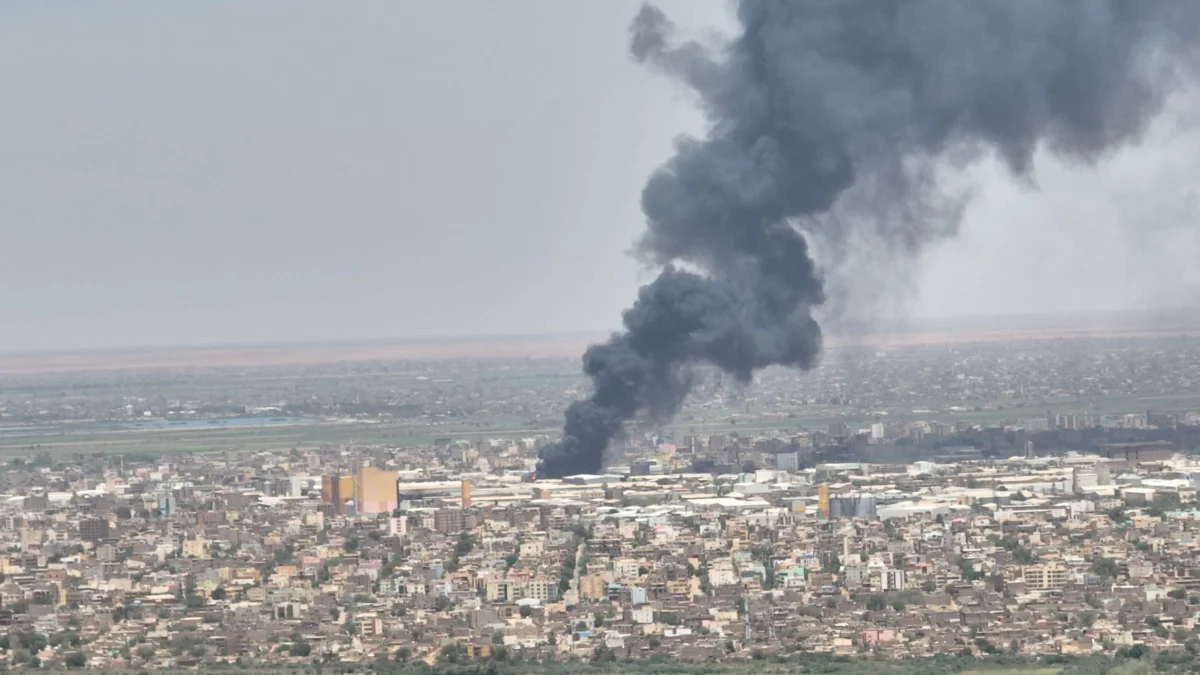
Despite the diplomatic activity in Saudi Arabia, the reality for residents in Sudan’s capital remains one of terror and deprivation. In Bahri, also known as Khartoum North, eyewitnesses reported seeing massive plumes of black smoke rising from industrial zones and residential neighborhoods alike. Drone footage has captured the scale of the destruction, showing a cityscape scarred by airstrikes and heavy machine-gun fire.
Residents who have been unable to flee the city describe a harrowing existence. In Eastern Khartoum, gun clashes have turned residential streets into front lines. Many citizens have remained barricaded in their homes for weeks, facing dwindling supplies of water, food, and electricity. The fear of stray bullets and the presence of snipers on rooftops have made even the simplest tasks, such as searching for bread, a life-threatening endeavor. The Sudanese Armed Forces (SAF) have increasingly utilized their superiority in the air, launching strikes against RSF positions embedded in densely populated urban areas, while the RSF has utilized ground-based guerrilla tactics, occupying civilian homes and government buildings to shield themselves from aerial bombardment.
The Roots of the Conflict: A Timeline of Tension
To understand the current crisis, one must look back at the fragile political transition that followed the 2019 ouster of long-time autocrat Omar al-Bashir. The alliance between the SAF and the RSF was always one of convenience rather than shared vision.
- April 2019: Following months of mass protests, the military removes Omar al-Bashir from power. A Transitional Military Council is formed, with Burhan as head and Hemedti as deputy.
- August 2019: A power-sharing agreement is signed between the military and civilian protest leaders, forming a Sovereignty Council to lead the country toward elections.
- October 2021: Burhan and Hemedti join forces to lead a military coup, dissolving the civilian-led government of Prime Minister Abdalla Hamdok. This move derails the democratic transition and leads to a suspension of international aid.
- December 2022: Under intense international pressure, a "Framework Agreement" is signed to return to civilian rule. However, the deal exposes deep rifts between the SAF and RSF regarding the timeline for the RSF’s integration into the regular army.
- April 15, 2023: Tensions reach a breaking point. Heavy fighting erupts in Khartoum and other regions after weeks of troop movements by the RSF.
The current war is essentially a power struggle between two men who once collaborated to seize power but now view each other as existential threats. General Burhan views the RSF as a "rebellious militia" that must be dismantled, while Hemedti portrays himself as a defender of democracy against the "remnants" of the old regime within the army leadership.
Humanitarian Catastrophe and the Collapse of Infrastructure
The human cost of the conflict has reached staggering proportions in less than a month. According to United Nations estimates, at least 100,000 people have fled Sudan to neighboring countries, including Egypt, Chad, and South Sudan. Internal displacement is estimated to be even higher, with hundreds of thousands moving away from the capital to more stable provinces like Al-Jazirah or the Red Sea state.
The healthcare system in Khartoum is on the verge of total collapse. The World Health Organization (WHO) and the Sudanese Doctors’ Union have reported that nearly 70% of hospitals in conflict zones are out of service. Those that remain open are functioning with minimal staff, no electricity, and a critical shortage of life-saving medicines. The WHO recently managed to deliver a shipment of medical supplies to Port Sudan, but the challenge remains transporting those supplies through a war zone to the capital.
Furthermore, the looting of humanitarian warehouses has severely hampered aid efforts. The World Food Programme (WFP) reported that millions of dollars’ worth of food supplies were stolen in the early days of the fighting, forcing a temporary suspension of operations that has only recently begun to resume in safer areas.
Political Stalemate and Hardline Stances
The prospects for a quick breakthrough in Jeddah are dampened by the rigid positions of both delegations. Special envoy Dafallah Alhaj, representing the Sudanese army, has stated unequivocally that the military will not engage in direct political negotiations with the RSF. The army’s current stance is that the RSF must first withdraw from civilian areas and surrender its heavy weaponry—a demand that the RSF is unlikely to meet given its current tactical advantages on the ground.
On the other side, Hemedti has utilized social media and international interviews to frame the conflict as a fight against "radical Islamists" within the military establishment. By aligning himself rhetorically with civilian democratic movements, Hemedti is attempting to gain international legitimacy, though many civilian groups remain wary of both military factions given their roles in the 2021 coup and previous human rights abuses in Darfur.
Regional and Global Implications
The conflict in Sudan is not merely a domestic affair; it has significant implications for regional stability. Sudan occupies a strategic position bordering seven countries and possesses a long coastline on the Red Sea, a vital artery for global trade.
- Red Sea Security: Saudi Arabia and other Gulf states are deeply concerned about the security of the Red Sea. Any prolonged instability in Sudan could invite piracy, smuggling, or the interference of rival regional powers.
- The Sahel Region: To the west, the conflict threatens to spill over into the volatile Sahel region, where countries like Chad and Niger are already battling insurgencies.
- Refugee Crisis: Neighboring countries, many of which are already struggling with their own economic and security crises, are ill-equipped to handle a massive influx of Sudanese refugees.
- The Nile Waters: Sudan is a key player in the ongoing dispute between Egypt and Ethiopia over the Grand Ethiopian Renaissance Dam (GERD). A vacuum of power in Khartoum could complicate already sensitive negotiations over water rights.
The Path Forward: Can Jeddah Deliver?
As the talks in Jeddah proceed, the international community remains cautiously hopeful but realistic. The immediate goal is the "Jeddah Declaration," a document that would commit both sides to the protection of civilians and the facilitation of aid. However, without an enforcement mechanism or a peacekeeping presence, any agreement signed in Saudi Arabia will rely entirely on the goodwill of commanders who have shown little inclination for restraint.
For the people of Sudan, the Jeddah talks represent a glimmer of hope in an otherwise dark landscape. However, until the guns fall silent in the streets of Khartoum and Bahri, the promise of a return to civilian rule and a transition to democracy remains a distant dream. The conflict has moved beyond a simple military skirmish; it has become a battle for the very identity and future of the Sudanese state. The coming days in Jeddah will determine whether the country can begin the long process of healing or if it will descend further into a protracted conflict that could destabilize the entire region for years to come.
