

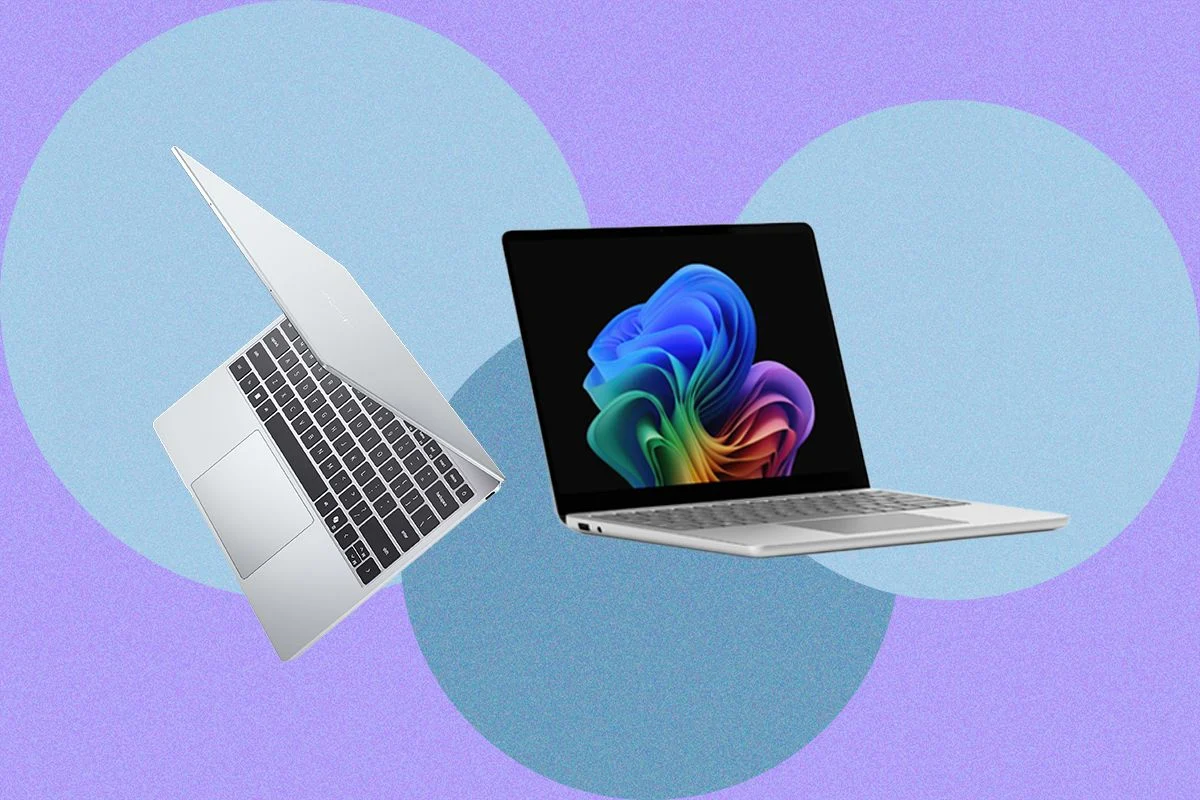
The release of the MacBook Neo represented a seismic shift in the personal computing industry, acting as a catalyst for a market-wide realignment of the entry-level laptop segment. By introducing a device priced at a disruptive $599, Apple effectively expanded its reach into a budget demographic that had previously been the exclusive domain of Windows-based manufacturers and Chromebooks. This move forced a response from the industry’s largest players, including Dell and Microsoft, leading to a new era of "premium-entry" devices that prioritize chassis quality and brand prestige over raw internal specifications. As the industry moves further into 2026, the ripple effects of this strategy are manifesting in divergent ways across the Windows ecosystem, highlighting a fundamental tension between hardware aesthetics and computing performance.
The Strategic Realignment of Dell: The XPS 13 Pivot
Dell has emerged as the most direct competitor to Apple’s new market positioning, adopting a strategy that mirrors the MacBook Neo’s philosophy of "accessible luxury." The newly announced Dell XPS 13, priced at $699 for general consumers and $599 for the education sector, marks a significant departure from the XPS line’s traditional status as a high-end, four-figure investment.
To achieve this aggressive price point, Dell has implemented a series of calculated hardware trade-offs. The base configuration of the XPS 13 now mirrors the MacBook Neo’s controversial 8 GB of RAM and 256 GB of solid-state storage. Furthermore, Dell has opted for a standard Intel Core 5 processor rather than the more expensive Intel Core Ultra series, a move that parallels Apple’s decision to utilize a modified iPhone-grade processor in the Neo instead of its flagship M-series laptop chips.
Despite these internal concessions, Dell has maintained the external hallmarks of its premium brand. The XPS 13 retains its signature CNC-machined aluminum chassis, measuring just half an inch in thickness. The display remains a high-priority component, featuring a 2560 x 1600 resolution IPS panel with a 120 Hz refresh rate and 500 nits of peak brightness. This specific focus on the "touchpoints" of the device—the screen, the keyboard, and the build material—suggests that Dell is betting on a consumer base that values the look and feel of a high-end machine over the ability to perform heavy video editing or multi-layered data processing.
%20052026%20SOURCE%20Microsoft.jpg)
Microsoft and the Surface Laptop Controversy
While Dell has attempted to match Apple’s price-to-prestige ratio, Microsoft’s recent announcements regarding the Surface Laptop for Business line have drawn significant criticism from industry analysts. Microsoft introduced two distinct tiers for its business-focused hardware: a 13.8-inch model featuring the cutting-edge Intel Core Ultra Series 3 "Panther Lake" architecture and a smaller 13-inch model aimed at more budget-conscious enterprise fleets.
The controversy centers on the 13-inch configuration, which carries a starting price of $1,200 despite being equipped with only 8 GB of RAM. While business-tier laptops historically carry a premium due to extended warranties, specialized support, and enterprise security features, the decision to offer an 8 GB configuration at this price point in 2026 has been viewed by many as a step backward. Critics argue that Microsoft is attempting to capitalize on the "8 GB baseline" established by the MacBook Neo without offering the corresponding price reduction that made Apple’s move palatable to the general public.
This hardware regression is particularly notable because the previous consumer-facing Surface Laptop 7th Edition had established 16 GB of RAM as the standard entry-level specification. The shift back to 8 GB for the 13-inch business model suggests a tactical move to manage supply chain costs, though it remains to be seen if this configuration will migrate to the consumer-focused Surface Laptop 8, expected to be unveiled at the Microsoft Build conference in June.
A Chronology of the Budget Premium Shift
The current state of the laptop market is the result of a multi-year evolution in consumer expectations and supply chain management.
- Late 2023 – Early 2024: The "Spec War" era. Windows manufacturers like Acer, Lenovo, and HP focused on providing 16 GB of RAM and mid-range processors in the $500–$700 range, often utilizing plastic chassis to keep costs low.
- Late 2025: The Launch of the MacBook Neo. Apple disrupted the $599 price point by repurposing high-yield mobile silicon and using its established aluminum supply chain to offer a premium-feeling device with entry-level specs.
- Early 2026: The Memory Crisis. A global shortage in NAND and DRAM production began to impact the industry, leading to rising component costs. This forced manufacturers to either increase retail prices or reduce the amount of memory included in base models.
- Mid 2026: The Windows Response. Dell pivots the XPS 13 to compete directly with the Neo. Qualcomm announces the Snapdragon C chip, targeting the $300–$400 Windows laptop segment to provide an alternative to the high-cost Intel and Apple silicon.
The Role of the Global Memory Shortage
Central to the persistence of 8 GB RAM configurations in 2026 is the ongoing volatility in the global memory market. Supply chain reports indicate that the industry-wide memory shortage has significantly narrowed the margins for budget laptops. Manufacturers who previously viewed 16 GB as a standard marketing advantage are now facing a difficult choice: absorb the increased cost of 16 GB modules or revert to 8 GB to maintain a specific "psychological" price point, such as $599 or $699.

Apple, with its vertically integrated supply chain, was the first to navigate this by optimizing its macOS environment to be more efficient with lower memory overhead. However, the Windows ecosystem, which relies on a broader range of hardware and software configurations, faces a steeper challenge. While Windows 11 and its successor have made strides in memory management, 8 GB remains a restrictive ceiling for power users, creating a clear divide between "lifestyle" laptops like the XPS 13 and "workhorse" laptops like the HP OmniBook 3.
The Emerging "Spec-First" Alternatives
While Apple and Dell chase the premium-build market, other manufacturers are doubling down on the traditional Windows value proposition. Companies such as Acer, Lenovo, and HP continue to offer devices in the $500 to $600 range that objectively outperform the MacBook Neo and the base XPS 13 in technical benchmarks.
The HP OmniBook 3, for instance, provides 16 GB of RAM and a more powerful multi-core processor for less than the cost of a student-discounted Dell XPS 13. However, these devices often feature thicker profiles, plastic or hybrid-composite chassis, and displays with lower color accuracy or refresh rates. This has created a bifurcated market where consumers must choose between a "fast machine in a cheap box" or a "slow machine in a premium box."
Implications for the Future: The $300 Windows Laptop
The competition is expected to intensify with the recent announcement of the Qualcomm Snapdragon C processor. Designed specifically for entry-tier Windows laptops, the Snapdragon C aims to enable a new category of devices starting as low as $300. These laptops are expected to leverage the power efficiency of ARM architecture to provide long battery life in thin-and-light designs, potentially challenging the MacBook Neo on portability and price, even if they cannot match its build quality.
This development suggests that the "Neo effect" is not just about Apple lowering its prices, but about a fundamental restructuring of how laptops are tiered. The $300 to $600 range is no longer a graveyard for slow, clunky machines; it has become the primary battleground for innovation in silicon efficiency and industrial design.

Conclusion: A Market in Flux
The arrival of the MacBook Neo has successfully forced the Windows ecosystem to reconsider its approach to the entry-level market. Dell’s adoption of the "premium-entry" model with the XPS 13 provides a viable alternative for users who prioritize aesthetics and display quality, while Microsoft’s current trajectory suggests a more cautious, perhaps even regressive, approach to memory standards in its business line.
As the industry moves toward the second half of 2026, the success of these strategies will depend on consumer behavior. If buyers continue to prioritize chassis feel and brand prestige over RAM capacity, the 8 GB baseline may persist longer than technical enthusiasts would prefer. Conversely, if the performance limitations of 8 GB become a significant hurdle for the modern AI-integrated workflow, manufacturers may be forced to find new ways to provide 16 GB of RAM without sacrificing the premium builds that have now become the standard of the $600 laptop. For now, the diversity of the Windows market remains its greatest asset, offering a spectrum of choices that Apple’s singular Neo cannot entirely cover.
