

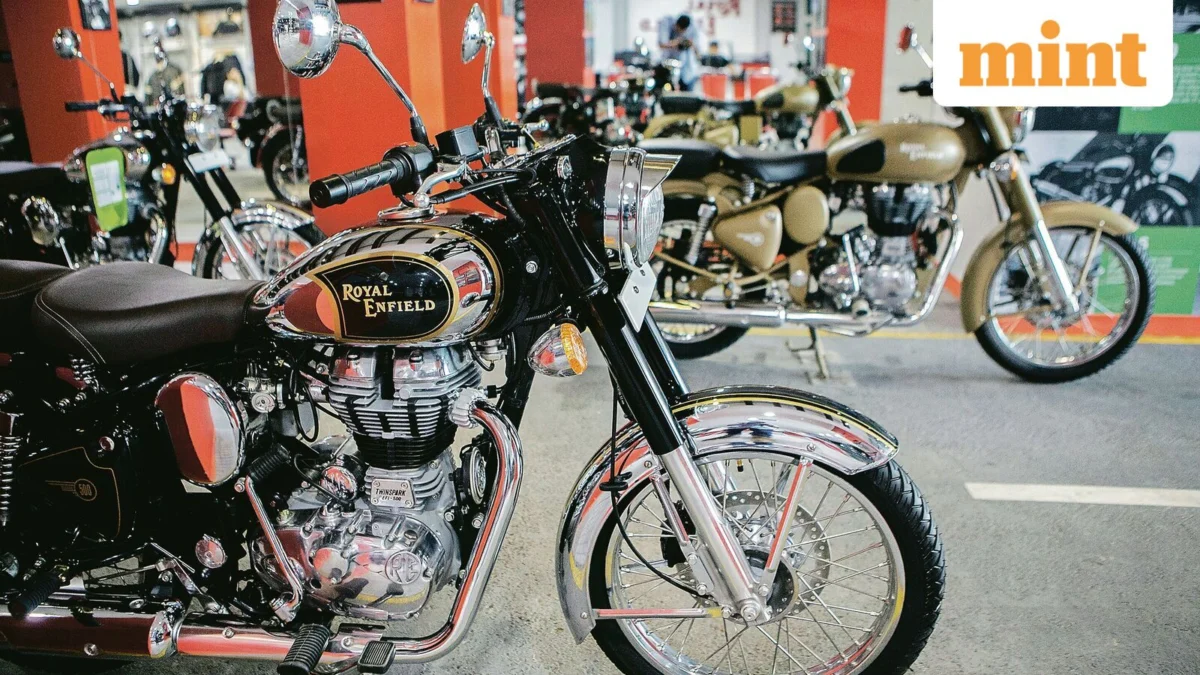
Eicher Motors, the parent company of the iconic Royal Enfield brand, continues to occupy a unique position in the Indian automotive landscape, driven by a decade-long shift toward premiumization and lifestyle motorcycling. Following the announcement of its Q4 FY26 earnings, the company has found itself at a critical juncture where robust operational performance meets the scrutiny of high market valuations and the looming shadow of electrification. As the Indian automotive sector undergoes a structural transformation, Eicher Motors remains a focal point for investors seeking exposure to the aspirational consumption story of the world’s most populous nation.
The company’s recent financial results underscored its resilience. Management commentary following the Q4 FY26 announcement highlighted steady volume growth, particularly in the mid-size motorcycle segment (250cc–750cc), where Royal Enfield maintains a dominant market share. However, the sustainability of its stock rally remains a subject of intense debate among analysts. While the "premiumization" tailwind remains strong, the entry of formidable global competitors and the capital-intensive transition to electric vehicles (EVs) present hurdles that were largely absent during Eicher’s meteoric rise over the previous decade.
A Chronology of Transformation: From Industrial Engines to Lifestyle Icon
To understand Eicher Motors’ current market standing, one must look at its evolution from an agricultural tractor manufacturer to a global leader in mid-size motorcycles. The journey began in earnest in 1994 when Eicher Group acquired Enfield India, a move that many at the time viewed as a risky bet on an aging brand. Under the leadership of Siddhartha Lal, the company underwent a radical streamlining process in the mid-2000s, divesting non-core businesses to focus on Royal Enfield and a strategic commercial vehicle partnership with the Volvo Group.
The launch of the Classic 350 in 2009 served as the primary catalyst for the company’s modern era, transforming Royal Enfield from a niche manufacturer of heavy, maintenance-intensive bikes into a mass-market lifestyle brand. This was followed by the introduction of the Himalayan in 2016, which opened the adventure touring segment, and the Interceptor 650 in 2018, which signaled Eicher’s intent to compete on the global stage. By FY24 and FY25, the company had successfully refreshed its lineup with the J-platform engines and the new Himalayan 450, setting the stage for the strong FY26 performance currently under review.
The Pillars of Dominance: Brand Equity and Margin Profiles
Eicher Motors’ investment thesis is built on three primary pillars: brand loyalty, superior margins, and the ongoing shift in consumer preferences. Royal Enfield does not merely sell motorcycles; it sells a "leisure motorcycling" ecosystem. This brand stickiness allows the company to maintain pricing power that mass-market players like Hero MotoCorp or Bajaj Auto often struggle to match in the commuter segments.
In the mid-size segment, Eicher’s market share has historically hovered above 80%. While this dominance is being challenged, the sheer volume of the "Classic" and "Bullet" franchises provides a massive aftermarket and community base that acts as a moat. Financially, this translates into healthy EBITDA margins. Because premium motorcycles carry higher price tags and better economies of scale at the high end, Eicher consistently reports operating margins that outperform traditional two-wheeler manufacturers.
Furthermore, the "premiumization" trend in India is no longer a projection but a reality. As disposable incomes rise, first-time buyers are increasingly skipping the 100cc-125cc commuter category in favor of 350cc machines. This shift in the "aspirational" entry point of the market has provided Eicher with a steady stream of new customers, even as the broader rural economy faces intermittent headwinds.
The Volvo Eicher Commercial Vehicles (VECV) Synergy
While Royal Enfield generates the majority of the headlines, the Volvo Eicher Commercial Vehicles (VECV) joint venture is a significant contributor to the company’s valuation. This partnership has allowed Eicher to integrate Volvo’s world-class technology into the Indian truck and bus market.
As of the Q4 FY26 period, the CV segment has benefited from the Indian government’s aggressive infrastructure spending and the expansion of the national highway network. VECV has carved out a strong position in the light and medium-duty truck segments and is making steady inroads into the heavy-duty category. The synergy provides Eicher with a diversified revenue stream, balancing the cyclical nature of the consumer motorcycle market with the industrial demand for logistics and construction vehicles.
Strategic Global Expansion: Beyond Indian Borders
Eicher Motors has made no secret of its ambition to become the "global leader in the mid-size motorcycle segment." To achieve this, the company has established assembly plants in several international markets, including Brazil, Thailand, and Colombia. These "Local Assembly" (CKD) units allow the company to bypass high import duties and price its products competitively against Japanese and European rivals.

Exports now account for a growing portion of Royal Enfield’s total volume. In markets like North America and Europe, the brand is positioned as an "accessible" and "authentic" alternative to high-priced heavyweights. This geographical diversification is crucial for the company’s long-term stability, as it reduces reliance on the domestic Indian monsoon cycle and local regulatory shifts.
Challenges and Investor Caution: The EV Transition and Competition
Despite the positive momentum, the road ahead is not without significant obstacles. The most prominent threat is the transition to electric mobility. While the 350cc+ segment is perceived to be more insulated from electrification than the scooter segment, the shift is inevitable. Eicher has announced its "Flying Flea" EV brand and is investing heavily in R&D, but the transition poses a "Catch-22." Moving too fast could cannibalize its high-margin internal combustion engine (ICE) business, while moving too slow could allow new-age startups or established rivals to seize the "green" premium market.
Competition has also reached a fever pitch. The partnership between Bajaj Auto and Triumph, as well as the collaboration between Hero MotoCorp and Harley-Davidson, has brought world-class mid-size motorcycles to Indian showrooms at competitive price points. For the first time in two decades, Royal Enfield is facing direct, well-funded competition in its core 350cc–500cc territory. Analysts note that while Royal Enfield’s brand is strong, the "newness" factor of Triumph and Harley models is attracting younger buyers who might have previously defaulted to a Classic 350.
Valuation Metrics: A Premium Price for a Premium Brand
From a valuation perspective, Eicher Motors continues to trade at a premium compared to its peers Bajaj Auto and Hero MotoCorp. According to recent market data, Eicher’s Price-to-Earnings (PE) ratio remains above the industry median of 27 times. While it trades at a lower PE than TVS Motor Company—which the market rewards for its aggressive EV stance and diversified product portfolio—Eicher is still considered an "expensive" stock by traditional value standards.
Investors are essentially paying for the "brand moat" and the expectation of sustained double-digit growth. However, if volume growth slows due to competitive pressure or if margins are squeezed by rising input costs (such as steel and aluminum), the stock could face a de-rating. The current valuation leaves little room for operational errors, making the company’s execution in the next few quarters critical.
Impact Analysis: Broader Economic Implications
The performance of Eicher Motors serves as a barometer for the health of India’s urban middle class. Strong sales for Royal Enfield suggest that urban consumption remains robust despite global inflationary pressures. Conversely, any slowdown in VECV sales would signal a cooling of the industrial and logistics sectors.
From a policy perspective, Eicher’s success in exports aligns with the "Make in India" initiative. By evolving from a domestic player to a global exporter of high-value engineering products, Eicher contributes significantly to the country’s manufacturing reputation. However, the company’s ability to navigate the "Faster Adoption and Manufacturing of Electric Vehicles" (FAME) subsidies and other regulatory frameworks will determine its success in the next phase of the automotive revolution.
Future Outlook and Final Take
As Eicher Motors moves deeper into FY27, its success will depend on its ability to balance its heritage with innovation. The company must defend its home turf against the Triumph-Bajaj and Harley-Hero onslaught while simultaneously proving that the Royal Enfield "soul" can be successfully translated into an electric format.
For investors, the conclusion is nuanced. Eicher Motors remains a fundamentally strong company with a debt-free balance sheet, industry-leading margins, and a visionary management team. However, the "easy gains" of the post-pandemic recovery have likely been priced in. Future returns will be driven by the company’s ability to capture incremental market share in international markets and its success in the heavy-duty truck segment via VECV.
While the brand loyalty of the "Bullet" remains a formidable asset, the automotive industry is entering its most disruptive decade in a century. Eicher Motors has proven its ability to reinvent itself once before; it must now do so again in the age of electrification and hyper-competition. Investors are advised to keep a close eye on monthly volume data and the progress of the company’s EV roadmap, as these will be the true North Stars for the stock’s trajectory in the coming years.
