

The global financial landscape is poised for a monumental shift as two of the most disruptive technology companies, SpaceX and OpenAI, formally initiated their journeys towards public trading, with predictions placing their initial market valuations well into the unprecedented trillion-dollar territory. On Wednesday, May 20, 2026, Elon Musk’s aerospace venture, Space Exploration Technologies Corp. (SpaceX), officially filed its intent to go public on the Nasdaq exchange, a move long anticipated by investors and industry observers. Simultaneously, reports emerged detailing that OpenAI, the leading artificial intelligence research and deployment company behind ChatGPT, is preparing for a confidential IPO filing as early as Friday of the same week, signaling an accelerating race to public markets for the titans of the new economy.
The Trillion-Dollar Debut: A New Benchmark for Tech IPOs
The sheer scale of these anticipated debuts is setting new records, challenging established market leaders and fundamentally redefining expectations for public market entries. According to traders on the prediction market platform Kalshi, there is a commanding 92% probability that OpenAI will complete its IPO within the current year, reflecting widespread confidence in its market readiness and investor appeal. Not far behind, Anthropic, a key private rival in the burgeoning AI sector, is given a 69% chance of officially going public this year, according to the same market.
What truly distinguishes these forthcoming IPOs is the staggering valuations projected for their inaugural trading days. Traders on Polymarket, another prominent prediction market, anticipate that all three companies—SpaceX, OpenAI, and Anthropic—are poised to close their first day of public trading at valuations exceeding $1 trillion. Such a feat would mark an unprecedented achievement in financial history, dwarfing previous records for public market debuts and signaling a profound recalibration of value perception in the tech sector.
SpaceX, which commanded a private valuation of $1.25 trillion as recently as February 2026, is predicted by Polymarket traders to have a 56% chance of closing its first trading day above an astonishing $2.2 trillion. This projection underscores the immense investor appetite for companies at the forefront of space exploration, satellite internet, and rocket technology. OpenAI, last valued privately at $852 billion in March 2026, is seen by traders as having a 65% chance of surpassing $1.4 trillion by the close of its initial public trading day. Meanwhile, Anthropic, reportedly engaged in discussions for a new funding round at a $900 billion valuation, is given 47% odds of closing its first day above $1.8 trillion. These figures paint a vivid picture of a market bracing for an influx of capital into highly disruptive, yet often pre-profitability, technology ventures.
Redefining the Trillion-Dollar Club and Market Dynamics
Should these projections materialize, SpaceX, OpenAI, and Anthropic would not merely join the exclusive "trillion-dollar club" but would immediately position themselves among the very top echelons of global corporations by market capitalization. Their valuations would likely surpass that of Warren Buffett’s Berkshire Hathaway, which currently stands at approximately $1.03 trillion. Furthermore, they would present a significant challenge to the market caps of tech giants like Meta Platforms and Tesla, both hovering around the $1.5 trillion mark, potentially reshaping the hierarchy of the world’s most valuable companies.
This impending wave of mega-IPOs reflects several converging trends in the global economy and technology sector. Companies are staying private for longer, fueled by the availability of substantial private capital through venture funding, private equity, and alternative financing mechanisms. This extended private phase allows them to mature, scale operations, and build significant market traction and user bases before facing the scrutiny of public markets. However, the eventual decision to go public, often driven by the need for even larger capital injections, liquidity for early investors and employees, and enhanced brand visibility, culminates in these unprecedented valuations.
A Deeper Dive into Financial Fundamentals: Revenue vs. Valuation
The astronomical valuations projected for these companies prompt a critical examination of their underlying financial fundamentals, particularly in comparison to established behemoths. Deutsche Bank analyst Adrian Cox, in a note issued on Thursday, highlighted this disparity, pointing out that Berkshire Hathaway generated over $350 billion in revenue last year. This figure starkly contrasts with SpaceX’s reported revenues of $18.67 billion during 2025. OpenAI, while experiencing explosive growth, reportedly generated $13.1 billion in revenue last year.
Anthropic’s 2025 revenues are less definitively published, but recent reports on Wednesday indicated that the company is on track to achieve its first-ever quarterly profit in the second quarter of 2026, with revenues nearing $11 billion for the period. This profitability is a notable differentiator, as both SpaceX and OpenAI remain unprofitable companies despite their massive private and projected public valuations. The market’s willingness to assign such high valuations to companies with relatively modest, or even negative, current earnings reflects a profound belief in their future growth potential, disruptive innovation, and capacity to capture vast new markets. Investors are effectively betting on the long-term vision of space commercialization and the transformative power of artificial intelligence.
Historical Context and Market Absorption Capacity
The prospect of multiple multi-trillion-dollar public debuts within a short span naturally raises questions about market capacity and the sustainability of such high valuations. Concerns about whether there will be enough buyers to absorb these massive offerings have been voiced by some market participants. However, analyst Adrian Cox offered a reassuring perspective on these fears.
"While there may be concerns about the capacity of the market to absorb a number of IPOs valued at several hundred billion dollars this year, they would slot into a US stock market worth about $70 trillion overall," Cox wrote. He further elaborated on the significant growth of the market, stating, "That is five times larger in nominal terms than it was even at the peak of the dot-com bubble in the late 1990s. At that time, there was an average of almost 500 IPOs a year, compared with about 120 this decade."
This historical context is crucial. The U.S. stock market in 2026 is far more mature, diversified, and possesses significantly greater liquidity than during the speculative fervor of the dot-com era. While the number of IPOs has decreased, the average size and maturity of companies going public have increased dramatically. The market’s ability to absorb substantial capital inflows is also bolstered by the sheer volume of institutional investment funds, pension funds, mutual funds, and increasingly sophisticated retail investors seeking growth opportunities.
Chronology of a Market Reshaping Event
The recent announcements and reports represent the culmination of years of private growth and strategic maneuvering:
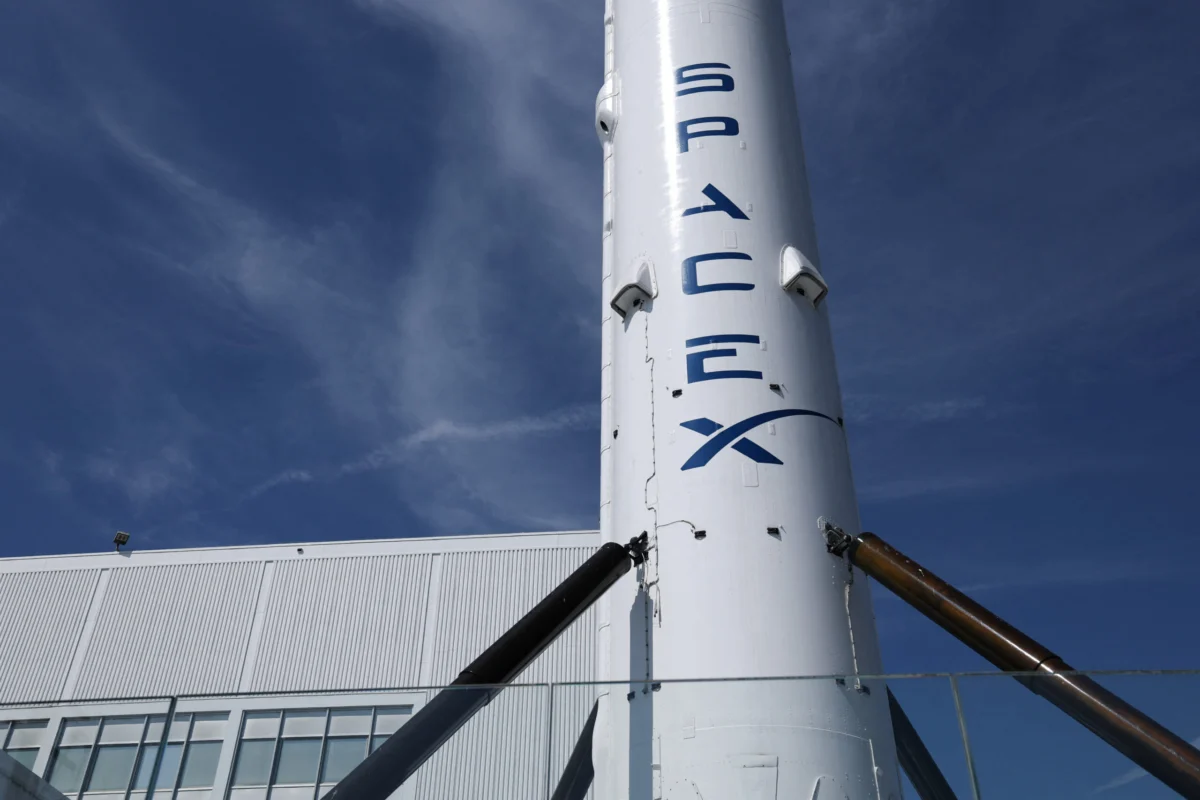
- March 26, 2026: A SpaceX Falcon 9 rocket is displayed outside its Hawthorne, California facility, symbolizing the company’s tangible progress and technological might, even as IPO rumors swirl.
- February 2026: SpaceX secures a private valuation of $1.25 trillion, setting the stage for its eventual public offering.
- March 31, 2026: OpenAI completes a funding round, solidifying its private valuation at $852 billion, underscoring its rapid ascent in the AI domain.
- April 29, 2026: Reports surface that Anthropic is in talks for a new funding round at a $900 billion valuation, signaling its competitive position and potential for a public listing.
- May 20, 2026 (Wednesday): SpaceX officially files to go public on the Nasdaq, marking a definitive step towards its market debut. On the same day, reports indicate OpenAI will confidentially file for its IPO as soon as Friday, intensifying the IPO race.
- May 20, 2026 (Wednesday): Further reports suggest Anthropic is pacing for a second-quarter profit at nearly $11 billion in revenue, distinguishing itself through early profitability ahead of a potential IPO.
This rapid succession of developments highlights the intense competition and strategic timing involved in bringing these colossal companies to public markets.
Implications for the Broader Tech Sector and Investor Strategies
The advent of these mega-IPOs carries profound implications for the broader technology sector and investor strategies. For one, it validates the immense potential and disruptive power of frontier technologies like commercial space and artificial intelligence. It also sets a new, elevated benchmark for what constitutes a "successful" tech IPO, potentially influencing how future private companies are valued and brought to market.
For investors, these IPOs represent both unparalleled opportunities and considerable risks. The potential for substantial first-day gains, as predicted, could attract significant capital. However, the high valuations relative to current revenues demand a long-term investment horizon and a strong conviction in the companies’ ability to execute on their ambitious growth plans. The market will closely watch how these companies manage the transition from private innovation hubs to publicly traded entities, facing increased scrutiny, regulatory pressures, and the need for consistent quarterly performance.
The surge of these high-profile tech companies into the public sphere also signals a potential shift in capital allocation within the broader market. As new "trillion-dollar contenders" emerge, investors may re-evaluate their portfolios, potentially shifting funds from more established, slower-growth companies towards these high-growth, high-potential disruptors. This could lead to increased volatility in certain sectors but also infuse the market with renewed dynamism and innovation-driven excitement.
Ultimately, the anticipated public debuts of SpaceX, OpenAI, and Anthropic are more than just financial events; they are milestones reflecting the cutting edge of technological advancement and a global economy increasingly shaped by audacious vision and groundbreaking innovation. The coming months will reveal whether these titans can live up to their unprecedented valuations and carve out their enduring legacies in the annals of public markets.
(Disclosure: CNBC and Kalshi have a commercial relationship that includes a CNBC minority investment.)
